Tree · Arecaceae
Coconut Palm
Cocos nucifera
Give it full tropical sun, warmth, and sandy coastal soil, and the coconut palm rewards you for decades.
Full sun
70–95°F · 21–35°C
USDA 10–11
49–98 ft · 15–30 m
Overview
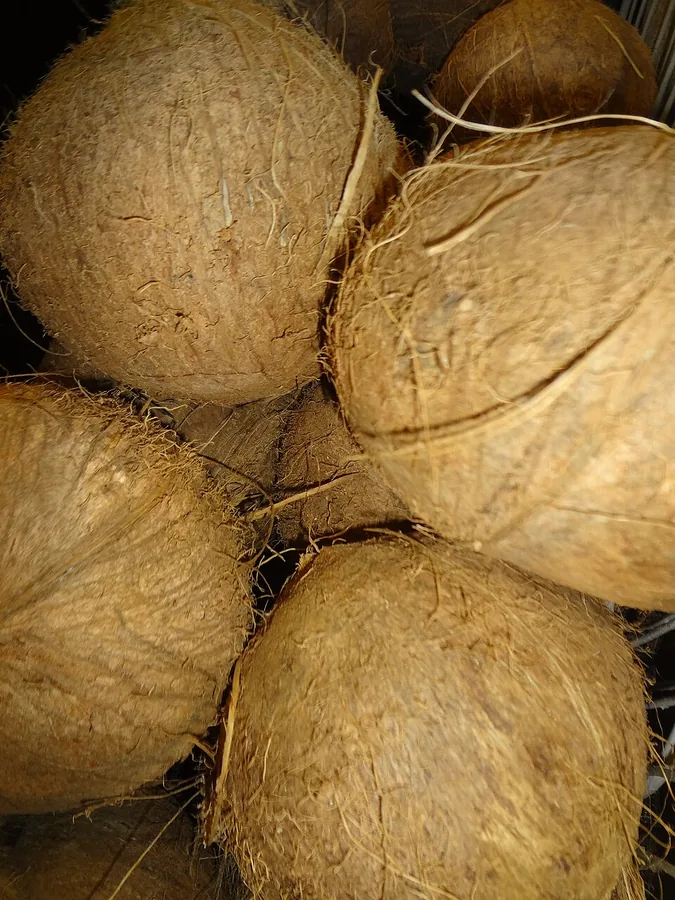
The coconut palm is the picture of the tropics, a tall single trunk crowned with long feathery fronds and heavy nuts. It grows wild along lowland coasts from Malesia to the southwest Pacific, where it shrugs off salt spray and even flooding. As a true palm, it is grown as much for the coconut itself as for the look of the tree.
This is a big, slow commitment rather than a quick crop. A mature palm can climb past 80 to 100 feet, and it waits 4 to 6 years before it flowers and starts to bear. Once it does, a single tree can set dozens of nuts a year, each one taking about 9 to 10 months to mature after the flowers are pollinated.
Warmth is the one thing it cannot do without. The coconut palm is strictly tropical and only grows outdoors in USDA Zones 10B to 11, where frost never reaches it. Push it any colder and the fronds scorch, so most gardeners outside the true tropics keep one only as a short-lived novelty in a pot.
Care
The short version: full sun, warmth, and sandy, well-draining soil in a frost-free Zone 10B to 11 spot. Water young palms about an inch a week while they establish, feed a complete palm fertilizer a few times a year, and site the tree well clear of where falling nuts could land.
Light
Coconut palms want full sun and grow best in the open. They will take a bit of partial sun, but anything shadier slows them down and weakens the fronds.
Water
While a young palm is getting established in its first year, give it about one inch of water a week from rain or irrigation. A mature tree is drought tolerant once settled, though it still does best with steady soil moisture. This is a coastal palm that handles salt and even flooding with no trouble.
Soil
Plant in sandy, well-draining soil like the tropical coastal ground it comes from. It tolerates salt spray and standing water that would rot most other trees, so a beachy, fast-draining site suits it perfectly.
Temperature
This is a strictly tropical tree that runs best between 70°F and 95°F (21°C to 35°C). Anything near 50°F (10°C) brings on cold damage, which is why it only survives outdoors in the warmest zones.
Humidity
The coconut palm likes high humidity, in keeping with its muggy coastal home. There is no number to hit outdoors in a tropical climate, since the surrounding air already supplies what it needs.
Feeding
Palms are prone to nutrient shortfalls, so feed a complete palm-special fertilizer that includes magnesium, manganese, and other micronutrients. Spread it across three to four feedings a year through the growing season to keep the fronds green and healthy.
Pruning
Take off only the fully dead, brown fronds and spent fruit or flower stalks. Cutting green fronds weakens the palm, so leave them be. On a tall tree, clear ripe coconuts and dead fronds before they fall on their own.
Repotting
A coconut palm is not a long-term container plant. A novelty sprouted from a nut outgrows an indoor pot within a year or two, after which it belongs outdoors in a frost-free climate. Roots circling the drainage holes, fast-drying mix, and pale stalled growth all say it has run out of room.
Size & spacing
This is a forest-scale tree that reaches 49 to 98 feet (15 to 30 m) tall with a canopy spreading 20 to 30 feet (6 to 9 m) across. Give it wide open ground far from buildings, walkways, and seating, both for its size and for the falling-nut hazard.
When to plant
The coconut palm keeps no planting calendar in the usual sense, because it grows in warm tropical conditions all year. There is no frost to plant around and no dormant season, so a nut can be sown whenever the soil stays warm. The long wait is in the years it takes to reach bearing age, not in the time of year you start.
Northern hemisphere
Southern hemisphere
Typical months for a temperate climate: start earlier in warm zones, later where spring frosts linger.
- Harvest: Begins flowering and bearing roughly 4-6 years after planting; nuts mature about 9-10 months after the flowers are pollinated, producing dozens of nuts per year on a mature palm
Hardiness
USDA hardiness zones: 10–11
Temperature: down to -1°C
Troubleshooting
A coconut palm shows trouble first in its fronds and its fruit. Cold and disease cause most of the serious problems, and the two look very different once you know what to watch for. Match the signs below and act before a setback turns into a lost tree.
Fruit dropping early, then fronds yellowing from the bottom up
This sequence points to lethal yellowing, a phytoplasma disease carried by the planthopper Haplaxius crudus. It starts with most or all of the nuts falling early, then the oldest lower fronds yellow and the color climbs as the flower stalks blacken and the spear leaf collapses. Once symptoms begin, an untreated palm usually dies within 3 to 5 months. Trunk injections of oxytetracycline every four months can hold it off in a prized specimen, but a palm with more than about a quarter of its leaves discolored should come out to protect the rest.
Fix:
- Trunk injection of oxytetracycline HCl (OTC) roughly every four months can suppress symptoms in valuable palms
- Remove symptomatic palms with more than about 25 percent discolored leaves to limit spread
- Replant with resistant cultivars where the disease is present
Reddish blotches and browning fronds after a cold snap
This is chilling injury, and it shows up within days of any spell at or below 50°F (10°C). The coconut palm is a strictly tropical tree, so reddish blotches appear on the younger leaves while mature fronds turn necrotic. Hold off on cutting damaged fronds until warm weather returns and new growth shows, since green tissue can still feed the plant. Only Zones 10B to 11 stay warm enough to grow one outdoors.
Fix:
- Protect from cold and grow only in frost-free tropical climates
- Wait for warm weather and new growth before removing damaged fronds, since green tissue may still photosynthesize
- Do not over-prune cold-damaged fronds until recovery is clear
Toxicity
Good news on this one. The coconut palm is a true edible-fruited palm with no toxic compounds, so it is safe around cats, dogs, horses, rabbits, livestock, birds, and people. The real hazard here is physical, not poison: heavy nuts and fronds falling from a tall tree can hurt anyone standing underneath.
Safe for
People · Cats · Dogs · Horses · Rabbits · Livestock · Birds
Cats None
Nothing toxic to worry about here, since this is a true edible-fruited palm. A cat that chews on a frond might get a mildly upset stomach, but the leaf itself carries no poison.
Dogs None
Dogs face no poisoning from the plant. The only likely effect is some passing stomach upset if one gnaws on a frond or husk, the same as with most rough plant matter.
Horses None
Safe around horses, with no toxic compounds in the foliage. Bulky fibrous plant material is hard to digest, so a grazing horse may simply leave it alone.
Rabbits None
There is no toxin that would harm a rabbit. Tough palm fronds are not natural rabbit food, so a curious nibble does no real damage.
Livestock None
Cattle, goats, and sheep can graze near a coconut palm without risk of poisoning. Coconut meal is even fed to stock, which underlines how safe the plant is.
Birds None
Birds are in no danger from this palm. Many tropical birds feed at coconut palms in the wild, and the fruit and flesh hold nothing harmful.
People Safe
The coconut is an everyday food, eaten as flesh, water, milk, and oil with no toxicity. The real danger is physical, so keep clear of the space directly under a tall fruiting palm where heavy nuts can drop.
Non-toxic basis rests on it being a true edible-fruited palm; there is no ASPCA Coconut Palm entry, so confirm with a veterinarian if a specific concern arises.
Varieties
Most coconut palms fall into a few well-known types, and the main thing that sets them apart is height and how well they stand up to lethal yellowing. These are the ones worth knowing.
Malayan Dwarf
A compact dwarf type that carries some resistance to lethal yellowing and comes in green, yellow, and golden forms.
Maypan
A Malayan Dwarf crossed with Panama Tall, bred for fast, sturdy growth while holding onto that lethal-yellowing resistance.
Jamaica Tall
The classic tall coconut, prized for its stature but documented as highly prone to lethal yellowing.
How to propagate
There is only one way to start a coconut palm, and it is the simplest planting you will ever do: sow the whole nut.
SeedEasy
Warm tropical conditions year-round · Six months from sowing to a transplantable seedling, with several years before fruiting
The whole coconut is the seed, and sowing the nut is the only way to start a new palm. Lay it on its side in warm tropical conditions and bury it under sand or mulch with about a third of the nut left showing. Give it roughly six months to grow into a seedling you can transplant, then several more years before it begins to fruit.
Myths
A sprouted coconut makes a good permanent houseplant.
It sells as a fun novelty on a windowsill, but this is a strictly tropical tree that demands full sun and warmth. A young plant outgrows its pot within a year or two, and outdoors it only survives in USDA Zones 10B to 11. Treat it as short-lived indoor decoration, not a lasting houseplant.