Houseplant · Arecaceae
Areca Palm
Dypsis lutescens
Give it bright indirect light, clean water, and humid air, and the areca palm fills a corner with soft, feathery green.
Bright indirect
61–84°F · 16–29°C
USDA 10–11
6–10 ft · 1.8–3 m
Overview
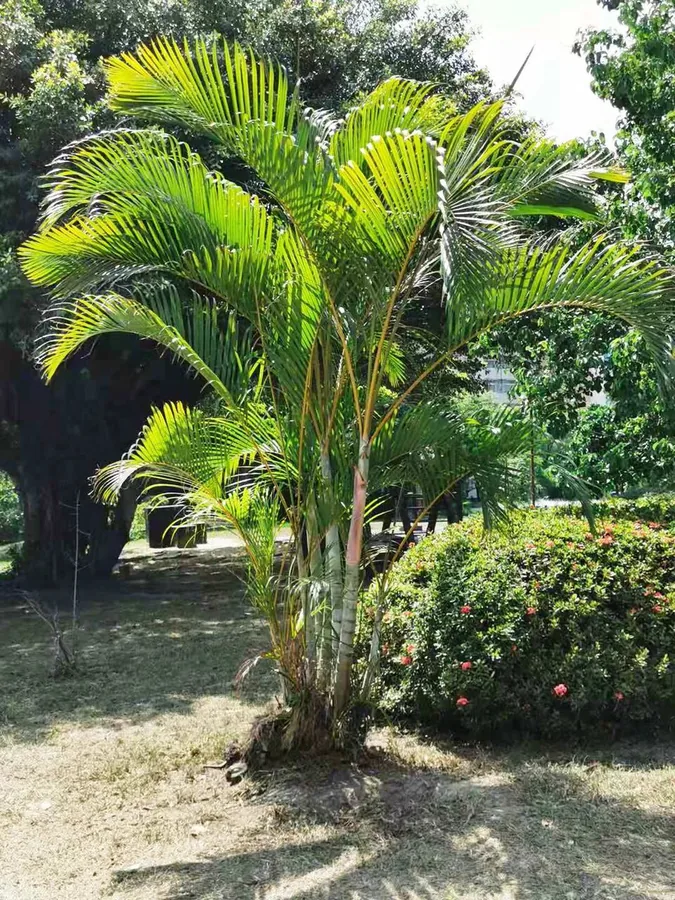
The areca palm has become one of the most popular indoor palms, and it's easy to see why. Slender yellow-green canes rise in a clump and arch out into soft, feathery fronds that soften any corner of a room. It comes from Madagascar, where it grows far taller outdoors, but indoors it settles into a manageable floor plant.
Grow it for the look, not for flowers. Indoors it rarely blooms, and the draw is the full, bushy crown of greenery rather than the yellow summer panicles it produces in the wild. The canes lend it a bamboo-like shape that reads tropical without taking over the room.
It earns its keep as a low-fuss plant, but it does have opinions. Steady moisture, humid air, and clean water keep the fronds green, while hard tap water and a dry room show up fast as brown, crispy tips. Get those few things right and the rest takes care of itself.
Care
The short version: bright indirect light, soil kept evenly moist but never soggy, humidity above 50%, and distilled water or rainwater to spare the leaf tips. Feed lightly in spring and summer and it stays full and green.
Light
Give the areca bright, indirect light, the kind a few feet back from a sunny window. It tolerates medium light and a bit of shade, but a dim corner thins out the fronds, while harsh direct sun scorches them.
Water
Keep the soil evenly moist but never waterlogged. Water well once the surface dries, then tip out whatever collects in the saucer so the roots never sit in standing water. Use distilled water or rainwater, since fluoride and salts in tap water burn the leaf tips.
Soil
Plant it in a rich, porous potting mix with plenty of organic matter that holds moisture yet drains freely. A pH between 6.0 and 7.0 suits it, and good drainage is what keeps the roots healthy.
Temperature
The areca is happiest between 61°F and 84°F (16°C to 29°C) and dislikes the cold. Keep it away from chilly drafts and frosty windows in winter, since it has no tolerance for a real chill.
Humidity
This is a humidity lover, so aim to keep the air above 50%. Dry indoor air browns the tips and invites spider mites, which makes a humidifier or a regular misting worth the trouble.
Feeding
Feed only during the spring and summer growing season, two or three times across those months. Use a slow-release palm fertilizer with micronutrients like iron and manganese, and go light, because too much fertilizer scorches the leaf tips.
Pruning
Pruning is minimal. Cut away only the dead, brown, or damaged fronds and leave every healthy green leaf in place. If you want a cleaner, more single-stemmed look, you can remove some of the basal suckers.
Repotting
Repot only every 2 to 3 years, in spring or early summer, and only once the roots have filled the pot. Arecas do best slightly rootbound, so resist the urge to move yours into a much larger container too soon.
Size & spacing
Indoors the areca reaches about 6 to 10 feet (1.8 to 3 m) tall and spreads 3 to 6 feet (90 to 180 cm) wide. Give it room for the fronds to arch out without crowding a wall or walkway.
Troubleshooting
The areca tells you what's wrong through its fronds. Brown tips usually point to the water or the air, while a dull, speckled look means pests have moved in. Match what you see below and deal with it before it spreads up the plant.
Fine webbing and a speckled, bronzed look across the fronds
Warm, dry indoor air invites spider mites, and arecas are a favorite target. Look on the undersides for tiny moving specks and faint webbing, or tap a frond over white paper and watch for dots that crawl. Rinse the whole plant hard with water, undersides included, raise the humidity to make the room less welcoming, and repeat the treatment to break the cycle.
Fix:
- Spray sturdy plants forcefully with water, including leaf undersides, to dislodge mites and break webbing
- Raise humidity to discourage mites
- Repeat treatments to break the life cycle; use insecticidal soap if needed
Brown, crisp tips creeping in along the leaf edges
Brown tips on an areca almost always come down to the water, not a disease. The plant is sensitive to fluoride and soluble salts in tap water, and a build-up of fertilizer or dry indoor air will scorch the edges the same way. Switch to distilled water or rainwater, flush the pot now and then to wash out the salts, and trim off only the dead brown tissue.
Fix:
- Switch to distilled water or rainwater, or let tap water stand 24 hours before use
- Periodically drench the pot to leach salts and discard the drainage
- Remove salt crusts from the soil surface and add fresh soil
- Reduce fertilizer and raise humidity above 50 percent
- Trim only the dead brown tissue
Toxicity
Good news for a household with pets or small children: the areca palm is non-toxic straight down the line. The ASPCA lists it as safe for cats, dogs, and horses, and there's no toxic compound to worry about for the other animals either. A chewed frond might upset a stomach the way any plant can, but it won't poison anyone.
Safe for
People · Cats · Dogs · Horses · Rabbits · Livestock · Birds
Cats None
Safe around cats. The ASPCA lists the areca palm as non-toxic, so a nibbled frond is no cause for alarm.
Dogs None
No toxicity for dogs. A curious chew won't poison them, though a big mouthful of any houseplant can still upset a stomach for a day.
Horses None
The ASPCA clears the areca palm for horses as well, so there's nothing toxic in the fronds.
Rabbits None
Nothing in the plant is poisonous to rabbits. It isn't a food crop, so treat any browsing as harmless rather than a meal.
Livestock None
Grazing animals face no toxic compounds here. As an indoor tropical palm it rarely crosses their path anyway.
Birds None
Safe to keep around pet birds, with no toxic parts to worry about if they perch on or peck at the fronds.
People None
Harmless to people, including children. It's a foliage plant rather than something to eat, but a stray leaf in a small mouth poses no poisoning risk.
Varieties
The areca palm sold as a houseplant is the straight species, so there isn't a lineup of named cultivars to choose between.
Dypsis lutescens (species)
This is the clumping golden cane palm sold as a houseplant, named for the yellow leaf stalks and arching feathery fronds that rise from a cluster of bamboo-like canes.
How to propagate
You can make more areca palms by splitting an established clump or by sowing fresh seed, though neither route is quick and both ask for a little patience.
DivisionModerate
Spring or early summer during active growth · Several weeks to a few months for divided clumps to root and resume growth
Because the areca grows as a multi-stemmed clump, you can split it in spring or early summer by separating basal suckers or sections, each carrying its own roots. The roots are brittle, so ease them apart with care. Expect the divisions to take anywhere from a few weeks to a few months to root in and start growing again.
SeedModerate
Sow fresh seed in a warm, humid environment · Germination and establishment are slow, often taking several months
Growing from seed works but tests your patience. Sow fresh seed somewhere warm and humid, since steady warmth and moisture are what coax it to sprout. Even then, germination and establishment drag on, often for several months before you have a usable plant.
Myths
Areca palms need soggy, constantly wet soil because they love moisture.
They do want soil kept evenly moist, but waterlogged roots are a different thing entirely. Any water that drains into the saucer should be poured off so the roots never sit in it. Constant wetness invites root rot, which kills far more arecas than dryness does.
Any tap water is fine for an areca palm.
This palm reacts badly to the fluoride and soluble salts in ordinary tap water, which show up as scorched, browned leaf tips. Distilled water, rainwater, or tap water left to stand for 24 hours is the safer choice.