Houseplant · Arecaceae
Bamboo Palm
Chamaedorea seifrizii
Give it bright indirect light and clean water, and the bamboo palm fills a corner with soft, feathery green.
Medium indirect
61–81°F · 16–27°C
USDA 10–11
3–10 ft · 0.9–3 m
Overview
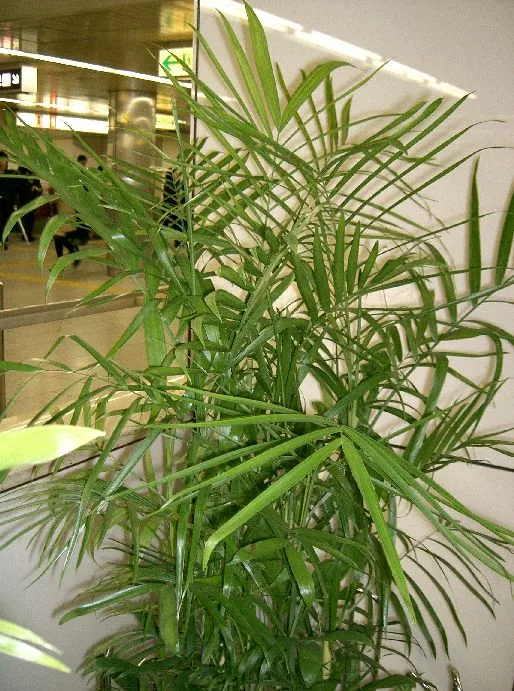
The bamboo palm earns its name from its slim, jointed canes, which look like bamboo but belong to the palm family. It's a clumping palm from the forests of Mexico and Central America, where it grows in the dappled shade beneath taller trees. That shady upbringing is what makes it such a forgiving houseplant, happy in the medium light most rooms can offer.
What people love about it is the easy, tropical look. Slender stems rise in a cluster and carry arching fronds of narrow leaflets, building a soft screen of green that softens a bare corner or fills an empty fireplace in summer. It grows slowly and stays manageable indoors, reaching anywhere from 3 to 10 feet (91 cm to 3 m) over years rather than seasons.
It asks for little beyond steady moisture, decent humidity, and water that isn't loaded with fluoride or salts. Get those right and the worst you'll usually face is a few brown tips. It's a genuinely beginner-friendly palm, and one of the reasons it shows up on so many lists of low-fuss indoor plants.
Care
The short version: medium, indirect light and a spot out of direct afternoon sun. Keep the mix lightly moist but never soggy, water with distilled water or rainwater to spare the leaf tips, and feed it a few times through the warm months.
Light
Give it medium, indirect light, the kind a few feet back from a bright window. It puts up with low light and partial shade better than most palms, but keep it out of direct afternoon sun, which scorches the fronds.
Water
Keep the mix lightly moist but never waterlogged, watering well once the soil surface dries and tipping out anything that pools in the saucer. Standing water leads to root and stem rot. The tips are sensitive to fluoride and salts, so reach for distilled water or rainwater where you can.
Soil
Plant it in a well-drained potting mix that holds a little moisture without staying soggy. Good drainage is the main thing, since the roots rot in heavy, wet soil.
Temperature
It's happiest in everyday room warmth, roughly 61°F to 81°F (16°C to 27°C). Keep it above the low 60s in winter and away from cold drafts and chilly windows.
Humidity
Average household humidity suits it, though it leans toward moderate to high and will thank you for more. Dry winter air is what brings on brown tips, so group it with other plants or set it away from heat vents.
Feeding
Feed during the warm growing season with a slow-release palm fertilizer, the kind that releases nitrogen, potassium, and magnesium gradually. Two or three light feedings across spring and summer are plenty, and going heavier only risks burning the tips.
Pruning
Trim away dead or damaged fronds and any spent canes right at the base. Each stem grows from a single central tip, so never cut the crown or growing point, or you kill that whole cane.
Repotting
Repot every 2 to 3 years, or sooner if roots circle the pot or push out the drainage holes and the soil dries out fast. Move it up just one pot size, since this palm doesn't mind being a little snug.
Size & spacing
Indoors it climbs slowly to somewhere between 3 and 10 feet (91 cm to 3 m) tall, with a clump spreading 3 to 6 feet (91 to 183 cm) across. Give it elbow room so air can move through the canes and the fronds aren't crushed against a wall.
Troubleshooting
A healthy bamboo palm mostly takes care of itself, so trouble tends to show up on the leaves first. Brown tips and faded, speckled fronds are the two you'll meet most often, and both are easy to read once you know what to look for. Match the symptom below, then fix the cause rather than just trimming the damage.
Speckled, dusty-looking fronds with fine webbing
Hot, dry indoor air invites spider mites, which leave the foliage stippled and faintly webbed. Check the undersides for tiny moving specks, or tap a frond over white paper to see them fall. Rinse the plant hard with water, raise the humidity around it, and treat with insecticidal soap or horticultural oil until the mites are gone.
Fix:
- Rinse foliage with a strong stream of water, including undersides
- Raise humidity around the plant
- Treat with insecticidal soap or horticultural oil, repeating as directed
Brown, crispy tips and edges on the fronds
This is almost always salt and fluoride buildup from tap water, not a watering mistake. The browning starts at the tips of older fronds while the center stays green, and you'll often spot a white crust on the soil or pot rim. Flush the pot well with distilled water or rainwater, switch to that for everyday watering, and ease off the fertilizer.
Fix:
- Flush the pot thoroughly with distilled water or rainwater to leach salts
- Switch to distilled water or rainwater for routine watering
- Raise local humidity and avoid placing near heat vents
- Reduce fertilizer rate and frequency
Toxicity
Good news for a home with pets or small children: the bamboo palm is safe. The ASPCA lists it as non-toxic to cats, dogs, and horses, and there's nothing poisonous in the plant for other animals either. A stray chewed frond might cause a little stomach upset from the fiber, but it won't poison anyone.
Safe for
People · Cats · Dogs · Horses · Rabbits · Livestock · Birds
Cats None
The ASPCA lists this palm as non-toxic to cats, so a curious nibble won't poison them. A cat that gorges on the fibrous fronds might vomit from the roughage alone, but the plant itself carries nothing harmful.
Dogs None
Dogs are in the clear here too, with the same non-toxic listing covering them. The worst a chewed frond is likely to cause is a passing bout of mild stomach upset from the fiber.
Horses None
No toxic compounds put horses at risk, and the plant is listed as safe for them. The leaves are too small to make this much of a temptation in any case.
Rabbits None
There's nothing poisonous in the fronds for a rabbit. The tough, stringy leaves aren't a natural food, so most rabbits leave them be rather than make a meal of them.
Livestock None
Grazing animals face no poisoning from this palm. As a tropical houseplant it rarely crosses their path, and the foliage holds no toxins if a stray leaf is eaten.
Birds None
Pet birds can perch in the fronds without worry, since nothing in the plant is toxic to them. A nibbled leaf tip won't do any harm.
People None
The plant poses no poisoning risk to children or adults. It isn't grown to be eaten, but a leaf that finds its way into a small mouth is harmless.
How to propagate
Bamboo palm can be multiplied by splitting an established clump or by sowing fresh seed, though neither is fast. Both ask for patience more than skill.
DivisionModerate
Spring to early summer during active growth · Several weeks to a few months to root and resume growth
Because it grows as a clump, you can split an established plant by separating basal suckers that already carry their own roots. Do this in spring or early summer while the palm is actively growing, and give each division several weeks to a few months to settle in and resume growth.
SeedModerate
When fresh ripe seed is available; warm conditions · Germination is slow and may take several weeks to months
Growing from seed works when fresh ripe seed is on hand. Sow it in warm, moist, well-drained media and be patient, since germination is slow and erratic and can take several weeks to months before sprouts appear.
Myths
The houseplant sold as bamboo palm is a kind of bamboo.
It isn't bamboo at all. The cane-like, jointed stems just look the part, but this is a clumping palm in the family Arecaceae. True bamboos belong to the grass family and are unrelated.
Every plant called bamboo palm is the same species.
The name gets pinned on several different palms. Chamaedorea seifrizii, the parlor palm Chamaedorea elegans, and the areca palm Dypsis lutescens all answer to it, yet they are distinct plants with different growth habits.