
Introduction
The bee balm plant earns its spot in your garden ten times over. I've grown Monarda in 3 different climate zones over the past decade. It brings hummingbirds, native bees, and butterflies into beds that used to sit empty. Most guides treat bee balm as one plant. But the genus holds 17 to 24 native species with different bloom times, sizes, and pollinator needs.
What makes this native wildflower stand out is the data behind it. The Mt. Cuba Center put 40 Monarda cultivars through a tough 3 year trial. Top performers scored 4.5 out of 5 after weekly checks. Those numbers separate the varieties that thrive from the ones that fall apart by August. I've seen both sides, and the gap is huge.
Think of bee balm as the swiss army knife of the pollinator garden. It feeds bees and hummingbirds. It brews into a fragrant herbal tea. It fills borders with color from spring through fall. No other perennial flowers in my garden pull that kind of weight season after season.
This guide covers trial tested varieties and species comparisons. You'll find care tips, propagation methods, and the real science behind bee balm's health benefits. By the end you'll know which Monarda fits your yard and how to grow it well.
7 Best Bee Balm Varieties
With 40 to 50 bee balm cultivars on the market, picking the right one can feel impossible. I've grown over a dozen bee balm varieties and watched some take off while others became mildew magnets by midsummer. Catalog photos won't tell you the full story.
These 7 picks combine real trial data from the Mt. Cuba Center and UGA research with my own growing notes. Each one earned its spot through proven garden performance, not just pretty flowers. I paired every variety with its best use so you can match the right mildew-resistant bee balm to your space.
Claire Grace Bee Balm
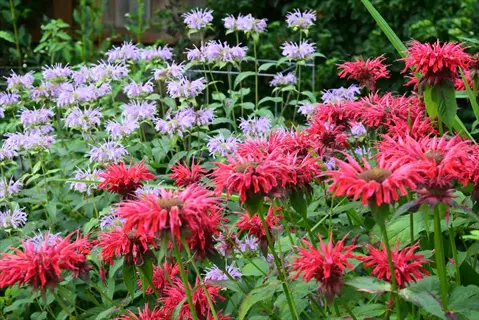
- Trial Rating: Scored 4.5 out of 5 in the Mt. Cuba Center three-year trial as the top-rated Monarda cultivar for the mid-Atlantic region.
- Species: A Monarda fistulosa cultivar with lavender-purple blooms that performs well in both montane and piedmont growing conditions according to UGA research.
- Disease Resistance: Demonstrates better powdery mildew tolerance than the straight Monarda fistulosa species, making it a reliable low-maintenance choice.
- Size: Grows 3 to 4 feet (90 to 120 centimeters) tall with an upright habit that works well at the back of a perennial border.
- Pollinator Value: Attracts bumble bees, butterflies, and hummingbirds with abundant tubular flowers that bloom from midsummer into early fall.
- Best For: Mixed borders and naturalized meadow plantings where you want strong disease resistance without regular fungicide applications.
Jacob Cline Bee Balm
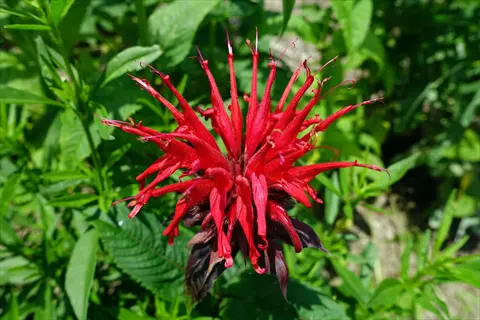
- Trial Rating: Earned a solid 4.0 out of 5 at the Mt. Cuba Center and was recognized as the top flowering performer in the UGA HortScience study.
- Flowers: Produces large, vibrant red flower heads up to 4 inches (10 centimeters) across that are among the showiest of all Monarda cultivars.
- Size: Reaches 3 to 5 feet (90 to 150 centimeters) tall, making it one of the taller selections and ideal as a background plant.
- Hummingbird Magnet: The deep red tubular flowers are perfectly shaped for ruby-throated hummingbirds, which are its primary pollinators.
- Disease Notes: Shows moderate powdery mildew susceptibility, so plant with at least 18 inches (45 centimeters) of spacing for good airflow.
- Best For: Hummingbird gardens and cottage-style borders where dramatic red flower color is the top priority.
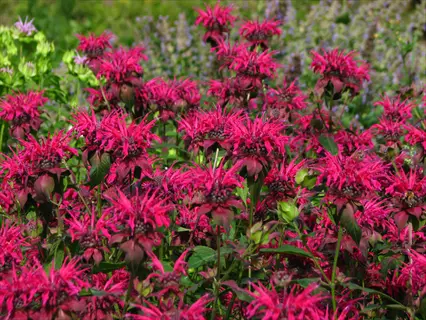
Raspberry Wine Bee Balm
- Trial Rating: Scored 4.0 out of 5 at the Mt. Cuba Center trial and showed good powdery mildew tolerance in the UGA evaluation.
- Flowers: Features a unique deep raspberry-red color that stands apart from standard red or purple bee balm selections.
- Size: Grows 3 to 4 feet (90 to 120 centimeters) tall with a sturdy, upright habit that resists flopping in wind and rain.
- Disease Resistance: Far more mildew-tolerant than many older red-flowered cultivars, reducing the need for late-season cleanup.
- Bloom Period: Flowers from July through August with consistent color that does not fade in intense sunlight or heat.
- Best For: Gardeners who want rich red tones combined with above-average disease resistance in a single cultivar.
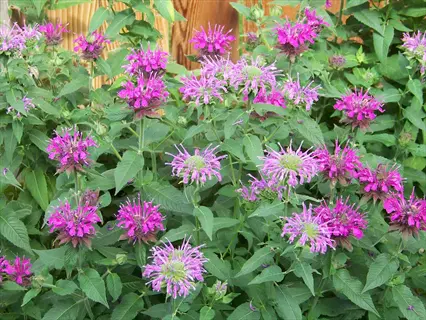
Dark Ponticum Bee Balm
- Trial Rating: Tied for the top score of 4.5 out of 5 at the Mt. Cuba Center alongside Claire Grace as one of the best-performing Monarda cultivars.
- Flowers: Produces deep purple flower heads with a compact, bold appearance that adds a dramatic accent to perennial borders.
- Size: Reaches 2 to 3 feet (60 to 90 centimeters) tall with a tidy growth habit that fits well in smaller garden spaces.
- Foliage: Dark-tinted stems and foliage complement the purple flowers, creating visual interest even before and after the bloom period.
- Disease Resistance: Strong resistance to powdery mildew earned it one of the highest overall scores in the three-year evaluation.
- Best For: Front to mid-border plantings and formal garden designs where a compact, disease-resistant purple variety is needed.
Pardon My Cerise Bee Balm
- Size: A true dwarf bee balm reaching just 10 to 18 inches (25 to 45 centimeters) tall, perfect for the front of borders and container gardens.
- Flowers: Bright cerise-pink blooms appear in profusion on compact mounded plants from midsummer through late summer.
- Container Friendly: Thrives in pots at least 12 inches (30 centimeters) in diameter, making it one of the best bee balm choices for patios and balconies.
- Disease Resistance: Bred specifically for improved mildew resistance in a smaller package, reducing maintenance compared to taller selections.
- Pollinator Value: Despite its small stature, the dense flower clusters still attract butterflies, hummingbirds, and native bees in large numbers.
- Best For: Container gardening, small-space gardens, edging paths, and front-of-border positions where taller varieties would overwhelm.
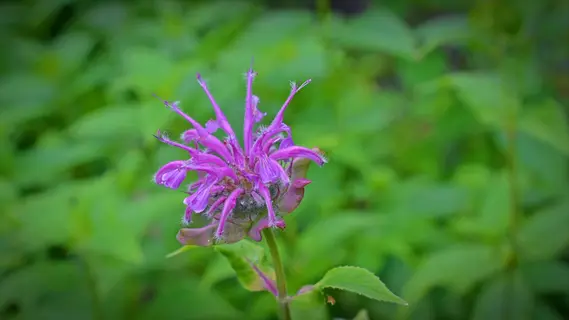
Violet Queen Bee Balm
- Trial Rating: Scored 4.4 out of 5 at the Mt. Cuba Center, placing it among the top five performers out of 40 cultivars evaluated.
- Flowers: Violet-purple blooms create a cooler color palette that pairs well with yellow coneflowers and white Shasta daisies.
- Size: Grows 2 to 3 feet (60 to 90 centimeters) tall with a full, bushy habit that fills in garden gaps fast.
- Adaptability: Performs well across a wide range of soil types and moisture levels, showing tolerance for both clay and loamy conditions.
- Bloom Duration: Flowers over a 3 to 4 week period in midsummer with potential for rebloom if you remove spent heads right away.
- Best For: Mixed perennial borders and cottage gardens where a reliable violet-purple accent with strong trial-proven performance is needed.
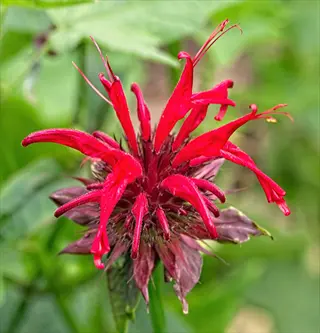
Grand Marshall Bee Balm
- Trial Rating: Earned 4.2 out of 5 at the Mt. Cuba Center, demonstrating consistent performance over the full three-year evaluation period.
- Flowers: Rich fuchsia-purple flower heads provide bold color from midsummer into early fall when many other perennials are winding down.
- Size: Reaches 18 to 24 inches (45 to 60 centimeters) tall, placing it in the compact category without being as small as true dwarf types.
- Disease Resistance: Above-average resistance to powdery mildew helps maintain clean foliage appearance through the entire growing season.
- Spreading Habit: Moderate spreading rate makes it easier to control than more aggressive cultivars while still filling in border gaps.
- Best For: Mid-border positions in pollinator gardens and perennial beds where a compact, well-rated selection with strong color is desired.
Claire Grace and Dark Ponticum tied for the top score in the Mt. Cuba trial, which tells you a lot about what works in real garden conditions. If you want the showiest red blooms, go with Jacob Cline. For small spaces or pots, Pardon My Cerise is the clear winner among dwarf bee balm cultivars.
Bee Balm Species Compared
Picking the right bee balm species matters more than picking the right cultivar. Clemson Extension makes this point clear. Your climate and soil type should drive your species choice first. I planted Monarda didyma in a hot, dry bed once. It struggled all summer while Monarda fistulosa would have thrived there.
The 5 major bee balm species in the eastern U.S. each fill a different niche. Wild bergamot handles drought and heat. Spotted bee balm blooms into mid October on sandy ground. Monarda bradburiana starts the show as early as late April. Plant all 5 and you get a continuous bloom window that runs almost 6 months, based on UGA research data.
Monarda punctata is the only eastern species that honey bees can reach. Its shorter, wider flowers make access easy for them. If you garden in a hot zone with sandy soil, spotted bee balm is your best bet. Monarda didyma works best in cool, wet spots and gives you bold scarlet blooms all summer long.
Growing Conditions and Care
Getting your bee balm care right starts with one rule. Give it full sun for at least 6 hours a day. I've tested partial shade spots and the plants bloom less and catch mildew faster. In hot southern zones you can get away with light afternoon shade, but full sun is still the best choice for strong growth.
Bee balm does best in moist well-drained soil but it handles more than most people think. NC State Extension lists it as tolerant of clay soil, wet soil, and even black walnut toxicity. That makes it one of the more forgiving perennials you can grow. I've had healthy clumps in both sandy loam and dense red clay with no problems.
Proper bee balm spacing is your best tool for powdery mildew prevention. Set plants 18 to 24 inches apart so air can move through the foliage. In my garden the clumps I spaced at 24 inches stayed cleaner than the ones I crowded at 12. Illinois Extension notes that dry soil stress makes mildew worse, so keep the ground moist during summer heat.
Your bee balm growing conditions will shift based on where you live. Northern gardeners should water about 1 inch per week and skip the shade. Southern growers may need to water twice a week in July and August when temps climb. Mulch 2 to 3 inches deep around the base to hold moisture and protect roots in both climates.
A simple seasonal routine keeps bee balm at its best. Divide clumps every 2 to 3 years in early spring when new shoots appear. Water well through summer and deadhead spent blooms to push new flowers. In fall, cut stems down to 12 to 24 inches and leave them standing. Those hollow stems give native bees a place to nest over winter.
Planting and Propagation
Bee balm propagation gives you 3 solid options. You can grow bee balm from seed, divide mature clumps, or take rhizome cuttings. I've used all 3 methods and each one works well when you time it right. Knowing when to plant bee balm makes a bigger difference than which method you choose.
Most guides say spring is the best time to plant. But Clemson Extension says fall is the better choice for perennial bee balm. Fall planting lets roots settle in before winter dormancy. My fall planted clumps have always produced stronger first year growth and earlier blooms than the ones I set out in spring.
Growing from Seed
- Stratification: Seeds need 2 to 3 weeks of cool moist seed stratification at 33 to 41°F (1 to 5°C) before sowing to break dormancy.
- Germination Time: Expect seedlings to emerge in 22 to 30 days when soil or seed starting mix stays between 60 and 70°F (15 to 21°C).
- Sowing Depth: Press seeds onto the surface of moist seed starting mix without covering them, as bee balm from seed needs light to sprout.
- Seed Viability: Stored bee balm seeds stay viable for about 2 years when you keep them in a cool, dry place away from direct sunlight.
Division of Established Clumps
- Timing: Run your bee balm division every 2 to 3 years in early spring when new shoots are 2 to 4 inches (5 to 10 centimeters) tall for the fastest recovery.
- Method: Dig up the entire clump, toss the woody center portion, and replant the strong outer sections with healthy rhizomes and new growth.
- Spacing: Set divisions 18 to 24 inches (45 to 60 centimeters) apart to allow good air flow and reduce powdery mildew pressure.
- Aftercare: Water divisions deep right after replanting and keep the soil moist for the first 2 to 3 weeks until roots take hold.
Rhizome and Stem Cuttings
- Rhizome Cuttings: Cut 3 to 4 inch (7 to 10 centimeter) sections of healthy rhizome with at least one visible growth node and plant them 1 inch (2.5 centimeters) deep.
- Stem Cuttings: Take 4 to 6 inch (10 to 15 centimeter) softwood cuttings from healthy new growth in late spring, strip lower leaves, and root in moist perlite.
- Rooting Time: Both rhizome cuttings and stem cuttings grow enough roots for transplanting within 3 to 4 weeks under warm, humid conditions.
- Success Rate: Rhizome divisions give you the highest success rate and produce flowering plants in the first growing season.
Fall Planting Strategy
- Best Timing: Clemson Extension says fall is the best planting season for perennial bee balm, allowing roots to settle before winter dormancy.
- Soil Preparation: Mix compost into planting holes to boost drainage and soil structure in heavy clay or packed garden beds.
- Mulching: Apply 2 to 3 inches (5 to 7.5 centimeters) of organic mulch around new plantings to insulate roots and hold soil moisture through winter.
- First Spring: Fall planted bee balm produces stronger first year growth and earlier blooms compared to specimens planted in spring.
Pollinator and Wildlife Value
Stand next to a blooming bee balm patch for 5 minutes and you'll see why it's one of the top hummingbird plants around. I count new visitors every time I check mine. Bumble bees push into the long tubes. Fritillary butterflies land on the outer petals. Each visitor works the bloom in a different way based on body size and tongue length.
Your pollinator garden gets a major boost from bee balm's unique flower shape. The long, narrow tubes hold nectar at the base, so only visitors with long tongues or beaks can reach it. Bumble bees get creative and chew holes through the petals to steal nectar. Sweat bees and other small insects then use those same holes for an easy meal.
NC State Extension data shows the real bee balm wildlife value runs deep. Monarda feeds 3 specialized native bee species that can't survive without it. Two of these are Dufourea monardae and Perdita gerhardi. Bee balm also hosts larvae for 3 moths and butterflies. A native plant garden with bee balm feeds insects no other flower can replace.
Here's a fact most people miss about bee balm pollinators. Honey bees can't reach the nectar in most Monarda flowers. The tubes are too long and narrow for their shorter tongues. Clemson specialist Benjamin Powell found that only spotted bee balm lets honey bees feed. The name "bee balm" is a bit off since it helps native bees far more.
I've seen the difference in my own butterfly garden between native and hybrid plants. Researchers worry that hybrid cultivars may not feed pollinators as well as native species. For top wildlife value, stick with wild bergamot or scarlet bee balm. Save the fancy hybrids for beds where looks matter most.
Uses and Health Benefits
Bee balm does far more than look pretty in your garden. The Oswego people near present day Oswego, New York taught settlers to brew bee balm tea from fresh leaves back in the 1700s. That tradition still holds up today. I dry leaves from my own plants every August and brew Oswego tea all winter long.
When I first read the research, I was shocked by how well the science lines up. A 2021 study tested wild bergamot extract in a peer reviewed lab setting. The results showed real medicinal benefits you can measure. If you grow bee balm edible varieties, you have a plant with proven bee balm herbal remedies value right in your yard.
Herbal Tea and Culinary Uses
- Oswego Tea: Fresh or dried bee balm leaves brew into a fragrant herbal tea with a minty, citrus flavor that people have enjoyed since the 1700s in North America.
- Edible Flowers: The colorful flower petals add flavor and visual interest to salads, soups, jellies, and fruit dishes without any known toxicity concerns.
- Flavor Profile: Monarda didyma offers a sweeter, more bergamot taste while Monarda fistulosa has a stronger oregano and thyme character suited for savory cooking.
- Drying Method: Harvest leaves just before flowers open, bundle stems, and hang upside down in a warm, dry, dark space for 1 to 2 weeks for the best flavor.
Antioxidant and Anti-Inflammatory Research
- Phenolic Content: Monarda fistulosa extract contains 120.64 milligrams of gallic acid equivalent per gram, placing it among the richest sources in the mint family.
- Key Compound: Rosmarinic acid at 91.23 milligrams per gram is the main polyphenol, a compound also valued in rosemary and sage for its protective properties.
- Anti-Inflammatory Effect: At a 200 milligram per kilogram dose, the extract reduced swelling by 31.91% in lab testing, close to the results of standard drugs.
- Pain Relief: The same dose showed 51.24% pain inhibition in testing, showing strong potential for bee balm medicinal uses backed by real data.
Essential Oils and Aromatics
- Active Compounds: Bee balm essential oils from wild bergamot contain thymol and p-cymene, 2 compounds with proven antiseptic and germ fighting properties.
- Mosquito Repellent: Crushing fresh bee balm leaves and rubbing them on skin releases aromatic oils that many gardeners report helps deter mosquitoes during outdoor work.
- Potpourri and Sachets: Dried bee balm flowers and leaves hold their fragrance for months in sachets, adding a natural minty scent to closets and drawers.
- Cut Flowers: Fresh bee balm stems last 7 to 10 days in a vase with clean water, making them a useful and fragrant addition to summer flower arrangements.
Traditional and Ethnobotanical Uses
- Native American Heritage: The Oswego people near present day Oswego, New York taught European settlers to use bee balm leaves for herbal tea in the colonial period.
- Cherokee Medicine: Cherokee communities documented over 12 different bee balm herbal remedies including poultices, infusions, and fever reducers.
- Name Origin: The common name bee balm comes from the old practice of applying plant resin to soothe bee stings, as recorded by the USDA Forest Service.
- Modern Herbalism: Interest in bee balm as a medicinal herb is growing alongside the broader trend toward edible landscaping and backyard herbal gardens.
5 Common Myths
Bee balm attracts honey bees better than any other flower in a pollinator garden because of its common name.
Most bee balm species have flowers too long and narrow for honey bee access, with only Monarda punctata being accessible to western honey bees due to its shorter, wider flower structure.
All bee balm varieties are equally vulnerable to powdery mildew and there is nothing you can do about it.
University trials show significant variation in mildew resistance among cultivars, with Monarda bradburiana and cultivars like Claire Grace and Raspberry Wine demonstrating strong tolerance in multi-year testing.
You should cut bee balm stems all the way to the ground at the end of every growing season for a cleaner garden.
Leaving 12 to 24 inches (30 to 60 centimeters) of dead hollow stems standing through winter provides essential nesting habitat for native stem-nesting bees.
Bee balm is purely ornamental and has no real medicinal or practical uses beyond looking pretty in the garden.
Peer-reviewed research shows Monarda fistulosa extract contains rosmarinic acid with measurable antioxidant and anti-inflammatory properties, and the plant has centuries of documented use in herbal teas and remedies.
Hybrid bee balm cultivars support pollinators just as well as the native straight species found growing wild.
University extension researchers have raised concerns that hybrid cultivars may not support pollinators as effectively as native parent species, particularly for specialized bees that depend on Monarda.
Conclusion
The bee balm plant gives you more value per square foot than almost any other native perennial in the garden. You now know which Monarda varieties earned top marks in real trials. Claire Grace and Jacob Cline both proved themselves through years of university testing, not just catalog hype. That data gives you confidence when you spend your money.
Getting your bee balm care right comes down to a few basics. Give it full sun, keep the soil moist, and space your plants so air moves through the foliage. Those 3 steps alone will cut your powdery mildew problems in half. Pick the right species for your climate first, then choose a cultivar within that group.
In my experience, Monarda stands out because of how much it does at once. It fills your pollinator garden with color. It brings in hummingbirds and native bees. It brews into tea and contains compounds that real research backs up. Few plants check that many boxes while also being tough enough for beginners.
Your choice to grow bee balm does more than make your yard look great. Three specialized bee species depend on this plant to survive. Every clump you add to your garden supports insects that can't live without Monarda. Start by matching a species to your USDA zone, pick a tried and tested cultivar, and plant it this fall.
External Sources
Frequently Asked Questions
Where is the best place to plant bee balm?
Plant bee balm in a spot that receives at least six hours of direct sunlight daily with moist, well-drained soil and good air circulation to prevent powdery mildew.
Does bee balm come back every year?
Bee balm is a hardy herbaceous perennial that returns each year from its root system across USDA hardiness zones 3 through 9.
Does bee balm like full sun or shade?
Bee balm performs best in full sun with at least six hours of direct light, though it tolerates light afternoon shade in hotter climates.
Is bee balm invasive in the UK?
Bee balm is not classified as invasive in the UK, but it spreads vigorously by underground rhizomes and may need physical barriers to stay contained.
Will bee balm grow in pots?
Bee balm grows well in containers at least 12 inches (30 centimeters) in diameter with drainage holes, regular watering, and a compact or dwarf variety.
Can bee balm survive winter?
Bee balm survives winter reliably in USDA zones 3 through 9, going dormant and regrowing from its rhizomes once soil warms in spring.
What happens if you don't deadhead bee balm?
Skipping deadheading causes bee balm to stop producing new flowers, redirect energy into seed production, and self-sow freely around the garden.
Is bee balm permanent?
Bee balm is a long-lived perennial that can persist indefinitely when divided every two to three years and given proper growing conditions.
Does bee balm need a lot of water?
Bee balm prefers consistently moist soil and needs about 1 inch (2.5 centimeters) of water per week, more during hot spells or in sandy soil.
Does bee balm get bushy?
Bee balm grows into a bushy clump reaching 2 to 4 feet (60 to 120 centimeters) tall and 2 to 3 feet (60 to 90 centimeters) wide within two growing seasons.