Tree · Salicaceae
Weeping Willow
Salix babylonica
Plant it by water with room to spread, and the weeping willow sweeps the ground in green.
Full sun
Every 3–7 days
USDA 6–8
30–50 ft · 9.1–15.2 m
Overview
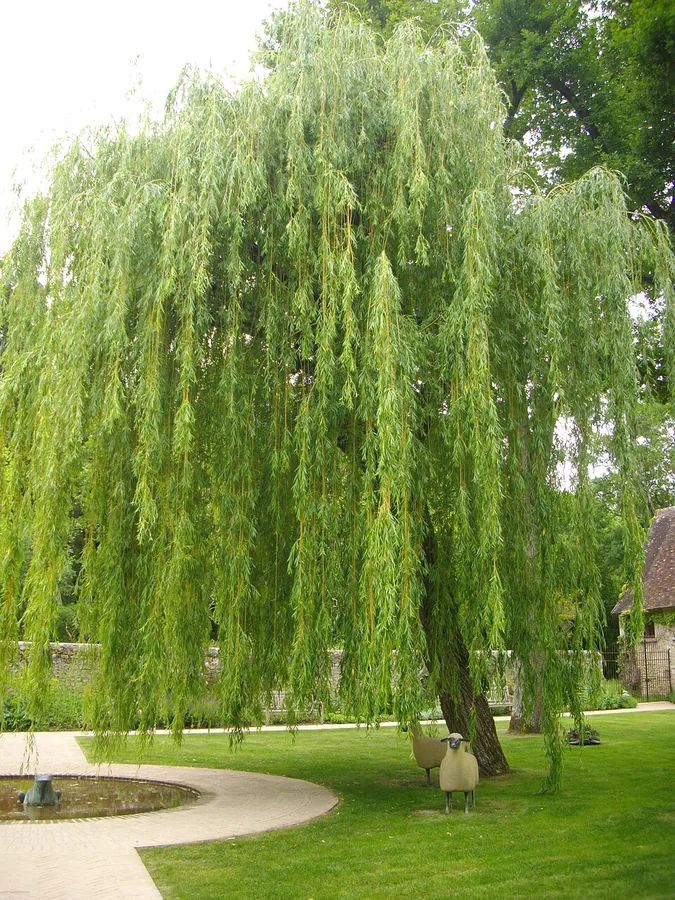
Nothing softens a waterside quite like a weeping willow. The long, slender branches hang almost to the ground and stir with the slightest breeze, which is why the tree turns up beside so many ponds and streams. It belongs to the willow family and earned the name Salix babylonica long before anyone traced its true home to China.
This is a fast-growing tree that gets big in a hurry, reaching 30 to 50 feet (9 to 15 m) in both height and spread within a few short years. That speed comes at a price. The wood is brittle and the roots run shallow and far, chasing every bit of moisture they can find, so the willow needs open ground well away from drains, paving, and foundations.
Give it sun and damp soil and it almost grows itself. The trade is upkeep, since the tree sheds litter, snaps limbs in storms, and lives a fairly short life for something so large. Plant it where it has room and water nearby, and few trees match its graceful, drooping form.
Care
The short version: plant it in full sun and damp ground, ideally near water, give it wide-open space far from pipes and pavement, and prune the brittle wood in late winter to keep storms from breaking it.
Light
Weeping willow does best in full sun but takes partial shade in stride. The more light it gets, the denser and healthier the canopy, and good sun also dries the leaves faster to keep fungal trouble down.
Water
This is a tree that loves wet feet. It thrives beside ponds and streams, shrugs off standing water and the odd flood, and wants soil that stays consistently moist. It can ride out a short dry spell, but without water in a drought it sheds leaves to cope.
Soil
Few trees are this easygoing about soil. Weeping willow adapts to clay, loam, or sand and to acidic or alkaline ground alike, and unlike most trees it puts up with poor drainage and soggy, wet sites.
Temperature
It is fully hardy across a wide range, holding up from -9°F to 100°F (-23°C to 38°C). That toughness suits it to most temperate gardens through both hard winters and hot summers.
Humidity
Ordinary outdoor humidity is all it asks, so there is no figure to track. Air movement counts for more, since a still, crowded canopy is where leaf diseases get their start.
Feeding
A balanced general-purpose tree fertilizer in early spring covers a young tree's needs. Once it is established on a moist site, it rarely needs feeding at all and grows fast on its own.
Pruning
Prune in late winter to early spring before the leaves break, taking out dead, weak, and storm-damaged wood. The wood is brittle and snaps under ice and snow, so cutting back weak crotches now heads off bigger breakage later.
Repotting
This is a landscape tree for the open ground, not a container plant, so there is no repotting to do. If you start with nursery stock, set it out before the roots circle the pot or lift and girdle at the base.
Size & spacing
Plan for a large tree that reaches 30 to 50 feet (9 to 15 m) tall and just as wide. Give it that full 30 to 50 feet (9 to 15 m) of clear space so the roots and weeping crown have room well away from buildings and pipes.
When to plant
Weeping willow goes in the ground in spring or fall, once the soil is workable and the worst cold has passed. The catkins open early, in April and May, arriving with or just ahead of the new leaves to signal the season has turned.
Northern hemisphere
Southern hemisphere
Typical months for a temperate climate: start earlier in warm zones, later where spring frosts linger.
- Plant: Spring or fall, after the ground is workable
- Harvest: Catkins appear in early spring (April to May), before or with the leaves
Hardiness
USDA hardiness zones: 6–8
Temperature: down to -23°C
Troubleshooting
Most willow trouble shows on the leaves, the shoots, or the brittle limbs, and a fast-growing tree this size can hide a problem until it spreads. Learn the early signs below and act while it still helps. Match what you see, then step in.
Woody swellings at the crown and a fading tree
Tumor-like galls at the crown and roots are the mark of crown gall, a bacterium that has no cure once it takes hold. In soggy, airless soil the roots can also rot and turn dark. Dig out and destroy a badly galled tree, fix the drainage where rot is the problem, and never wound the roots or lower trunk while you work.
Fix:
- Remove and destroy severely galled plants
- Avoid wounding roots and crown during cultivation
- Improve drainage where root rot is suspected
Blackened shoots and scabby leaf spots in spring
When willow scab and black canker strike the same tree, the pair is known as willow blight, and the new shoots blacken and die back fast. Cut out and burn the blighted, cankered growth, rake up every fallen leaf, and open the canopy so air moves through. A labeled fungicide helps only in bad years, and only alongside the cleanup.
Fix:
- Prune out and destroy blighted and cankered shoots
- Rake and remove fallen infected leaves
- Improve air circulation and avoid overhead wetting
- Apply a labeled fungicide in severe cases following extension guidance
Sticky, curled leaves or sawdust trails on the bark
Curling leaves and a sticky honeydew film usually mean aphids or scale are feeding, while sawdust and entry holes on the trunk point to borers. Hose off aphids or treat scale with horticultural oil, and keep the tree well watered so borers find it a harder target. Cut out and destroy any branch the borers have already tunneled.
Fix:
- Hose off or treat aphids; horticultural oil for scale
- Maintain vigor with adequate water to limit borer attack
- Remove and destroy borer-infested branches
- Use labeled insecticides only when infestations are severe
Limbs that split and break in storms
Willow wood is brittle by nature, and limbs tear at narrow crotches whenever ice, snow, or wind load them down. Prune out broken and weak branches as soon as you spot them, and shorten any overlong limb so storms have less to grab. Shaping the tree while it is young builds stronger attachments that hold up for years.
Fix:
- Prune out broken and weak limbs promptly
- Reduce overextended branches to lessen storm loading
- Remove deadwood regularly
Toxicity
Good news for pet owners: weeping willow is not a poisonous tree. The leaves and twigs are safe around cats, dogs, horses, rabbits, livestock, and birds, and rabbits even enjoy willow as a browse. The one thing to know is that the bark holds salicylates, the natural source of aspirin, so it shouldn't be eaten in quantity.
Safe for
People · Cats · Dogs · Horses · Rabbits · Livestock · Birds
Cats None
A nibble of willow leaf won't poison a cat. As with any plant, a stomach not used to greenery may turn briefly upset, so steer a determined chewer toward something else.
Dogs None
Weeping willow is safe around dogs, and a curious mouthful of leaves does no real harm. Keep a dog from stripping bark in quantity, since it carries the salicylates behind aspirin.
Horses None
Horses can browse willow without trouble, and the foliage has long been considered harmless to them.
Rabbits Safe
Willow leaves and twigs are a familiar safe browse for rabbits, often offered as a gnawing treat.
Livestock Safe
Cattle, goats, and sheep graze willow without ill effect, and the leaves pose no poisoning risk to a grazing herd.
Birds Safe
Birds nest and forage in willows freely, and neither the foliage nor the catkins threaten them.
People Safe
Weeping willow is not a poisonous tree, so the leaves pose no danger to people. One thing to know: the bark carries salicylates, the natural source of aspirin, so it shouldn't be eaten in any quantity.
No special toxicity handling required; as with any plant, discourage pets from chewing large quantities of foliage or bark.
Varieties
A few named willows stand out for the form or color of their growth. These are the ones worth knowing.
Tortuosa (Corkscrew / Contorted Willow, Dragon's Claw Willow)
Its branches, shoots, and leaves spiral in a twisted corkscrew that shows best on fresh growth and turns dramatic once the tree drops its leaves for winter.
Golden Weeping Willow (Salix × sepulcralis 'Chrysocoma')
A vigorous hybrid whose bright golden-yellow weeping branches light up the bare winter landscape.
Aurea
A selection prized for the warm golden tone of its young stems.
How to propagate
Willows are among the easiest of all trees to multiply, and a single parent can give you many young plants from cuttings or a branch bent to the ground.
Stem cuttingsEasy
Late winter to early spring (hardwood) or summer (softwood) · Several weeks to root; rapid establishment thereafter
Few trees root as willingly as a willow. Take hardwood cuttings in late winter or early spring, or softwood ones in summer, and even a bare length pushed into moist soil will strike roots within a few weeks before taking off fast. This is the standard way to propagate the tree.
LayeringEasy
Spring to summer · One season
Low branches do the work themselves. Pin one against moist ground from spring through summer and it roots where it touches, giving you a new plant in a single season.
Myths
Weeping willow is poisonous to dogs and cats and must be kept from pets.
Willows don't appear on the ASPCA toxic-plant lists, and the closely related purpleosier willow is listed as non-toxic to dogs, cats, and horses. The real hazards are aggressive roots and brittle wood, not poison. The bark does hold salicylates, the natural aspirin compound, so it shouldn't be eaten in quantity.
Weeping willows are tough, long-lived shade trees that fit a small yard.
They grow fast but live short and ask for constant upkeep. The wood is brittle and the roots chase water aggressively, clogging drains and sewers and heaving pavement, which makes the tree a poor match for tight or built-up sites.