Tree · Sciadopityaceae
Japanese Umbrella Pine
Sciadopitys verticillata
A living fossil with soft, whorled needles that asks for little beyond patience and steady moisture.
Full sun
Every 5–10 days
USDA 5–8
25–30 ft · 7.6–9.1 m
Overview
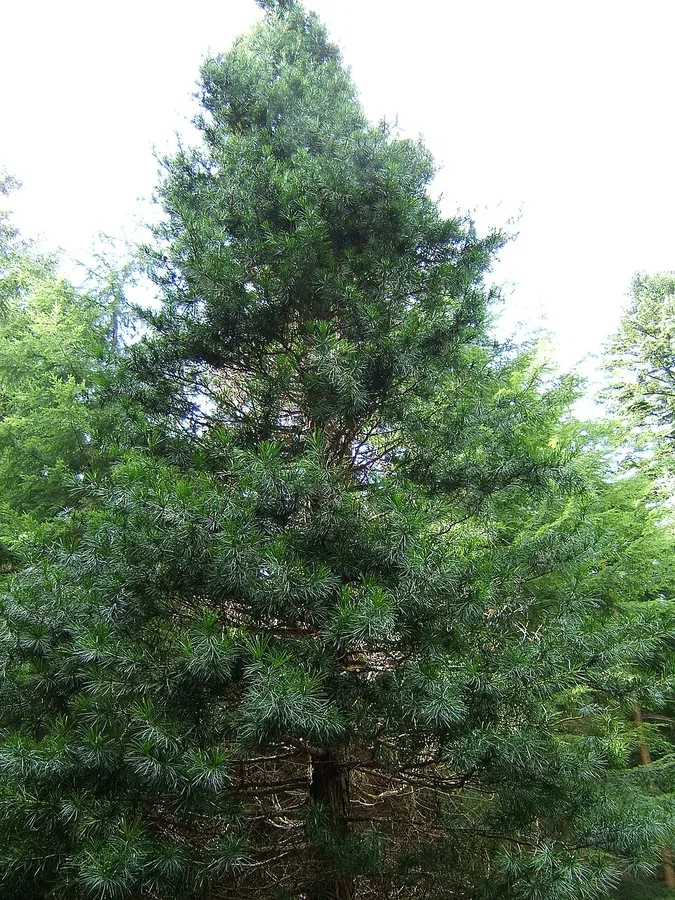
The Japanese umbrella pine is a slow, stately conifer named for the way its glossy needles fan out in whorls like the ribs of a parasol. It is not actually a pine. The tree stands alone as the sole living member of its family, Sciadopityaceae, a lineage that reaches back over 200 million years to the age of the dinosaurs.
In the garden it grows into a dense, narrow pyramid, taking decades to reach 25 to 30 feet (7.5 to 9 m) tall. The needles are thick and soft, a deep lustrous green, and they hold their color year-round. Native to the misty mountain forests of Japan, the tree has long been prized there and turns up in temple gardens as well as collectors' beds across cooler parts of the world.
This is a tree for the unhurried gardener. It costs more than most conifers because it grows so slowly that nurseries wait years to sell it, and it rewards a good site with steady, trouble-free presence. Give it rich, moist soil and shelter from harsh wind, and it settles in for the long haul.
Care
The short version: full sun to part shade, rich and slightly acidic soil kept evenly moist, and a spot sheltered from drying winter wind in zones 5 to 8.
Light
Give it full sun to partial shade. It takes full sun well in cooler climates, but where summers turn hot, a little afternoon shade keeps the needles from scorching and the tree from stressing.
Water
Keep the soil consistently moist, watering every 5 to 10 days and deeply during dry spells. The tree has no tolerance for drought, so don't let it dry out, especially while it is young and still establishing.
Soil
Plant in rich, moist, well-drained loam on the acidic side, with a pH of 5.5 to 6.5. Good drainage is not optional here, since soggy roots are one of the quickest ways to lose the tree.
Temperature
It is hardy across a wide range, from -20°F to 90°F (-29°C to 32°C), which covers zones 5 to 8. Cold itself is rarely the problem; drying winter wind does far more damage than the temperature alone.
Humidity
Ordinary outdoor humidity suits it, so there is no number to chase. It hails from damp mountain forests and resents hot, dry, exposed sites more than it resents the air being moist.
Feeding
A single spring feeding is enough. Use a balanced or acidic slow-release fertilizer made for evergreens, and go light, since this slow grower neither needs nor wants a heavy push.
Pruning
Barely any pruning is needed. Take out dead or damaged branches and keep a single central leader, working in late winter to early spring so the cuts heal as growth resumes.
Repotting
A container-grown tree needs moving up every 2 to 3 years. Watch for roots circling the pot, roots pushing through the drainage holes, or soil that dries out fast, all signs the plant has outgrown its home.
Size & spacing
Plan for a tree that reaches 25 to 30 feet (7.5 to 9 m) tall and spreads 15 to 20 feet (4.6 to 6 m) wide. It grows slowly, but give it the full room from the start so the broad pyramid can fill out.
When to plant
There is no rushing this tree, but timing the planting still matters. Set it out in spring or early fall, while the soil is warm and moisture is reliable, so the slow roots have a full season to settle before extreme heat or hard frost.
Northern hemisphere
Southern hemisphere
Typical months for a temperate climate: start earlier in warm zones, later where spring frosts linger.
- Plant: Spring or early fall
- Harvest: May to June (inconspicuous)
Hardiness
USDA hardiness zones: 5–8
Temperature: down to -29°C
Troubleshooting
This conifer carries no serious pests or diseases, so nearly every problem traces back to the site itself. Most trouble shows in the needles, and reading those signs points you straight to the root cause. Match what you see below, then fix the conditions rather than the symptom.
Yellowing, thinning needles and a tree in slow decline
Most decline traces back to the roots, either sitting in waterlogged, poorly drained soil or baking in a hot, dry, exposed spot. Dig a little and you may find dark, soft roots where drainage has failed. Fix the drainage, mulch to hold even moisture, and give the tree afternoon shade where summers run hot.
Fix:
- Improve drainage and avoid waterlogging
- Provide afternoon shade in hot-summer regions
- Maintain even soil moisture and mulch the root zone
Needles turning brown or bronze over winter
This is winter burn, caused by cold, drying wind that pulls moisture from the needles faster than frozen roots can replace it. The damage shows up on the wind-facing or sun-exposed side, and healthy new growth pushes through in spring. Shelter the tree from harsh wind, soak the ground before it freezes, or plant a color-stable cultivar like Wintergreen.
Fix:
- Shelter the plant from harsh winter winds with a barrier or screen
- Water thoroughly before the ground freezes
- Choose a winter-color-stable cultivar such as Wintergreen
Toxicity
Good news for households with animals: this is a genuinely safe tree. Unlike the toxic yews it can resemble, the Japanese umbrella pine carries no known poisons and appears on no toxic-plant lists. Cats, dogs, horses, and grazing livestock can all share a garden with it without risk.
Safe for
People · Cats · Dogs · Horses · Rabbits · Livestock · Birds
Cats None
Safe around cats. A curious cat that nibbles a needle won't be poisoned, though the stiff, resinous foliage rarely tempts them anyway.
Dogs None
No toxic compounds threaten dogs. A dog that gnaws a fallen branch may get a mild, passing stomach upset from the roughage, nothing more.
Horses Safe
Considered safe for horses, with none of the toxins found in true yews or other dangerous conifers.
Rabbits Safe
Poses no poisoning risk to rabbits. They tend to ignore the tough, leathery needles in favor of softer greens.
Livestock Safe
Grazing cattle, goats, and sheep face no toxic threat from this conifer if they browse the foliage.
Birds Safe
Harmless to birds, which may shelter in the dense, whorled branches without any danger.
People Safe
Not toxic to people. It is grown as an ornamental rather than for eating, so there's no edible part to seek out, but contact and handling carry no risk.
No special handling precautions for toxicity; an outdoor landscape conifer rather than a houseplant.
Varieties
Most umbrella pines sold are the straight species, but a handful of named cultivars are worth seeking out for winter color, a tighter shape, or a size that fits a small garden.
Wintergreen
It holds its dark, glossy green right through winter while ordinary plants bronze in the cold.
Joe Kozey
A narrow, upright column with sturdy branches that shrug off heavy snow loads.
Sternschnuppe
A vigorous selection carrying long, lustrous deep-green needles on a broad pyramidal frame.
Mr. Happy
A compact dwarf that fits a rock garden or a container where the full-size tree never could.
Picola
A slow-growing dwarf that rounds into a tidy globe, made for small spaces.
How to propagate
Multiplying this tree tests your patience more than your skill. Both routes are slow and best left to those happy to wait years, which is part of why it stays a premium plant.
SeedDemanding
Sow when cones ripen; seed is slow and germination can be erratic · Several years; extremely slow early growth
Growing from seed takes real patience. The cones need 18 to 20 months to ripen before you can collect seed, and germination comes in fits and starts. Seedlings then creep along, often reaching only 4 to 5 feet in their first 10 years.
Stem cuttingsDemanding
Take cuttings from semi-hardwood growth · Months to root; slow to develop
Cuttings taken from semi-hardwood growth root slowly, over months rather than weeks. This is still the usual way to propagate named cultivars, since it keeps the parent's exact form that seed would lose.
Myths
The Japanese umbrella pine is a kind of true pine.
It looks like a pine and carries the name, but it isn't one. It is the only living member of its own family, Sciadopityaceae, an ancient line that split off long before the true pines arose. Despite the common name, it has no close relatives among the pines at all.