Houseplant · Cactaceae
Thanksgiving Cactus
Schlumbergera truncata
Give it bright indirect light and cool fall nights, and this forest cactus blooms right on time for the holidays.
Bright indirect
50–86°F · 10–30°C
USDA 10–12
4–20 in · 10–50 cm
Overview
The Thanksgiving cactus is a forest cactus from the coastal mountains of Brazil, where it grows perched on tree branches rather than baking in the desert. That past shapes how you treat it. It wants more water and gentler light than a spiny desert cactus, and it earns its keep with a flush of bright flowers in late fall, usually right around Thanksgiving.
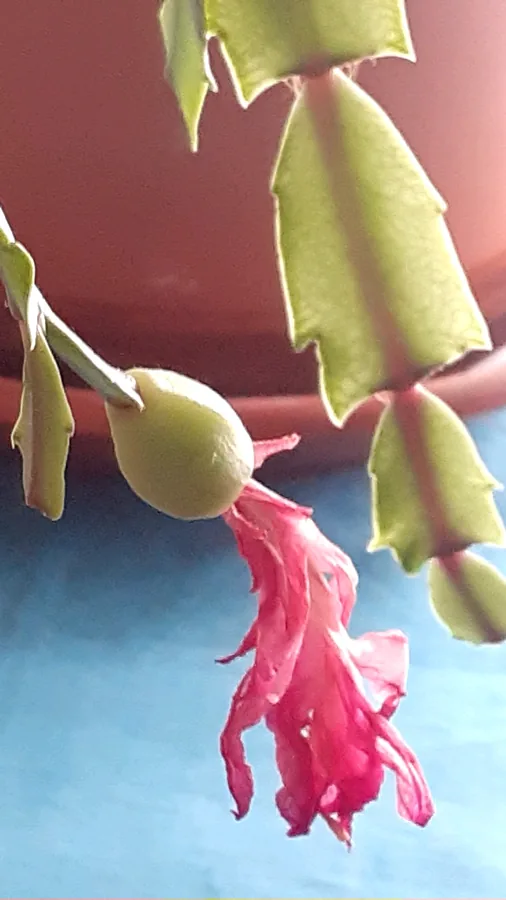
You can pick it out by the pointed, claw-like teeth along the edge of each flat stem segment, which is where the names crab cactus and claw cactus come from. The true Christmas cactus, a close relative, has rounded, scalloped segments instead and blooms about a month later. Most plants sold as Christmas cactus are really this one.
It's an easy plant that lives for decades and flowers better as it ages. The two things it asks for are steady conditions while it's in bud and the cool, short autumn days that set those buds in the first place. Get those right and the rest is forgiving.
Care
The short version: bright indirect light, water once the top of the mix dries, and a stretch of cool nights in fall to trigger the bloom. Keep it slightly potbound and don't move it once buds appear.
Light
Give it bright, indirect light rather than direct sun. It also takes partial shade or a little gentle sun, but harsh midday rays bleach the stems pale or red. An east or north window suits it well.
Water
Let the top half of the mix dry between waterings, then water well. It needs more than a desert cactus but must never sit waterlogged, or the roots rot. Once buds set, keep the mix evenly moist to stop the buds dropping.
Soil
Plant it in a well-drained, organic-rich potting mix, the kind made for epiphytes that drains fast yet holds some moisture. A slightly acidic pH of 5.5 to 6.5 is the sweet spot.
Temperature
It's comfortable across a wide range, roughly 50°F to 86°F (10°C to 30°C). The catch is fall: a stretch of cool nights paired with short days is what triggers the plant to set buds.
Humidity
Average indoor humidity is fine, so there's no number to fuss over. A bit of extra moisture in the air helps newly potted cuttings, but an established plant doesn't ask for it.
Feeding
Feed monthly with a dilute balanced houseplant fertilizer through spring and summer, then stop in late summer to nudge it toward fall flowering. It wants more magnesium than most plants, so an occasional Epsom-salt solution helps.
Pruning
After it finishes blooming, pinch or twist off a few stem segments. That single step branches the plant and fills it out into a fuller, bushier shape over time.
Repotting
Repot only every 3 to 4 years, since this cactus blooms best when it's a little potbound. Move it up when roots push through the drainage holes, water runs straight through, or growth stalls.
Size & spacing
It stays compact, reaching about 4 to 20 inches (10 to 50 cm) in both height and spread. A single plant fills a hanging basket or a windowsill pot without crowding anything around it.
Troubleshooting
Most trouble with this cactus shows up as dropped buds or soft, discolored stems, and both trace back to how you water and where you put it. Match what you see below, then adjust the conditions before the problem spreads.
Soft, mushy stems blackening at the base
This is root rot from soil that stays too wet. Cut away the rotted segments and any brown, soft roots, then repot into a fast-draining epiphytic mix and ease off the watering. The cure is prevention: let the top of the mix dry before you water again.
Fix:
- Reduce watering frequency
- Repot into a fast-draining epiphytic mix
- Remove rotted segments and affected roots
Buds shrivel and drop before they open
Bud drop almost always traces back to a change the plant didn't like. Once buds set, the cactus wants one steady spot, even moisture, and no drafts or temperature swings. Move it to show it off and the buds fall within days, so leave it put until the flowers open.
Fix:
- Keep the plant in one stable spot once buds form
- Keep the mix evenly moist (not soggy) while in bud
- Avoid drafts and temperature swings
Stem segments fading to pale yellow or red
Too much direct sun bleaches the segments, and it shows up worst in a hot, bright window through summer. Move the plant to bright indirect light and shade it from harsh midday sun. The color recovers once the light is right.
Fix:
- Move to bright indirect light
- Shade from hot midday summer sun
Toxicity
Good news for pet owners: the Thanksgiving cactus is non-toxic to cats, dogs, horses, and the rest of the household. The ASPCA clears it outright. The only minor caveat is that a pet eating a lot of the fibrous stems may get a mild, passing stomach upset, the same as with most houseplants.
Safe for
People · Cats · Dogs · Horses · Rabbits · Livestock · Birds
Cats None
Safe for cats, with nothing toxic in the stems or flowers. A cat that nibbles a lot of the fibrous segments might drool or vomit a little, but it passes on its own.
Dogs None
No poison here for dogs. The worst a big mouthful of the chewy stems tends to cause is a brief bout of mild stomach upset.
Horses Safe
The ASPCA clears this plant for horses too. There's no real risk from a stray taste.
Rabbits Safe
Rabbits can be around it without worry. As with any fibrous green, a large helping might loosen the stomach for a day.
Livestock Safe
Grazing animals face no toxin from the stems or blooms. Heavy munching of the fibrous segments could bring on a short, mild bout of indigestion, nothing more.
Birds Safe
Pet birds are fine around this cactus, with no poisonous parts to worry about.
People Safe
Safe for people, including curious children. It isn't grown to eat, and the fibrous stems would simply taste unpleasant rather than do any harm.
Varieties
Schlumbergera comes in a range of flower colors and a couple of closely related forms. These are the ones you're most likely to meet.
'White Christmas'
A truncata cultivar that opens clean white flowers instead of the usual pinks and reds.
'Cambridge'
A truncata cultivar grown for its warm blooms that range from pink into orange.
Schlumbergera × buckleyi
This is the true Christmas cactus, a hybrid you can tell apart by its rounded, scalloped segments and its later bloom a month behind the Thanksgiving type.
How to propagate
This cactus is one of the simplest plants to multiply, and a single cutting roots into a whole new plant with almost no fuss.
Stem cuttingsEasy
Late spring to early summer (May-June) · Roots in about 3-8 weeks
Take cuttings in late spring to early summer, around May or June, when the plant is growing well. Twist off a piece of 3 to 5 jointed segments, let the cut end callus over for a day or two, then set it into a moist, well-drained mix and keep it humid. Roots form in 3 to 8 weeks, and from there you have a new plant.
Myths
The plant labeled Christmas cactus at the store is the real thing.
Most of what sells as holiday cactus is actually Schlumbergera truncata, the Thanksgiving or crab cactus. You can tell from the pointed, claw-like teeth along each segment and the bloom that arrives in late fall, a good month ahead of the true Christmas cactus.
Holiday cactus is poisonous to pets.
The ASPCA lists Schlumbergera as non-toxic to cats, dogs, and horses. The most a pet risks from chewing the stems is a brief, mild stomach upset, and only from eating a fair amount.