Herb · Asteraceae
Common Tansy
Tanacetum vulgare
A tough golden-flowered herb that asks for almost nothing and spreads if you let it.
Full sun
Every 7–14 days
50–86°F · 10–30°C
USDA 3–8
Overview
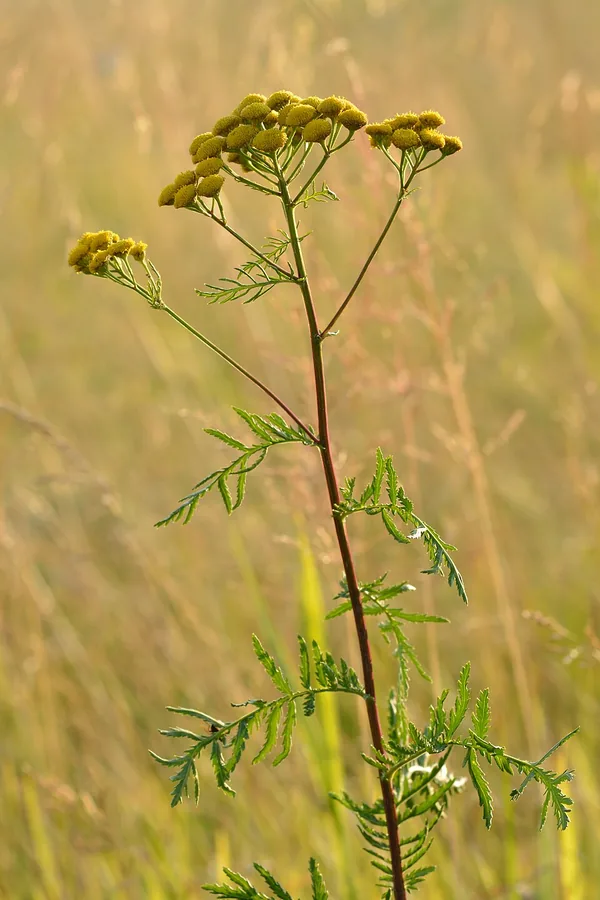
Common tansy is a hardy perennial in the daisy family, easy to spot by its flat clusters of button-shaped golden-yellow flowers and its ferny, sharply aromatic leaves. It came over from Europe as a garden and medicinal plant and has since made itself at home across much of North America. Brush against it and the bitter, almost camphor scent tells you right away which plant you've found.
It thrives on neglect. Tansy shrugs off poor soil, drought, and cold down to zone 3, and it grows fast once it gets going. That same toughness is the catch, because it spreads hard through creeping rhizomes and heavy self-seeding, and several states list it as a noxious weed. Plant it where you can contain it, or skip it where it isn't allowed.
There is one more thing to know before you grow it. The whole plant holds thujone and sesquiterpene lactones, which make it toxic to pets, livestock, and people, so this is an ornamental and pest-repellent herb rather than anything for the table.
Care
The short version: full sun and well-drained soil, water only while it's young or during a long dry spell, and stay on top of deadheading and dividing so it doesn't run away from you.
Light
Tansy does best in full sun, where the stems stay sturdy and the flowering is heaviest. It will take partial shade, but expect taller, floppier growth and fewer of those golden buttons.
Water
Once it's rooted in, tansy is genuinely drought tolerant and needs water only through a long dry spell. Soak young plants until they establish, then back off, since soggy soil does far more harm than a dry stretch ever will.
Soil
This is a plant that handles dry and poor soils without complaint, though it grows lushest in moist, humus-rich ground. It isn't fussy about pH and runs happily anywhere from 6.0 to 8.0, so long as the drainage is good.
Temperature
Tansy is comfortable across a wide range, roughly 50°F to 86°F (10°C to 30°C), and its hardy roots ride out winters down to zone 3. Heat and cold rarely faze it once it's settled.
Humidity
It prefers things on the dry side, around 30% to 60% humidity, which suits most open garden sites. Damp, stagnant air is the only condition it dislikes.
Feeding
Feeding is mostly unnecessary because tansy thrives in lean ground. A little compost or a balanced fertilizer in spring is plenty, and more than that just fuels even more aggressive spread.
Pruning
Deadhead the spent flower heads before they set seed, which is your main defense against runaway self-seeding. Cut the stems back near ground level in late fall or early spring to tidy the clump for the next flush.
Repotting
A container plant needs dividing every 1 to 2 years before the roots circle and the crown crowds. In the ground, lift and split the clump every few years, which both refreshes it and keeps its spread in check.
Size & spacing
Tansy stands anywhere from 1 to 5 feet (30 to 150 cm) tall depending on conditions, with each clump filling out to about 9 to 18 inches (23 to 46 cm) across before the rhizomes start to wander.
When to plant
Tansy follows the seasons of a cold-hardy perennial. Start seed indoors in late winter, set plants out after the last frost once the soil warms, and the golden flower heads open from July through September.
Northern hemisphere
Southern hemisphere
Typical months for a temperate climate: start earlier in warm zones, later where spring frosts linger.
- Sow: 6 to 8 weeks before the last spring frost
- Plant: After the last spring frost once soil has warmed
- Harvest: Blooms July through September
Hardiness
USDA hardiness zones: 3–8
Temperature: down to -40°C
Troubleshooting
Most tansy trouble comes from too much water or from the plant's own urge to spread, not from being fragile. Read the early signs below and step in before a wandering clump or a soggy crown becomes a real problem.
Tansy taking over the bed and popping up where you never planted it
This is aggressive spread, and tansy does it two ways at once. Creeping rhizomes push new shoots well past the original clump while dropped seed fills in the gaps. Deadhead before the flowers set seed, dig out the rhizomes down to the last root fragment, and mow or cut the patch back through the season to wear it down.
Fix:
- Deadhead before seed set
- Dig out rhizomes including root fragments
- Mow or cut repeatedly through the season
Lower leaves yellowing in soil that stays wet
Wet feet are the problem here. Poor drainage or overwatering leaves the soil soggy, the roots turn dark and soft, and the lowest leaves yellow in protest. Open up the drainage and water less often, and a plant this drought-hardy bounces back quickly.
Fix:
- Improve drainage
- Reduce watering frequency
Soft clusters of insects crowding the new shoot tips
Those are aphids, small soft-bodied insects that gather on tender stem tips and leave a sticky honeydew behind. Blast them off with a strong jet of water, then follow with insecticidal soap if they regroup. Tansy draws in predatory insects on its own, so leaving a few often lets the beneficials clean up for you.
Fix:
- Spray with a strong jet of water
- Apply insecticidal soap
Toxicity
Tansy is toxic to people and animals alike, so treat it with respect. The whole plant carries thujone and sesquiterpene lactones that cause vomiting, drooling, and tremors, and in larger amounts they can damage the organs and, in people, end a pregnancy. Wear gloves to handle it and keep it well away from pets, grazing animals, and children.
Toxic to
Cats · Dogs · Horses · Rabbits · Livestock · Birds · People
Cats Toxic
A cat that nibbles tansy usually drools and vomits, with diarrhea and a sore, irritated mouth close behind. Keep larger helpings out of reach, since the thujone in the plant can bring on tremors and worse.
Dogs Toxic
Watch for vomiting, diarrhea, and an itchy rash where a dog has chewed the foliage. A big or repeated dose pushes past stomach upset into trembling, seizures, and damage to the liver and kidneys.
Horses Toxic
Horses turn off tansy by its bitter smell, but one that does eat it gets a churning gut and a dull, off mood. The thujone builds with quantity, so steady grazing risks tremors and organ strain.
Rabbits Toxic
The same volatile oils that trouble other animals make tansy a poor choice for rabbits, bringing on drooling and digestive upset. Leave it off the menu entirely rather than testing a small amount.
Livestock Toxic
Cattle, sheep, and goats mostly leave the bitter plant alone, yet hungry animals on overgrazed ground will take it. Thujone and the sesquiterpene lactones can cause vomiting, staggering, and convulsions in quantity.
Birds Toxic
The aromatic oils that repel insects are no kinder to birds, so the foliage and seed are not safe to offer. Treat the whole plant as off-limits for backyard poultry and pet birds alike.
People Caution
No part of tansy is safe to eat, despite its long history in old kitchens and remedies. The thujone can trigger vomiting, drooling, and tremors, it acts as an abortifacient, and a real dose damages the organs, so handle it with gloves and keep it well away from children.
Wear gloves when handling; the aromatic foliage can cause contact dermatitis in sensitive people.
Helpline numbers

United States
ASPCA Animal Poison Control: (888) 426-4435 (fee applies)
Poison Control: (800) 222-1222



Canada
Poison Centres: 1-844-764-7669
Varieties
Most tansy you'll meet is the plain wild species, but a couple of tamer selections turn up in gardens for their looks.
Tanacetum vulgare var. crispum (Fern-leaf or Curly Tansy)
Its foliage is more finely cut, crisped, and curled than the wild plant, which makes it a tidier ornamental that spreads less freely.
'Isla Gold'
This selection carries bright golden-yellow ferny leaves that gardeners grow for the color alone.
Companions
Tansy earns its keep next to roses and fruit trees, where its scent helps turn away some pests and draw in beneficial insects, but it's a poor neighbor for small vegetables it can quickly crowd out.
Plant near
Roses: Traditionally interplanted to help deter some insect pests and to attract beneficial predatory insects.
Fruit trees: Used as an aromatic companion thought to repel some pests while drawing in pollinators and predators.
Keep apart
Low-growing vegetable beds: Aggressive rhizomatous spread and heavy self-seeding can crowd out less competitive crops.
How to propagate
Tansy multiplies almost too easily, whether you sow seed or split an existing clump, so the real skill is keeping it in check rather than getting more of it.
SeedEasy
Spring · Germinates in 1 to 2 weeks; typically blooms by the second year
Sow in spring and the seed sprouts in just 1 to 2 weeks, though the plant usually waits until its second year to bloom. Tansy self-seeds with abandon, so deadhead the spent flowers if you want to keep it from spreading where it isn't wanted.
DivisionEasy
Spring or fall · Establishes within one growing season
Lift an established clump in spring or fall and split it apart, since every rhizome piece roots with ease and settles in within a single growing season. This is the quickest way to make more plants and a handy chance to rein in a clump that has outgrown its spot.
Myths
Tansy is a safe culinary and medicinal herb because old recipes once called for it.
History gave tansy a place in cooking and home remedies, but we now know better. The plant carries thujone, which makes it unsafe to eat even in small amounts. Leave it in the garden and out of the kitchen.
Planting tansy keeps every garden pest away.
Tansy does carry a real repellent effect against some insects, but it is no blanket shield. It also pulls in certain pests along with the beneficial bugs, so treat it as one tool rather than a fix-all.