Herb · Asteraceae
German Chamomile
Matricaria chamomilla
Give it full sun and free-draining soil, and German chamomile fills the bed with apple-scented daisies all summer.
Full sun
Every 3–7 days
41–86°F · 5–30°C
60–65 days
Overview
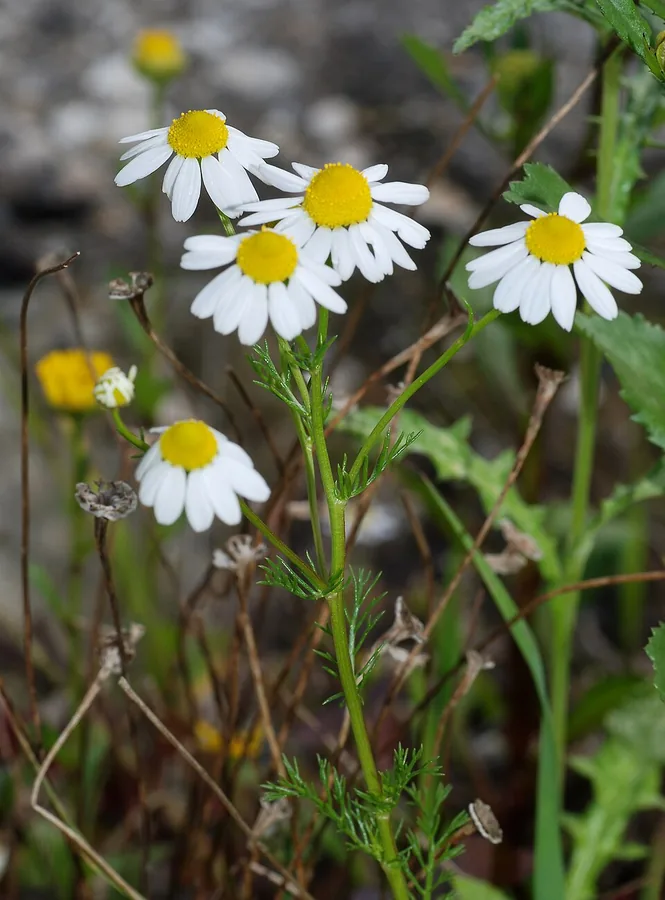
German chamomile is the upright, fast-growing annual behind most chamomile tea. It belongs to the daisy family and carries small white-and-yellow flowers on feathery stems, with a sweet, apple-like scent that gives it away long before you see it. Gardeners grow it for the flower heads, which are picked at their peak and dried for a calming brew.
It asks for very little. A sunny spot and well-drained soil are about all it needs, and it even tolerates poor, low-fertility ground that would stall fussier herbs. The plant is a strong self-seeder, so one season's flowers tend to sow the next, and a small planting can hold its own in a bed for years if you let a few heads ripen.
Keep one thing in mind. The dried flowers make a tea that is safe for most people, but the fresh plant is mildly toxic to cats, dogs, and horses, and handling the foliage can irritate skin in anyone sensitive to ragweed. It earns a place in the garden easily, just not where a curious pet grazes.
Care
The short version: full sun, light well-drained soil, and steady moisture while young, with little or no feeding and regular deadheading to keep the flowers coming.
Light
Chamomile flowers best in full sun with six or more hours a day. It will take a little afternoon shade, but anything dim leaves you with stretched stems and only a scatter of blooms.
Water
Keep seedlings and young plants evenly moist while they settle in. Once established, the plant shrugs off a short dry spell, though steady moisture and good drainage give you the heaviest flowering.
Soil
Plant it in well-drained sandy to loamy ground. It is unfussy enough to thrive in poor, low-fertility soil, and it suits a wide pH band from 5.6 to 7.5.
Temperature
This is a cool-season herb that runs comfortably from 41°F to 86°F (5°C to 30°C). The seedlings handle a light frost, which is why an early start works so well.
Humidity
Average humidity around 40% to 60% is all it asks for. Outdoors that takes care of itself, so spend your attention on airflow rather than chasing a number.
Feeding
Go light. A little compost or a dilute balanced feed at planting is plenty, and too much nitrogen trades flowers for leaves, which defeats the point of growing it.
Pruning
Deadhead and harvest the open flower heads often to stretch the bloom and curb self-seeding. Cut back any leggy growth as it appears to keep the plant tidy.
Repotting
Chamomile is not really a repotting plant. It is grown as a direct-sown or transplanted annual and refreshed each season, so you start fresh rather than potting it on.
Size & spacing
Plants reach 12 to 24 inches (30 to 60 cm) tall with a spread of 8 to 12 inches (20 to 30 cm). Give each a hand's width of room so air moves freely between them.
When to plant
German chamomile is a cool-season annual that gets going early. Sow indoors in late winter or scatter seed straight into the ground in early spring, since the seedlings take a light frost in stride. The daisy-like flowers open in early to midsummer, and that is when you pick the heads for drying.
Northern hemisphere
Southern hemisphere
Typical months for a temperate climate: start earlier in warm zones, later where spring frosts linger.
- Sow: Late winter to early spring, about 4-6 weeks before the last frost
- Plant: Early spring; cool-season annual whose seedlings tolerate a light frost
- Harvest: White-and-yellow daisy flowers in early to mid summer; harvest flower heads when fully open with petals reflexed
Hardiness
USDA hardiness zones: 2–8
Temperature: down to -46°C
Troubleshooting
Chamomile is an easy herb, but a few problems crop up around seedlings, sunlight, and its habit of seeding everywhere. Most show up early and are simple to head off. Match what you see below, then act before it spreads.
Seedlings keel over at the soil line
This is damping-off, a soilborne fungus that strikes when the surface stays cold and wet. The stems pinch and go water-soaked right at the base, and the seedling topples. Sow thinly in a sterile, free-draining mix, cut back on water, and keep the air moving so it never gets a foothold.
Fix:
- Reduce watering
- Improve drainage and airflow
- Sow thinly in a sterile, well-drained seed mix
Sticky buds and curled new growth crawling with tiny insects
Those soft green or black specks on the buds are aphids, and the shine they leave behind is honeydew. Too much nitrogen feeds the soft, sappy growth they love, so ease off the feed and knock them down with a hard jet of water. Insecticidal soap clears a heavier outbreak, and ladybugs will keep doing the work for you.
Fix:
- Dislodge aphids with a strong spray of water
- Apply insecticidal soap
- Encourage beneficial insects such as ladybugs
Leggy stems and barely any flowers
When chamomile stretches and refuses to bloom, it is almost always starved of sun. Anything under six hours leaves the plant tall and bare. Move it to a full-sun spot, hold back on the fertilizer that pushes leaf over flower, and deadhead spent heads to coax out more.
Fix:
- Relocate to a full-sun site
- Reduce fertilizing
- Deadhead to encourage more flowers
Chamomile popping up all over the bed next spring
Chamomile is a champion self-seeder, and any flower head left to ripen will scatter dozens of volunteers. The fix is simple: harvest or deadhead the heads before they shed seed. Whatever does come up pulls easily while the seedlings are small.
Fix:
- Deadhead before seed set
- Pull unwanted volunteer seedlings
Toxicity
Chamomile is gentle in the cup but not on the lawn. The dried flowers brew into a tea that is safe for most people to drink, yet the living plant is mildly toxic to cats, dogs, and horses, and its oils can irritate skin on contact. Keep pets from grazing it, and wear gloves if you are prone to plant allergies.
Toxic to
Cats · Dogs · Horses · Rabbits · Livestock · Birds
Safe for
People
Cats Mild
A cat that chews the foliage may drool, vomit, or go off its food, and the volatile oils can leave the skin irritated. Steady grazing over time has been linked to a tendency toward easy bleeding.
Dogs Mild
Expect an upset stomach, loose stools, and a flat appetite if a dog nibbles the plant. Repeated contact can redden the skin, and long-term ingestion raises the same bleeding concern.
Horses Mild
Grazing horses can come away with a sour stomach and mild diarrhea, and the oils sometimes irritate the muzzle and skin on contact.
Rabbits Mild
The same volatile oils that bother cats and dogs upset a rabbit's gut, so keep them off the leaves and let them browse safer greens instead.
Livestock Mild
Goats, sheep, and cattle that graze chamomile may show digestive upset and skin irritation, though most leave the bitter, aromatic foliage alone.
Birds Caution
There is little firm data on birds, so treat the plant with care and keep pet birds from picking at the oily foliage and pollen.
People Edible as tea
The dried flowers are brewed into a soothing tea that is safe for most people to drink. The catch is the skin: handling the foliage or pollen can trigger contact dermatitis, especially if you react to ragweed and its Asteraceae cousins.
Wear gloves when handling; the foliage and pollen can cause contact dermatitis, especially in people sensitive to ragweed and other Asteraceae.
Helpline numbers

United States
ASPCA Animal Poison Control: (888) 426-4435 (fee applies)

United Kingdom
Animal PoisonLine: 01202 509000 (fee applies)

Australia
Animal Poisons Helpline: 1300 869 738
Varieties
A few named cultivars stand out, mostly bred for tea growers who want bigger heads or richer oil. These are the ones worth seeking out.
Bodegold
A German tea cultivar bred for big flower heads and a high yield of essential oil.
Bona
A Czech cultivar that trials have clocked as the first to flower each year, which suits an early harvest.
Zloty Lan
A Polish cultivar selected for its rich bisabolol and heavy essential oil yield.
How to propagate
SeedEasy
Early spring; sow indoors in late winter or direct-sow once soil is workable, as seedlings tolerate light frost · Germinates in about 7-14 days and flowers in roughly 60-65 days
Chamomile grows readily from seed, whether you start it indoors in late winter or scatter it straight onto worked spring soil, since the seedlings shrug off a light frost. Press the seed onto the surface and leave it uncovered, because it needs light to germinate. Sprouts show in about 7 to 14 days, the plants flower in roughly 60 to 65, and any heads you leave will reseed the bed for next year.
Myths
German and Roman chamomile are the same plant.
They share a family and a use, but they are two different species. German chamomile is the upright, self-seeding annual Matricaria chamomilla, while Roman chamomile is the low, mat-forming perennial Chamaemelum nobile. Both brew into tea, yet they differ in growth habit and chemistry.
Chamomile is harmless because it makes a soothing tea.
The tea is gentle, but the living plant is not entirely innocent. The ASPCA lists chamomile as toxic to cats, dogs, and horses, and its volatile oils and acids can bring on dermatitis, an upset stomach, and allergic reactions. Anyone who reacts to ragweed may react to chamomile too.