Herb · Asteraceae
Roman Chamomile
Chamaemelum nobile
Give it full sun and dry feet, and chamomile spreads into a soft, apple-scented mat.
Full sun
Every 7–10 days
60–90 days
USDA 4–9
Overview
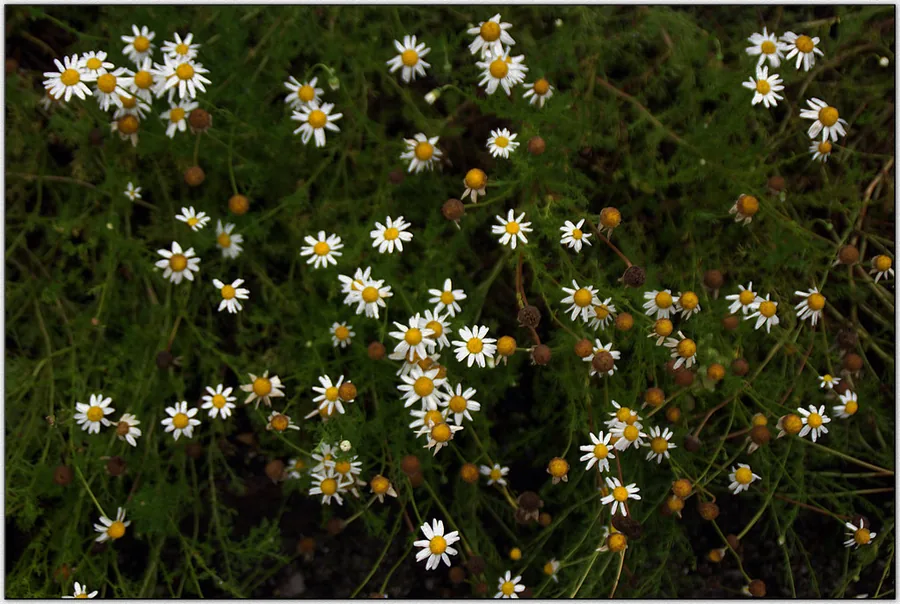
Roman chamomile is a low, creeping perennial in the daisy family, grown as much for its scent as its flowers. Brush against the feathery foliage and it gives off a warm, apple-like smell that has made it a favorite for fragrant lawns and path edges. Through summer it throws up small white-and-yellow daisies that you can pick and dry for tea.
It asks for very little. Give it full sun and light, well-drained soil and it shrugs off drought, knits into a dense mat, and comes back year after year through zones 4 to 9. The one thing it won't forgive is wet feet, so heavy or soggy ground is where most plants fail.
There are two kinds worth knowing. The familiar flowering form gives you blooms to harvest, while a non-flowering selection called 'Treneague' stays tight to the ground and makes the classic chamomile lawn. Which one you plant depends on whether you want flowers to brew or a carpet to walk on.
Care
The short version: full sun, light and sharply drained soil, and a moderate drink only once the top half has dried out. It's a light feeder that needs almost no fertilizer, and a shear after bloom keeps the mat dense.
Light
Chamomile flowers best in full sun, though it will take a little partial shade. The more sun it gets, the denser the mat and the heavier the bloom, so save the shadier spots for tougher plants.
Water
Water in moderation and let the top half of the soil dry out before the next drink, which usually works out to every 7 to 10 days. Once established it handles drought well, and the fastest way to kill it is to leave the roots sitting in wet soil.
Soil
Plant it in light, well-drained sandy loam. It isn't fussy about acidity and grows happily anywhere from pH 5.6 to 7.5, but sharp drainage matters far more than the numbers. Lighten heavy clay with grit before planting.
Temperature
It's hardy and easygoing across 39°F to 86°F (4°C to 30°C), surviving winters down through zone 4. The weak spot is summer: prolonged heat and humidity make the center of the mat thin out and brown.
Humidity
Chamomile prefers things on the dry side, around 30% to 50% humidity. Muggy, still air is what invites fungal dieback, so airflow counts for more than any moisture reading.
Feeding
This is a light feeder that needs little to no fertilizer. A single balanced, low-nitrogen feed in spring is plenty, and overdoing it just pushes soft growth that aphids love.
Pruning
Shear or mow the mat back lightly after flowering to keep it dense and spark fresh growth. Deadheading the spent flowers along the way stretches the bloom further into the season.
Repotting
Chamomile rarely needs repotting. If you grow it in a container, divide and refresh it every 2 to 3 years, or sooner if the roots circle the pot, the growth thins, or the soil dries out almost as fast as you water it.
Size & spacing
Each plant stays low, just 6 to 12 inches (15 to 30 cm) tall, but spreads to 12 to 18 inches (30 to 45 cm) wide as it mats. Space plants so they knit together for a lawn, or leave more room if you want them as tidy clumps.
When to plant
Chamomile follows the warm season. Start seed indoors in late winter, set young plants out in spring once the frost is past and the soil has warmed, and pick the flower heads through summer as they open.
Northern hemisphere
Southern hemisphere
Typical months for a temperate climate: start earlier in warm zones, later where spring frosts linger.
- Sow: Late winter to early spring, 6-8 weeks before the last frost
- Plant: Spring, after the last frost when soil has warmed
- Harvest: White-and-yellow daisy flowers in summer; harvest flower heads when the petals are flat or just fully opened
Hardiness
USDA hardiness zones: 4–9
Temperature: down to -34°C
Troubleshooting
Most chamomile trouble comes down to too much water or a sticky outbreak of aphids. Both show early if you look at the buds, the foliage, and the soil. Match what you see below and act before a small problem spreads through the mat.
Yellowing, wilting plants sitting in wet ground
When chamomile collapses in soggy soil, the cause is almost always root rot. The roots suffocate and turn black and mushy, and there's no saving a plant once it's that far gone. Pull the worst ones, cut back your watering, and fix the drainage so the rest can dry out.
Fix:
- Improve soil drainage
- Reduce watering frequency
- Remove and discard severely affected plants
A bare, browning hole opening up in the center of the mat
Roman chamomile sulks in a muggy heat wave, and the middle of the mat is the first part to thin out and die back. Heat and trapped, humid air drive this, sometimes with a little fungal dieback on top. Shear the patch back to spark fresh basal growth, thin the planting for airflow, and give it some afternoon shade where summers run hot.
Fix:
- Shear back to encourage fresh basal growth
- Improve air circulation by thinning
- Provide afternoon shade in hot climates
Sticky, distorted buds crawling with tiny insects
Those clustered insects are aphids, and they cluster on soft new buds and coat them in sticky honeydew that cuts your bloom short. Knock them off with a strong jet of water, then treat any survivors with insecticidal soap. Ease up on the nitrogen, since the lush growth it pushes is exactly what aphids look for.
Fix:
- Spray plants with a strong jet of water
- Apply insecticidal soap to affected buds
- Encourage beneficial predators such as ladybugs
Curled, sticky leaves with insects clustered underneath
This is aphids again, this time feeding on the tender foliage and leaving the leaves curled and tacky. Flip a few leaves over and you'll see the colonies and the honeydew they leave behind. Hose them off and follow with insecticidal soap, and let ladybugs and other helpers keep the numbers down.
Fix:
- Hose off foliage with water
- Apply insecticidal soap
Toxicity
Chamomile sits in a tricky spot. The flowers make a gentle, soothing tea that's safe for most people, but the ASPCA lists the plant as mildly toxic to cats, dogs, and horses. The volatile oils and anthemic acid in the foliage can cause vomiting, an itchy rash, and, with steady long-term chewing, a tendency to bleed. Enjoy the tea, and keep grazing pets away from the plant.
Toxic to
Cats · Dogs · Horses · Rabbits · Livestock · Birds
Safe for
People
Cats Mild
The ASPCA flags chamomile as mildly toxic to cats. A cat that nibbles it may drool, vomit, or go off its food, and the volatile oils can leave an itchy, irritated rash where the plant touches skin. Steady chewing over weeks is the real worry, since the anthemic acid can thin the blood and raise the risk of bleeding.
Dogs Mild
Dogs react in much the same mild way, with an upset stomach, loose stools, and a poor appetite after a curious chew. Brushing against crushed foliage can also bring on contact dermatitis. Keep an eye on a dog that grazes the plant day after day, because long-term exposure can lead to a bleeding tendency.
Horses Mild
Grazing horses get off lightly, with mild digestive upset, a dull appetite, and the occasional skin reaction the usual signs. There's no acute danger from a mouthful, but the same blood-thinning effect builds with chronic grazing, so steer them away from chamomile borders and pasture stands.
Rabbits Caution
Chamomile isn't on the ASPCA's list for rabbits, but the same volatile oils that upset other mammals make it a poor choice for a grazer this small. A nibbled flower head is unlikely to do harm, yet steady browsing could bring on soft stools or appetite loss, so it's best kept out of reach.
Livestock Caution
Cattle, goats, and sheep tend to leave the bitter, aromatic foliage alone, and a few mouthfuls rarely cause trouble. Treat it with caution all the same, since the volatile oils and tannins that bother pets can irritate a grazing animal's gut if it eats a large amount.
Birds Caution
There's little solid data on chamomile and birds either way. The plant isn't known to be dangerous to them, but the irritant oils mean a pet bird shouldn't be allowed to graze it freely, and any deliberate herbal use is worth running past an avian vet first.
People Safe as tea
The flowers are the classic base for a calming cup of tea and are safe to drink for most people. The catch is the daisy family connection: anyone allergic to ragweed or related plants can react to it, and handling the fresh foliage sometimes leaves a mild skin rash.
Handling or crushing the foliage can cause contact dermatitis in sensitive people and animals; wash hands after handling and keep grazing or chewing pets away.
Helpline numbers

United States
ASPCA Animal Poison Control: (888) 426-4435 (fee applies)

United Kingdom
Animal PoisonLine: 01202 509000 (fee applies)

Australia
Animal Poisons Helpline: 1300 869 738
Varieties
Roman chamomile comes in only a couple of common forms, but they serve very different purposes. These are the two you're most likely to meet.
'Treneague'
A non-flowering, low-growing form prized for fragrant chamomile lawns, and because it sets no seed you can only spread it by dividing the mat.
'Flore Pleno'
A double-flowered form that trades the simple daisy for rounded, fuller blooms in creamy white.
How to propagate
Chamomile is easy to increase, whether you raise it from its fine seed or split an established mat into new plants.
SeedEasy
Sow indoors in late winter to early spring, or direct-sow after the last frost · Germinates in about 10-14 days; establishes over the first growing season
Start seed indoors in late winter to early spring, or sow it straight into warm ground after the last frost. The seed is fine and needs light to sprout, so scatter it on the surface and press it down rather than burying it. Seedlings break ground in about 10 to 14 days and settle in over that first growing season.
DivisionEasy
Spring or early autumn · 2-4 weeks to root in
Lift an established mat in spring or early autumn and pull it apart into rooted clumps that take hold again within 2 to 4 weeks. Division is also your only option for the non-flowering 'Treneague', which never sets seed to grow from.
Myths
Roman chamomile and German chamomile are the same plant.
They look alike and both brew into tea, but they aren't the same plant or even the same genus. Roman chamomile is a low, mat-forming perennial, while German chamomile is a taller annual that reseeds itself. One spreads as a fragrant groundcover, the other shoots up and is gone by winter.
Chamomile is completely safe around pets because it is a soothing herbal tea.
Safe in your cup doesn't mean safe in the garden. The ASPCA lists chamomile as toxic to cats, dogs, and horses, and chewing it can bring on vomiting, diarrhea, appetite loss, and an itchy rash. A herb that calms people can still make a pet sick.