Vegetable · Asteraceae
Sunchoke
Helianthus tuberosus
Plant it once and it feeds you for years, so long as you keep it where you want it.
Full sun
Every 7–10 days
120–150 days
USDA 3–9
Overview
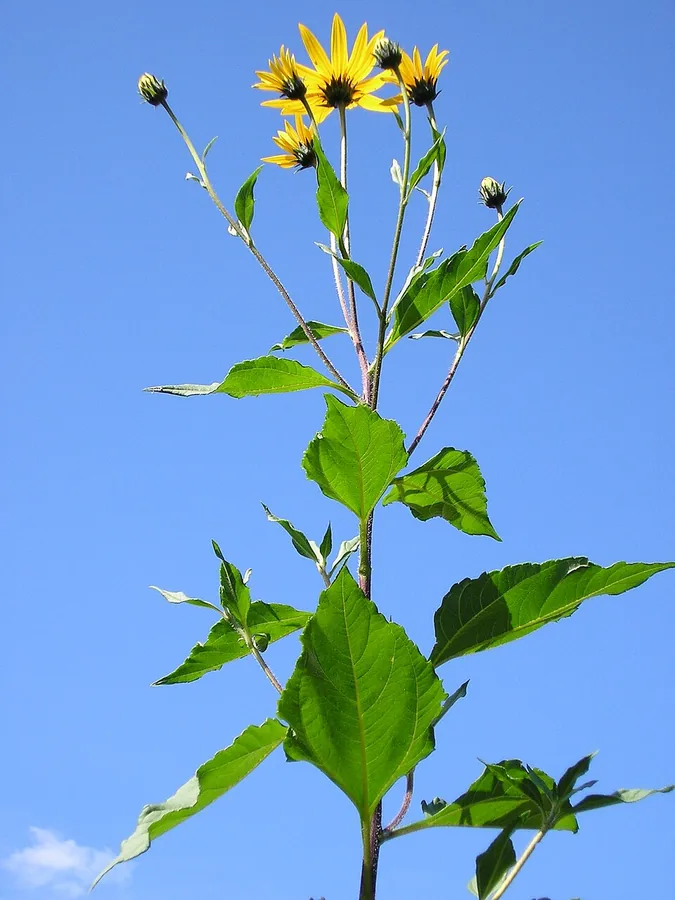
Sunchokes are a North American sunflower grown for the tubers rather than the bloom. Despite the Jerusalem artichoke name, the plant has nothing to do with artichokes or with Jerusalem. It is Helianthus tuberosus, a tall perennial that throws up bright yellow, sunflower-like flowers in late summer over fat roots that taste faintly nutty and sweet.
What sets sunchokes apart is how little they ask. They shrug off cold down to -22°F (-30°C), take poor soil in stride, and crop reliably with barely any fuss. The same vigor that makes them carefree also makes them a handful, because a single forgotten tuber will start a new patch the next spring.
Treat them as a long-term resident, not a tidy annual bed. Pick a corner where they can run, or hem them in with a buried barrier or a big container, and they reward you with a heavy harvest of tubers that store right in the ground through winter.
Care
The short version: full sun, ordinary well-drained soil, and a deep drink during dry spells, with a contained bed or buried barrier to hold their spread in check.
Light
Sunchokes do best in full sun, which gives you the tallest stalks and the heaviest tubers. They will still crop in partial sun or light shade, just with a smaller harvest, so save the brightest spot for them.
Water
Give them a deep soak every 7 to 10 days during dry spells, and stay on top of it in late summer and fall while the tubers are bulking up. Established plants handle drought well, but steady moisture is what fills out the crop.
Soil
They take almost any soil but grow best in loose, loamy ground that drains freely. Aim for a pH of 5.8 to 6.8, and skip soggy spots, since wet roots invite tuber rot.
Temperature
Few crops are this tough. Sunchokes survive winters down to -22°F (-30°C) and grow happily through summer heat up to 86°F (30°C), which lets them thrive across a wide stretch of the country.
Humidity
Outdoor humidity around 40% to 60% suits them, and there's no figure worth fussing over. Damp, crowded air late in the season is what brings on powdery mildew, so airflow matters more than the number.
Feeding
These plants barely need feeding. A single balanced feed in spring is plenty, and going heavier only grows leggy, top-heavy stalks that flop over in the wind.
Pruning
You can leave them be, but cutting the tall flower stalks back in late summer curbs reseeding and keeps the stems from toppling. Clear the dead stalks after frost, and mow down any colony you need to hold in check.
Repotting
Sunchokes aren't usually grown in pots. If you keep them in a contained bed or large container, lift and divide the tubers each season to refresh the planting and thin out the crowd.
Size & spacing
Give them room, because the stalks shoot up to 6 to 10 feet (1.8 to 3 m) tall and each clump spreads 2 to 4 feet (60 to 120 cm) wide. They cast real shade, so plant them where they won't shadow shorter crops.
When to plant
Sunchokes run on a simple yearly rhythm. Plant tuber pieces in early to mid spring once the soil can be worked, watch the tall stalks bloom in late summer, then dig the tubers after the first hard frost and on through winter into early spring whenever the ground isn't frozen solid.
Northern hemisphere
Southern hemisphere
Typical months for a temperate climate: start earlier in warm zones, later where spring frosts linger.
- Plant: Early to mid spring, once soil can be worked, by planting tuber pieces 10-15 cm deep
- Harvest: Yellow sunflower-like blooms in late summer to fall; harvest tubers after the first hard frost and through winter into early spring
Hardiness
USDA hardiness zones: 3–9
Temperature: down to -40°C
Troubleshooting
Sunchokes rarely give trouble, and most of what comes up is about managing their vigor rather than saving a struggling plant. Watch the tubers, the tall stalks, and where new shoots turn up. Match what you see below and act before a small issue takes hold.
New shoots popping up far from where you planted
This is the sunchoke's aggressive spread, driven by tuber fragments left behind at harvest and by rhizomes creeping out from established clumps. Even a small piece you miss will resprout the next spring and start a fresh colony. Dig out every fragment you can find, plant inside a bordered bed or buried barrier, and mow down any stray shoots before they fatten new tubers.
Fix:
- Dig and remove every tuber fragment repeatedly over several seasons
- Confine plantings to a bed bordered by buried barriers or grow in large containers
- Mow or cut emerging shoots before they store energy in new tubers
Mushy tubers with cottony white growth
This is sclerotinia soft rot, a fungus that takes hold in soggy, poorly drained ground and at any spot where a tuber was bruised during digging. The rot turns tubers watery and discolored and only gets worse in saturated soil. Throw out anything affected, fix the drainage, and store your healthy tubers cool and just barely moist rather than wet.
Fix:
- Discard affected tubers
- Improve soil drainage and avoid waterlogging
- Cure and store harvested tubers cool and slightly moist, not wet
Dusty white film on the upper leaves
Late in the season, crowded and humid stands often pick up powdery mildew. The white patches spread across the leaf surface and the foliage yellows and dries early, though the damage is mostly cosmetic by then. Thin the stems for better airflow and clear away any heavily coated leaves.
Fix:
- Improve air circulation by thinning stems
- Remove and dispose of heavily infected foliage
Tall stalks leaning or toppling after a storm
Sunchokes grow to 6 to 10 feet (1.8 to 3 m), and that height makes them prone to lodging in exposed sites and rich soil. Top-heavy stems tip from the base or snap mid-stalk once wind and rain hit. Stake them or plant against a sheltered fence, and cutting the stalks back partway in midsummer keeps them from getting so top-heavy.
Fix:
- Provide staking or grow against a wind-sheltered fence
- Cut stalks back partway in midsummer to reduce height
Toxicity
Good news on this one. Every part of the sunchoke is safe for people and pets, with no toxic compounds in the leaves, stems, or tubers. The only thing to know is the tubers are rich in inulin, a fiber that can cause gas if you or an animal eats a lot at once, which is a digestive quirk and not poisoning.
Safe for
People · Cats · Dogs · Horses · Rabbits · Livestock · Birds
Cats None
Safe around cats, with no toxic compounds in the leaves, stems, or tubers. A cat that nibbles a stalk might get a mild, passing stomach upset, but nothing dangerous.
Dogs None
No poisoning risk for dogs. A curious dog that digs up and eats a tuber may pass some extra gas from the inulin, which clears on its own.
Horses Safe
Horses can graze the foliage without harm. The tubers are a wholesome, starchy treat in moderate amounts.
Rabbits Safe
Rabbits handle the leaves and tubers fine. Introduce any new food slowly, as you would with any fresh green, to keep their gut settled.
Livestock Safe
Cattle, goats, sheep, and pigs all eat sunchoke tops and tubers, and the crop is sometimes grown on purpose as livestock forage.
Birds Safe
Backyard poultry and wild birds peck at the plant with no trouble, and the seed heads draw them in once the blooms fade.
People Safe
The tubers are a tried-and-true food, eaten raw or cooked. They are very high in inulin, a fiber we don't fully digest, so a big helping can leave you gassy, but that's a digestive quirk and not poisoning.
No special handling precautions for toxicity; tubers are high in inulin, which can cause gas and digestive upset if eaten in quantity by people, but this is a dietary effect and not poisoning.
Varieties
A handful of named sunchoke types are worth seeking out, mostly chosen for smoother tubers that are easier to clean. These are the ones you'll run across.
Stampede
An early type with large white-fleshed tubers that crops well even where the season runs short.
Red Fuseau
Carries long, smooth, reddish-skinned tubers that wash up far easier than the knobby kinds.
Mammoth French White
A vigorous, tall grower that puts out big, knobby white tubers in quantity.
Fuseau
Prized for smooth, elongated tubers with few knobs, which makes scrubbing and prep a breeze.
How to propagate
Sunchokes multiply themselves whether you want them to or not, and starting your own patch is as simple as burying a few tubers.
Bulbs & cormsEasy
Early to mid spring · One growing season to a harvestable colony
Plant whole tubers or pieces, each carrying at least one bud or eye, about 4 to 6 inches (10 to 15 cm) deep in early to mid spring, the same way you would set out a bulb or corm. They take hold fast and grow into a harvestable colony within a single season, then spread hard from there, so give them a spot you're happy to keep them in.
Myths
Jerusalem artichokes are a kind of artichoke that comes from Jerusalem.
It is neither an artichoke nor tied to Jerusalem. The plant is a North American sunflower, Helianthus tuberosus, and the name most likely twisted out of the Italian word for sunflower, girasole.
You can eat the tubers in any amount with no aftereffect.
The tubers are loaded with inulin, a fiber the human gut can't fully break down, so a large serving brings on real gas and flatulence. That's a digestive effect, not a sign of anything toxic.