Vegetable · Asteraceae
Globe Artichoke
Cynara cardunculus var. scolymus
Give it full sun, deep soil, and a winter chill, and the artichoke rewards you with tender buds.
Full sun
Every 3–7 days
45–84°F · 7–29°C
85–110 days
Overview
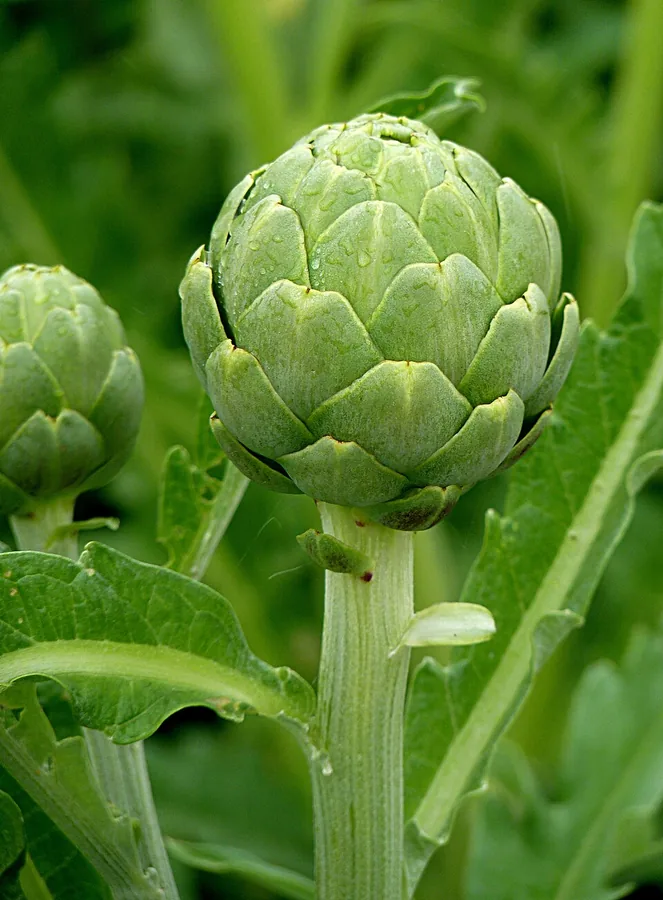
The globe artichoke is a big, architectural thistle grown for its immature flower buds, the part you steam and eat before the bracts ever open. Left on the plant, those buds burst into striking purple flowers. It belongs to the same family as the daisy and the sunflower, and it shows in the silver-green, deeply cut leaves that can sprawl several feet across.
Most gardeners treat it as a perennial in mild-winter regions, where a planted crown comes back and crops for years. Where winters bite harder, it's grown as an annual from seed sown the same spring. The catch is that a first-year plant only sets buds if it has felt a cold spell, which is why the timing matters so much.
This is a heavy feeder that wants rich, deep, well-drained ground and steady moisture through the season. Give it sun, room to spread, and water that never sits around the crown, and it pays you back with buds from summer into fall. Cut corners on drainage and the crown rots before you taste a thing.
Care
The short version: full sun, deep and rich well-drained soil, and steady moisture all season. Feed it often, give each plant 3 feet of room to spread, and make sure young plants get a cold spell so they form buds.
Light
Artichokes want full sun, with no real tolerance for shade. The plants are large and need every hour of light to fuel the buds, so give them the most open, sunny spot you have.
Water
Keep the soil evenly moist through the whole growing season, since deep, regular watering is what makes the buds tender and full. Water at the base and don't let the ground go bone dry between drinks. Just as important, never let water pool around the crown, because soggy soil brings on rot.
Soil
Plant in rich, deep, well-drained loam loaded with organic matter, since this is a hungry plant with a big root system. Aim for a pH between 6.5 and 7.5, and raise the bed if your ground holds water, because good drainage protects the crown.
Temperature
Artichokes do best in the range of 45°F to 84°F (7°C to 29°C). They also need a stretch of cold near 50°F (10°C) to trigger budding, so the cool side of that range is part of the deal, not a problem.
Humidity
Ordinary outdoor humidity suits them, so there's no number to hit. Airflow matters more, since damp, crowded leaves invite the pests and rots that trouble this plant.
Feeding
The artichoke is a heavy feeder. Work compost into the bed and feed monthly through spring and summer with a nitrogen-rich balanced fertilizer to keep the big leaves and buds coming.
Pruning
Cut the buds while they're still tight, before they open. After harvest, take the spent flowering stalks down to the base. In cold zones cut the foliage to the ground and mulch the crown for winter, and in mild zones trim old growth in late winter to bring on fresh shoots.
Repotting
Artichokes aren't usually grown in containers, so there's little repotting to do. What they need instead is dividing every 3 to 4 years, lifting and splitting an established crown to keep it vigorous and productive.
Size & spacing
A mature plant stands 3 to 6 feet (90 to 180 cm) tall and spreads about as wide. Give each one roughly 3 feet (90 cm) of room so the big leaves have space and air can move through.
When to plant
Artichokes need warmth to grow but a touch of cold to bud. Start seed indoors in late winter, chill the young plants, then set them out after the last frost and harvest the tight buds from summer into fall.
Northern hemisphere
Southern hemisphere
Typical months for a temperate climate: start earlier in warm zones, later where spring frosts linger.
- Sow: Start seed indoors 8-10 weeks before the last spring frost, then chill/vernalize the seedlings (expose to roughly 50°F / 10°C for 10 or more days) so they will form buds the first year.
- Plant: Transplant after the last frost once soil has warmed, in spring.
- Harvest: Harvest the immature flower buds in summer (and into fall) before the bracts begin to open.
Hardiness
USDA hardiness zones: 7–11
Temperature: down to -18°C
Troubleshooting
Most artichoke trouble shows up on the new growth, the buds, or the crown below the soil. Catch the early signs and you can step in before a plant is lost. Match what you see below, then act while it still helps.
A wilting plant with a black, mushy crown
When a plant flops over even though the soil is wet, suspect crown and root rot from ground that stays soggy. There's no saving it once the crown turns soft and dark, so pull and destroy the plant. Fix the drainage before you replant, and never put another artichoke back in the same wet spot.
Fix:
- Remove and destroy affected plants
- Improve soil drainage before replanting
- Avoid replanting artichokes in the same wet site
Sticky new growth covered in tiny soft-bodied bugs
These are aphids, and they crowd onto the youngest leaves and shoot tips to feed. Watch for the ants that farm them, since the two travel together. Knock the colonies off with a hard jet of water, follow up with insecticidal soap, and strip out any leaf that's badly coated.
Fix:
- Dislodge with a strong jet of water
- Apply insecticidal soap
- Remove and destroy heavily infested leaves
A lush plant that never sets a single bud
A first-year artichoke that grows nothing but leaves usually missed its cold spell. The plant needs a stretch near 50°F (10°C) for 10 or more days to switch over to budding. Chill the seedlings before they go out, pick an annual-type cultivar like Imperial Star, or hold the plant over winter so it buds the next year.
Fix:
- Vernalize transplants for 10 or more days near 50°F / 10°C before setting out
- Overwinter plants as perennials in mild zones to bud the following year
Aphids tucked inside the bracts of a cut bud
Aphids love to hide deep in the developing flower head where you can't see them until the bud is split open. A long soak in cold salted water floats them out before cooking. Cutting buds while they're still tight, and clearing aphids off the plant beforehand, keeps them out in the first place.
Fix:
- Soak cut buds in cold salted water to flush out insects
- Harvest buds promptly while still tight
- Control aphids on plants before they enter the bud
Ragged holes in the leaves with silvery trails
Those slime tracks point to slugs and snails feeding after dark, with earwigs sometimes joining in. Go out with a flashlight after sundown and pick them off, or set out iron-phosphate bait. Clearing damp hiding spots near the plant takes away the shelter they need.
Fix:
- Handpick at night
- Set out traps or iron-phosphate slug bait
- Remove damp hiding places near plants
Toxicity
Good news on this one: the artichoke is an edible vegetable with no poison to worry about for pets, livestock, or people. The only real hazard is physical, since spiny cultivars carry sharp tips on the bracts that can prick bare hands. Wear gloves when you handle those types and you're set.
Safe for
People · Cats · Dogs · Horses · Rabbits · Livestock · Birds
Cats None
The ASPCA doesn't list artichoke as poisonous to cats, so a curious nibble is nothing to fear. The bristly leaves are more likely to put a cat off than the plant is to do any harm.
Dogs None
Artichoke is safe for dogs, and the plant carries no toxin that should worry you. A dog that gulps down a large helping of fibrous leaf might pass some loose stool, the way it would after any rich plant.
Horses Safe
Nothing in the plant poisons horses. The coarse, prickly foliage is unappealing enough that most horses leave it alone on their own.
Rabbits Safe
Rabbits can eat the tender leaves without any risk. Bring it in slowly, as a sudden pile of fresh greens can loosen a rabbit's gut no matter the plant.
Livestock Safe
Cattle, goats, and sheep graze artichoke and its close cousin the cardoon with no ill effect. The sharp bracts on spiny types are the only thing worth watching.
Birds Safe
The plant holds nothing toxic to birds, and chickens will happily peck at scraps of leaf and stem. There's no part to keep away from them.
People Safe
The flower buds are the whole point, cooked and eaten across the world. The one real hazard is physical, since spiny cultivars carry sharp tips on the bracts, so wear gloves when you handle them.
The bracts of some varieties have sharp spine tips and the foliage is bristly, which can prick or irritate skin during handling and harvest. This is a physical hazard, not poisoning.
Varieties
A handful of artichoke varieties cover most gardens, split mainly between perennial green types and the annual cultivars bred for colder ground. These are the ones worth knowing by name.
Green Globe
The most widely grown green-budded variety, and the standard for perennial growing in regions with mild winters.
Imperial Star
An annual-type cultivar bred to set buds in its first year from seed with little need for chilling, which makes it the go-to where winters are too cold for a perennial.
Violetto di Romagna
An Italian heirloom that carries long, elongated purple buds instead of the usual green.
Green Globe Improved
A selected strain of Green Globe that gives you more uniform, more productive plants.
How to propagate
Artichokes grow either from seed or from pieces of an existing crown, and the two methods give you very different results.
SeedModerate
Start indoors 8-10 weeks before last frost, then vernalize seedlings before transplanting · First buds in roughly 85-110 days from transplant when seedlings are vernalized
Start seed indoors 8 to 10 weeks before your last frost, then give the seedlings a cold spell before they go out so they'll bud the first year. With that chilling done, the first buds come in roughly 85 to 110 days after transplanting. Seed-grown plants vary from one to the next, so reach for an annual-type cultivar like Imperial Star if you want a dependable first-year crop.
DivisionEasy
Late winter to early spring · Rooted offshoots establish within one growing season
Dividing an established crown is the surest way to copy a plant exactly. In late winter or early spring, detach a rooted sucker or offshoot from the parent and pot it up. These rooted pieces settle in within a single growing season and come true to the plant you took them from.
Myths
Artichokes are poisonous to pets.
Globe artichoke is an everyday edible vegetable, and the ASPCA does not list it among the plants toxic to cats or dogs. The only real danger is physical, not poison, since the bracts on some types end in sharp spines that can prick.
Artichokes grow true to type from seed like most vegetables.
Plants raised from seed vary a lot from one to the next, so dividing rooted offshoots from a parent crown is what gives you uniform plants. Only a few cultivars, such as Imperial Star, can be counted on to bud in their first year straight from seed.