Vegetable · Asteraceae
Salsify
Tragopogon porrifolius
Give it deep, stone-free soil and a long cool season, and salsify hands you a sweet, oyster-flavored root.
Full sun
Every 4–7 days
50–77°F · 10–25°C
110–150 days
Overview
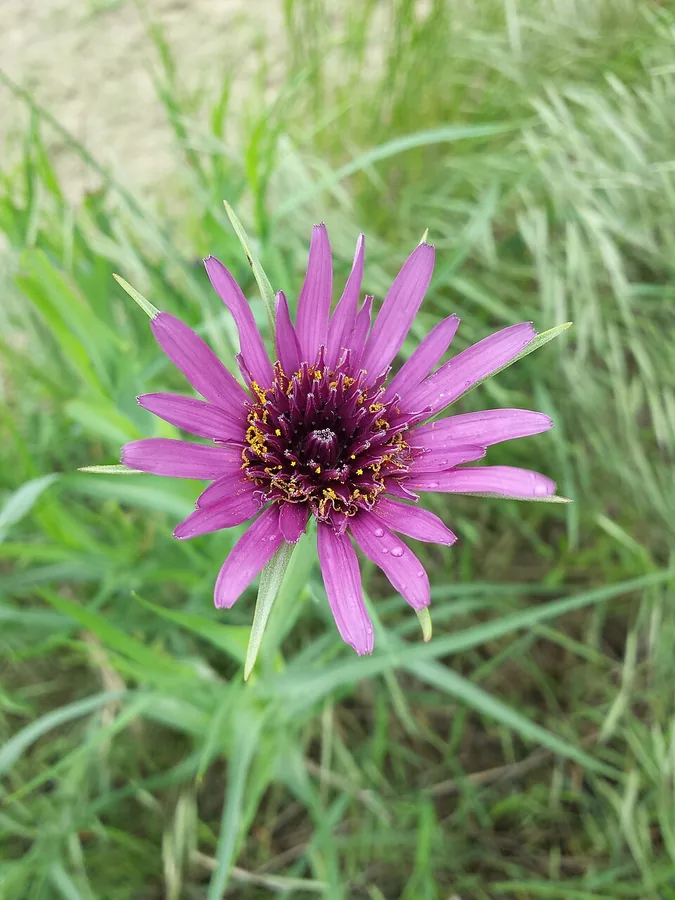
Salsify is an old-fashioned root vegetable grown for the long, slender taproot that tastes faintly of oysters, which is how it earned the name oyster plant. It belongs to the daisy family and is a close cousin of the dandelion, throwing up the same kind of starry purple bloom in its second year. Most gardeners treat it as a yearly crop, lifting the roots before it ever flowers.
It asks for patience more than skill. Salsify needs a long, cool growing season of about four to five months, and the root only turns out smooth and straight if the soil underneath is deep and loose. Get the bed right and the rest is easy, since the plant shrugs off most pests and rarely needs fussing over.
The payoff comes late in the year. A few frosts sweeten the roots, and they keep right in the ground through winter, so you can dig them fresh whenever the soil is soft enough to work.
Care
The short version: full sun and a deep, loose, stone-free bed worked well before sowing. Give it 1 to 2 inches of water a week to keep the roots straight, sow early for a long cool season, and dig the roots after the first frosts have sweetened them.
Light
Salsify does best in full sun, though it will take a little partial shade and still crop. The more sun the leaves catch, the more energy goes down into the root.
Water
Give it about 1 to 2 inches of water a week and keep the soil evenly moist all season. Steady moisture is what keeps the roots from forking or cracking, so don't let the bed swing between bone-dry and soaked.
Soil
This is the part that makes or breaks the crop. Salsify wants deep, loose, stone-free loam rich in organic matter, dug a full 12 to 24 inches down so the taproot can drive straight. A pH between 6.0 and 7.5 suits it well.
Temperature
Salsify is a cool-season root that grows best from about 50°F to 77°F (10°C to 25°C). It handles cold without complaint, and a frost late in the year only improves the flavor of the roots.
Humidity
Ordinary outdoor air around 40% to 70% humidity is fine, so there's nothing to manage here. Damp, still conditions just raise the odds of white rust on the leaves, so airflow matters more than any number.
Feeding
Work compost or a balanced fertilizer into the bed before you sow, and that's usually feed enough for the season. Skip fresh manure, which makes the roots fork and grow hairy.
Pruning
There's no routine pruning to do. In the first year, just snap off any flower stalk the moment it appears, so the plant keeps pouring its energy into the root instead of running to seed.
Repotting
not_applicable
Size & spacing
Plants reach 1 to 4 feet (30 to 122 cm) tall once they send up flower stalks, with a slim spread of 6 to 12 inches (15 to 30 cm). Space them so each root has room to swell without crowding its neighbor.
When to plant
Salsify runs on a long, slow clock. Sow the seed straight into the ground in early spring as soon as the soil can be worked, let the roots size up over a cool season of four to five months, and start digging in fall once a frost or two has sweetened them. The roots hold in the ground, so the harvest can stretch into winter.
Northern hemisphere
Southern hemisphere
Typical months for a temperate climate: start earlier in warm zones, later where spring frosts linger.
- Plant: Direct sow in early spring as soon as the soil can be worked (about 2-4 weeks before the last frost); salsify needs a long, cool growing season.
- Harvest: Harvest roots in fall after the first frosts, which sweetens them; roots can overwinter in the ground and be dug through winter or early spring while the soil is workable.
Hardiness
USDA hardiness zones: 5–9
Temperature: down to -29°C
Troubleshooting
Salsify gives little trouble, and most of what goes wrong starts underground or with the weather. Forked roots and early bolting are the usual complaints, both tied to the bed and the timing. Match what you see below and fix the cause before it costs you the crop.
A flower stalk and a tough root in the first season
When salsify bolts, it shoots up a flower stalk in year one and the root turns woody and tough to eat. Heat, drought, or sowing too late into warm soil sets it off. Sow early so the plant gets a long cool run, snap off any flower stalks the moment they show, and pull usable roots before they go hard.
Fix:
- Remove flower stalks as soon as they appear
- Harvest usable roots before they become woody
Gnawed roots and tunneling in overwintered beds
Mice and voles find overwintered roots an easy winter meal, leaving tunnels along the rows and hollowed-out roots behind. The simplest answer is to lift and store the roots before heavy rodent pressure sets in. Where you want to leave them in the ground, manage the mulch and set out rodent controls around the bed.
Fix:
- Harvest and store roots before deep winter rodent pressure
- Manage mulch and use rodent controls around the bed
Roots that split, fork, or grow hairy side roots
Forked roots almost always trace back to the bed itself. Stones, heavy ground, or a shallow dig push the taproot off course, and uneven watering or fresh manure makes it worse. Work the soil a good 12 to 24 inches deep, clear out the rocks, and keep the moisture steady, and the roots run long and smooth.
Fix:
- Work the soil deeply (12-24 inches) and remove rocks before sowing
- Maintain even moisture of 1-2 inches of water per week
- Amend with compost rather than fresh manure
White blisters or powdery patches on the leaves
Damp, crowded foliage invites white rust and powdery mildew, which show up as white blister-like pustules or a dusty white coating. Strip off the marked leaves and bin them, open the planting up so air can move, and keep the foliage dry. Rotating to a fresh bed each year stops the problem from settling in.
Fix:
- Remove and dispose of affected foliage
- Improve airflow and reduce overhead moisture
- Rotate the crop to a new bed
Clusters of soft insects and sticky leaves
Aphids gather on the leaves and stems as small soft-bodied clusters, leaving a sticky honeydew behind. A strong jet of water knocks most of them off, and insecticidal soap handles a stubborn colony. Scout the plants often and let natural predators do their share.
Fix:
- Dislodge with a strong jet of water
- Apply insecticidal soap if needed
Toxicity
Salsify is grown to be eaten, and every part of it is safe. The roots, shoots, and young leaves all turn up on the table, and the plant is safe for pets, livestock, and children alike. The only thing to note is the milky white sap from cut roots, which can stain hands but does no harm.
Safe for
People · Cats · Dogs · Horses · Rabbits · Livestock · Birds
Cats None
Salsify isn't on the ASPCA toxic list, so a curious cat that nibbles a leaf has nothing to fear. The milky sap may stain a paw, but it won't harm.
Dogs None
A dog can dig up and chew the roots without trouble, since none of the plant is poisonous. Too much of any vegetable can loosen the stomach, but salsify itself is safe.
Horses Safe
Horses graze salsify without harm. The plant carries no toxin that would trouble them.
Rabbits Safe
Rabbits can browse the tender leaves and roots safely, and many take to the fresh greens. Introduce any new green slowly to keep their digestion settled.
Livestock Safe
Cattle, goats, and sheep can eat salsify in the field with no ill effect, which is why it spreads through grazing land. There's no toxin here to worry over.
Birds Safe
Birds peck at the seeds and foliage freely, and the plant poses no risk to them. Backyard hens can share the trimmings without concern.
People Safe
Salsify is grown as food, and the roots, shoots, and young leaves are all good to eat. The only nuisance is the sticky white latex from cut roots, which washes off the hands.
Cut roots and stems exude a milky white latex (typical of the daisy family) that can stain hands; wash after handling.
Varieties
Only a couple of salsify types turn up in gardens, and they split neatly between a refined kitchen cultivar and the wilder species. These are the two worth knowing.
Mammoth Sandwich Island
The most widely grown white-rooted kind, prized for long, smooth, evenly tapered roots that carry the faint oyster flavor salsify is known for.
Common (purple) salsify
The wild species type, which throws up mauve-purple, dandelion-like flowers in its second year above the same white-fleshed roots.
How to propagate
Salsify is grown one way only, from seed sown right where it will grow, since the deep taproot will not tolerate being lifted and moved.
SeedEasy
Direct sow in early spring as soon as the soil can be worked · Germinates in about 8-10 days; roots reach harvest size in roughly 110-150 days
Sow salsify straight into the bed in early spring as soon as the soil can be worked, because the long taproot resents being moved. Seeds break ground in about 8 to 10 days, and the roots fill out over a long, cool season of roughly 110 to 150 days. Always start with fresh seed, since salsify seed loses its life quickly from one year to the next.
Myths
Salsify and black salsify are the same plant.
They look alike on the plate but come from two different species. True salsify is Tragopogon porrifolius, with white-skinned roots and purple flowers, while black salsify is Scorzonera hispanica, with black-skinned roots and yellow flowers.
Salsify roots must be dug before frost or they spoil.
The opposite is true. Frost actually sweetens the roots, so you can leave them in the ground and dig them through winter or early spring for as long as the soil stays workable.