Houseplant · Piperaceae
String of Turtles
Peperomia prostrata
A trailing peperomia whose tiny leaves look like a shell of little turtles, happy to spill over a shelf for years.
Bright indirect
Every 7–14 days
68–75°F · 20–24°C
USDA 10–12
Overview
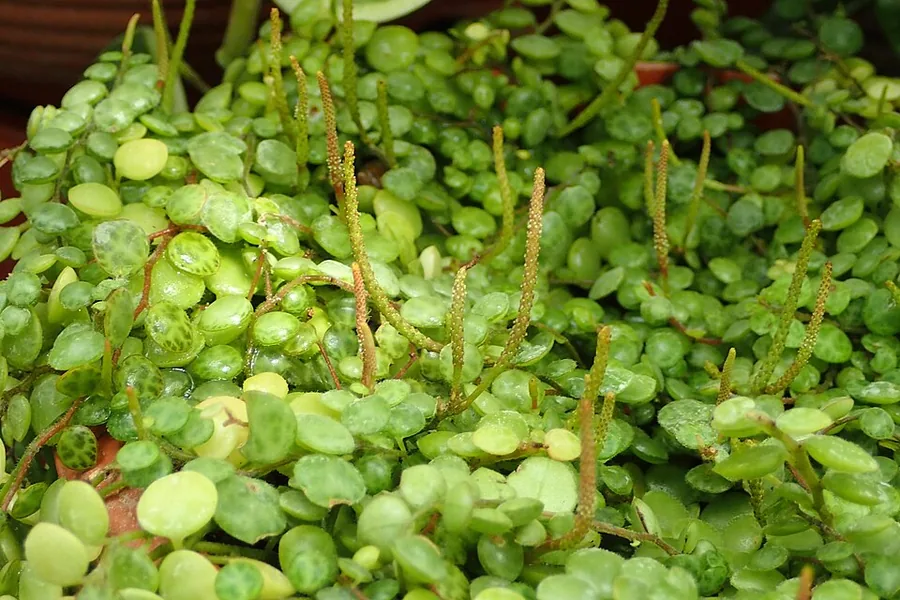
String of turtles is a small trailing peperomia from the rainforests of Ecuador, where it creeps along the forest floor and over mossy logs. The draw is the foliage. Each leaf is round and barely the size of a fingernail, marked with a pale web of veins that really does look like a tiny turtle shell. It grows slowly and stays compact, trailing just 9 to 12 inches (23 to 30 cm), which makes it a favorite for a shelf edge or a small hanging pot.
It earns its easy reputation by asking for very little. Bright, indirect light and a pot that drains well cover most of what it needs, and it is forgiving enough to handle a missed watering far better than a soggy one. The leaves are semi-succulent, so they hold a reserve of water and let the plant coast between drinks.
The one thing it won't forgive is wet feet. Treat it like a fussy fern with constant moisture and the roots rot fast. Give it room to dry out partway and a spot with good light, and a single plant fills out into a cascade of patterned little leaves that lasts for years.
Care
The short version: bright, indirect light, a fast-draining pot, and water only once the top half of the soil has dried. Keep it warm, feed it lightly in the growing months, and resist the urge to overwater.
Light
Give it bright, indirect light, the kind a few feet back from an east or south-facing window. It tolerates medium and even low light, but the turtle-shell markings fade without enough of it. Keep it out of harsh, direct sun, which scorches the small leaves.
Water
Let the top half of the soil dry out before you water again, which usually lands somewhere between every 7 and 14 days. The semi-succulent leaves hold their own reserve, so the plant copes with going dry far better than staying wet. Overwatering is the surest way to kill it.
Soil
Plant it in a well-drained houseplant or cactus mix, the kind that lets water run through rather than sit. A loamy or sandy texture works well, and a pH anywhere from 5.5 to 7.5 suits it fine. Drainage matters more than anything else here.
Temperature
Keep it in the comfortable range of 68°F to 75°F (20°C to 24°C), which is to say normal room temperature. It has no tolerance for frost or cold drafts, so keep it away from chilly windows and doorways in winter.
Humidity
Average household humidity is plenty, so there's no number to fuss over. It appreciates a slightly more humid spot, but it does just fine in ordinary room air without misting or a humidifier.
Feeding
Feed lightly through spring and summer while it's actively growing. A weak liquid fertilizer about once a month works, or you can use a slow-release granular feed once a year. This is a slow grower, so go easy and don't overdo it.
Pruning
Pinch back the trailing stems now and then to push the plant toward fuller, bushier growth. Trim off any stems that turn leggy or get damaged, and the plant keeps a tidier shape.
Repotting
This one likes to be snug in its pot and can stay put for several years. Only move it up when roots start poking from the drainage holes, water runs straight through, or growth stalls, and even then go just one size larger.
Size & spacing
It stays small, trailing 9 to 12 inches (23 to 30 cm) with a spread of only 3 to 4 inches (8 to 10 cm). That modest footprint is what makes it such an easy fit for a shelf, a desk, or a small hanging pot.
Troubleshooting
Nearly every problem with this plant traces back to water or light. Catch the early signs on the leaves and roots and you can turn things around before they go too far. Match what you see below, then act.
Leaves dropping or yellowing with soft, mushy stems
This is almost always root rot from overwatering, the one thing that kills this plant fastest. The soil sits wet, the roots turn brown and soft, and the leaves let go. Cut watering right back, repot into a fresh, well-draining mix, and trim away any rotted roots before they spread.
Fix:
- Reduce watering frequency
- Let soil dry partway before watering again
- Repot into fresh well-draining mix and trim rotted roots if rot is present
Sticky residue, fine webbing, or tiny insects on the plant
Sap-sucking pests like mealybugs, spider mites, scale, and whiteflies leave behind sticky sap, webbing, or visible bugs at the leaf undersides and stem joints. Wipe them off, treat with insecticidal soap, and move the plant away from your others so it doesn't pass them along. This one usually shrugs off pests, so an infestation often arrives on a new plant.
Fix:
- Wipe off pests
- Treat with insecticidal soap
- Isolate the plant to prevent spread
Faded leaves with washed-out markings
When the turtle-shell pattern goes flat and dull, the plant is starved for light. It has been sitting too far from a window in dim conditions. Move it to bright, indirect light from an east or south-facing window and the markings sharpen back up.
Fix:
- Move to a spot with bright, indirect light from an east or south-facing window
Toxicity
Good news for a home with pets or small children. The ASPCA lists this trailing peperomia as non-toxic, and no part of the plant is known to harm cats, dogs, or anyone else who takes a curious bite. You can set it on a low shelf without worry.
Safe for
People · Cats · Dogs · Horses · Rabbits · Livestock · Birds
Cats None
The ASPCA lists this peperomia as non-toxic to cats, so a curious nibble is no cause for worry.
Dogs None
Dogs are in the clear here too. The ASPCA rates the plant non-toxic to them, and a chewed trailing stem won't poison your dog.
Horses Safe
Nothing in this plant is known to harm horses, though as a small trailing houseplant it rarely crosses their path.
Rabbits Safe
A rabbit that grabs a mouthful of the leaves should be fine, since the plant carries no toxins that affect them.
Livestock Safe
Grazing animals such as cattle, goats, and sheep face no toxic risk from this peperomia.
Birds Safe
Pet birds can perch and peck without trouble. The plant holds nothing that would poison them.
People Safe
This peperomia is safe around children, so a stray leaf in a small hand is nothing to panic over.
How to propagate
Making more string of turtles is simple, and a single plant gives you plenty of material. You can root a single leaf or a whole length of stem, both during the warm growing months.
Leaf cuttingsEasy
Spring or summer during active growth · Several weeks to a few months to root and establish
Pluck a healthy leaf with its little stalk still attached and press it into moist, well-draining mix. Do this in spring or summer while the plant is growing, then be patient, because roots and a new plant take anywhere from a few weeks to a couple of months to take hold.
Stem cuttingsEasy
Spring or summer during active growth · Several weeks to root
Snip a stem a few inches long during the spring or summer growth and lay it on moist mix. A dab of rooting hormone speeds things along, and the cutting usually puts down roots within a few weeks.
Myths
String of turtles is a true succulent and should be watered like a cactus and kept bone dry.
It is only a semi-succulent. The leaves do bank a little water, but the plant likes to dry just partway between drinks, not all the way out. Leave it parched and it sulks, yet overwatering is the far bigger danger and the usual cause of a plant lost to rot.