Houseplant · Piperaceae
Peperomia 'Hope'
Peperomia deppeana × quadrifolia 'Hope'
Easy, pet-safe, and happy to trail, Peperomia 'Hope' asks only for bright indirect light and a soil that's allowed to dry out.
Bright indirect
USDA 11–12
3–6 in · 8–15 cm
Overview
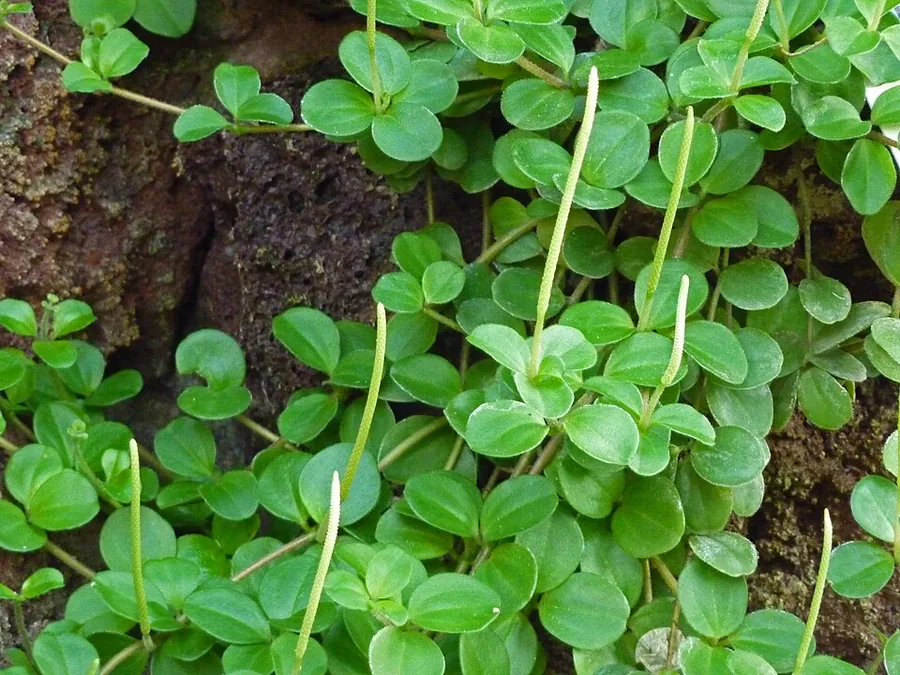
Peperomia 'Hope' is a small trailing houseplant in the pepper family, prized for the round, coin-shaped leaves that line its stems in tidy whorls. It's a hybrid, a cross between two Mexican and Central American species, and the leaves are semi-succulent, holding enough water to carry the plant through a missed watering or two.
The habit is what people grow it for. Stems trail to 2 to 4 feet (61 to 122 cm) over time, spilling out of a hanging basket or down off a shelf, while the plant itself stays low at just 3 to 6 inches (8 to 15 cm) tall. Growth is steady rather than fast, so it keeps a neat shape without much work.
Best of all, it forgives beginners. Give it the light it likes, hold back on the watering can, and it settles in for years. It's also non-toxic and pet-safe, which makes it an easy yes for a home with cats, dogs, or small children.
Care
The short version: bright, indirect light and a well-draining mix you let almost dry out before watering again. Feed lightly through the growing season, keep it above 60°F (15.6°C), and resist the urge to overwater those water-storing leaves.
Light
Give it bright, indirect light, the kind it gets near a north or east window. It will get by in medium light or even low light, but the trade is slower growth and longer, leggier stems. Keep it out of harsh direct sun, which scorches the leaves.
Water
Let the top half of the soil dry out before you water again, then water thoroughly and tip away anything that pools in the saucer. The semi-succulent leaves store their own water, so the real risk is overwatering, not underwatering. Ease off through fall and winter when growth slows.
Soil
Plant it in a well-draining mix loosened with orchid bark, coconut coir, or perlite so water runs straight through. It likes things on the acidic side, around pH 6.0 or a little below, and a loam and sand blend suits the parent species just as well.
Temperature
Keep it warm, no colder than 60°F (15.6°C). It's a tropical plant with no tolerance for frost, so an indoor spot away from cold windows and drafts is exactly what it wants.
Humidity
Ordinary household humidity is enough, so there's no number to hit. It appreciates a little extra moisture in the air, but it adapts well to a normal room without any fuss.
Feeding
Feed monthly from spring through early fall with a liquid houseplant fertilizer diluted to half strength. Stop entirely from fall through winter, when the plant is resting and can't use the extra.
Pruning
Pinch and prune whenever stems run long and bare. Tip-pruning pushes the plant to branch, which keeps it full and bushy instead of stringy, and the pieces you remove root easily into new plants.
Repotting
This slow grower likes to stay slightly potbound, so repot only every 2 to 3 years or when roots start circling and poking out the drainage holes. When you do, move up just one pot size into fresh mix.
Size & spacing
The plant stays low at 3 to 6 inches (8 to 15 cm) tall, but its trailing stems reach out 2 to 4 feet (61 to 122 cm). Give it room to cascade from a shelf or basket and it shows off that habit best.
Troubleshooting
Almost every problem with Peperomia 'Hope' starts at the watering can or the window. Soggy roots and too little light cause most of the trouble, with a few common pests rounding out the list. Match what you see below, then fix the cause rather than the symptom.
Mushy black stems and a plant collapsing at the soil line
This is root rot, and it traces back to soil that stays too wet for too long. Tip the plant out and check the roots, because rotted ones turn brown or black and squash between your fingers while the soil smells sour. Cut away every soft root and stem, take a few healthy tip cuttings as insurance, and repot what's left into fresh, fast-draining mix.
Fix:
- Remove the plant from wet soil and cut away all soft, blackened roots and stems with clean tools
- Take healthy tip cuttings to salvage the plant if the base is badly rotted
- Repot remaining healthy tissue into fresh, fast-draining mix
- Withhold water until the plant recovers and the top of the soil dries
Shriveled, soft leaves that have lost their plump look
When the round leaves go soft and wrinkled, the plant is thirsty or sitting in dry air. Check the soil first, because bone-dry mix and deflated, semi-succulent leaves point to underwatering. Give it a thorough drink, let the excess drain, and the leaves usually firm back up within a day or two; a pebble tray helps if your air runs very dry.
Fix:
- Water thoroughly and let excess drain
- Resume a consistent moderate watering schedule
- If air is very dry, raise humidity with a pebble tray or grouping plants
Leaves dropping off all at once
A burst of falling leaves usually comes down to soggy roots or a cold draft. Feel the soil and check the spot, since wet mix points to overwatering while a chilly windowsill below 60°F (15.6°C) points to cold stress. Ease off the water, move the plant out of any draft, and trim away any roots that have already turned to rot.
Fix:
- Correct watering: let the soil almost dry between waterings and ensure good drainage
- Move the plant away from cold drafts and keep it above the recommended minimum temperature
- Inspect roots and trim any rot, repotting into fresh mix if needed
Fine webbing and speckled leaves with tiny moving dots
Webbing and pale stippling are the work of spider mites, which move in when the air turns hot and dry. Tap a leaf over white paper and you'll see the specks crawl. Rinse and wipe the foliage to knock them back, follow up with insecticidal soap or horticultural oil per the label, and keep the plant away from the others until it's clean.
Fix:
- Rinse foliage and wipe leaves to physically remove mites
- Treat with insecticidal soap or horticultural oil, repeating per label
- Isolate the plant from others until controlled
White cottony clusters where the leaves meet the stems
Those white, waxy tufts tucked into the leaf joints are mealybugs, and the sticky honeydew they leave is a giveaway. Dab each one with a cotton swab soaked in 70% isopropyl alcohol, then treat the whole plant with insecticidal soap or horticultural oil and repeat as they reappear. Isolate it and check the plants nearby, since mealybugs spread fast.
Fix:
- Dab insects with a cotton swab dipped in 70% isopropyl alcohol
- Treat with insecticidal soap or horticultural oil, repeating as needed
- Isolate the plant and inspect nearby plants
Long bare stems with leaves spaced far apart
Leggy, stretched-out growth means the plant is reaching for light. You'll see it lean toward the window, with long gaps between small leaves on the new stems. Move it somewhere brighter near a north or east window, pinch back the bare stems to push fresh branching, and root the trimmings to fill the pot back out.
Fix:
- Move to a brighter spot with bright, indirect light (near a north or east window)
- Pinch or prune back leggy stems to encourage branching
- Propagate trimmed cuttings to refill the pot for a fuller look
Toxicity
Good news for pet owners: Peperomia 'Hope' is non-toxic and safe around cats, dogs, and other animals. The genus is documented as pet-friendly, so a curious nibble is nothing to fear. As with any houseplant, a large mouthful might cause a brief, mild stomach upset, so it's still worth keeping bites to a minimum.
Safe for
People · Cats · Dogs · Horses · Rabbits · Livestock · Birds
Cats None
Safe to share a room with. The ASPCA lists related peperomia species as non-toxic to cats, so a curious nibble won't poison your cat, though a big mouthful of any plant can leave any animal with a passing upset stomach.
Dogs None
Dogs are in no danger here. Peperomia is documented as non-toxic to dogs, and the worst a chewed leaf is likely to bring is brief, mild tummy trouble if a dog really goes to town on it.
Horses None
No toxic compounds put horses at risk, and extension references list the genus as non-toxic to them. There's no special need to fence this one off.
Rabbits None
Rabbits can be around it without concern. Nothing in the plant is poisonous to them, so a stolen bite is harmless even if it isn't part of a proper rabbit diet.
Livestock None
Grazing animals face no toxicity from this plant. As a small trailing houseplant it rarely crosses their path anyway, and contact with it does no harm.
Birds None
Pet birds are safe near it, with no toxic parts to worry about. A bird that picks at a leaf won't come to any harm.
People None
Harmless to people and a sound pick for a home with small children. It isn't grown to be eaten, but a leaf in a curious mouth is nothing to panic over.
As a semi-succulent the sap is generally regarded as non-irritating, but as with any houseplant ingestion of large amounts may cause mild, transient stomach upset in pets; supervise curious pets
How to propagate
Peperomia 'Hope' is one of the easiest houseplants to multiply, and the trimmings you take to keep it bushy are exactly what you root into new plants.
Stem cuttingsEasy
Spring to summer · Several weeks to root
Stem cuttings are the easy way to make more of this trailer. Snip a tip with at least one node, stand it in water or push it into moist mix, and do it in spring or summer while the plant is growing. Give it a few weeks and roots fill in, then pot it up as a new plant.
Leaf cuttingsModerate
Spring to summer · Several weeks to root
Leaf cuttings give you a second route, the way many peperomia propagate. Take them in spring or summer too, and expect them to be slower and a touch fussier than stem cuttings, rooting over several weeks before they push new growth.
Myths
Peperomia 'Hope' is a true species, Peperomia rotundifolia 'Hope' or Peperomia tetraphylla 'Hope'.
'Hope' is a patented hybrid cultivar, not a species. It came from a cross between Peperomia deppeana and Peperomia quadrifolia, both accepted species on Kew's Plants of the World Online, and carries plant patent PP24794. The trade keeps mislabeling it as a rotundifolia or tetraphylla cultivar, but the name on the patent is the accurate one.
Peperomia is toxic to cats and dogs, like so many trailing houseplants.
Peperomia is documented as non-toxic to cats and dogs. The ASPCA lists several peperomia species as safe for both, and NC State Extension tags the whole genus as non-toxic to cats, dogs, and horses. You can grow 'Hope' in a pet home without worry.
Sources
- Missouri Botanical Garden Plant Finder
- NC State Extension Gardener Plant Toolbox
- Missouri Botanical Garden Plant Finder
- NC State Extension Gardener Plant Toolbox
- Clemson Cooperative Extension HGIC
- ASPCA Animal Poison Control
- ASPCA Animal Poison Control
- United States Patent and Trademark Office (USPP24794P3)
- Plants of the World Online, Royal Botanic Gardens Kew
- Plants of the World Online, Royal Botanic Gardens Kew