Houseplant · Apocynaceae
String of Hearts
Ceropegia woodii
Give it bright light and a dry-out between drinks, and the hearts trail on for years.
Bright indirect
59–86°F · 15–30°C
USDA 10–12
3–12 ft · 0.9–3.7 m
Overview
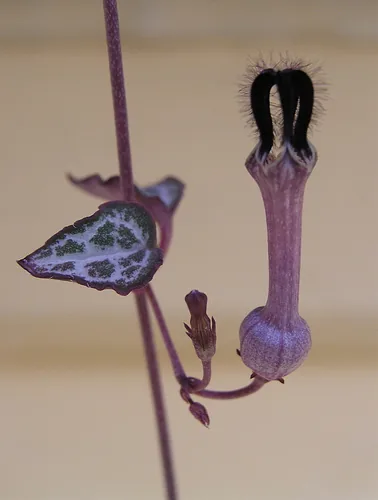
String of hearts is a trailing semi-succulent from southern Africa, where it scrambles over rocks as a tuberous vine. The thin stems carry pairs of small heart-shaped leaves, marbled silver over green, that give the plant its name and its other handles like rosary vine and chain of hearts. Grown indoors it spills from a hanging pot or a high shelf, the strands reaching several feet over time.
It earns its easy reputation honestly. The plant stores water in its leaves and along its stems, so it shrugs off a missed watering far better than it forgives a soggy pot. Give it a bright spot and a gritty, fast-draining mix and it more or less looks after itself, putting on length fast through spring and summer.
The two things it asks for are bright indirect light and a dry-out between waterings. Skimp on light and the vines stretch pale and bare; overwater and the roots rot. Get those two right and you have a long-lived, forgiving plant that's simple to multiply into more.
Care
The short version: bright indirect light, a free-draining cactus or succulent mix, and water only once the soil has dried out completely, easing off further through winter dormancy.
Light
Give it bright indirect light, the brighter the better short of harsh midday sun. A west- or south-facing window is ideal, since strong light is what keeps the vines compact and the leaves boldly marbled. In dim corners the growth turns pale and stretchy.
Water
This is the part that matters most. Let the soil dry out completely between waterings, then water thoroughly, because the plant stores its own reserves and rots in a pot that stays wet. Ease off even further through winter dormancy, when it barely drinks at all.
Soil
Plant in a free-draining cactus or succulent mix, ideally cut with coarse sand or perlite so water runs straight through. It tolerates a wide pH range from 6.0 to 8.0, so the drainage matters far more than the chemistry.
Temperature
Ordinary room warmth suits it, anywhere from 59°F to 86°F (15°C to 30°C). Keep it above 60°F (16°C) through winter and away from cold drafts, since it has no tolerance for frost.
Humidity
Average household air is fine and low humidity is no problem for a semi-succulent like this. There's no misting to do and no number to chase.
Feeding
Feed lightly during the spring and summer growing season with a half-strength balanced houseplant fertilizer, no more than once a month. Stop feeding entirely through winter while the plant rests.
Pruning
Trim back any overly long or sparse vines to push the plant into fuller, bushier growth. Don't waste the prunings, since every trimmed strand roots easily into a new plant.
Repotting
This plant likes to be crowded, so repot only when you must. Tell-tale signs are roots filling the pot, soil that dries out almost immediately after watering, and growth that has stalled.
Size & spacing
35–144 in (90–365 cm) tall
Troubleshooting
Most string of hearts trouble traces back to just two things: not enough light, or too much water. Learn to read the vines and the soil and you can head off both before they take hold. Match what you see below, then act early.
Yellow leaves with soft, mushy stems near the soil
This is root rot from overwatering, the one mistake that kills this plant. Soil that stays wet turns the lower stems mushy and the roots brown and soft. Stop watering, let the mix dry out fully, and repot into a free-draining cactus or succulent mix while cutting away any rotted tissue. Take a few healthy cuttings or tubers as a backup if the rot has spread.
Fix:
- Stop watering and allow the mix to dry out completely
- Repot into a free-draining cactus/succulent mix and remove rotted tissue
- Take healthy stem cuttings or tubers as backup if rot is advanced
Sticky residue, twisted growth, or bugs on the vines
Aphids, mealybugs, or scale are feeding on the plant. Watch for white cottony tufts, small raised bumps, or clusters of soft-bodied insects on the stems and leaf undersides. Wipe them off with a cotton swab dipped in isopropyl alcohol, follow up with insecticidal soap, and keep the plant away from the rest of your collection until it clears.
Fix:
- Wipe off pests with a cloth or cotton swab dipped in isopropyl alcohol
- Treat with insecticidal soap as needed
- Isolate the plant to prevent spread
Long, bare vines with wide gaps between the hearts
Stretched, gappy growth almost always means too little light. The leaves look pale instead of well marbled, and the stems run on with little to show for it. Move the plant to a brighter window with bright indirect light and trim the leggy strands to push out denser growth.
Fix:
- Move to a brighter spot with bright indirect light, such as a west- or south-facing window
- Trim leggy growth to encourage denser branching
Toxicity
Good news for pet owners and parents: string of hearts is widely regarded as non-toxic and safe around cats, dogs, and the rest of the household. The milky sap can leave sensitive skin a little itchy, so wash your hands after taking cuttings, but there's nothing here to worry about if a curious nibble happens.
Safe for
People · Cats · Dogs · Horses · Rabbits · Livestock · Birds
Cats None
String of hearts is regarded as non-toxic, so a curious cat that nibbles a heart or two should be fine. A mouthful of any houseplant can still cause a little drooling or a brief stomach upset, but nothing serious.
Dogs None
Dogs can share a room with this trailing vine without worry. It carries no known toxin for them, though chewing the stems may bring on mild, passing tummy trouble like any non-food plant would.
Horses None
There is no toxicity concern for horses here. It is a small indoor vine they are unlikely to meet, and the plant holds nothing that would harm them.
Rabbits None
Rabbits are safe around string of hearts. The foliage isn't poisonous, so a stray bite won't hurt, but keep the trailing strands out of reach to spare the plant.
Livestock None
Grazing animals face no danger from this plant, which lives indoors in a pot far from any pasture. Nothing in it is toxic to them.
Birds None
Pet birds can perch and peck near this vine safely, since it holds no toxin known to harm them. A nibbled leaf now and then is no cause for alarm.
People None
String of hearts poses no real danger to people. The milky sap may leave sensitive skin a touch itchy, so wash your hands after taking cuttings, and there's no reason to make a meal of it.
As with any houseplant, discourage pets and children from chewing the foliage, and the milky sap of Apocynaceae plants may cause mild irritation in some individuals.
Varieties
Most people grow the plain species, but one named form turns up often enough to know.
Ceropegia woodii 'Variegata'
A variegated form marbled in pink, cream, and green that grows more slowly than the plain species.
How to propagate
Few houseplants are as generous as this one. Every long vine is a supply of new plants, whether you take a cutting, root a single bead, or layer a stem still attached to the parent.
Stem cuttingsEasy
Active growing season (spring to summer) · A few weeks to root, especially with bottom heat
Stem cuttings are the simplest way in. Take them during the active growing season from spring through summer, set them in a free-draining mix, and they put down roots within a few weeks. A little bottom heat speeds the whole thing along.
Offsets & pupsEasy
Active growing season · A few weeks once in contact with soil
The vines carry small aerial tubers, the bead-like tubercles that give the rosary vine its name. Press one into the soil during the growing season and it roots on its own, sending up a new plant within a few weeks.
LayeringEasy
Active growing season · A few weeks
Layering skips the cutting altogether. Pin a trailing stem down so its tubercles touch the soil while it's still attached to the parent, wait a few weeks during active growth for roots to form, then snip the new plant free.
Myths
String of hearts needs frequent watering to stay lush like a typical leafy houseplant.
This is a drought-tolerant semi-succulent, not a thirsty leafy plant, and it wants to dry out completely between drinks. Overwatering is what kills it, rotting the roots beyond saving. Cut back even further once winter dormancy sets in and the plant stops growing.