Houseplant · Apocynaceae
Dischidia
Dischidia nummularia
Give it bright light, fast-draining roots, and a long dry-out, and dischidia trails happily for years.
Bright indirect
Every 7–14 days
64–84°F · 18–29°C
USDA 10–12
Overview
Dischidia is a trailing epiphyte from the wet tropics, where it clings to tree bark and rock rather than growing in soil. Most people know it by the strands of small, fleshy leaves that spill over the edge of a pot or a piece of mounted bark. It belongs to the same family as the milkweeds, and like its relatives it carries a thin milky sap in the stems.
What sets it apart as a houseplant is how it drinks. Out in the canopy its roots dry within hours of rain, so indoors it wants a coarse, airy mix and a real dry-out between waterings. Get that rhythm right and it grows fast, throwing out long trailing stems that look at home in a hanging pot or trained up a mount.
It asks for a bit more than a beginner plant, mostly around water and air. Warmth and high humidity keep it lush, while soggy roots are the one thing it won't forgive. Read the watering right and the rest comes easily.
Care
The short version: bright, indirect light, a coarse epiphyte mix that drains fast, and a full dry-out between waterings. Keep it warm and humid, feed lightly through the growing season, and never let the roots sit wet.
Light
Give dischidia bright, indirect light for the fullest growth, though it copes with medium indirect light too. Keep it out of harsh direct sun, which scorches the leaves, and expect leggy stems if the spot is too dim.
Water
Let the mix dry out completely before you water again, roughly every 7 to 14 days. This is an epiphyte built for fast-draining roots, so it's far more forgiving of dry spells than wet ones. Overwatering is the quickest way to kill it, since soggy roots rot fast.
Soil
Plant in a coarse, airy epiphyte or orchid mix of bark and perlite that water runs straight through. Many growers skip the pot altogether and mount it on bark, the way it grows in the wild.
Temperature
Keep it in the range of 64°F to 84°F (18°C to 29°C), which is comfortable indoor warmth. It has no tolerance for cold, so keep it away from chilly windows and drafts.
Humidity
This is a high-humidity plant that does best at 60% to 80%. A bathroom, a kitchen, or a spot near a humidifier suits it well, and dry indoor air will leave the leaves looking tired.
Feeding
Feed monthly from spring through summer with a dilute balanced liquid fertilizer while the plant is actively growing. Ease off through the cooler, slower months when it isn't putting out new growth.
Pruning
Trim back leggy or overlong trailing stems to push fuller, bushier growth. Cut away any rotted or damaged stems as you spot them to keep the plant healthy.
Repotting
Repot every 2 to 3 years, or sooner if roots crowd the container, growth slows, or the old mix breaks down and stays wet. Move it into fresh coarse mix and a pot only a little larger.
Size & spacing
Stems trail anywhere from 2 to 36 inches (5 to 91 cm) long and the plant spreads around 2 to 3 feet (61 to 91 cm). Hang it or set it high so the strands have room to cascade.
Troubleshooting
Nearly every problem with dischidia traces back to water and air. Catch the early signs on the roots, leaves, or stems and you can step in before anything spreads. Match what you see below, then act while it still helps.
Stems collapse and the base turns soft and mushy
This is root rot, almost always from too much water or a mix that holds moisture. As an epiphyte, dischidia wants its roots to dry out between drinks, so soggy conditions suffocate them fast. Slide the plant out, cut away every brown, soft root and stem, then repot into a fresh airy mix and water only once it dries.
Fix:
- Remove the plant and cut away all rotted roots and stems
- Repot into fresh coarse, fast-draining epiphyte mix
- Water only after the medium dries out
Spots appearing on the leaves
Marks like these point to leaf spot, which sets in when the air stays too damp or water lingers on the foliage. Water at the base and keep the leaves dry, give the plant more air movement, and pull off any badly marked leaves so it doesn't spread.
Fix:
- Water at the base and avoid wetting foliage
- Improve air circulation around the plant
- Remove badly affected leaves
Stems growing long and sparse with gaps between leaves
Stretched, leggy stems mean the plant is reaching for more light. Move it somewhere brighter with strong indirect light, but keep it out of harsh direct sun that scorches the leaves. A quick trim of the lankiest stems pushes denser, fuller regrowth.
Fix:
- Move to a brighter spot with bright, indirect light
- Avoid harsh direct sun that scorches leaves
- Trim leggy stems to promote denser regrowth
Toxicity
Good news for a home with pets or children: dischidia carries no real poisoning risk. The plant has a milky sap that can taste unpleasant, so a curious nibble might bring on a little drooling or an upset stomach, but nothing dangerous. You can keep it around cats, dogs, and small children without worry.
Safe for
People · Cats · Dogs · Horses · Rabbits · Livestock · Birds
Cats None
Dischidia isn't known to poison cats, so a curious nibble shouldn't cause harm. A cat that chews a lot of any houseplant might get a mildly upset stomach, but that passes on its own.
Dogs None
Dogs can share a room with this plant without worry. There's no toxic compound here, though a dog that swallows a mouthful of stems may drool or bring it back up simply because the leaves are tough.
Horses None
Nothing in dischidia is poisonous to horses. As a small trailing houseplant it's unlikely to ever cross a horse's path anyway.
Rabbits None
Rabbits face no poisoning risk from this plant. Keep it out of reach more to spare the foliage than to protect the rabbit.
Livestock None
Grazing animals such as cattle, goats, and sheep aren't harmed by dischidia, which lives indoors and out of their reach in any case.
Birds None
Pet birds can perch and forage near a dischidia safely, with no toxic parts to worry about.
People None
The plant poses no poisoning danger to people, including children. It's grown for looks rather than eating, so there's no reason to taste it.
Wear gloves when handling, as the milky sap may irritate skin and eyes.
Helpline numbers

United States
ASPCA Animal Poison Control: (888) 426-4435 (fee applies)

United Kingdom
Animal PoisonLine: 01202 509000 (fee applies)

Australia
Animal Poisons Helpline: 1300 869 738
Varieties
Several dischidia turn up in the houseplant trade, each with its own leaf shape and trailing habit. These are the ones worth knowing by name.
Dischidia nummularia
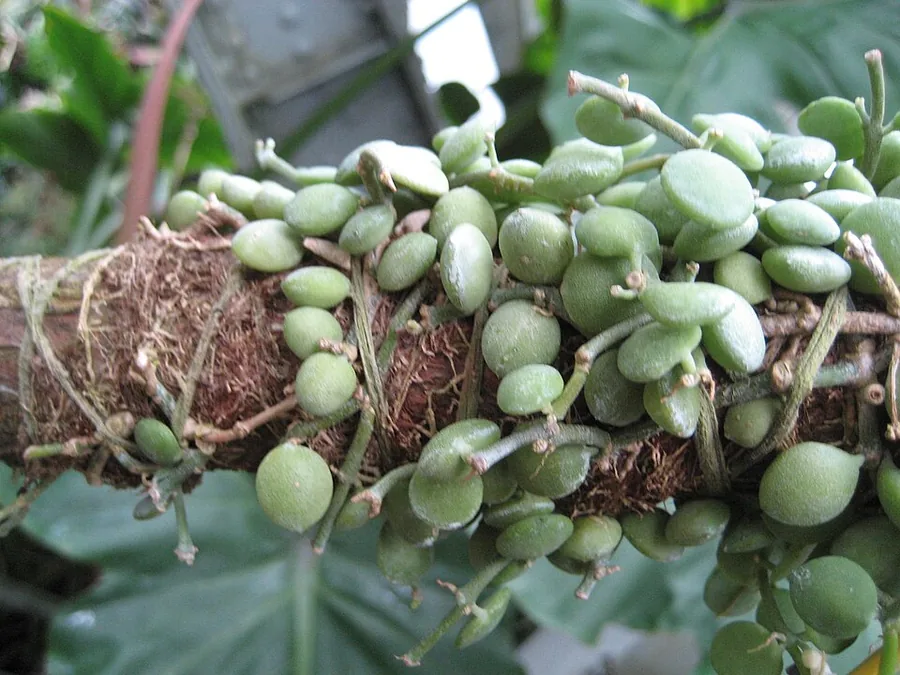
Called string of nickels for its trailing stems strung with rounded, coin-like paired leaves, this species ranges naturally from southern China through tropical Asia to northern Queensland.
Dischidia ruscifolia
Known as million hearts, it carries dense trailing stems lined with small heart-shaped leaves.
Dischidia ovata
The watermelon dischidia shows oval green leaves striped with silver that pick up a pinkish-red tinge in bright light.
How to propagate
Dischidia is simple to multiply, and a single healthy plant gives you all the cuttings you need to fill more pots or share with friends.
Stem cuttingsEasy
Spring or summer during active growth · A few weeks to root
Stem cuttings are far and away the easiest way to make more dischidia. Take them in spring or summer while the plant is growing, set them in a coarse, moist mix, and they put down roots in a few weeks. From there a cutting fills out into a trailing plant identical to the one you took it from.
Myths
Dischidia are parasites that harm the trees they climb.
These plants are epiphytes, and sometimes lithophytes, which means they perch on tree bark or rock only for support. They pull nothing from the surface they sit on and take their water and food from the air and rain instead. A dischidia never feeds off its host, so it does no harm to the tree.