Houseplant · Apocynaceae
Sweetheart Hoya
Hoya kerrii
Treat it like a succulent, give it bright light, and the sweetheart hoya asks for almost nothing.
Bright indirect
45–80°F · 7–27°C
USDA 10–12
Overview
The sweetheart hoya earns its name from thick, waxy leaves shaped like plump green hearts. It's a slow-growing climber from the forests of Indo-China and Malesia, where it scrambles up trees as an epiphyte. Indoors it stays compact and easygoing, which is exactly why it turns up on so many windowsills.
You'll most often meet it as a single rooted heart in a small pot, sold around Valentine's Day. That charming version is just one leaf, and it tends to stay one leaf. A true vining plant comes from a cutting with a stem and a node, and given time it trails into long strands of overlapping hearts.
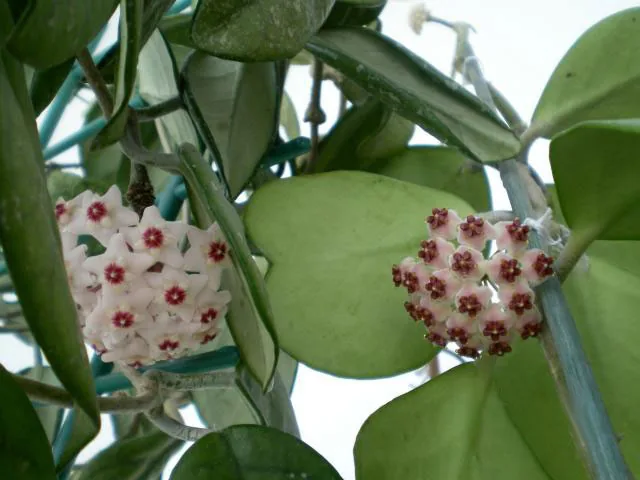
Care is mostly about restraint. The fleshy leaves store their own water, so the fastest way to kill this plant is kindness with the watering can. Give it light, let it dry out, and leave it slightly crowded in its pot, and it rewards the patience with clusters of star-shaped flowers.
Care
The short version: bright indirect light, water like a succulent and only once the soil dries out, a fast-draining mix, and a pot it can stay a little crowded in.
Light
Give it bright indirect light near a south, east, or west window, and it will hold its color and bloom far better. It puts up with medium light or some shade, but growth slows and flowers rarely come. Keep it out of harsh direct sun, which scorches the waxy leaves.
Water
Treat this plant like a succulent. The thick leaves store plenty of water, so let the soil dry out completely between drinks, waiting until the top third to half is dry or the leaves just start to pucker. Water very sparingly through winter, because overwatering is the main cause of root rot and the quickest way to stop it flowering.
Soil
Use a fast-draining, loose mix that never stays soggy. A blend of one part potting soil, one part orchid bark, and one part perlite dries quickly and suits it well. It isn't fussy about pH and is happy anywhere from 6.0 to 8.0.
Temperature
Ordinary room warmth is ideal, roughly 45°F to 80°F (7°C to 27°C). Keep it above 45°F (7°C) and away from cold drafts, since it has no tolerance for a chill.
Humidity
Average household humidity suits it fine, so there's no number to chase. The waxy leaves hold their own moisture, which makes this plant far more forgiving than most tropicals about dry indoor air.
Feeding
Feed monthly with a dilute liquid houseplant fertilizer during active growth from spring through fall. A formula with an NPK ratio around 2:1:2 or 3:1:2 works well. Skip feeding in winter while the plant rests.
Pruning
This slow grower barely needs pruning. The one rule that matters: never cut off the bare flower spurs after the blooms fade, because the plant reuses those same spurs to flower again, and removing them costs you next year's display.
Repotting
Repot only every few years, since hoyas bloom better when they're slightly potbound. Move up a size when roots push through the drainage holes, water runs straight through, or the plant dries out almost as soon as you water it.
Troubleshooting
Almost every problem with this plant traces back to water, light, or expecting a single leaf to do more than it can. Match what you see below, then adjust before a small slip turns into rot.
Soft, blackened base and a plant that collapses at the soil line
This is root rot, and it almost always comes from too much water or a pot that holds it. The thick leaves already store plenty, so soggy mix suffocates the roots fast. Stop watering, cut away any rotted tissue, and repot into a fast-draining mix in a pot with drainage holes. If the base is gone, take a healthy cutting with a node and start over.
Fix:
- Stop watering and let the soil dry out
- Remove rotted tissue and repot into a fast-draining mix in a pot with drainage holes
- Take a healthy cutting (with a node) to start over if the base is lost
Wrinkled, puckered leaves that have lost their plumpness
Puckering points one of two ways, so check the soil before you act. Dry mix with firm roots means the plant went too long without a drink, and a thorough watering plumps the leaves back up. Wet mix with mushy roots means overwatering has damaged the roots so they can no longer take up water, and the fix there is better drainage and a chance to dry out.
Fix:
- If too dry, water thoroughly and resume a regular let-it-dry cycle
- If overwatered, correct drainage and let the soil dry before watering again
Sticky residue, warped new growth, or bugs on the leaves
Sap-sucking pests like mealybugs, aphids, spider mites, and scale all show up on hoyas. Look for white cottony masses, soft little insects, fine webbing with stippling, or small bumps along the stems. Wipe them off and treat with insecticidal soap or horticultural oil, then isolate the plant and repeat until it stays clean.
Fix:
- Wipe off pests and treat with insecticidal soap or horticultural oil
- Isolate the plant and repeat treatment until clear
A lone heart leaf that never sends out a vine
The cute single heart sold in a pot is usually just a leaf with no node, and a leaf alone has no growth point to push out stems. It can stay plump and green for years, but it will never vine on its own. If you want a trailing plant, start with a stem cutting that carries at least one node.
Fix:
- Accept that the leaf will likely remain a single leaf (it can stay green and alive for years but will not vine)
- If you want a vining plant, obtain a stem/tip cutting that includes at least one node
A healthy plant that simply refuses to bloom
Most often the plant just needs more light, so move it close to a south, east, or west window where the light is bright but indirect. Ease off the water too, since soggy roots hold blooms back. Single leaves and very young plants won't flower at all, so patience matters. Whatever you do, leave the old flower spurs in place, because the plant blooms from those same spurs again.
Fix:
- Move to a brighter spot with bright indirect light near a south/east/west window
- Reduce watering and let the soil dry between waterings
- Be patient and do not cut off the flower spurs
Toxicity
Good news for households with animals: the sweetheart hoya is non-toxic and pet-safe. The ASPCA and NC State Extension both list it as safe for cats, dogs, and horses, and the rest of the family has nothing to fear either. A pet that overdoes it on any plant might get a brief stomach ache, but there are no real toxins to worry about.
Safe for
People · Cats · Dogs · Horses · Rabbits · Livestock · Birds
Cats None
The ASPCA and NC State Extension both list this hoya as non-toxic to cats, so a nibble is nothing to fear. A cat that gorges on any houseplant might drool or get a brief upset stomach, but that passes on its own.
Dogs None
Dogs are in the clear here too, with the same non-toxic listing from the ASPCA and NC State Extension. The worst a curious chewer is likely to face is a little mild, short-lived tummy trouble.
Horses None
Horses can graze near this one without worry, since both the ASPCA and NC State Extension tag it non-toxic to them.
Rabbits Safe
No toxins here put a rabbit at risk. As with any unfamiliar greenery, keep the portions small so a sudden bellyful doesn't unsettle a sensitive gut.
Livestock Safe
This is an indoor plant that grazing animals rarely meet, and it carries nothing that would harm them anyway.
Birds Safe
Pet birds can perch and pick near the waxy leaves safely, as the plant holds no compounds known to trouble them.
People Safe
There's nothing poisonous in this hoya for people, so a child's accidental taste is no cause for alarm. It isn't grown to eat, though, so there's no reason to make a meal of it.
Considered pet-safe; no special handling for toxicity is required, though pets eating any plant may have mild, transient GI upset
Varieties
The plain green form is the most common, but one named variety shows up in plant shops worth knowing.
'Variegata'
This one carries a green center on each heart-shaped leaf rimmed with a soft creamy-white border, giving it a brighter look than the plain green type.
How to propagate
There's only one reliable way to make more of this plant, and the whole trick is making sure your cutting has a node.
Stem cuttingsEasy
Spring to summer · Roots in a few weeks
Take a stem or tip cutting that includes at least one node in spring or summer, when the plant is growing. Stand it in a fast-draining mix and it roots in a few weeks. Skip the bare single leaf: it will root and live, but with no node it has no growth point and never turns into a vine.
Myths
A single sweetheart-leaf cutting will grow into a full vining plant.
A bare leaf will root, but with no node it has no growth point, so it stays one leaf for good. Penn State Extension is blunt about the cute potted heart: it is simply a single leaf of H. kerrii that will stay just as it is and never become a vine. For a trailing plant you need a cutting that includes a node and a bit of stem.