Ornamental · Plumbaginaceae
Statice
Limonium sinuatum
Give it full sun and sharp drainage, and statice rewards you with papery blooms that dry to keep their color for months.
Full sun
Every 7–10 days
61–81°F · 16–27°C
90–120 days
Overview
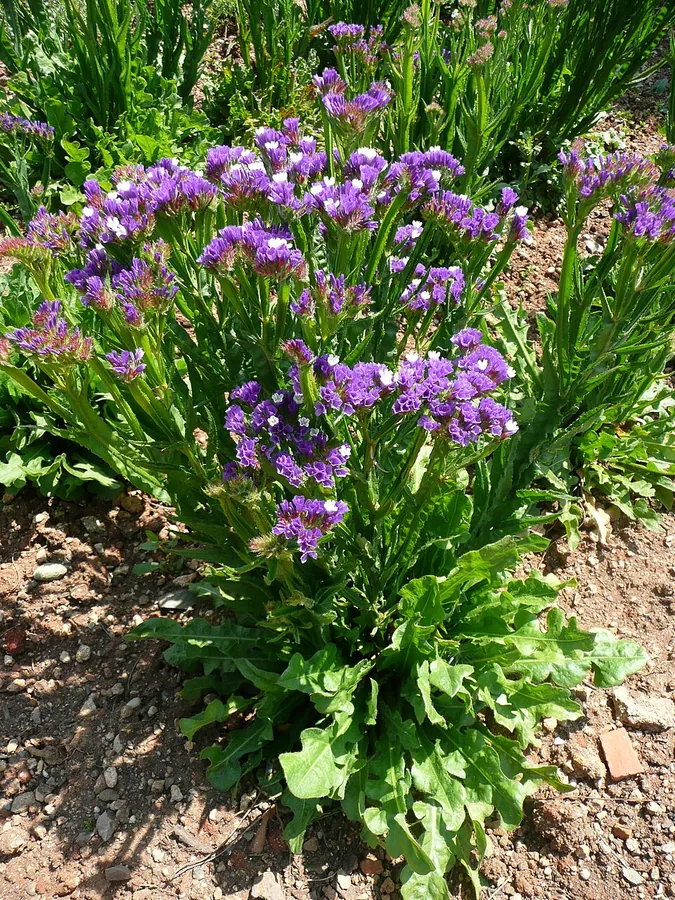
Statice earns its place for the bright, papery flowers it carries on stiff, winged stems all through summer. It belongs to the leadwort family and hails from the Mediterranean, where it grew along dry, sunny coasts, which is why it goes by sea lavender as well. Most gardeners run it as a warm-season annual, even though it's a tender perennial at heart, hardy only in the mild reaches of zones 8 to 10.
The draw is the color, and there's plenty of it. Flowers come in deep blue, purple, rose, apricot, and yellow, held in tight clusters that feel dry to the touch even on the living plant. That papery texture is what makes statice a florist's favorite for drying, since cut stems hold their shade for months with no fuss.
It asks for little once it's settled. Statice shrugs off drought and thrives in lean, sandy ground that would starve a fussier flower. What it won't forgive is wet feet, so the whole game is sun and drainage.
Care
The short version: full sun, light and sharply drained soil, and a careful hand with the watering can. Let it dry between drinks, feed it next to nothing, and give it room for air to move.
Light
Statice wants full sun, plain and simple, with no real tolerance for shade. Give it the brightest, most open spot you have, since weak light gives you floppy stems and washed-out blooms.
Water
Let the soil dry out between waterings, roughly every 7 to 10 days, and lean drier rather than wetter. The plant is drought tolerant once established, and the fastest way to kill it is to keep the roots soggy.
Soil
Plant in light, well-drained sandy loam, loam, or sand, and sharp drainage matters more than richness. It handles a wide pH band, anywhere from 6.0 to 8.0, so most garden ground suits it as long as water runs through.
Temperature
Statice grows best in mild warmth, between 61°F and 81°F (16°C to 27°C). It's a tender perennial that frost will cut down, which is why so many gardeners treat it as an annual.
Humidity
Average outdoor air is fine, so there's no target to hit. Good airflow counts for more than any humidity reading, because still, muggy conditions are what stress the plant and invite rot.
Feeding
Feed sparingly, if at all. Statice does well in lean soil and rarely needs more than a light dose of balanced fertilizer during the growing season, so heavy feeding only pushes soft growth.
Pruning
There's no deadheading to do, since each plant gives one long bloom rather than a repeat flush. Cut the stems when the flowers are fully colored, for fresh arrangements or to hang and dry.
Size & spacing
Plants reach 12 to 18 inches (30 to 46 cm) tall and spread 9 to 12 inches (23 to 30 cm) across. Set them about that far apart so air moves freely between them and the crowns stay dry.
When to plant
Statice runs on a frost-bracketed schedule. Start the seeds indoors in late winter, set the plants out once the spring frosts have passed and the soil has warmed, and cut flowers from early summer into fall where the weather stays cool.
Northern hemisphere
Southern hemisphere
Typical months for a temperate climate: start earlier in warm zones, later where spring frosts linger.
- Sow: 6 to 8 weeks before the last spring frost date, or direct sow at the last spring frost date
- Plant: After the last spring frost when soil has warmed
- Harvest: Summer (June to July), continuing into fall in cooler climates
Hardiness
USDA hardiness zones: 8–10
Temperature: down to -12°C
Troubleshooting
Most statice trouble traces back to too much water or muggy air rather than neglect. Watch the crown and the new growth, since that's where the first signs show. Match what you see below and act before a setback turns into a lost plant.
Wilting plant with a blackened crown at the soil line
This is crown and root rot, and it almost always comes from too much water or soil that drains poorly. Lift a struggling plant and you'll find soft, dark tissue at the base and mushy roots. Pull and bin the worst plants, then fix the drainage and water far less often before the rot spreads.
Fix:
- Remove and discard severely affected plants
- Improve drainage and reduce watering frequency
Stunted, sparse-flowering plants through a hot, muggy summer
Statice is a Mediterranean tender perennial that resents heat paired with humidity, and it sulks when the air stays heavy. Plants slow down and bloom poorly through a sticky summer. Give it full sun with sharp drainage and moving air, and where summers run hot grow it as a cool-season annual instead.
Fix:
- Site in full sun with excellent drainage and air movement
- Grow as a cool-season annual where summers are hot and humid
Curled new growth with a sticky film on the stems
Aphids gather on the tender tips and flower stalks, where you'll spot clusters of small soft-bodied insects and the shine they leave behind. Knock them off with a hard jet of water, and reach for insecticidal soap only if they keep coming back. Go easy on nitrogen too, since the soft flush of growth it drives is exactly what draws them in.
Fix:
- Dislodge aphids with a strong spray of water
- Use insecticidal soap if populations are heavy
Toxicity
Good news for pet owners: statice is safe. The ASPCA lists it among the non-toxic plants, so a cat, dog, or rabbit that nibbles a stem comes to no harm, and the dried blooms are just as harmless in a vase or wreath.
Safe for
People · Cats · Dogs · Horses · Rabbits · Livestock · Birds
Cats None
Safe to have around cats. The ASPCA clears statice for the litter-box crowd, so a curious nibble won't hurt.
Dogs None
No worries for dogs. A pup that chews a stem or a fallen flower head is in no danger.
Horses Safe
Horses can graze near statice without trouble, as it carries no known toxins for them.
Rabbits Safe
Rabbits aren't put at risk by it. The papery blooms and foliage hold nothing harmful.
Livestock Safe
Cattle, goats, and sheep can share a pasture with statice and come to no harm from a mouthful.
Birds Safe
Backyard and pet birds are fine around it, with no toxic parts to avoid.
People Safe
Harmless to people, which is why florists reach for it as a filler. Handling the stems and dried blooms poses no concern.
Varieties
Statice is mostly sold as seed series bred for cut-flower work. A few names turn up again and again, each leaning toward a particular color range or stem quality.
QIS Series
A uniform cut-flower strain whose name stands for Quick In Spring, sold in a broad spread of colors from dark blue and purple to apricot.
Pacific Series
A vigorous mix bred for long, strong stems that hold up well in both fresh and dried bouquets.
Sunset Mix
A warm-toned blend that runs through apricot, rose, and yellow.
How to propagate
Statice is grown from seed, the one reliable way to start it, whether you raise transplants indoors or sow straight into the bed.
SeedModerate
Sow indoors 6 to 8 weeks before the last spring frost, or direct sow after frost danger passes · Germinates in about 2 to 3 weeks; transplants establish over several weeks
Statice is grown from seed. Start it indoors 6 to 8 weeks before your last spring frost, or sow it straight in the ground once frost danger has passed. Seedlings break through in about 2 to 3 weeks and take several more to settle in. Give them warmth and a light, well-drained mix, and hold back on water so the young plants don't damp off.
Myths
Statice must be deadheaded constantly to keep blooming.
Each plant puts out one long bloom rather than a steady flush, so snipping spent heads won't coax more flowers. You can skip deadheading entirely and just cut stems when the color is full, for the vase or for drying.
Statice is poisonous to cats and dogs and unsafe in bouquets.
The ASPCA lists statice, also called sea lavender, among its non-toxic plants. It is a safe filler flower for arrangements in homes with pets.