Ornamental · Plumbaginaceae
Sea Thrift
Armeria maritima
Give it full sun and sharp drainage, and sea thrift cushions a rock garden in pink for years.
Full sun
Every 7–14 days
USDA 4–8
6–12 in · 15–30 cm
Overview
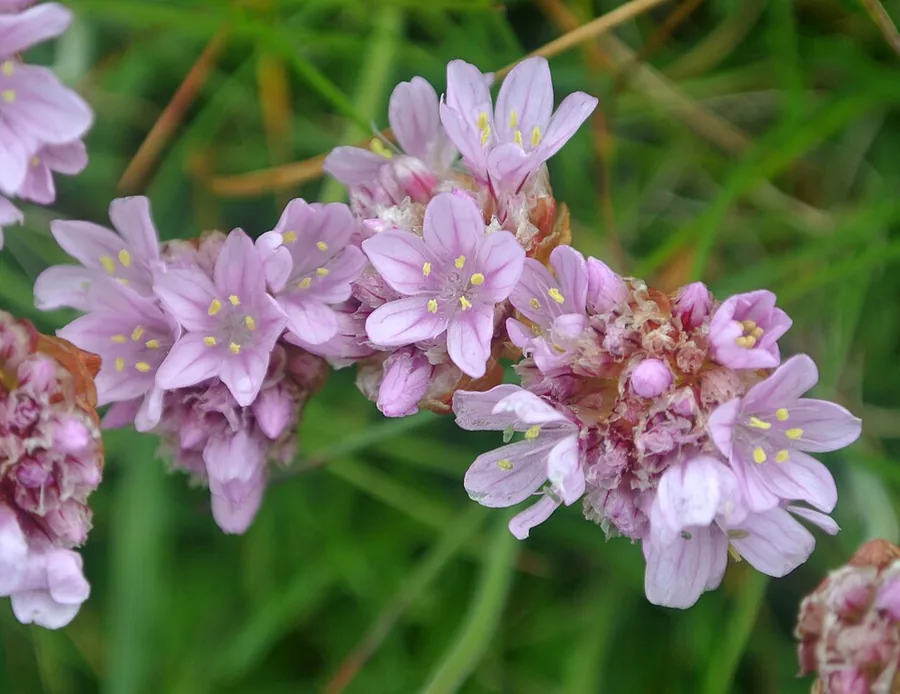
Sea thrift is a tough little evergreen perennial that grows wild on coastal cliffs and salt marshes, which tells you everything about what it wants. It forms a tidy grassy cushion of narrow leaves, then sends up bare stems topped with round pink to white flowers in spring. At 6 to 12 inches tall, it stays small enough for the front of a border, a rock garden, or a crevice in a wall.
What makes it easy is also what trips up new growers. The plant thrives on neglect in poor, gritty ground, but it sulks and rots in the rich, moist soil most gardeners work hard to build. Treat it mean, give it sun and sharp drainage, and it asks for almost nothing else.
It earns its keep beyond the flowers, too. The mounded foliage stays green through winter in much of its range, it shrugs off salt, wind, and drought, and a happy clump can hold its spot for many years before it needs splitting.
Care
The short version: full sun, lean and sharply drained soil, and a light hand with both water and fertilizer. Keep it dry and hungry, and it will reward you for years.
Light
Sea thrift wants full sun and flowers best there. It will take partial sun or light shade, but too little light leaves the cushion loose and open and cuts back the bloom.
Water
This is a drought-tough plant that hates wet feet. Once it's established, water only every 7 to 14 days, letting the soil dry right out in between. Soggy ground is what rots the crown, so err on the dry side every time.
Soil
Give it lean, gritty, very well drained ground, the sandier and rockier the better. A pH from 6.0 to 7.5 suits it fine. Rich or heavy clay soil holds too much moisture and is the fastest way to kill it.
Temperature
It's genuinely hardy, taking anything from -29°F to 86°F (-34°C to 30°C). Cold is no threat at all, and its real weakness is wet warmth rather than any drop in temperature.
Humidity
Sea thrift likes it dry and airy and resents muggy, still conditions. There's no humidity number to hit, but damp stagnant air invites mildew, so give each clump room to breathe.
Feeding
Feed it almost never. A light touch in spring is plenty, and rich soil does more harm than good, rotting out the center of the clump. Hungry ground is exactly what this plant prefers.
Pruning
Deadhead the whole spent flower stem to coax a few more blooms later on. Resist the urge to cut the foliage back hard in fall, since shearing it to the ground cuts your spring flowers.
Repotting
Sea thrift doesn't so much get repotted as divided every 2 to 3 years. When the middle of the clump goes woody and bare and the flowering tails off, it's time to lift and split it.
Size & spacing
Expect a compact mound just 6 to 12 inches (15 to 30 cm) tall and about as wide. Set plants roughly that far apart so the cushions can fill in without crowding and trapping damp air.
When to plant
Sea thrift runs on a cool-season clock. Start seed in late winter, set young plants out in spring once the frost has passed, and the first flush of pink globes opens through April and May, with the odd rebloom into summer and fall.
Northern hemisphere
Southern hemisphere
Typical months for a temperate climate: start earlier in warm zones, later where spring frosts linger.
- Sow: late winter to early spring
- Plant: spring after last frost
- Harvest: mid to late spring (April-May) with sporadic summer/fall rebloom
Hardiness
USDA hardiness zones: 4–8
Temperature: down to -34°C
Troubleshooting
Nearly every problem with sea thrift comes back to one thing: too much water. Get the drainage right and most of the list below never appears. When something does go wrong, match the sign to the cause and act before the rot reaches the crown.
Dead, collapsed center in the middle of the mound
This is crown rot, the most common way sea thrift dies, and it starts when the center sits too wet. Heavy clay, rich soil, or a long damp fall keeps moisture trapped where the clump can't shed it. Lift the plant, throw out the dead core, and replant the healthy outer ring in lean, gritty ground that drains fast.
Fix:
- Lift and divide the clump, discarding the dead center
- Replant healthy outer divisions in lean, gritty, very well-drained soil
- Reduce watering
Wilting plant sitting in soggy soil
When the soil stays saturated, root rot sets in and the plant fades even though the ground is wet. The giveaway is a clump that wilts while its roots turn soft and dark. Move it into gritty, fast-draining soil and hold off on water until it recovers.
Fix:
- Improve drainage
- Withhold water
- Move or replant in gritty, fast-draining soil
Sticky, twisted new growth or chewed leaves
Two pests cause this. Aphids cluster on the stems and leave the new growth sticky and curled, while slugs and snails chew ragged holes and trail slime across the foliage. Blast aphids off with a hard spray of water or treat them with insecticidal soap, and pick or trap the slugs after dark.
Fix:
- Rinse aphids with a strong stream of water or use insecticidal soap
- Hand-pick or trap slugs and snails
Dusty white film coating the leaves
That chalky coating is powdery mildew, a fungus that takes hold when the air is humid and the plants sit too close together. Open things up so air can move, strip off the worst leaves, and keep water off the foliage. Full sun and sharp drainage usually keep it away for good.
Fix:
- Improve air circulation
- Remove affected foliage
- Avoid overhead watering
Toxicity
Good news for households with animals and small children: sea thrift is not toxic. No reference lists it as poisonous to pets, livestock, or people, so a stray nibble is nothing to lose sleep over. Wash up after gardening as ordinary good practice.
Safe for
People · Cats · Dogs · Horses · Rabbits · Livestock · Birds
Cats None
Sea thrift carries no rating against cats, so a curious nibble is nothing to worry about. As with any plant, a big mouthful might bring a brief bout of mild stomach upset.
Dogs None
Dogs can share the garden with this one safely, since none of its parts are poisonous. A pup that gulps down a lot of foliage may get a passing tummy ache, and that's the worst of it.
Horses Safe
Horses are in no danger from sea thrift; it isn't on any toxic list. It's a small rock-garden plant, hardly worth a graze, and poses no real risk.
Rabbits Safe
Rabbits can browse around sea thrift without harm. The plant holds no toxins, though a steady diet of any single garden plant is best kept in check.
Livestock Safe
Cattle, goats, and sheep face no poisoning from sea thrift, which carries no toxic rating. Its low cushion of grassy leaves is unlikely to tempt a grazing animal anyway.
Birds Safe
Backyard and wild birds are perfectly fine around sea thrift. Nothing in its leaves, stems, or flowers is harmful to them.
People Safe
Sea thrift carries no rating as poisonous to people, so handling and gardening around it is safe. Wash your hands after working in the soil, as you would with any plant.
Generally safe to handle; wash hands after gardening as a routine precaution.
Varieties
Beyond the wild pink form, a few named selections are worth seeking out for different flower colors and foliage. These are the ones you'll most often find offered.
Alba
A white-flowered form that trades the usual pink globes for clean white ones.
Splendens
This one pushes deeper, carrying rich rose-pink flowers above the green cushion.
Rubrifolia
Its foliage takes on a reddish-purple tint that sets off the pink blooms nicely.
Vindictive
A compact, free-flowering rose-red selection long regarded as one of the best garden forms.
How to propagate
You can make more sea thrift in three ways, and the method you pick depends on whether you want speed, free plants, or an exact copy of a favorite.
DivisionEasy
Spring · One growing season
Division in spring is the surest way to keep sea thrift going, and it doubles as a fix for an aging clump. Throw out the woody dead center that forms in older plants and replant the healthy outer pieces. They settle in over a single growing season.
SeedEasy
Sow in spring or fall · Generally flowers in the second year
Seed comes up easily, sown in either spring or fall. Be patient, though, since most seedlings hold off on flowering until their second year.
Stem cuttingsModerate
Summer · Several weeks to a few months
For an exact copy of a plant you like, take basal cuttings in summer. They are slower and fussier than division, rooting over anywhere from several weeks to a few months.
Myths
Sea thrift is a short-lived plant that always dies off after a few years.
Given lean, sharply drained soil and full sun, it lives on for many years. What people read as a short lifespan is usually crown rot creeping in from wet or rich soil. Get the drainage right and the plant sticks around.