Ornamental · Apiaceae
Sea Holly
Eryngium planum
Give it full sun and poor, dry soil, and sea holly throws up steel-blue, thistle-like flowers all summer.
Full sun
Every 10–21 days
USDA 5–9
2–3 ft · 0.6–0.9 m
Overview
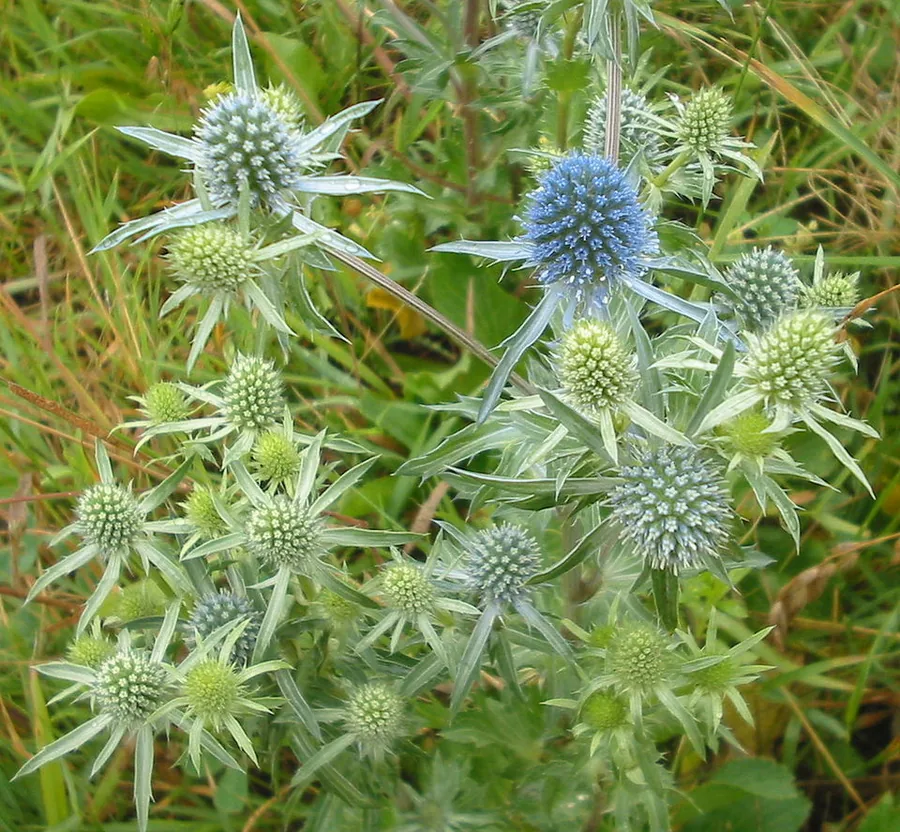
Sea holly earns its name from the spiny, steel-blue flower heads that look every bit like a thistle, though the plant is no holly at all. It belongs to the carrot family and grows as a tough, long-lived perennial, hardy across USDA zones 5 to 9. The cone-shaped blooms sit in a ruff of stiff, silvery bracts that hold their color from June into September.
What sets this plant apart is how little it asks for. It runs on lean, dry soil and full sun, the kind of spot where fussier perennials sulk. Give it rich ground or steady water and it pays you back with floppy, leggy stems, so the trick is almost always to do less.
The flowers earn their keep twice over. Bees and other pollinators work them all summer, and the stems dry beautifully for arrangements, keeping their blue long after the season ends. A deep taproot anchors the plant and carries it through drought, but it also means sea holly hates being moved once it has settled in.
Care
The short version: full sun, poor to average soil that drains fast, and almost no water or feeding once the plant is established. Leave the deep taproot undisturbed and it will run for years.
Light
Sea holly wants full sun, and that is what keeps its stems stiff and upright. It will take a little partial sun, but in real shade the stems stretch, lean, and flop instead of standing on their own.
Water
Once established, this is a drought-tolerant plant that wants to dry out fully between drinks. Water only every 10 to 21 days, and only during a long dry spell. Too much water, more than anything else, is what kills it.
Soil
Plant it in dry, sandy or loamy soil that drains fast. It shrugs off poor, gritty ground that would starve other perennials, and tolerates a wide pH from 5.5 to 8.5. Rich, soggy soil brings on floppy growth and root rot.
Temperature
It is genuinely hardy, taking winter lows down to about -20°F (-29°C) and summer heat up to around 90°F (32°C). That range carries it comfortably through zones 5 to 9 with no special protection.
Humidity
Low humidity suits it fine, and there is no figure to aim for. Damp, still air around the foliage does more harm than good, so air movement matters more than any moisture in the air.
Feeding
This is a plant that thrives on neglect. It needs little to no fertilizer, and a feed in spring is plenty if you bother at all. Rich feeding only produces soft, leggy stems that fall over.
Pruning
Deadhead spent blooms to keep the plant tidy, and cut the stems back once flowering finishes. The foliage can be cut right to the ground in late fall or early spring to clear the way for fresh growth.
Repotting
Sea holly rarely needs lifting or repotting, and that is by design. Its deep taproot resents disturbance, so the plant is best left where it is once established. Reach for the spade only when a long-standing clump is clearly crowded or losing vigor.
Size & spacing
Expect a plant 2 to 3 feet (61 to 91 cm) tall in bloom, spreading 12 to 24 inches (30 to 61 cm) across. Give each one that much room so the clumps have space to fill out and air can move between them.
When to plant
Sea holly follows the rhythm of a cold-winter perennial. Start seed indoors in late winter after a spell of cold, moist chilling, set young plants out in spring once frost has passed, and the steel-blue flowers arrive from June through September.
Northern hemisphere
Southern hemisphere
Typical months for a temperate climate: start earlier in warm zones, later where spring frosts linger.
- Sow: Late winter, 8-10 weeks before last frost; seed germinates best after cold-moist stratification
- Plant: Spring after last frost, while young so the taproot is undisturbed
- Harvest: June to September
Hardiness
USDA hardiness zones: 5–9
Temperature: down to -29°C
Troubleshooting
Sea holly is one of the easier perennials to keep, and most of its troubles come from kindness rather than neglect. Rich soil, shade, and extra water cause far more problems than drought ever will. Match what you see below and the fix is usually to back off.
The plant wilts and the base turns to mush
This is root rot, and it comes from soil that stays wet rather than from any disease you can spray away. The roots turn brown and soft and the crown collapses. Dig in sand or grit to open the drainage, stop watering so the ground can dry, and pull any plant that has rotted too far to save.
Fix:
- Improve drainage by amending with sand or grit
- Stop supplemental watering and allow soil to dry
- Remove and discard severely rotted plants
Stems flop over and the plant grows leggy
Floppy, leaning stems almost always trace back to soil that is too rich or a spot that is too shady. Sea holly wants lean, dry ground and full sun, where its stems stand stiff on their own. Stop feeding it, move it into more light if you can, and cut the sprawling stems back after it flowers.
Fix:
- Grow in lean, dry, well-drained soil and avoid fertilizing
- Site in full sun for stiff, self-supporting stems
- Cut back floppy stems after flowering
Twisted new growth and ragged holes in the leaves
Two pests cause most of this. Aphids cluster on the soft new shoots and warp them, while slugs and snails chew ragged holes and leave slime trails behind. Blast aphids off with a jet of water or hit them with insecticidal soap, pick the slugs by hand or set out bait, and clear away the damp debris that shelters them.
Fix:
- Spray aphids off with a strong jet of water or use insecticidal soap
- Hand-pick slugs and snails or use bait
- Keep area free of debris that shelters slugs
Toxicity
Good news for households with pets and children: sea holly carries no toxin and is safe to be around. Despite the name, it is no relation to true holly and has nothing poisonous in its leaves, stems, or roots. The one thing to mind is the spiny bracts and leaf edges, which can prick or scratch, so reach for gloves when you cut the stems.
Safe for
People · Cats · Dogs · Horses · Rabbits · Livestock · Birds
Cats None
Sea holly is not poisonous to cats, so a curious nibble won't harm them. The stiff, prickly bracts are the only thing to watch, since a sharp leaf can scratch a probing nose.
Dogs None
Dogs can chew the foliage without any risk of poisoning. The spiny flower heads are far more likely to put one off than to cause real trouble.
Horses Safe
There is no toxin here for horses to worry about. The rigid, thistle-like bracts tend to keep them grazing elsewhere anyway.
Rabbits Safe
Rabbits face no poisoning from sea holly. The prickly leaves and stems usually keep them from bothering with it at all.
Livestock Safe
Cattle, goats, and sheep can graze near sea holly without harm, as the plant carries no toxin. Its sharp, spiny growth simply makes it unappealing to eat.
Birds Safe
Sea holly poses no toxic threat to birds, which often visit the flowers for the seeds. The stiff bracts are the only physical obstacle they meet.
People Safe
The plant is safe around children and adults alike, with no poisonous parts to fear. The real hazard is the spiny bracts and leaf edges, so wear gloves when you cut or arrange the stems.
The spiny, stiff bracts and leaf margins can prick or scratch skin; wear gloves when handling or cutting stems.
Varieties
Several named cultivars build on the wild plant, from knee-high dwarfs to heavy-blooming and variegated forms. These are the ones worth knowing.
Blue Hobbit
A dwarf cultivar that forms a tidy globe-shaped mound only 8 to 12 inches tall in bloom.
Blue Glitter
It carries a heavy crop of glittering steel-blue flower heads on stems that branch freely.
Jade Frost
A variegated form with blue-green leaves rimmed in creamy white below its violet-blue blooms.
Tiny Jackpot
A compact pick that stands on strong stems to only about 14 inches tall.
Companions
Sea holly looks its best next to other plants that share its taste for sun and dry, lean ground, where their colors and textures play off its steel-blue spikes.
Plant near
Black-eyed Susan: Shares full-sun, dry, well-drained conditions and contrasts with the steel-blue flower heads.
Ornamental grasses: Thrive in the same lean, sunny, drought-tolerant settings and complement the spiky texture.
Yarrow: Drought-tolerant, full-sun perennial that pairs well in dry borders and pollinator plantings.
How to propagate
Sea holly is best multiplied from seed, since its deep taproot makes any method that disturbs the roots a gamble.
SeedModerate
Sow in late winter to spring; cold-moist stratification improves germination · Blooms typically in the second year from seed
Seed is the most reliable way to get more sea holly. Sow in late winter to spring, and give the seed a spell of cold, moist chilling first to wake it up. Start the plants young and set them out before the taproot runs deep, and most will reward you with their first flowers in the second year.
DivisionDemanding
Spring, only if necessary · Slow and unreliable to recover
Division is a last resort with this plant. The deep taproot resents being cut and lifted, so a divided clump transplants poorly and is slow and unreliable to recover. Try it only in spring and only if you have no other choice, since an undisturbed plant always does better.
Myths
Sea holly is a kind of true holly and is poisonous like holly berries.
The name is misleading. Sea holly belongs to the carrot family, not the genus that holds true holly, and no source reports it as toxic to pets or people. The only real hazard is the spiny bracts, not anything you might swallow.
Sea holly clumps need digging and dividing on a regular schedule to stay vigorous.
Sea holly grows from a deep taproot that hates being moved, so dividing it tends to set the plant back rather than refresh it. Leave an established clump where it sits, and start new plants from seed or root cuttings instead.