Herb · Apiaceae
Chervil
Anthriscus cerefolium
Give it cool weather, shade, and steady water, and chervil rewards you with its fine, lacy leaves.
Partial shade
Every 2–4 days
39–75°F · 4–24°C
40–60 days
Overview
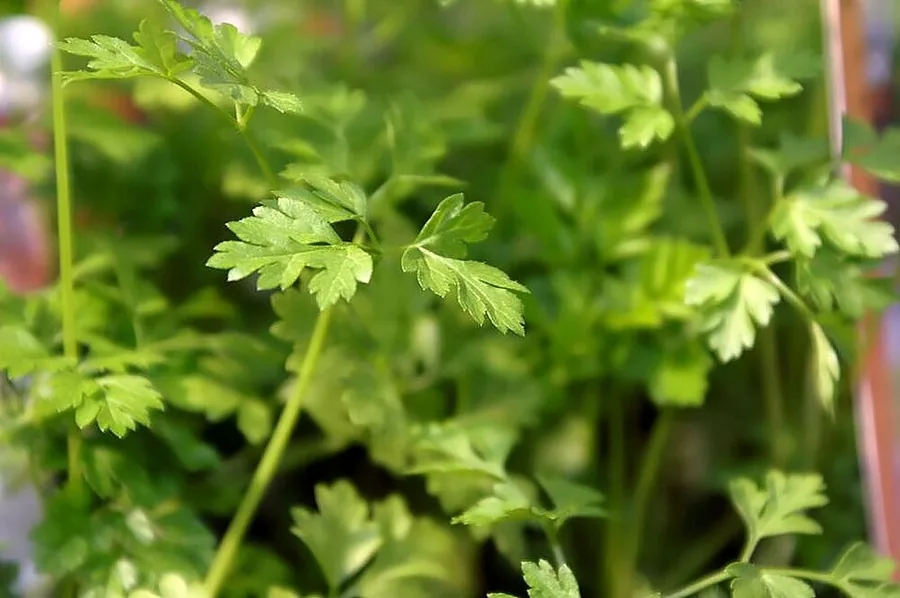
Chervil is a delicate cooking herb in the carrot and parsley family, with fine, fern-like leaves and a gentle flavor that hints at parsley and anise. It earned the old name French parsley for a reason, since it sits at the heart of French cooking and the classic fines herbes blend. The flavor is delicate and fades fast when cooked hard, so most cooks add it at the very end.
It grows fast and finishes its life in a single season as a cool-season annual. Heat is its undoing. Once the days lengthen and warm, the plant throws up flower stalks and the leaves turn bitter, which is why timing and shade matter more here than with most herbs.
Grown in the right spot, chervil is easy and quick. It does fine in a shady corner where sun-loving herbs sulk, and it slips happily into a pot on a cool windowsill or a partly shaded bed. The trick is steady moisture and a string of small sowings rather than one big planting.
Care
The short version: partial shade, steady moisture, and cool weather. Chervil tolerates poor soil and wants little feeding, so the real work is keeping it cool and watered and sowing fresh seed every few weeks.
Light
Chervil prefers partial shade and is one of the few herbs that genuinely likes it. It will take more sun in cool weather, but shade slows bolting and keeps the leaves tender, so a spot with afternoon shade is ideal in spring.
Water
Keep the soil consistently moist and never let it dry out. Chervil bolts and runs to seed the moment it gets thirsty, so plan to water every 2 to 4 days, more in warm or dry spells. Steady moisture is the single biggest thing keeping the leaves sweet.
Soil
Plant in moist, well-drained loam. Chervil is easygoing about fertility and tolerates poor ground, and it handles a wide pH range from 6.0 to 8.0, so most garden soil suits it as long as it holds moisture without going soggy.
Temperature
This is a cool-weather herb, happiest between 39°F and 75°F (4°C to 24°C). It shrugs off light frost but bolts fast once heat sets in, which is why it belongs in the spring and fall garden rather than the summer one.
Humidity
Average humidity around 40% to 60% suits chervil fine, so there's no number to fuss over. Far more important is keeping the soil moist and the air moving so the lacy foliage stays clean.
Feeding
Chervil needs very little. A light, balanced organic feed worked in at planting in spring is plenty, and the plant does well even in poor soil. Heavy feeding does more harm than good and can draw aphids.
Pruning
Pinch out flower stalks as soon as they form to delay bolting and keep tender leaves coming. Harvest the outer leaves often, which pushes fresh growth from the center and keeps the plant productive longer.
Repotting
not_applicable
Size & spacing
Chervil stays small, reaching 12 to 24 inches (30 to 60 cm) tall with a spread of about 12 to 18 inches (30 to 45 cm). Give each plant a little room so air moves through the fine foliage and the leaves stay dry.
When to plant
Chervil runs on cool weather, not warmth. Direct-sow it in early spring and again in fall, skip the hot middle of summer, and keep a fresh crop coming by sowing a little more every few weeks.
Northern hemisphere
Southern hemisphere
Typical months for a temperate climate: start earlier in warm zones, later where spring frosts linger.
- Plant: Direct-sow in early spring and again in fall; cool-season herb that bolts in summer heat, so provide shade and succession-sow every 3-4 weeks.
- Harvest: Cut tender young leaves before flowering; small white five-petaled flowers form in umbels 1-2 inches across, followed by seed.
Hardiness
USDA hardiness zones: 3–10
Temperature: down to -40°C
Troubleshooting
Most chervil trouble comes down to heat or moisture, and it shows up first in the leaves. Catch the early signs and you can usually steer the plant back on track. Match what you see below, then act while it still helps.
Flower stalks shooting up and the leaves turning bitter
This is bolting, and it's the classic chervil problem. Heat and long days flip the plant from making leaves to making seed, and dry soil only speeds it along. Pinch off the flower stalks as they appear, move the plant somewhere cooler and shadier, keep the soil moist, and sow fresh seed every 3 to 4 weeks so you always have a young crop coming.
Fix:
- Pinch off emerging flower stalks
- Move to a cooler, shadier location
- Maintain consistently moist soil
- Succession-sow fresh seed every 3-4 weeks for a continuous supply
Sticky, curling new growth covered in tiny insects
Those clustered specks are aphids, soft-bodied insects that gather on the undersides of the leaves and leave a sticky honeydew behind. A strong spray of water knocks them off, and repeating it every few days usually settles the problem. Go easy on nitrogen feeding, since the lush growth it drives is what draws them in.
Fix:
- Rinse aphids off with a strong spray of water
- Repeat as needed
Ragged holes chewed through the leaves overnight
Slugs and snails do this, and tender seedlings take the worst of it. Look for silvery slime trails near the plants, with the damage heaviest after rain or overnight. Pick them off by hand and clear away the damp debris and hiding spots nearby so they have nowhere to shelter.
Fix:
- Remove slugs and snails by hand
- Reduce moist hiding spots near plants
Toxicity
Cultivated culinary chervil is safe and pets, livestock, and people can be around it without worry. The real danger is mistaken identity in the wild, since chervil looks a lot like poison hemlock and other deadly cousins in the same family. Never use a foraged plant unless you are certain of what it is.
Safe for
People · Cats · Dogs · Horses · Rabbits · Livestock · Birds
Cats None
Cultivated chervil is not toxic to cats, and a nibble of the foliage won't do any harm.
Dogs None
Dogs are safe around the plant. There are no poisons to worry about if one chews a leaf.
Horses None
Horses can graze near chervil without any risk from the herb itself.
Rabbits Safe
Rabbits can eat the leaves, and the soft, lacy foliage makes a fine occasional green.
Livestock Safe
Cattle, goats, and sheep handle cultivated chervil without trouble.
Birds Safe
Backyard birds and poultry can peck at the plant safely.
People Safe
Chervil is a kitchen herb meant to be eaten, prized in French cooking for its delicate flavor. The only caution is in the wild, where its toxic lookalikes make sure-footed identification essential.
Chervil closely resembles toxic Apiaceae lookalikes such as poison hemlock; foragers and gardeners must be absolutely certain of plant identity before harvesting wild plants.
Varieties
Only a few named chervil types turn up in seed catalogs, and they differ more in leaf shape than in flavor. These are the ones worth knowing.
Crispum
A curled-leaf type with a subtle, mild flavor and tightly ruffled foliage.
Vertissimo
A compact, productive selection with dark green flat leaves that crops heavily in a small space.
Plain chervil
The standard flat-leaf form most often grown for the kitchen.
Companions
Chervil grows well beside cool-season crops that share its taste for shade and steady moisture.
How to propagate
Chervil is grown from seed and nothing else, and it has firm opinions about how that seed is handled.
SeedModerate
Early spring and fall, in cool weather; succession-sow every 3-4 weeks · Seeds germinate in about 10 days at 60°F soil temperature; tender leaves ready to harvest in roughly 6-8 weeks
Always direct-sow chervil where it will grow, because it forms a taproot and resents being moved. Scatter seed in cool weather, in early spring and again in fall, and sow a fresh batch every 3 to 4 weeks for a steady supply. The seeds need light to sprout, so barely cover them or leave them on the surface and keep the soil evenly moist. Expect germination in about 10 days at 60°F (16°C), with tender leaves ready to pick in roughly 6 to 8 weeks.
Myths
Any lacy, fern-leaved plant found in the wild is safe to use like chervil.
Chervil belongs to a family full of dangerous lookalikes, and poison hemlock in particular can pass for it at a glance. Getting it wrong can be fatal. Only ever use plants whose identity you are certain of, and the safest path by far is to grow your own from known seed.