Herb · Apiaceae
Caraway
Carum carvi
Give it full sun and a patient first year, and caraway hands you a crop of fragrant seed the next.
Full sun
Every 3–7 days
50–77°F · 10–25°C
70–90 days
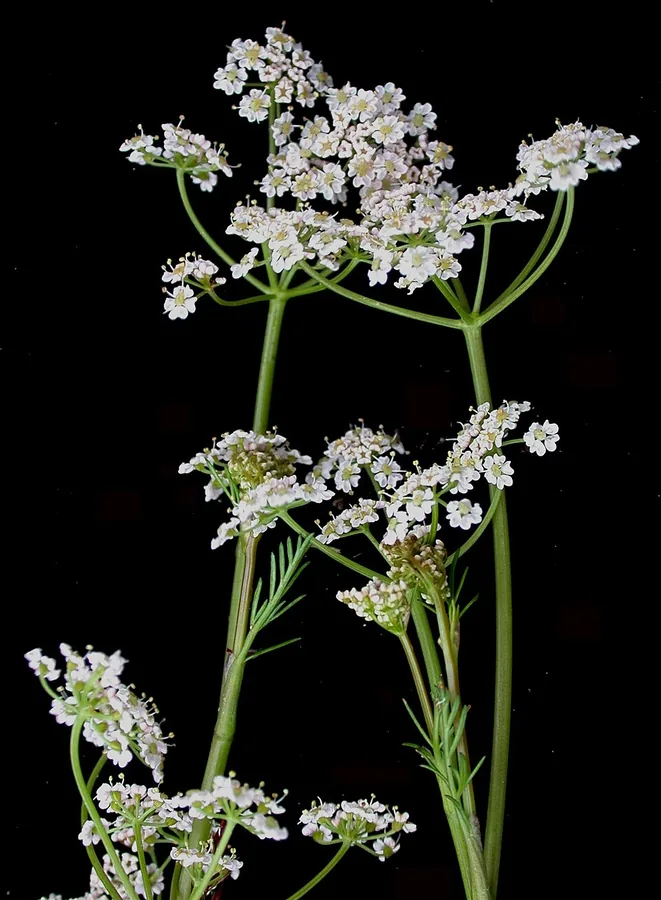
Overview
Caraway is a hardy biennial herb from the carrot family, grown for the warm, faintly anise-flavored seed that shows up in rye bread, cheese, and slow-cooked dishes. It runs on a two-year cycle, building a low rosette of feathery leaves the first season and saving its flowers and seed for the second. The taproot is thick and parsnip-like, which is why the plant hates being moved once it's settled.
Despite the nickname Persian cumin, this is its own plant, Carum carvi, with a flavor all its own. It's an easy grower in cool temperate gardens across USDA zones 4 to 9, asking for little more than full sun, steady moisture while the slow seed germinates, and the patience to wait out that first leafy year.
Care
The short version: full sun, fertile well-drained soil on the neutral side, and even moisture while the slow seed germinates, then patience through a leafy first year before the seed crop arrives in year two.
Light
Caraway wants full sun to ripen a good seed crop, though it will get by in partial sun. The more direct light it gets, the stronger the flowering stems and the fuller the harvest in year two.
Water
Keep the soil evenly moist and well drained, never waterlogged. The seedbed in particular has to stay damp through the slow germination, since a dry spell early on is the quickest way to lose a stand. Water every 3 to 7 days once plants are up, adjusting for heat and rain.
Soil
Plant in fertile, well-drained loam rich in organic matter. Caraway likes things close to neutral, in the range of pH 6.0 to 7.5, and a deep, loose bed lets that long taproot run straight.
Temperature
This is a cool-temperate herb, comfortable between about 50°F and 77°F (10°C to 25°C). It handles the cold of zones 4 to 9 well, overwintering as a rosette to bloom the following year.
Humidity
Average outdoor humidity of 40% to 60% suits caraway fine, so there's no number to fuss over. Good airflow around the plants matters more than the figure on a gauge.
Feeding
Caraway is a light feeder, so a balanced fertilizer or some compost in spring during active growth is plenty. Go easy on the nitrogen, which pushes soft leafy growth at the expense of the seed you're after.
Pruning
There's little to do here. Cut back the spent flower and seed heads after harvest, deadhead if you want to limit self-seeding, and take care not to disturb the central taproot crown while you work.
Repotting
Caraway rarely needs repotting and resents root disturbance, so direct-sow it where it's to grow rather than transplanting. If you do grow it in a container, choose a deep one and avoid breaking up that taproot.
Size & spacing
Plants reach 12 to 30 inches (30 to 75 cm) tall when the flowering stems go up in year two. Give each one about 10 to 12 inches (25 to 30 cm) of room so air moves freely and the rosettes don't crowd.
When to plant
Caraway works on a two-year clock, so plan for the long game. Direct sow in spring as soon as the soil can be worked, or get a head start in early fall. The plant settles in and grows leaves the first year, then blooms in late spring of the second and ripens its seed by mid to late summer.
Northern hemisphere
Southern hemisphere
Typical months for a temperate climate: start earlier in warm zones, later where spring frosts linger.
- Plant: Direct sow in spring as soon as soil can be worked, or in early fall.
- Harvest: Blooms late spring to early summer of the second year; harvest seeds when they turn brown in mid to late summer of year two.
Hardiness
USDA hardiness zones: 4–9
Temperature: down to -34°C
Troubleshooting
Caraway is an easygoing herb, and most of its trouble shows up either underground at the taproot or as patchy, slow germination at the start. Match what you see below and step in early, while it still makes a difference.
Stunted plants with rusty tunnels in the taproot
This is the work of carrot root fly, whose larvae burrow into the root and slow the whole plant. Lift one and you'll see winding rust-colored tunnels and small white maggots. Pull and destroy any infested plants, cover the rest with row cover from sowing, and move your Apiaceae crops to a fresh bed each year so the flies can't find them.
Fix:
- Remove and destroy infested plants
- Use floating row covers from sowing
- Rotate Apiaceae crops to a new bed each year
Few or very slow seedlings after sowing
Caraway germinates slowly, so a thin, patchy stand usually means the seedbed dried out before the seed could sprout, or the seed itself was old. Two to three weeks on, you may see only scattered seedlings even in warm soil. Keep the bed evenly moist until germination, don't let the surface crust over, and resow with fresh seed sown shallow if the first try fails.
Fix:
- Keep the seedbed consistently moist until germination
- Resow with fresh seed at a shallow depth
- Avoid letting the surface crust over
Leaves chewed and stripped by green caterpillars
Plump green caterpillars banded with black and yellow are parsley worms, the larvae of the black swallowtail. The damage looks worse than it is on an established plant. Handpick them and move them to a sacrificial plant rather than killing them, since they grow into pollinators you want in the garden.
Fix:
- Handpick the caterpillars
- Relocate them to a sacrificial plant since they mature into pollinators
- Tolerate minor damage on established plants
Toxicity
The ripe seed is a well-loved kitchen spice, so caraway is safe on your own plate. The plant itself is a different story for animals: ASPCA lists it as toxic to dogs, cats, and horses, since its carvone and limonene oils can bring on mild vomiting and diarrhea. Keep the aromatic foliage and harvested seed out of reach of curious pets.
Toxic to
Cats · Dogs · Horses · Rabbits · Livestock · Birds
Safe for
People
Cats Mild
A curious cat that nibbles the aromatic foliage may drool and then bring up its food, with loose stools to follow. Signs stay mild and usually pass on their own.
Dogs Mild
Dogs drawn to the scent can get an upset stomach after chewing the leaves or seed, with vomiting and diarrhea the most common results.
Horses Toxic
The same carvone and limonene oils irritate a horse's gut, so expect drooling, colicky discomfort, and loose droppings if a horse grazes the plant.
Rabbits Caution
A rabbit's digestion is easily thrown by strong essential oils, so the aromatic leaves are best kept off the menu rather than offered as forage.
Livestock Caution
Grazing animals rarely seek out the pungent foliage, but a large feed of it could bring on the same mild stomach upset seen in other animals.
Birds Caution
Birds are sensitive to concentrated plant oils, so keep pet birds away from the foliage and especially the oil-rich seed.
People Edible seeds safe
The ripe seed is a kitchen spice eaten in bread, cheese, and stews with no trouble. Eat it as food rather than dosing on the concentrated oil, and there's nothing to worry about.
Aromatic foliage and seeds may tempt pets, so keep harvested seed and plants out of reach.
Helpline numbers

United States
ASPCA Animal Poison Control: (888) 426-4435 (fee applies)

United Kingdom
Animal PoisonLine: 01202 509000 (fee applies)

Australia
Animal Poisons Helpline: 1300 869 738
Varieties
Most caraway is the standard biennial, but a couple of named types are worth knowing if you want seed sooner or a heavier harvest.
Annual caraway (var. annua, e.g. 'Sprinter')
This type flowers and sets seed in its first season instead of making you wait until the second year.
'Arterner'
A German biennial selection grown for its high yield of seed and essential oil.
Companions
Plant near
Peas: Traditional interplanting companion; its deep taproot helps loosen and break up soil for neighboring plants.
How to propagate
Caraway is grown from seed, and there's really only one way to do it well, given that long taproot that won't tolerate a move.
SeedEasy
Direct sow in early spring once soil is workable, or in early fall · Germinates in 1-3 weeks; forms a leafy rosette the first season and produces seed in the second season
Start caraway from seed sown right where it will grow, since its long taproot resents being moved. Sow in early spring once the soil is workable, or in early fall, and look for sprouts in one to three weeks. The plant builds a leafy rosette its first season and saves its flowers and seed for the second.
Myths
Caraway and cumin are the same spice.
The nickname Persian cumin causes the mix-up, but caraway is its own species, Carum carvi, while true cumin is Cuminum cyminum. The two have differently shaped seeds and a distinct flavor, so one won't stand in for the other.
Caraway is completely harmless to pets.
ASPCA lists caraway as toxic to dogs, cats, and horses. Its carvone and limonene oils can bring on mild vomiting and diarrhea, so keep the plant and harvested seed out of a pet's reach.