Houseplant · Euphorbiaceae
Pencil Cactus
Euphorbia tirucalli
Tough, sun-loving, and nearly impossible to kill, but its milky sap bites back, so handle it with care.
Full sun
Every 14–28 days
50–86°F · 10–30°C
USDA 10–12
Overview
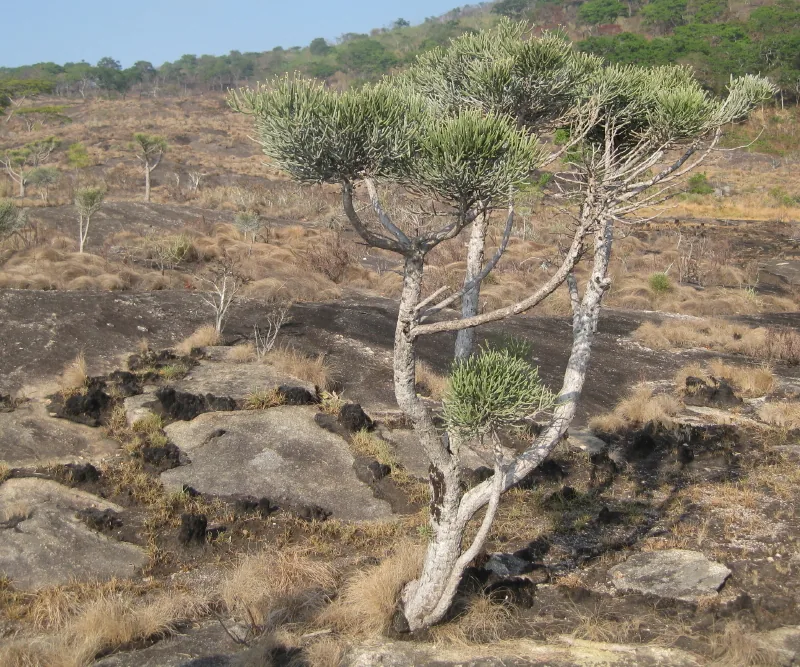
The pencil cactus isn't a cactus at all. It's a succulent spurge from East and southern Africa that grows as a tangle of slim, pencil-thick green stems with almost no leaves. Indoors it makes a striking, architectural plant, and it asks for very little once you sort out the light and the watering.
What sets this plant apart is the caustic milky latex sealed inside every stem. Snap or cut one and it bleeds a white sap loaded with diterpene esters that burns skin and can do real damage to the eyes. That single trait should shape how you place it and how you ever lay a hand on it.
Grown well, it shrugs off neglect and reaches 2 to 10 feet (60 cm to 3 m) tall over the years. Give it strong light, a gritty pot that drains fast, and long dry spells between drinks, and the worst it'll throw at you is the occasional rotted stem from a heavy hand with the watering can.
Care
The short version: full sun or the brightest window you have, a gritty fast-draining mix, and a deep soak only once the soil is bone dry. Go easy in winter, and always wear gloves and eye protection when you touch it.
Light
Give it full sun at a south-facing window, or the brightest bright-indirect light you can manage. The more sun it gets, the stockier and stronger the stems stay, while a dim corner leaves them thin and stretched.
Water
Let the mix dry out completely, then water deeply, which usually lands somewhere around every 14 to 28 days. Cut right back in winter. Standing moisture is the one thing that reliably kills this plant, rotting the stems and roots fast.
Soil
Plant it in a gritty, fast-draining cactus or succulent mix so water races through and never lingers at the roots. A pH anywhere from 6.0 to 7.5 suits it, and a pot with a drainage hole is not optional.
Temperature
It's happiest between 50°F and 86°F (10°C to 30°C) and won't take frost. Keep it above 50°F (10°C) through winter, since cold paired with damp soil is what triggers rot.
Humidity
Low household humidity is exactly what it wants, so there's no number to chase and no misting to do. Dry air actually helps keep stem rot at bay.
Feeding
Feed monthly through spring and summer with a dilute balanced or low-nitrogen cactus fertilizer. Stop completely in autumn and winter while growth slows, and skip feeding a plant that's stressed or just repotted.
Pruning
Prune only to control the size or shape, and never without gloves and eye protection, because cut stems bleed caustic latex that burns skin and can injure the eyes. Cut into a bag, keep the plant away from your face, and wash your tools and hands the moment you finish.
Repotting
Repot every 2 to 3 years or once roots circle the pot and crowd the drainage holes. A top-heavy plant that tips easily is another sign it's time. Wear gloves and eye protection, since repotting almost always nicks a stem and starts the sap flowing.
Size & spacing
Indoors it climbs to 2 to 10 feet (60 cm to 3 m) tall and spreads 2 to 6 feet (60 to 180 cm) wide over time. Give it room to lean and grow, and a heavy pot to keep a tall specimen from toppling.
Troubleshooting
This plant is hard to kill, so trouble usually means one of two things: too much water or too little light. Both show up in the stems first. Match what you see below and act before a soft patch spreads.
Soft, mushy stems collapsing at the base
This is rot, almost always from too much water in soil that drains too slowly. Cold, wet conditions push it along. Cut back to firm green tissue with gloves and eye protection, let the healthy pieces callus, and replant in dry, gritty mix.
Fix:
- Cut away all soft, discolored tissue back to firm green growth using gloves and eye protection
- Allow healthy cuttings to callus, then replant in dry, gritty mix
- Withhold water until the plant is clearly established and the mix is dry
Thin, pale stems stretching toward the window
This is etiolation, the plant reaching for light it isn't getting. The new growth comes in spindly and leans toward the brightest spot in the room. Move it somewhere with several hours of direct sun, and step up the light slowly so the stems don't scorch.
Fix:
- Move to a brighter location with several hours of direct sun
- Acclimate gradually to stronger light to avoid scorch
Toxicity
Treat this plant as a genuine hazard, not a houseplant to handle casually. Every stem holds a caustic milky latex that burns skin into a rash and, in the eyes, causes searing pain, swelling, and even temporary blindness. No part is edible, and the sap is toxic to cats and dogs and irritating to every other animal, so keep it well away from pets, children, and your own bare hands.
Toxic to
Cats · Dogs · Horses · Rabbits · Livestock · Birds · People
Cats Toxic
A cat that bites a stem drools, paws at its mouth, and may vomit from the burning latex. Sap on the fur leads to red, sore skin, and a swipe near the eyes can cause painful swelling and damage.
Dogs Toxic
Chewing brings on drooling, mouth pain, and an upset stomach. The latex blisters the gums and lips, and any that reaches the eyes burns hard enough to need a vet right away.
Horses Toxic
The caustic sap inflames the mouth and gut if a horse browses the stems, and contact leaves the muzzle and lips sore and irritated.
Rabbits Toxic
Even a small nibble irritates a rabbit's mouth and digestive tract. Keep the plant well out of reach, since these grazers test new things with their teeth.
Livestock Toxic
Goats, sheep, and cattle that browse the stems suffer burning of the mouth and stomach upset from the latex. Fence the plant off where animals roam.
Birds Toxic
The caustic sap is dangerous to pet birds, irritating the beak, mouth, and crop. A pecking bird can also smear latex onto its feathers and eyes.
People Caution
No part is safe to eat, and the milky sap is the real hazard. It burns skin into a stinging rash, and in the eyes it causes intense pain, swelling, and even temporary blindness, so always wear gloves and eye protection.
Always wear gloves AND eye protection when handling, cutting, or repotting. Never touch your face or rub your eyes. If latex contacts skin, wash thoroughly; if it contacts the eyes, flush immediately with copious water and seek urgent medical or veterinary care.
Helpline numbers

United States
ASPCA Animal Poison Control: (888) 426-4435 (fee applies)
Poison Control: (800) 222-1222



Canada
Poison Centres: 1-844-764-7669
Varieties
The straight species is all green, but one colorful cultivar shows up far more often on shop shelves.
'Firesticks' / 'Sticks on Fire' (Euphorbia tirucalli 'Rosea')
Its young stems flush coral, orange, and red instead of plain green, and the color deepens in cool weather and strong sun.
How to propagate
Pencil cactus roots easily from its own stems, so one plant quickly becomes several. The catch is the caustic sap, which makes safe handling the whole job.
Stem cuttingsEasy
Late spring to summer during active growth · 3 to 6 weeks to root
Take cuttings in late spring or summer while the plant is growing, and always wear gloves and eye protection, since the cut ends bleed caustic latex. Rinse that sap off the wound, let the cutting callus for several days, then stand it in dry, gritty mix where it roots in 3 to 6 weeks.
Myths
The pencil cactus is a true cactus.
Despite the name, it isn't a cactus at all. Euphorbia tirucalli is a pencil-stemmed succulent spurge, and the bleeding caustic latex is the giveaway, since true cacti don't have it. It only looks cactus-like on the surface.