Vegetable · Euphorbiaceae
Cassava
Manihot esculenta
Give it warmth, sun, and well-drained soil, and cassava feeds you through a long season once you know how to handle it safely.
Full sun
Every 7–14 days
59–95°F · 15–35°C
240–360 days
Overview
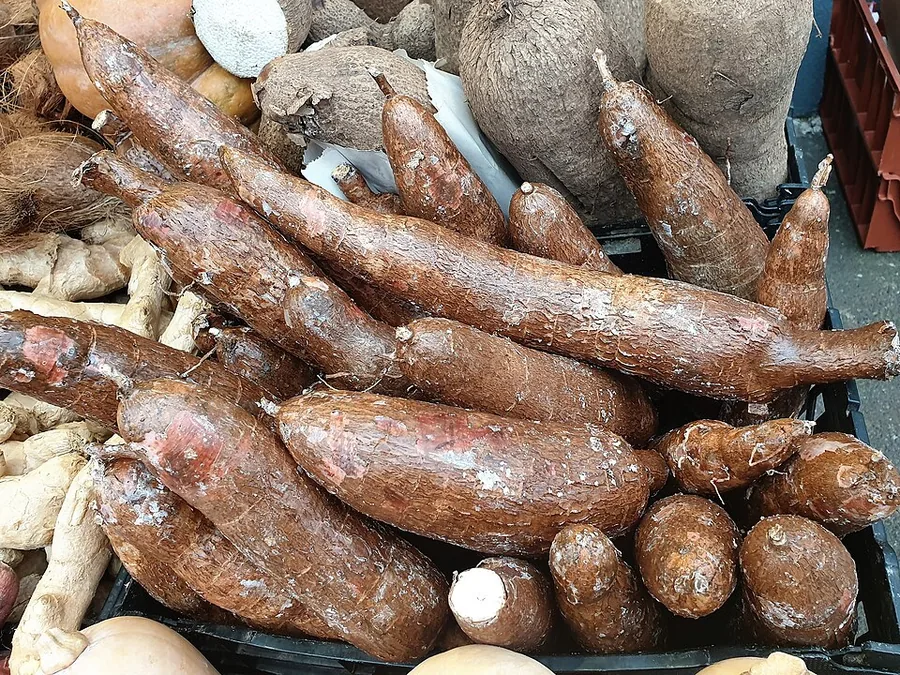
Cassava is a woody tropical shrub grown for its starchy roots, and it stands among the most important staple crops in the warm parts of the world. It belongs to the spurge family and traces back to South America, where people have grown it for thousands of years. The plant reaches 5 to 10 feet (1.5 to 3 m) tall and shrugs off drought and poor ground that would stop most vegetables.
What sets cassava apart is the trade-off built into it. The roots store plenty of energy and keep well in the ground, but every part of the plant holds cyanide-forming compounds that make it dangerous raw. People have eaten it safely for centuries by peeling, soaking, and cooking it, and that step is not optional.
For a home grower in zones 9 to 11, cassava asks for a long warm season and little else. Plant a stem cutting after the last frost, keep it watered while it gets going, and let it run. The reward is a heavy crop of roots, as long as you handle and prepare them with care.
Care
The short version: full sun and warmth, planted in light, well-drained soil. Water young plants to get them started, then back off, since cassava handles drought far better than soggy roots, and give it a long frost-free season to bulk up.
Light
Cassava wants full sun and grows best with it, though it will get by in partial shade. The more direct light it gets, the better the roots fill out, so give it the most open spot you have.
Water
Water young plants steadily until they take hold, then ease right off. Cassava is highly drought-tolerant once established and only needs water every 7 to 14 days in dry spells. Soggy, waterlogged soil is the real danger, since it rots the roots and ruins their quality.
Soil
Plant in well-drained sandy loam that lets water move through freely. A pH of 5.5 to 6.5 suits it best, and loose ground gives the roots room to swell. Heavy, wet clay is the one thing to avoid.
Temperature
Cassava is a true warm-weather crop that runs best between 59°F and 95°F (15°C to 35°C). It has no tolerance for cold, and a single frost blackens the foliage and ends the season.
Humidity
Average humidity of 40% to 70% suits cassava fine, and it copes with drier air better than most tropical plants. There is no need to fuss over moisture in the air.
Feeding
Work a balanced NPK feed into the soil at planting, with enough potassium to push root development. Cassava is not a hungry crop, so a single feed at the start usually carries it through the season.
Pruning
Cassava needs little pruning. Strip off the lower lateral shoots to steer the plant's energy, and cut back any stems that frost or damage has killed. Save the healthy stems at season's end as cuttings for next year.
Repotting
not typically container-grown
Size & spacing
A mature plant stands 5 to 10 feet (1.5 to 3 m) tall and spreads 3 to 6 feet (90 to 180 cm) wide, so give each one plenty of room. It is a large shrub, not a tidy vegetable, and it grows accordingly.
When to plant
Cassava needs warmth and a long run to fill its roots. Plant stem cuttings once frost is well past and the soil has warmed, then leave the plants to grow through the season. The roots are ready to dig anywhere from 8 to 18 months later, and they must come out before the first frost.
Northern hemisphere
Southern hemisphere
Typical months for a temperate climate: start earlier in warm zones, later where spring frosts linger.
- Plant: Plant woody stem cuttings (stakes) after all danger of frost has passed and soil is warm.
- Harvest: Harvest roots 8-18 months after planting, once tubers have bulked.
Hardiness
USDA hardiness zones: 9–11
Temperature: down to -7°C
Troubleshooting
Most cassava trouble starts underground or with the planting material you begin with. Watch the leaves for virus, the roots for rot, and the calendar for frost. Match what you see below and act before a setback costs you the crop.
Yellow-green mottling and twisted, stunted leaves
This is cassava mosaic virus, spread by whiteflies and, more often, by planting infected cuttings. There is no cure, so pull and destroy any plant that shows the mottled, distorted pattern. Start clean next season with certified virus-free stakes and keep the whitefly population down.
Fix:
- Remove and destroy infected plants
- Use virus-free planting material
- Control whitefly vectors
Blackened leaves and stems after a cold snap
Cassava is frost-tender, and a night near freezing turns the foliage and stems black before the plant folds. Get the roots out of the ground ahead of any frost. In all but the warmest zones, treat it as a single warm-season crop and time planting and harvest to fit between the cold spells.
Fix:
- Harvest roots before frost
- Protect or relocate if possible
Soft, rotting roots and a wilting plant
Soggy ground is almost always behind root rot, which leaves the tubers soft, discolored, and foul-smelling. Cassava shrugs off drought but cannot stand wet feet. Plant on ridges or a well-drained site, ease off the water, and dig the roots once they have bulked rather than leaving them to sit.
Fix:
- Improve drainage
- Avoid overwatering
- Harvest promptly once mature
Toxicity
This is a plant to respect. Every part of cassava, roots and leaves alike, holds cyanide-forming compounds that are genuinely poisonous raw to people and animals. The roots become a safe, nourishing staple only after proper peeling, soaking, and thorough cooking, so keep raw material well away from children, pets, and livestock.
Toxic to
Cats · Dogs · Horses · Rabbits · Livestock · Birds · People
Cats Severe
Raw roots, leaves, or stems can poison a cat fast. Watch for heavy drooling, vomiting, labored breathing, and wide pupils, which can give way to weakness, convulsions, and collapse. Get to a vet without waiting.
Dogs Severe
A dog that chews any raw part is at real risk from the cyanide it releases. Early drooling and vomiting can slide into trouble breathing, staggering, and seizures. This is an emergency, so call the vet straight away.
Horses Toxic
Raw cassava foliage and roots are dangerous to horses. The cyanide brings on fast, distressed breathing, trembling, and stumbling, and a large dose can be fatal. Keep horses clear of the plant entirely.
Rabbits Toxic
Never offer raw leaves or peelings to rabbits. Their small bodies handle cyanide poorly, so even a little can leave a rabbit weak, gasping, and twitching before it goes down.
Livestock Severe
Cattle, goats, and sheep that graze raw cassava or eat fresh trimmings can drop quickly. The signs come on as rapid breathing, drooling, staggering, muscle tremors, convulsions, and collapse.
Birds Toxic
Raw cassava is not safe for poultry or pet birds. The released cyanide can cause labored breathing and sudden weakness, and birds are small enough that a modest amount turns serious.
People Caution
Cassava feeds millions as a staple, but only after it is peeled, grated or soaked, and cooked through. Raw or half-processed roots and leaves release cyanide and can cause vomiting, dizziness, and, with steady under-processing, the lasting paralysis called konzo. Never eat any part of it raw.
Proper processing (peeling, grating/soaking, and thorough cooking) drives off the cyanide and renders cassava safe to eat; the raw plant and unprocessed roots/leaves are dangerous. Keep raw plant material away from children and animals.
Helpline numbers

United States
ASPCA Animal Poison Control: (888) 426-4435 (fee applies)
Poison Control: (800) 222-1222


Canada
Poison Centres: 1-844-764-7669
Varieties
Cassava splits into two broad groups by how much cyanide the roots carry. Knowing which one you have decides how much processing the harvest needs.
Sweet cassava
It carries less of the cyanide-forming compounds, with most of what remains held in the peel, yet it still needs peeling and cooking before it reaches the table.
Bitter cassava
It packs the cyanide-forming compounds right through the root, so it demands heavy processing such as grating, soaking, fermenting, and cooking before it is safe to eat.
How to propagate
Cassava is one of the simplest crops to multiply, since you grow the next planting straight from the stems of the last one.
Stem cuttingsEasy
Plant mature woody stem cuttings (stakes) at the start of the warm season after frost danger has passed. · 2 to 4 weeks for sprouting and rooting
Cassava is grown from stem cuttings rather than from tubers or seed. Cut stakes 20 to 30 cm long from mature, healthy stems and set them out at the start of the warm season once frost has passed. New shoots and roots break within about 2 to 4 weeks.
Myths
A quick boil makes any cassava safe to eat.
Bitter types need real work before they are safe, including peeling, grating, soaking, and a long cook. A brief boil can leave too much cyanide behind, and eating under-processed roots over time leads to cyanide poisoning and the paralysis called konzo.
Only the roots of cassava are poisonous.
The leaves carry the same cyanide-forming compounds as the roots. Both have to be properly processed before anyone or any animal can safely eat them.