Vegetable · Solanaceae
Bell Pepper
Capsicum annuum
Give it full sun, even water, and warm soil, and the bell pepper keeps the kitchen stocked all season.
Full sun
Every 3–7 days
59–86°F · 15–30°C
60–90 days
Overview
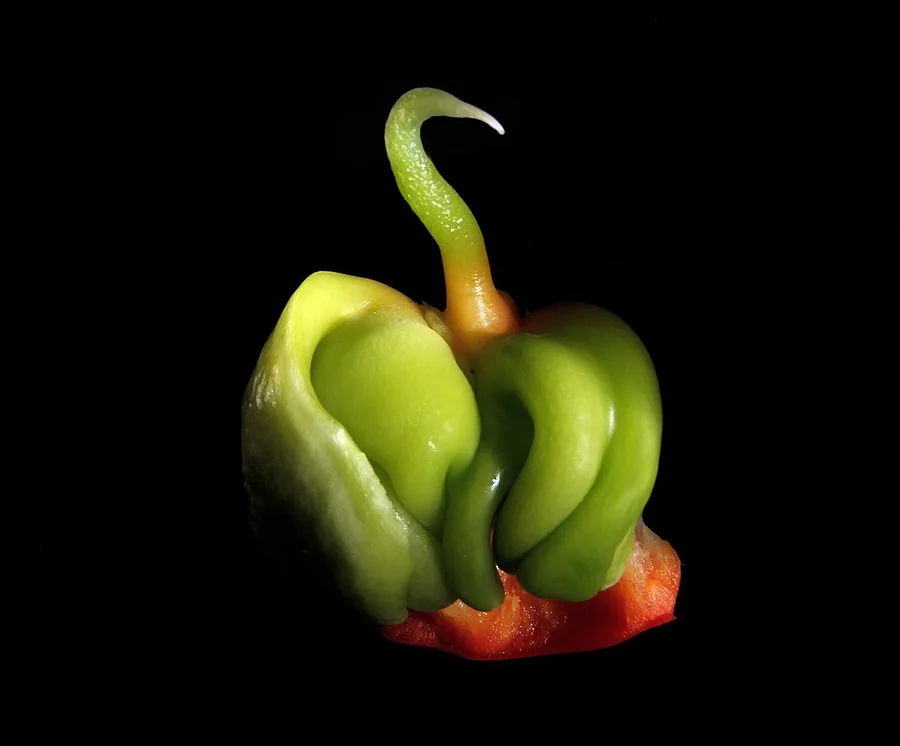
Bell peppers are the sweet, no-heat members of the nightshade family, grown for their thick, crisp fruit. The same pepper changes color as it ripens, starting green and turning red, yellow, or orange depending on the variety. They take their time getting started but reward a warm spot with weeks of picking.
These are warm-season plants with no tolerance for cold. They sulk in chilly soil and drop their flowers in a heat wave, so the trick is timing them into the steady warmth of early summer. Get that window right and they crop heavily from midsummer to the first frost.
Peppers are forgiving once established and ask for little fuss. Steady moisture, full sun, and a soil test before you feed cover most of what they need. Cut corners on watering and you invite blossom-end rot, the one problem that trips up most growers.
Care
The short version: full sun, warm soil, and even moisture of about 1 to 2 inches of water a week, planted in rich, well-drained ground with a balanced feed worked in at planting time.
Light
Bell peppers need full sun, at least 6 to 8 hours of direct light a day. Shade gives you weak, leggy plants and little fruit, and it strips the leaf cover the developing peppers rely on for shade.
Water
Aim for steady, even moisture of about 1 to 2 inches (2.5 to 5 cm) a week. Skip the boom-and-bust of letting the soil dry hard and then flooding it, since those swings are what bring on blossom-end rot. A layer of mulch holds the moisture and steadies the soil temperature.
Soil
Plant in rich, well-drained loam worked over with plenty of organic matter. Peppers like a slightly acidic pH of 6.0 to 6.8, so a soil test before planting is worth the trouble.
Temperature
Peppers thrive between 59°F and 86°F (15°C to 30°C). They drop their flowers when days push past the high end or nights dip below it, and cold soil stalls them outright.
Humidity
Ordinary outdoor humidity suits them, so there's no number to chase. What matters more is room for air to move between plants, which keeps the foliage dry and disease at bay.
Feeding
Work a balanced fertilizer such as 10-10-10 into the bed at planting, guided by a soil test, then add a light nitrogen sidedress once the first fruits set. Too much nitrogen grows a leafy plant that holds back on fruit.
Pruning
Pruning is mostly unnecessary. Pinch off the very first flowers on small transplants so the plant builds itself up before it fruits, and stake or cage it so a heavy crop doesn't snap the branches.
Repotting
Garden peppers aren't repotted, but seedlings benefit from one move up. Shift them from their cell trays into 8 to 10 cm pots before they go outside, so the roots have room and never start circling.
Size & spacing
Plants stand 18 to 35 inches (45 to 90 cm) tall and spread 12 to 24 inches (30 to 60 cm) across. Give each one that much room so air can move through the planting and the leaves dry fast.
When to plant
Bell peppers run on warmth and have no patience for frost or cold ground. Start the seeds indoors in late winter, set the transplants out a few weeks after the last frost once the soil has warmed, and pick fruit from midsummer until the first fall frost.
Northern hemisphere
Southern hemisphere
Typical months for a temperate climate: start earlier in warm zones, later where spring frosts linger.
- Sow: 8-10 weeks before the last spring frost
- Plant: 2-3 weeks after the last frost, once soil has warmed to about 18°C (65°F) and nights stay above 13°C (55°F)
- Harvest: Harvest from midsummer until first fall frost; pick green at full size and firm, or leave fruit on the plant to ripen red, yellow, or orange
Hardiness
USDA hardiness zones: 9–11
Temperature: down to -7°C
Troubleshooting
Most pepper trouble turns up on the fruit, where uneven water and harsh sun leave their marks, or on the soft new growth that draws pests. Catch these early and a small problem stays small. Match what you see below, then act while it still helps.
Dark, sunken patch on the bottom of the fruit
This is blossom-end rot, and it starts with uneven watering rather than poor soil. When the ground swings from bone dry to soaked, the plant can't carry enough calcium into the fruit. Water on a steady schedule of about 2.5 to 5 cm a week, mulch to hold the moisture, and pull off any fruit already marked.
Fix:
- Remove affected fruit so the plant redirects energy
- Water deeply and consistently, about 2.5-5 cm per week
- Apply organic mulch to even out soil moisture
Flowers drop without setting fruit
Peppers stop setting fruit when days climb past 90°F (32°C) or nights fall below 59°F (15°C), and the blossoms simply fall away. Keep the plants evenly watered and ease off the nitrogen. Fruit set picks back up on its own once the weather settles into a milder stretch.
Fix:
- Keep plants evenly watered through hot spells
- Wait for moderate temperatures; fruit set usually resumes on its own
- Reduce supplemental nitrogen
Curled, sticky new leaves with tiny insects underneath
Those soft-bodied specks clustered on the shoot tips are aphids, and the shine they leave behind is honeydew that draws sooty mold. Blast them off with a hard spray of water, then treat the leaf undersides with insecticidal soap if they hold on. Lady beetles and lacewings will keep working the colony down, so spare them where you can.
Fix:
- Dislodge aphids with a strong spray of water
- Apply insecticidal soap or horticultural oil, covering leaf undersides
- Preserve natural enemies such as lady beetles and lacewings
Pale, papery blisters on the sunny side of the fruit
This is sunscald, and it shows up when fruit that grew in shade suddenly bakes in full sun after the leaves above it thin out. It only ever hits the side facing the sun. The fruit is still fine to eat once you cut away the damaged skin, so the real fix is protecting the leaf cover that shades the crop.
Fix:
- Harvest affected fruit promptly; undamaged portions are still edible
- Manage leaf-spotting diseases to preserve foliage cover
Toxicity
Good news for a household with pets: the whole bell pepper plant is safe. The sweet cultivars carry little to no capsaicin, and the ASPCA doesn't list the plant as toxic to cats or dogs. The fruit is an everyday vegetable, and a stray nibble of leaf won't do any harm.
Safe for
People · Cats · Dogs · Horses · Rabbits · Livestock · Birds
Cats None
Sweet bell pepper is safe for cats. A curious nibble of fruit causes no harm, though a big helping of foliage might bring on a mild, passing stomach upset like any new food would.
Dogs None
Dogs can have bell pepper without worry. Many enjoy a crunchy slice of the ripe fruit, and the plant carries no toxin to fret over.
Horses Safe
There's nothing in a bell pepper plant to harm a horse. Most horses won't bother with the pungent foliage anyway.
Rabbits Safe
Rabbits can eat sweet pepper safely, and a small piece of the fruit makes a fine treat. Skip the seeds and the stem, which they have no use for.
Livestock Safe
Cattle, goats, and sheep face no danger from this plant, and surplus peppers are a harmless scrap to pass along.
Birds Safe
Pepper poses no threat to birds, which actually shrug off the heat compounds that bother mammals. Backyard hens will pick at chopped fruit happily.
People Safe
Sweet bell peppers are an everyday vegetable, good raw or cooked and safe for the whole household.
No special handling needed. As with other Solanaceae vegetables, the fruit is the part intended for eating; discourage pets from chewing large amounts of foliage or stems.
Varieties
Most home gardeners grow a handful of dependable sweet peppers. These are the ones worth knowing by name.
California Wonder
A classic open-pollinated heirloom whose thick-walled, blocky four-lobed fruit ripens from green to red.
King of the North
An open-pollinated favorite in short-season northern gardens, prized for reliably ripening its fruit to red.
Big Bertha
A hybrid that produces extra-large, elongated bell fruit reaching about 18 cm (7 in) long.
Companions
Bell peppers do well beside herbs and alliums that share their conditions and help shrug off pests, but keep them away from fennel, which holds back almost everything planted near it.
Plant near
basil: Traditional companion listed on extension companion-planting charts; shares growing conditions and may help deter some insect pests.
onions: Listed as a compatible companion for peppers on extension companion-planting charts.
carrots: Listed as a compatible companion for peppers on extension companion-planting charts.
Keep apart
fennel: Extension companion-planting guidance lists fennel as incompatible with most garden vegetables, including peppers, because it inhibits neighboring plants.
How to propagate
Bell peppers are grown one way at home, from seed started early indoors so the slow seedlings have time to size up before they go out.
SeedEasy
Sow indoors 8-10 weeks before the last spring frost · Germinates in about 7-14 days at 24-29°C (75-85°F); transplant-ready in 8-10 weeks
Peppers are grown from seed, sown indoors 8 to 10 weeks before your last spring frost. Germination is slow and uneven in cool soil, so set the tray on a heat mat at 75°F to 85°F (24°C to 29°C) and the seedlings should break ground in 7 to 14 days. Don't sow straight into the garden in most temperate climates, since the plants need that head start to be transplant-ready in 8 to 10 weeks.
Myths
Green and red bell peppers come from different plants.
They are the same fruit at different stages. Green peppers are simply picked early, and most varieties ripen on to red, or to yellow or orange depending on the cultivar. Left on the plant to color up, the fruit also turns noticeably sweeter.