Ornamental · Solanaceae
Calibrachoa
Calibrachoa × hybrida
Give it full sun, steady water, and acidic soil, and calibrachoa spills bloom from spring to frost.
Full sun
Every 1–3 days
USDA 9–11
3–12 in · 8–30 cm
Overview
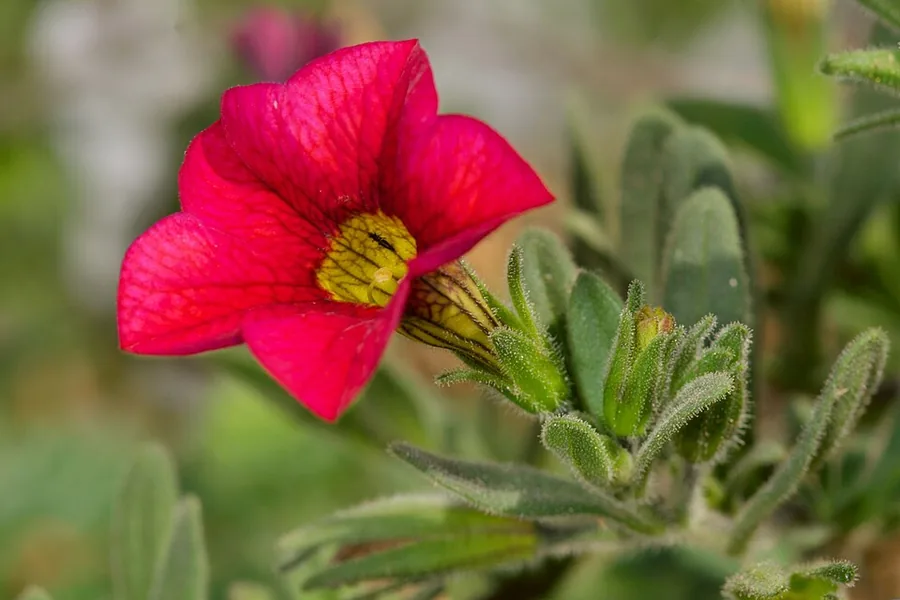
Calibrachoa is the plant most people know as Million Bells, a trailing flower that drips small petunia-like blooms over the edge of a pot or basket all season. It belongs to the nightshade family and is a close cousin of the petunia, but it carries its own name for good reason. The flowers are smaller, the habit is more mounding and trailing, and the color range runs deeper.
Gardeners grow it as a warm-season annual in most of the country, since it's a tender perennial that only overwinters in the mildest zones. It loves heat and sun, shrugs off the work of deadheading, and keeps flowering without a pause. That mix of toughness and nonstop color is why it fills so many summer containers.
The plant does ask for a couple of things in return. It's a hungry, thirsty feeder that wants slightly acidic soil and steady moisture, and it sulks in shade. Get the sun, the feeding, and the soil pH right, and the rest takes care of itself.
Care
The short version: full sun, steady moisture in a fast-draining pot, and a slightly acidic mix kept fed every couple of weeks. Pinch the tips now and then to keep it full, and skip the deadheading entirely.
Light
Calibrachoa wants full sun, 8 or more hours a day. Bloom falls off fast as shade climbs, so a spot that bakes in afternoon light gives you the fullest, most colorful plant.
Water
Keep the mix evenly moist but never soggy. In summer heat, baskets and pots can need watering every day, sometimes more, while the surface dries within a day or two. Always grow in a pot with drainage holes, since standing wet is what invites root rot.
Soil
Grow it in a well-draining, organically rich potting mix on the acidic side, somewhere around pH 5.0 to 6.5. A peat-based mix suits it well. Skip heavy clay in beds, which holds too much water for these roots.
Temperature
It handles a wide swing, from about 41°F to 95°F (5°C to 35°C), and takes summer heat in stride. Frost is the hard limit, which is why most gardeners treat it as an annual.
Humidity
Average humidity of 40% to 60% keeps it happy, so it's not a plant you fuss over on that front. Good airflow around crowded baskets does more good than any reading on a gauge.
Feeding
This is a heavy feeder. Mix a slow-release balanced fertilizer in at planting, then follow with a dilute water-soluble balanced feed every other week. If the new growth yellows, work in some chelated iron or iron sulfate to bring it back.
Pruning
There's no deadheading to do, since the spent flowers drop on their own. Pinch the stem tips back about 2 in (5 cm) at planting or midseason to keep the plant compact and push fresh branching and bloom.
Repotting
Calibrachoa isn't really repotted. It's grown as a single-season container plant and replaced each spring, so once it's in its pot or basket it stays there for the year.
Size & spacing
Plants stay low and spreading, about 3 to 12 inches (8 to 30 cm) tall with a trailing spread of 12 to 24 inches (30 to 60 cm). That mounding, cascading shape is what makes them spill so well over the edge of a basket.
When to plant
Calibrachoa is all about warmth and has no tolerance for frost. Set plants out in spring once the cold has passed and the soil has warmed past 55°F (13°C), and they bloom from late spring straight through until the first frost shuts the season down.
Northern hemisphere
Southern hemisphere
Typical months for a temperate climate: start earlier in warm zones, later where spring frosts linger.
- Plant: spring, after the last frost once soil temperatures exceed 55°F (13°C)
- Harvest: late spring continuously until first frost
Hardiness
USDA hardiness zones: 9–11
Temperature: down to -7°C
Troubleshooting
Most calibrachoa trouble traces back to soil pH, watering, or light, and it shows up in the leaves and the flowering. Read the early signs and you can turn a plant around before it goes downhill. Match what you see below, then act while it still helps.
Plant wilts in wet soil and collapses at the base
When a plant droops even though the mix is soaking wet, suspect root or stem rot from Pythium or Phytophthora. Slide it out of the pot and look at the roots; healthy ones are white and firm, while rotted roots are brown, soft, and few. There's no saving a badly hit plant, so bin it and replant any survivors in fresh, fast-draining mix in a pot that actually drains.
Fix:
- Stop watering until the top of the mix dries
- Remove and discard badly affected plants
- Replant survivors in fresh, fast-draining mix in a container with working drainage holes
New leaves turn yellow while the veins stay green
This is iron deficiency, and it shows up first on the newest growth because calibrachoa is a hungry plant that needs more iron than most bedding flowers. The usual trigger is potting mix that has drifted above pH 6.5, which locks the iron up where roots can't reach it. Test the mix, bring the pH back down toward 5.5 to 6.0 with iron sulfate, and drench with chelated iron to green the new leaves back up.
Fix:
- Lower the media pH toward 5.5 to 6.0 using iron sulfate per label directions
- Drench with chelated iron to green up new growth
- Resume feeding every other week with a balanced water-soluble fertilizer
Sticky residue, speckled leaves, or twisted new growth
These are the calling cards of aphids, thrips, or spider mites, the three pests that turn up most on calibrachoa. Check the shoot tips and leaf undersides for clustered aphids, fine webbing, or slim thrips that scatter when you tap a stem over white paper. A strong jet of water knocks most of them off, and insecticidal soap or horticultural oil handles the rest.
Fix:
- Knock pests off with a strong spray of water
- Treat infestations with insecticidal soap or horticultural oil per label
- Discard heavily infested stems
Few flowers and long, stretched-out stems
Too little sun is the main reason a plant goes leggy and stops blooming, since flowering drops off as shade climbs. Underfeeding makes it worse, because this is a heavy feeder that runs out of steam without regular meals. Move the container into full sun, trim the leggy tips back about 2 in (5 cm) to push fresh branching, and feed every other week.
Fix:
- Move containers to a spot with full sun
- Trim back leggy stem tips by about 2 in (5 cm) to force branching
- Feed every other week with a balanced water-soluble fertilizer
Toxicity
Good news for pet owners and parents: calibrachoa is safe to grow around the whole household. It doesn't appear on the ASPCA toxic plant lists, and its close cousin the petunia is listed as non-toxic. The worst a curious nibble might bring is a mild, passing stomach upset, the kind any plant can cause.
Safe for
People · Cats · Dogs · Horses · Rabbits · Livestock · Birds
Cats None
Safe to keep around cats. It stays off the ASPCA toxic list, and a curious nibble brings nothing worse than the odd mild stomach upset that any plant can cause.
Dogs None
No worries with dogs either. A dog that chews a trailing stem might get a brief tummy grumble from the roughage, but there's no toxin at work here.
Horses Safe
Horses can graze near it without harm. Nothing in the plant is known to poison them.
Rabbits Safe
Rabbits face no danger from the leaves or flowers, and a few stems do no damage beyond filling them up.
Livestock Safe
Cattle, goats, and sheep can be around it safely, since the plant carries no compounds that trouble grazing animals.
Birds Safe
Pet and backyard birds are fine near the blooms. There's no reason to fence the baskets off from them.
People Safe
Harmless to people, though it's an ornamental and not grown for eating. Children playing nearby are in no danger from it.
No special handling precautions are needed
Varieties
Calibrachoa reaches gardeners through a handful of named series rather than single varieties. These are the ones worth knowing by name.
Million Bells
The original trademarked series that introduced calibrachoa to the US market in the 1990s and gave the plant its everyday common name.
Superbells
A vigorous trailing series carrying solid, double, and patterned colors that holds up well in university trials.
MiniFamous
A series known for double-flowered forms such as Uno Yellow and Uno Pink Star that extension horticulturists single out.
Cabaret
A compact, uniform series that suits hanging baskets and mixed containers and earns strong marks in extension trials.
Callie
A semi-trailing series that shares the plant's extension nickname callie and blooms in baskets all season long.
How to propagate
Calibrachoa is multiplied from cuttings rather than seed, though patents put real limits on doing it yourself.
Stem cuttingsModerate
Spring to summer
Cuttings are the practical way to multiply calibrachoa, since the plants set very few seeds. Take them in spring or summer from healthy growing stems. One catch worth knowing: most named cultivars are patented, so you can't legally propagate them at home.
Myths
Calibrachoa must be deadheaded like petunias to keep it blooming.
The flowers are self-cleaning, so spent blooms drop on their own. You never have to pinch them off to keep the show going. It blooms from spring until frost with no deadheading at all.
Calibrachoa is just a miniature petunia you can grow from saved seed.
It's a genus of its own, not a small petunia, and it sets very few seeds. Nearly every garden hybrid is grown from cuttings instead. Most cultivars are patented, so propagating them at home is off limits.
Yellow leaves on calibrachoa always mean it is being overwatered.
When the yellowing hits new growth and leaves the veins green, the cause is usually iron deficiency from a media pH that has crept too high. This plant needs more iron than most bedding flowers and does best in a slightly acidic mix around pH 6.0.