Tree · Annonaceae
Pawpaw
Asimina triloba
North America's largest native fruit, rich as custard and tasting of banana and mango, ripens on a tree few gardeners know.
Full sun
Every 5–7 days
USDA 5–8
15–30 ft · 4.6–9.1 m
Overview
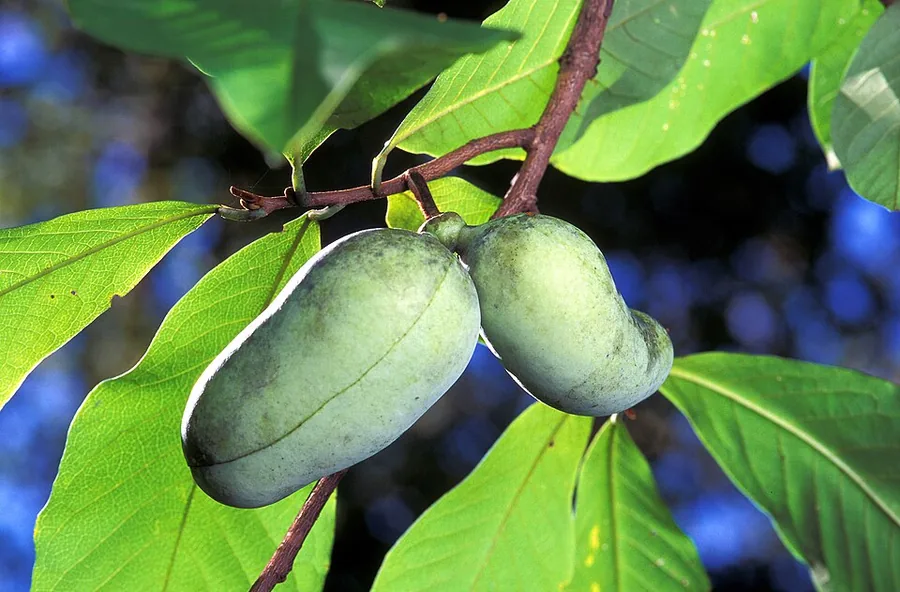
The pawpaw is the largest fruit native to North America, and for all that it stays a stranger to most gardens. It grows wild in the understory of eastern woods, from the Gulf states up into Canada, and bears a soft, green-skinned fruit with custard flesh that tastes of banana and mango at once.
It is a small, slow tree that ripens its crop in the shade of taller trees in the wild, though it fruits best once it reaches full sun. The flowers are an odd maroon, opening in early spring before the leaves, and they draw flies and beetles rather than bees. That quirk, more than anything, decides whether you get fruit.
Plant a pawpaw and you take on a tree that asks for patience up front and gives back a fruit you will not find in a store. It needs two unrelated trees to set a crop, steady moisture while it settles in, and a few years before it bears. After that it nearly looks after itself.
Care
The short version: deep, fertile, moisture-holding soil and steady water while it establishes, shade for the first year or two, then full sun for the best fruit, plus a second unrelated tree so the flowers can cross-pollinate.
Light
Young pawpaws need shade for their first year or two, mimicking the woodland understory where seedlings start out. Once established, the tree fruits best in full sun, though it will still grow and bear in partial or even full shade.
Water
Pawpaws want deep, evenly moist soil that still drains, and they need regular watering through the first two years while the roots establish. They take to moist river-bottom ground but resent heavy or waterlogged soil that never dries out.
Soil
Give them deep, fertile, well-drained loam that holds moisture, on the slightly acidic side with a pH of 5.5 to 7.0. Heavy clay and ground that stays wet are the two things they will not tolerate.
Temperature
Pawpaws are tough across the cold, hardy from about -20°F to 90°F (-29°C to 32°C), and the trees need a real winter chill to fruit well. The early spring flowers can still take a hit from a hard late frost.
Humidity
They favor the moderate to high humidity of their native eastern range, roughly 50% to 80%, which comes naturally outdoors in those regions. There is no number to fuss over in the garden.
Feeding
While a young tree is establishing, feed a balanced fertilizer such as 20-20-20 every couple of weeks from spring into early summer. Ease off as the tree matures and settles into steady growth.
Pruning
Pawpaws ask for little pruning. In late winter or early spring, take out dead, damaged, or crossing branches and shape the structure, and pull the root suckers to stop the tree from spreading into a thicket.
Repotting
Not applicable; grown in the ground as a landscape or orchard tree, not as a container houseplant
Size & spacing
A mature pawpaw stands 15 to 30 feet (4.5 to 9 m) tall and spreads about as wide, so give it the same 15 to 30 feet (4.5 to 9 m) of room. Remember it spreads by suckers, so leave space for the colony it wants to form.
When to plant
Pawpaws follow the rhythm of the temperate woods. Plant containerized trees in spring as new growth begins so the brittle taproot has the whole season to settle, watch the maroon flowers open in early to mid spring before the leaves, and pick the ripening fruit from late summer into fall.
Northern hemisphere
Southern hemisphere
Typical months for a temperate climate: start earlier in warm zones, later where spring frosts linger.
- Plant: Spring, during new growth, using containerized stock to protect the brittle taproot
- Harvest: Blooms early to mid spring before the leaves emerge; fruit ripens late summer to early fall (about August to October)
Hardiness
USDA hardiness zones: 5–8
Temperature: down to -29°C
Troubleshooting
Pawpaws stay remarkably free of pests and disease, so most trouble traces back to pollination or a rough transplant rather than bugs. Match what you see below and the cause is usually clear. Act early and the fix is simple.
Flowers open but little or no fruit follows
Most empty pawpaws come down to pollination. The trees are largely self-incompatible, and bees ignore the flowers, so a lone tree or two grafts of the same cultivar rarely set a crop. Plant at least two unrelated trees, and hand-pollinate by hand when flies and beetles are scarce.
Fix:
- Plant at least two different cultivars or unrelated seedlings; hand-pollinate flowers if natural fly and beetle activity is low
A new tree sulks or dies after planting
The pawpaw grows a long, fleshy, brittle taproot with almost no fine root hairs, so it resents being dug and moved. Wild or bare-root plants often fail outright. Set out container-grown stock in spring as new growth begins, and shade young seedlings for their first year or two while the roots take hold.
Fix:
- Use container-grown stock, transplant in spring during new growth, and shade young seedlings for the first one to two years
Flower stalks wither and drop before fruit forms
The larvae of the peduncle borer moth tunnel into the flower stalks and kill the bloom before it can set. Damage is usually light, so snip off and destroy the affected stalks and leave the rest. Pawpaws carry natural acetogenins that keep them nearly pest-free otherwise.
Fix:
- Tolerate minor damage; remove and destroy affected flower stalks; trees are otherwise nearly pest-free due to natural acetogenins
Spotted leaves or nibbled new growth
Now and then a pawpaw picks up Phyllosticta leaf spot or flyspeck fungi, or its leaves get chewed by zebra swallowtail larvae, Japanese beetles, or thrips. It looks worse than it is. The damage stays cosmetic and barely touches the crop, so no spray is needed and the swallowtail caterpillars do no lasting harm.
Fix:
- Usually cosmetic and not harmful to yield; no treatment normally needed; zebra swallowtail larvae seldom cause permanent damage
Toxicity
The ripe, peeled flesh is a genuine treat and safe for people, but the rest of the plant is not for eating. The seeds and skin hold acetogenins that upset the stomach, and the leaves, twigs, and bark carry insecticidal compounds. There is no pet-toxicity data on file, so treat the seeds, skin, foliage, and prunings as a mild caution around animals and children.
Toxic to
Cats · Dogs · Horses · Rabbits · Livestock · Birds
Safe for
People
Cats Caution
There is no cat-specific data, so treat it with care. The seeds, skin, leaves, and twigs hold acetogenins that can upset the stomach, so keep a curious cat from chewing fallen fruit or prunings.
Dogs Caution
A dog that gulps seeds, skin, or chewed-up leaves may drool or get an upset stomach from the acetogenins. The ripe flesh itself is mild, but the rest of the plant is worth keeping out of reach.
Horses Caution
No grazing data exists for horses, so play it safe. The bitter leaves and twigs carry insecticidal compounds and are best fenced off rather than offered.
Rabbits Caution
Rabbits should not nibble the foliage, seeds, or skin, since the acetogenins can irritate the gut. A small taste of ripe pulp is the only part worth considering, and even that only rarely.
Livestock Caution
Cattle, goats, and sheep tend to leave the bitter leaves alone, and that instinct is a good one. Keep prunings and fallen seeds out of pastures to be sure.
Birds Caution
Wild birds and mammals eat the ripe fruit in the wild and spread the seeds, but the seeds and skin are not meant to be swallowed by pet birds. Offer only a little ripe pulp if you offer any at all.
People Ripe flesh safe
The ripe, peeled flesh is a custard-sweet treat and safe to eat. The seeds and skin, though, hold emetic acetogenins and can turn the stomach, and handling the fruit gives some people a skin rash.
Wear gloves when harvesting if you are prone to skin irritation; do not eat or let pets or children chew the seeds, skin, leaves, or twigs.
Helpline numbers

United States
ASPCA Animal Poison Control: (888) 426-4435 (fee applies)
Poison Control: (800) 222-1222



Canada
Poison Centres: 1-844-764-7669
Varieties
Wild pawpaws vary a lot from tree to tree, so breeders have picked out the best for size, flavor, and few seeds. These named cultivars are the ones worth seeking out.
Shenandoah
A Peterson Pawpaws release with large, yellow-skinned fruit, butter-colored flesh, a mild sweet flavor, and few seeds for the size of the fruit.
Susquehanna
Another Peterson Pawpaws release prized for very large fruit, thick flesh, few seeds, and a sweet, rich flavor.
Mango
A vigorous selection that carries round fruit with orange-yellow flesh.
Sunflower
A large, late-ripening pawpaw that first came out of eastern Kansas.
How to propagate
You can raise a pawpaw from seed if you have patience, but a named cultivar only stays true to type when it is grafted.
SeedModerate
Growing from seed takes patience. The seed needs 90 to 120 days of cold, moist stratification before it will sprout, and the seedlings crawl along at first. They also come up genetically variable, so a seed-grown tree won't match the parent cultivar.
GraftingDemanding
Named cultivars are kept true by grafting, not seed. Growers join a cutting of the chosen variety onto a seedling rootstock by whip-and-tongue, cleft, bark inlay, or chip budding, a skilled job that demands good timing and a steady hand.
Myths
Pawpaws are pollinated by bees.
The flowers give off a faint, fetid smell that bees want nothing to do with. Flies and beetles do the real work, drawn in by that odor, which is why a row of pawpaws stays quiet of buzzing even in full bloom.
One tree, or two of the same grafted cultivar, will give you a full crop.
Pawpaws are largely self-incompatible, so a flower can't be fertilized by its own pollen or a clone of itself. You need two genetically different trees to get a real harvest, which means two seedlings or two separate cultivars, not two copies of the same one.
The whole fruit is safe to eat.
Only the ripe pulp belongs on your plate. The seeds and skin carry acetogenins that can turn your stomach, so scoop out the soft flesh and leave the rest behind.