Herb · Cannabaceae
Hops
Humulus lupulus
Give them full sun, deep soil, and something tall to climb, and hop bines rocket skyward for the brewing harvest.
Full sun
Every 2–4 days
120–150 days
USDA 3–8
Overview
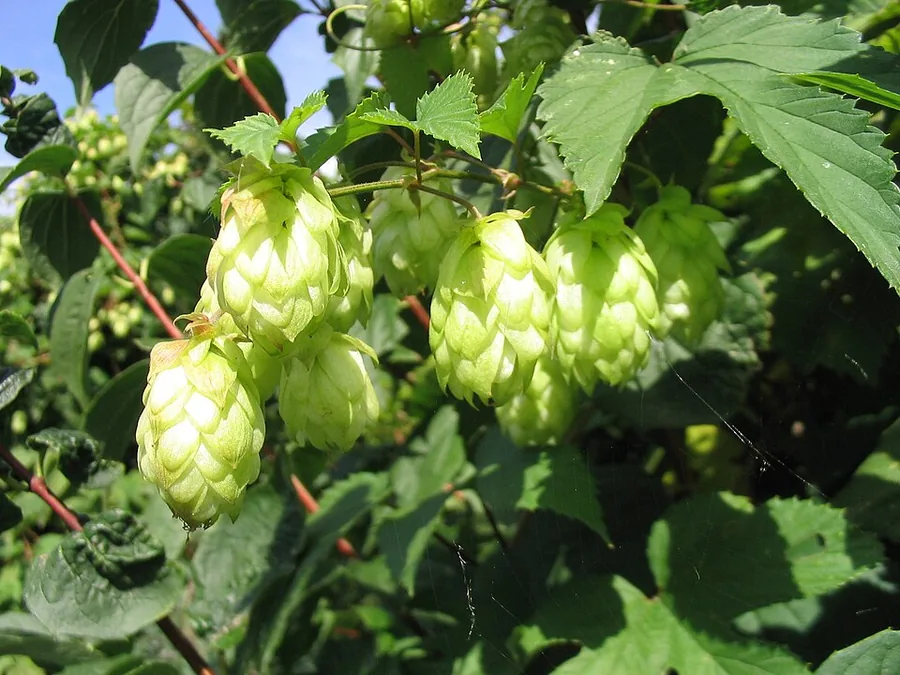
Hops are the climbing perennial behind the bitterness and aroma in beer. The plant sends up fast-growing shoots called bines that twist clockwise up any string or trellis you give them, reaching as much as 25 feet (7.5 m) in a single season before dying back to the ground each fall. The papery green cones it produces in late summer are the prize.
This is a dioecious plant, meaning each crown is either male or female, and only the females carry the cones brewers use. The bines climb by wrapping their rough, hooked stems around a support rather than by tendrils, so a tall trellis or a run of twine is not optional. Underground, tough rhizomes spread the plant outward, which is why hops can take over a corner of the garden if you let them.
Hops are hardy and long-lived once established, shrugging off winters as cold as -29°F (-34°C). The first year goes into building roots, and full cone production usually waits until the second or third season. Plant a female cultivar, give it height and steady water, and a single crown can crop for years.
Care
The short version: full sun, deep and rich well-drained soil, and steady moisture through the heat of summer, plus a tall support for the bines and a wide berth so the rhizomes don't run.
Light
Hops demand full sun, the more the better, since the bines need long days and strong light to power their explosive growth and set good cones. They'll take a little partial sun, but anything shadier means weaker bines and a thinner harvest.
Water
These are thirsty plants in summer, drinking heavily through June and July when the bines are racing upward. Keep the soil consistently moist but never waterlogged, and ease off on the water as the plant dies back in fall.
Soil
Give hops deep, rich, well-drained sandy loam loaded with organic matter, since the roots run deep and the plant feeds hard. A pH between 6.0 and 6.5 suits them well.
Temperature
Hops are tough across a wide range, surviving winter lows near -29°F (-34°C) and growing happily up to about 90°F (32°C). The cold rarely troubles an established crown, which dies back and regrows each spring.
Humidity
Outdoor humidity is whatever the season brings, so there's no target to hit. Airflow is what counts, because crowded, damp foliage is exactly where downy and powdery mildew take hold.
Feeding
Feed monthly from spring through midsummer with a balanced fertilizer carrying nitrogen while the bines are in active growth, then taper off before the cones set. The fast growth makes for a hungry plant.
Pruning
In spring, cut second- and third-year crowns back to the ground once the bines hit about 2 feet, then keep only a few strong shoots and train them clockwise up your strings. Strip the lower leaves for airflow, and cut the bines to the ground after harvest as the plant dies back.
Repotting
Hops aren't a container plant, so there's no real repotting to do. Instead, lift and divide the crowns every few years if the center crowds up, the shoots lose vigor, or the rhizomes start wandering past their patch.
Size & spacing
A single season can send the bines up to 25 feet (7.5 m) tall, spreading 3 to 6 feet (91 to 183 cm) wide at the base. Give each crown plenty of room and a tall, sturdy support so air moves freely and the rhizomes have somewhere to run.
When to plant
Hops grow on a clear annual rhythm. Plant rhizomes or crowns in early spring as soon as the soil can be worked, train the bines up through the long days of summer, and cut the cones in late August and September before the plant dies back for winter.
Northern hemisphere
Southern hemisphere
Typical months for a temperate climate: start earlier in warm zones, later where spring frosts linger.
- Plant: Plant rhizomes or crowns in early spring after the soil can be worked
- Harvest: Cones harvested late August through September (late summer to fall)
Hardiness
USDA hardiness zones: 3–8
Temperature: down to -40°C
Troubleshooting
Most hop trouble lands on the leaves, either as a fungal disease in damp weather or as a pest in the heat of summer. Catch it early, because a problem that reaches the cones costs you the harvest. Match what you see below, then act while it still does some good.
Yellow patches on top, gray-purple fuzz underneath, and stunted shoots
This is downy mildew, a stubborn disease that takes hold in cool, wet weather and is hard to clear once it settles in. Watch for the pale, brittle basal spikes pushing up from the crown, and remove them along with any infected foliage right away. Open the planting up for airflow, water at the base, and treat preventively during damp spells.
Fix:
- Remove and destroy infected basal spikes and diseased foliage promptly
- Improve air circulation by stripping lower leaves and thinning bines
- Avoid overhead irrigation; water at the base
- Apply a labeled fungicide preventively during cool, wet periods following extension recommendations
White powdery coating on leaves, shoots, and cones
Powdery mildew dusts the leaves and young growth with a white, felt-like film and goes after the cones, leaving them deformed. Prune out the first infected tissue in spring and keep the bines open to sun and moving air. A sulfur spray or another labeled fungicide helps when the weather favors the fungus.
Fix:
- Prune to remove early infected tissue in spring
- Improve air movement and sun exposure
- Apply sulfur or another labeled fungicide per extension guidance
Stippled, bronzed leaves with fine webbing in hot weather
Twospotted spider mites flare up in hot, dry summers, stippling the leaves until they bronze and drop. Tap a leaf over white paper and you'll see the tiny mites moving. Rinse the plants often with a strong jet of water, keep them from drying out, and protect the predatory mites that hold the pests in check.
Fix:
- Wash plants regularly with a strong stream of water
- Conserve beneficial predatory mites and other natural enemies
- Provide adequate but not excessive water and nitrogen
- Apply a labeled miticide if populations escalate
Curled, sticky leaves with colonies of small soft-bodied insects
The hop aphid shows up in spring and sticks around all season, clustering on leaf undersides and growing tips and leaving sticky honeydew that turns to sooty mold. Check the tips weekly and treat early, because once the aphids reach the cones they spoil the harvest. Lady beetles and lacewings do much of the work if you let them.
Fix:
- Encourage and conserve natural enemies such as lady beetles and lacewings
- Hose off light infestations with water
- Apply insecticidal soap or a labeled insecticide for heavy early-season or cone infestations
Leaves chewed down to a lacy skeleton in midsummer
Japanese beetles feed in groups and strip the soft leaf tissue, leaving only a lacy web of veins behind. Pick them into soapy water in the cool of the morning when they're slow. The damage looks alarming, but established bines usually shrug it off.
Fix:
- Hand-pick beetles into soapy water in the early morning
- Apply a labeled insecticide during heavy adult flights if needed
Toxicity
Hops are dangerous to dogs, and this is no minor warning. Both fresh cones and the spent hops left over from brewing can trigger a sudden, life-threatening fever in a dog, so keep every part of the plant and all brewing waste well out of reach. Cats, horses, and other animals should be kept away too, while the cones themselves are what people use to brew beer.
Toxic to
Cats · Dogs · Horses · Rabbits · Livestock · Birds · People
Cats Moderate
Cats are considered at risk, and while reports are fewer than in dogs, eating hops can push up their body temperature and turn the stomach. Keep cones, dried hops, and brewing waste out of reach.
Dogs Severe
This is the serious one. Hops can trigger a malignant hyperthermia crisis in dogs, with heavy panting, a dangerously high fever, a racing heart, restlessness, vomiting, and seizures that can turn fatal within hours. Spent hops left over from brewing are a frequent cause, and sighthounds such as greyhounds run an even higher risk, so any ingestion is an emergency.
Horses Moderate
Horses are considered susceptible too. A horse that eats hops may show clear distress and a rising body temperature, so keep the plant and any brewing waste away from pasture and feed.
Rabbits Caution
There's little solid evidence either way for rabbits, so treat hops as off the menu rather than risk it. Don't offer cones, foliage, or trimmings.
Livestock Caution
Cattle, goats, and sheep are best kept clear of hops as a precaution, since the same heat-driven reaction seen in dogs can't be ruled out. Fence off plantings and never toss spent hops where grazing animals can reach them.
Birds Caution
How birds handle hops isn't well documented, so the safe move is to keep cones and dried hops away from them entirely.
People Caution
Adults use hop cones to brew beer and brew them into calming teas, and the plant is low-risk for grown-ups. Even so, it isn't a food for children to nibble, and the bines can leave a skin rash on some people who handle them.
Keep all hops, including bittered/boiled spent hops from brewing, completely away from dogs. Dispose of used hops securely in a sealed, dog-proof container rather than an open compost or trash that pets can reach.
Helpline numbers

United States
ASPCA Animal Poison Control: (888) 426-4435 (fee applies)
Poison Control: (800) 222-1222



Canada
Poison Centres: 1-844-764-7669
Varieties
Most home growers pick a hop by its brewing character, from bright citrus aromas to heavy bittering punch. A few are grown for looks alone. These are the ones worth knowing by name.
Cascade
A popular American aroma hop with bright citrus and floral notes that has become a staple for home and craft brewers alike.
Centennial
A dual-purpose cultivar prized for its bold citrus aroma, earning it the nickname super Cascade.
Chinook
A high-alpha bittering hop that carries a distinct spicy, piney character.
Nugget
A vigorous high-alpha bittering cultivar known for its heavy, herbal aroma.
Aureus
An ornamental golden hop grown mostly for its bright chartreuse foliage rather than for brewing cones.
How to propagate
Hops are nearly always grown from the parent plant rather than from seed, which keeps a named female cultivar true and gets you to a brewing crop years sooner.
DivisionEasy
Early spring while dormant · One growing season to establish; full cone production typically by the second or third year
The easiest way to multiply hops is to split the perennial crown of an established female plant in early spring while it's still dormant, which keeps the named cultivar true to type. A division settles in over one growing season, but don't expect a full crop of cones until the second or third year.
LayeringModerate
Spring through early summer · One season to root before separating
Rhizome cuttings and layered sections of bine root readily when set out from spring through early summer, taking about a season to root before you separate them. Commercial growers usually start from clean, disease-free transplants rather than field rhizomes to keep mildew out of a new planting.
SeedDemanding
Spring · Two or more years to flower and reveal sex
Seed is rarely the route to take, since seedlings won't come true to a named cultivar and split into males and females. Sown in spring, they take two years or more to flower and finally show their sex, so you're gambling on a long wait for an unknown plant.
Myths
Any hop plant will give you cones to brew with.
Hops are dioecious, so only the female plants carry the papery cones, the strobiles, that brewers want. Growers keep male plants around only for breeding and pollination and usually pull them, because pollinated, seeded cones are a problem for most brewing.
Only beer made from hops is dangerous to dogs, not the plant.
The hops themselves are the hazard, with no beer required. Fresh cones, dried hops, and especially the spent hops left over from brewing can set off a life-threatening high-fever reaction in dogs even with no alcohol involved.