Herb · Boraginaceae
Borage
Borago officinalis
Sow it once and the blue star flowers and bees keep coming back on their own.
Full sun
Every 3–7 days
50–86°F · 10–30°C
55–75 days
Overview
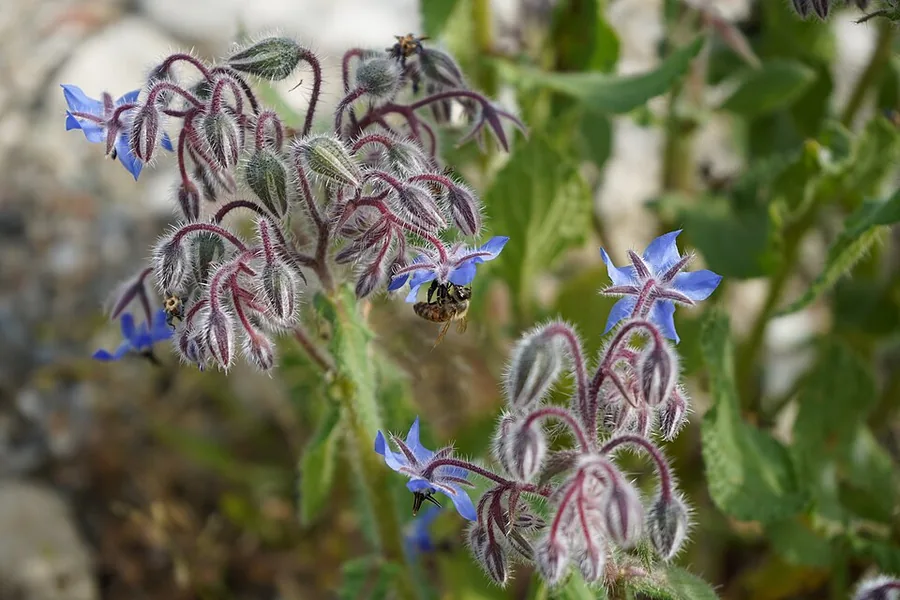
Borage is the easygoing herb with the bright blue, star-shaped flowers that bees can't leave alone. It's a fast-growing annual from the borage family, happiest in full sun and forgiving of poor, dry ground that would stall fussier plants. Sow it once and it tends to settle in for the long haul.
The young leaves and the open flowers carry a clean, cucumber-like taste that turns up in summer drinks, salads, and as a candied garnish. The whole plant wears stiff bristly hairs, so gloves earn their keep at harvest. Both leaves and flowers are worth picking young and tender.
What borage gives in ease it can take back in spread. Left to flower and drop seed, it reseeds itself freely and comes up across the garden the next year, so a little deadheading keeps it where you want it.
Care
The short version: full sun and well-drained soil, even on the lean and dry side. Water to settle it in, then ease off once it's established, skip the heavy feeding, and deadhead the flowers to slow its eager self-seeding.
Light
Borage wants full sun to grow stocky and flower hard, though it puts up with partial shade. Too little light gives you a tall, floppy plant that leans and falls over.
Water
Water often enough to keep the soil evenly moist while the plant settles in. After that it turns fairly drought-tolerant and copes with lean, dry ground, so back off and just avoid waterlogging.
Soil
Plain well-drained garden soil suits it, and it even handles poor, dry spots that stump other herbs. A pH of 6.0 to 7.0 is ideal, but borage isn't picky about much beyond drainage.
Temperature
It grows across a wide band, from about 50°F to 86°F (10°C to 30°C). Frost ends an annual borage, so wait for the cold to pass before sowing.
Humidity
Ordinary outdoor air around 40% to 60% is all it asks. Good airflow counts for more than any humidity reading, since crowded, still air invites powdery mildew on the leaves.
Feeding
Borage is a light feeder that needs very little. A bit of compost or a balanced fertilizer at planting covers it on poor soils, and rich ground only grows weak, floppy stems.
Pruning
Pinch the growing tips early for a bushier, sturdier plant, and deadhead spent flowers to keep the blooms coming and curb the heavy self-seeding. Cut back any leggy or flopping growth to freshen the foliage.
Repotting
Borage isn't really a container plant. Its taproot resents being moved, so it's direct-sown where it grows rather than potted up or repotted.
Size & spacing
Plants reach 18 to 35 inches (45 to 90 cm) tall and spread 12 to 24 inches (30 to 60 cm) wide. Give each one that much room so air moves through and mildew stays away.
When to plant
Borage runs on warmth and dislikes being moved, so the season starts when the frost ends. Sow the seed straight into warm spring soil, watch the blue flowers open from early summer, and pick young leaves and blooms right through to fall.
Northern hemisphere
Southern hemisphere
Typical months for a temperate climate: start earlier in warm zones, later where spring frosts linger.
- Sow: Generally not recommended; borage has a taproot and resents transplanting. If started indoors, sow in deep pots 3-4 weeks before last frost.
- Plant: Direct-sow after the last spring frost once soil has warmed
- Harvest: Blue star-shaped flowers appear from early summer through fall; harvest young, tender leaves and open flowers as needed
Hardiness
USDA hardiness zones: 2–11
Temperature: down to -46°C
Troubleshooting
Borage shrugs off most trouble, and the few problems it does meet are mild and easy to read. Watch the new growth and the crowded lower leaves for the first signs. Match what you see below and step in early.
Volunteer seedlings popping up all over the garden
Borage is a heavy self-seeder, so one plant left to flower and drop seed becomes a crowd of volunteers the next year. Deadhead the spent flowers before the seed matures, and hoe or pull the young seedlings while they're easy to lift. Cutting plants back before the seed drops keeps the spread in check.
Fix:
- Deadhead spent flowers before seed sets to limit reseeding
- Pull or hoe unwanted volunteer seedlings while young
- Harvest or cut plants before mature seed drops
Soft-bodied insects clustered on new growth and leaf undersides
Those clusters are aphids, and they gather on the tender tips and the backs of leaves, leaving a sticky honeydew behind. A hard jet of water knocks most of them off, and borage draws in ladybugs and lacewings that finish the job, so a small colony is rarely worth worrying about. Reach for insecticidal soap only when the infestation gets out of hand.
Fix:
- Spray plants with a strong jet of water to dislodge aphids
- Tolerate minor populations, as borage attracts beneficial predators such as ladybugs and lacewings
- Use insecticidal soap only if infestation is severe
Dusty white coating spreading across the leaves
A dusty white film on the upper leaves is powdery mildew, a fungus that takes hold on warm days and cool, humid nights, especially where plants crowd each other. Thin out the planting so air moves freely, strip off the worst leaves, and keep water off the foliage. It shows up most in late season and rarely kills the plant.
Fix:
- Improve air circulation by thinning crowded plants
- Remove and discard heavily affected foliage
- Avoid overhead watering
Top-heavy plants flopping over after rain or wind
Borage grows fast and hollow, so a plant pushed too hard with rich soil or shade turns leggy and brittle and topples under its own weight. Pinch the tips early to build a stockier, branchier plant, and give it light staking or sturdy neighbors to lean on. Full sun and lean ground keep the growth tight enough to stand on its own.
Fix:
- Pinch tips early to promote bushier, sturdier growth
- Provide light staking or grow among supporting companion plants
- Site in full sun and avoid over-fertilizing
Toxicity
Borage sits in an unusual spot: people eat its flowers and young leaves, yet the plant holds pyrrolizidine alkaloids that can harm the liver in quantity. Enjoy it in moderation as a garnish, and keep horses, livestock, rabbits, and birds away from it altogether, since these animals are far more at risk than a person taking the odd taste.
Toxic to
Cats · Dogs · Horses · Rabbits · Livestock · Birds
Safe for
People
Cats Mild
A nibble or two rarely causes more than mild stomach upset, but the pyrrolizidine alkaloids in the leaves build up in the liver over time. Keep a cat from grazing the plant repeatedly.
Dogs Mild
A curious dog that chews a leaf may get a queasy stomach and little else, though regular helpings raise a real liver concern as the alkaloids accumulate. Steer dogs away from the foliage.
Horses Toxic
Horses are especially vulnerable to pyrrolizidine alkaloids, which scar the liver as they pile up. The damage creeps in slowly, so weight loss, a dull coat, and strange behavior can surface long after grazing. Keep borage out of pasture and hay.
Rabbits Toxic
The bristly, alkaloid-laden leaves are no treat for a rabbit, and the toxin loads the liver with every feeding. Don't offer borage as forage.
Livestock Toxic
Cattle, sheep, and goats that browse borage take in pyrrolizidine alkaloids that quietly damage the liver over weeks and months. Listlessness, weight loss, and poor thrift point to the slow harm. Keep it clear of grazing ground.
Birds Toxic
The same liver-toxic alkaloids make borage foliage a poor choice for poultry and pet birds, so keep it off the menu.
People Edible in moderation
The young leaves and blue flowers are a familiar kitchen herb, fine to eat now and then for their cool, cucumber taste. The catch is the pyrrolizidine alkaloids, which can stress the liver with large or steady use, so treat borage as a garnish and not a daily green.
Wear gloves or long sleeves when handling or harvesting, as the stiff bristly hairs can mildly irritate skin. Consume flowers and young leaves only in moderation due to pyrrolizidine alkaloid content.
Helpline numbers

United States
ASPCA Animal Poison Control: (888) 426-4435 (fee applies)

United Kingdom
Animal PoisonLine: 01202 509000 (fee applies)

Australia
Animal Poisons Helpline: 1300 869 738
Varieties
Borage comes in just a couple of forms, separated mainly by flower color. Both grow and taste the same.
Borago officinalis (common borage)
The standard species carries the bright blue, star-shaped flowers and bristly, cucumber-flavored leaves most gardeners picture when they think of borage.
Borago officinalis 'Alba' (white borage)
This selection trades the blue blooms for clean white ones and is otherwise the same plant in every way.
Companions
Borage earns its place beside fruiting crops by pulling in bees and other pollinators that lift their yields.
Plant near
Tomato: Borage attracts pollinators and beneficial insects and is a traditional companion planted near tomatoes
Strawberry: Borage is a classic companion for strawberries, drawing pollinators that improve fruit set
Squash: Its abundant blue flowers attract bees and other pollinators that benefit pollination of squash and other cucurbits
How to propagate
Borage all but plants itself, which makes seed the only method that matters and the only one you'll ever need.
SeedEasy
Direct-sow outdoors after the last spring frost once the soil has warmed · Seeds typically germinate in 1-2 weeks and plants establish within several weeks
Sow borage straight into the ground where you want it to grow, since its deep taproot resents being moved. Wait until after the last spring frost and the soil has warmed, and the seeds come up in 1 to 2 weeks and fill out over the following few weeks. Once it's settled in, it sows itself for years to come.
Myths
Borage is a completely safe culinary herb you can eat in any amount.
The leaves and stems carry pyrrolizidine alkaloids that can harm the liver when eaten in large amounts or over a long stretch. The flowers and young leaves are fine as an occasional garnish, but treat borage as a flavoring, not a staple green.
Planting borage once is enough because it's only an annual.
It does die back each year, yet it drops so much seed that it comes back on its own season after season. Left to set seed, a single plant can seed a whole bed and turn weedy.