Tree · Cornaceae
Flowering Dogwood
Cornus florida
Give it part shade and moist, acidic soil, and the flowering dogwood rewards you with spring bracts and red autumn fruit.
Partial shade
Every 5–10 days
USDA 5–9
15–30 ft · 4.6–9.1 m
Overview
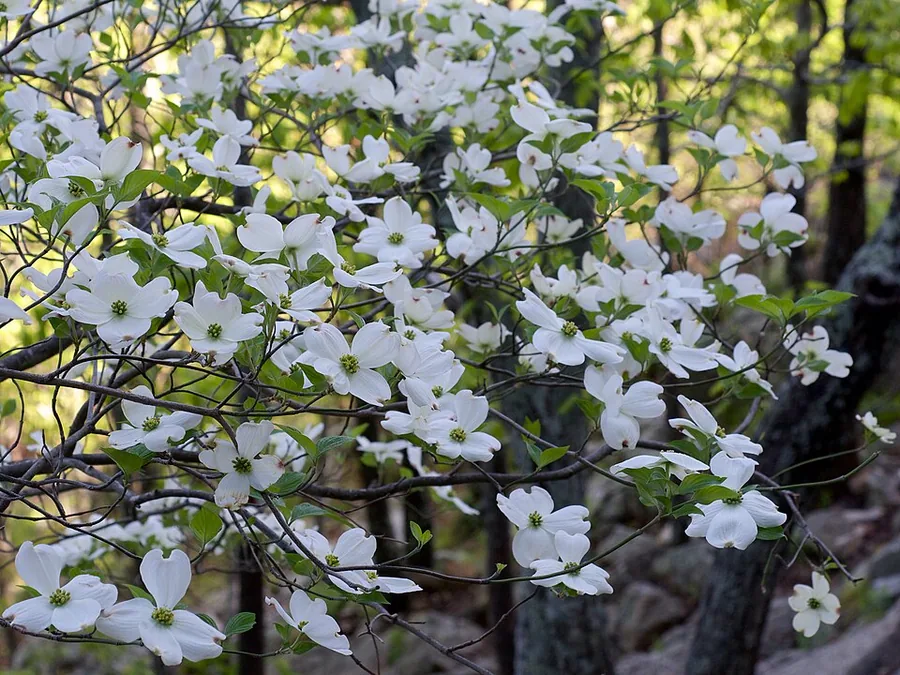
Flowering dogwood is one of the signature small trees of eastern North America, the kind that lights up the spring woods with broad white blooms. In the wild it grows as an understory tree, settling in beneath taller oaks and pines where the light is dappled and the soil stays cool and moist. That habit tells you almost everything about how to grow it well.
The famous spring show is a bit of a trick. What look like four big white petals are really bracts, modified leaves wrapped around a knot of tiny true flowers in the center. They open in April and May, sometimes before the leaves, and the tree follows them with clusters of bright red fruit from August into October that birds clear out fast.
It rates as a moderate tree to grow because it is fussy about its site and prone to a few diseases when stressed. Get the spot right, with shade from the worst afternoon sun and ground that drains yet never bakes, and it settles into a long, slow life. Push it into hot, dry, compacted soil and you invite the very troubles that shorten its years.
Care
The short version: part shade with shelter from harsh afternoon sun, moist and acidic well-drained soil, a 2 to 4 inch mulch to keep the roots cool, and a careful eye for anthracnose in cool, damp seasons.
Light
This is an understory tree, so it leans toward part shade and welcomes a break from hot afternoon sun. It will take full sun in cooler regions or with steady moisture, but a baking, exposed spot stresses it and opens the door to disease.
Water
Keep the soil consistently moist, since the tree has no patience for drought, heat, or packed ground. Water deeply through dry spells and lay down 2 to 4 inches of mulch to hold moisture and keep the shallow roots cool.
Soil
Plant it in rich, acidic, well-drained loam with plenty of organic matter worked in. A pH between 6.0 and 7.0 suits it, and soil that drains freely yet never dries out is the sweet spot.
Temperature
It is hardy across a wide swing, from about -20°F to 100°F (-29°C to 38°C), which covers cold winters and hot summers alike. The heat is more of a threat than the cold, because a tree dried out and stressed by heat is the one disease finds first.
Humidity
Ordinary outdoor humidity is fine and needs no fussing. Airflow matters far more than any humidity number, since still, crowded air around the canopy is what lets anthracnose and mildew take hold.
Feeding
Feed once in early spring with a balanced slow-release fertilizer made for acid-loving plants. Go light on the nitrogen, because a flush of soft growth is exactly what anthracnose feeds on.
Pruning
Prune in late fall or winter while the tree is dormant, taking out dead, diseased, or cankered wood along with any water sprouts. Work carefully and avoid wounding the bark, since open cuts are the doorway borers slip through.
Repotting
This is a landscape tree that rarely needs repotting. If you're growing a young one in a container, move it up only when roots start circling the surface or the pot dries out fast after every watering.
Size & spacing
A mature flowering dogwood reaches 15 to 30 feet (4.5 to 9 m) tall and spreads about as wide. Give it that full 15 to 30 feet (4.5 to 9 m) of open room so the canopy can breathe and disease has less of a foothold.
When to plant
Flowering dogwood runs on the seasons of the temperate woods. The bracts open in April and May, the red fruit ripens from August into October, and the best time to set a new tree in the ground is spring or fall while it sits dormant.
Northern hemisphere
Southern hemisphere
Typical months for a temperate climate: start earlier in warm zones, later where spring frosts linger.
- Sow: Not typically started indoors; seed is sown outdoors in fall or stratified at about 41 degrees F for up to 120 days before spring sowing
- Plant: Spring or fall while dormant
- Harvest: April to May (showy white bracts before or with leaf emergence); red fruit August to October
Hardiness
USDA hardiness zones: 5–9
Temperature: down to -29°C
Troubleshooting
Most dogwood trouble traces back to a stressful site and shows up first on the leaves before it moves into the wood. Catch it early, especially in a cool, wet spring, and you can often keep a small problem from reaching the trunk. Match what you see below, then act while it still helps.
Blotched, drooping leaves followed by sunken cankers on the trunk
This is dogwood anthracnose, the most serious disease the tree faces, and it hits hardest in cool, damp, shaded spots. It starts on the lowest leaves as tan spots with purple edges, then climbs into the twigs and trunk as cankers that can girdle and kill a tree. Prune out cankered wood in dry weather, clear fallen leaves, open the canopy for airflow, and use a labeled fungicide from bud break onward where the risk runs high.
Fix:
- Prune out and destroy dead and cankered wood during dry summer weather
- Remove water sprouts and rake and dispose of fallen leaves
- Improve air circulation and avoid excess nitrogen
- Apply a labeled fungicide (chlorothalonil, mancozeb, propiconazole, or copper) from bud break through new growth in high-risk sites
Early red leaves, peeling bark, and sawdust near holes in the trunk
These are the marks of the dogwood borer, a larva that tunnels under the bark and usually slips in through a wound. Watch for sloughing bark and sawdust-like frass on the trunk and big branches, since a young tree can die within a season or two. Keep the tree healthy and watered, shield the bark from mower and trimmer damage, and treat the trunk with a labeled permethrin starting in early May.
Fix:
- Keep trees healthy with proper watering and fertilization
- Avoid bark wounds from lawn equipment
- Apply labeled permethrin to trunk and major branches beginning in early May, repeating per label
White powdery film on the leaves with scorched edges
A dusty white coating on the new growth points to powdery mildew, which settles in where shade is dense and air sits still. The leaf edges brown and some leaves fall early, though the tree usually survives it. Thin the canopy and nearby plantings to get air moving, and apply a labeled fungicide as soon as the first patches show.
Fix:
- Thin canopy and surrounding plantings to improve air circulation
- Apply a labeled fungicide (myclobutanil, propiconazole, sulfur, or copper) early when symptoms first appear
Tiny purple-edged spots peppering the bracts and young leaves
Lots of small tan spots ringed in reddish purple on the spring bracts is spot anthracnose, which flares up in wet weather. It looks rough and can wrinkle the bracts, but it rarely does the tree any lasting harm. Thin the canopy for airflow, choose resistant varieties, and in bad years spray a labeled fungicide every 10 to 14 days from bud break through leaf expansion.
Fix:
- Thin the canopy to improve air circulation
- Plant resistant varieties
- Apply a labeled fungicide every 10 to 14 days from bud break through leaf expansion in severe cases
Toxicity
Good news for a household with animals: flowering dogwood is not toxic. The ASPCA does not list it among plants that poison cats or dogs, and it poses no real risk to other pets, livestock, or people. The red fruit is bitter, so eating a lot of it might bring a mild stomach ache, but there is nothing dangerous in the tree.
Safe for
People · Cats · Dogs · Horses · Rabbits · Livestock · Birds
Cats Safe
The ASPCA does not list flowering dogwood as toxic to cats, so a curious nibble is nothing to worry about. As with any plant, a cat that eats a lot of leaves might cough it back up, but the tree itself carries no poison.
Dogs Safe
Dogs are in the clear here too, since the tree is not on the ASPCA toxic list. A big mouthful of bark or fruit could leave a dog with a passing upset stomach, but there is no lasting danger.
Horses Safe
Horses can graze around a dogwood without harm. The leaves and twigs hold nothing toxic, and the tree is not known to cause trouble for grazing animals.
Rabbits Safe
Rabbits can browse the foliage safely. Nothing in the plant is poisonous to them, though a rabbit will do best on its regular diet of hay and greens rather than tree leaves.
Livestock Safe
Cattle, goats, and sheep face no risk from a dogwood in or near the pasture. The tree is considered non-toxic, so an animal that strips a few low branches will be fine.
Birds Safe
Birds love the bright red fruit and eat it freely, which is exactly how the seeds spread. The berries are a welcome food source rather than any sort of hazard.
People Safe
The plant poses no poisoning risk to people. The red fruit is bitter, so eating a lot of it can lead to a mild stomach ache, but there is nothing dangerous about the tree.
No special toxicity handling required; as with any plant, discourage pets from chewing large amounts of foliage or fruit.
Varieties
Most of the dogwoods you'll find for sale are named cultivars, bred for bract color, heavier bloom, or disease resistance. These are a few worth knowing.
Cherokee Chief
This one trades the usual white for deep rosy-red bracts that stand out against the spring greenery.
Cherokee Princess
A heavy, dependable bloomer that covers itself early in large white bracts.
Cloud 9
Smothered in white flowers and willing to bloom well even as a young tree.
Appalachian Spring
A white-bracted selection prized for its resistance to dogwood anthracnose.
How to propagate
There are three ways to make more flowering dogwoods, and the one you choose depends on whether you care about matching a named cultivar.
SeedModerate
Sow in fall, or stratify cleaned seed at about 41 degrees F for up to 120 days then sow in spring · Germinates the following spring; some seed delays to the second year
Seed carries a built-in dormancy that a cold spell breaks. Sow cleaned seed outdoors in fall, or chill it at around 41°F (5°C) for up to 120 days and sow in spring, and it sprouts the following spring, with some seed holding off until the second year. The catch is that seedlings vary, so they won't match a named cultivar.
Stem cuttingsModerate
Softwood cuttings in summer · Several weeks to root; cuttings from young trees root and grow better than those from mature trees
Take softwood cuttings in summer, or hardwood cuttings over winter. They root in a few weeks, and cuttings pulled from young trees take and grow far better than those off old wood.
GraftingDemanding
Dormant season grafting or budding · One or more growing seasons to establish
This is how the nursery trade keeps a named cultivar true. Grafting or budding during the dormant season holds the bract color and disease resistance steady, and the young tree needs a season or more to settle in.
Myths
Flowering dogwood does best in full, hot sun like most flowering trees.
This is a native understory tree, and it wants part shade with moist, acidic, organically rich soil beneath it. It has little tolerance for drought, heat, or packed-down ground, and a tree baking in a hot, dry spot grows stressed. A stressed dogwood is far more likely to fall to disease, so the site you pick matters as much as anything you do later.
The big white petals of a dogwood bloom are its real flowers.
The four showy white parts everyone admires are not petals at all. They are bracts, modified leaves, and the true flowers are the small yellowish-green clusters tucked in the center.