Tree · Fabaceae
Eastern Redbud
Cercis canadensis
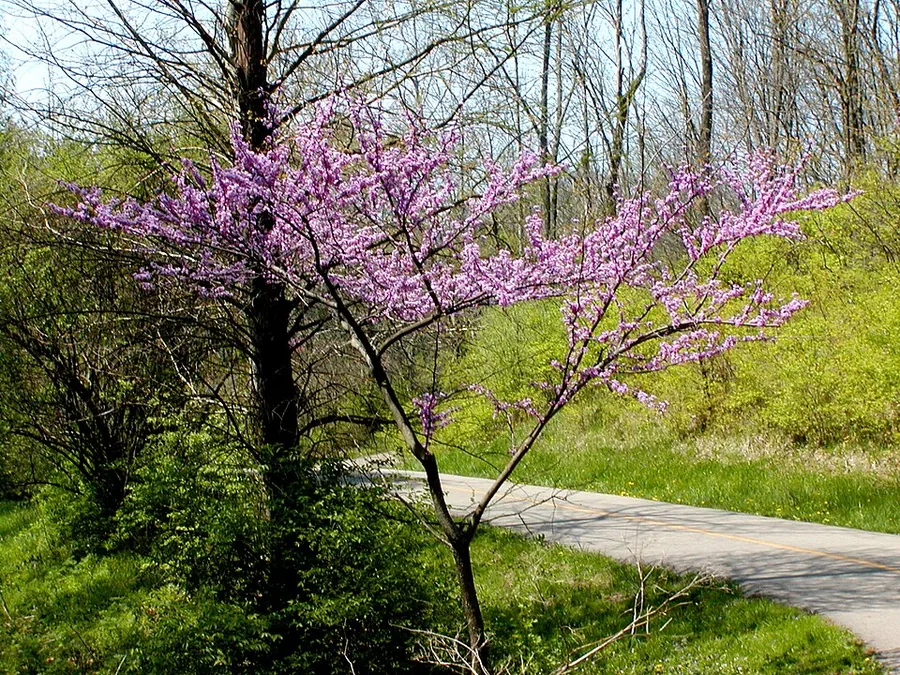
It lights up the bare spring woods with rose-pink flowers right on the branches before a single leaf appears.
Full sun
Every 7–14 days
USDA 4–9
20–30 ft · 6.1–9.1 m
Overview
Eastern redbud is a small native tree that turns heads in early spring, when rose-pink to magenta flowers burst straight out of the bare branches and even the trunk before the leaves arrive. It belongs to the legume family, the same group as peas and beans, which is why those blooms are shaped like tiny pea flowers and why flat seed pods follow them later in the season.
After the flowers fade, the tree leafs out in broad heart-shaped foliage and settles into an easy, rounded shape. It stays modest in size, reaching 20 to 30 feet (6 to 9 m) tall, so it fits a yard where a larger shade tree would crowd things out. It also handles a wide range of light, from full sun to fairly deep shade, which makes it useful at a woodland edge or under taller trees.
Redbud is hardy and undemanding once it settles in, thriving across zones 4 through 9. The main things to watch are root disturbance, since it resents being moved, and a few fungal diseases that take advantage of a stressed tree. Keep it healthy and it asks for little in return.
Care
The short version: plant it in full sun to part shade in average, well-drained soil, keep it watered while it's young, and prune only after it finishes blooming. It adapts to most soils and shrugs off cold, but it hates soggy ground and dislikes being transplanted once established.
Light
Redbud is easygoing about light, growing in anything from full sun to full shade. It flowers best and keeps a denser shape in full sun to part shade, which makes it a natural fit for a woodland edge where it gets sun part of the day.
Water
Keep the soil evenly moist with regular watering for the first year or two while the roots take hold. A mature tree handles short dry spells, but it won't stand a long drought, and it sulks in soggy, waterlogged ground. Water deeply whenever a dry stretch runs past a few weeks.
Soil
This tree adapts to loam, clay, or sand as long as it drains well, and it shrugs off a wide pH range from 5.5 to 8.0. Average, medium-moisture ground suits it fine. What it can't abide is soil that stays wet.
Temperature
Redbud is genuinely tough, riding out winters down to -29°F (-34°C) and summer heat up to 95°F (35°C). That cold hardiness is what lets it grow across such a wide stretch of the country.
Humidity
Ordinary outdoor humidity is all it needs, so there's no number to track. Air movement matters more than moisture in the air, since still, crowded conditions are what invite leaf spot and other fungal trouble.
Feeding
Feed in early spring as growth resumes, using a balanced slow-release tree fertilizer. Proper feeding does more than push growth, since a well-fed tree holds up far better against canker and wilt.
Pruning
Prune in late spring, right after flowering, taking out dead, broken, or cankered wood and shaping as needed. Remove any cankered or wilting branches the moment you spot them to slow the spread of disease. Keep lawn weedkillers well away, because redbud is very sensitive to herbicide drift.
Repotting
Redbud is rarely grown in a container and seldom needs repotting. If you do hold a young one in a pot, watch for roots circling or escaping, water running straight through, or thin new growth, all signs it wants more room or a spot in the ground.
Size & spacing
Expect a mature tree of 20 to 30 feet (6 to 9 m) tall with a wide, spreading crown of 25 to 35 feet (7.5 to 10.5 m). Give it that much open room, since the canopy spreads broad and the tree resents being moved once planted.
When to plant
Set a young redbud out in early spring, while it's small and easiest to move into a permanent spot, since it doesn't take kindly to being shifted later. The reward comes the following spring, when the bare branches break into pink bloom from March through May, ahead of nearly everything else in the garden.
Northern hemisphere
Southern hemisphere
Typical months for a temperate climate: start earlier in warm zones, later where spring frosts linger.
- Plant: early spring while young, in a permanent protected site (does not transplant well)
- Harvest: early spring (March to May), pea-like rose-pink to magenta flowers on bare branches and trunk before leaves emerge
Hardiness
USDA hardiness zones: 4–9
Temperature: down to -34°C
Troubleshooting
Most redbud trouble traces back to fungal disease taking hold in a stressed or wounded tree. Learn to tell a serious canker or wilt from harmless leaf spots, and you'll know when to act and when to leave well enough alone. Match what you see below, then step in early on the ones that matter.
Branches dying back with sunken dark lesions on the bark
This is Botryosphaeria canker, a fungus that slips in through wounds and stressed wood, then girdles the branch above it. Cut the affected branch well below the lesion and burn or bin the wood, wiping your tools between cuts. The fungus rarely touches a vigorous tree, so steady watering and good care are your best defense.
Fix:
- Prune out and destroy all dead, dying, and cankered branches well below the lesion
- Disinfect pruning tools between cuts
- Improve vigor with proper watering, mulching, and correct fertilization
Wilting and small leaves on just one side of the tree
Verticillium wilt comes up through the roots and clogs the sapwood, so the damage often shows on one side first. Peel the bark on a wilting branch and you'll find dark streaks in the wood underneath. There's no cure, so keep the tree vigorous, prune out the dead wood, and never replant a susceptible species in the same soil. The cultivar 'Forest Pansy' is hit hardest.
Fix:
- Prune out dead wood and dispose of it
- Improve host vigor with light mulching and watering during dry periods of more than a few weeks
- Fertilize when appropriate and manage other stresses
Brown or black spots and blotches across the leaves
These are fungal leaf spot and anthracnose, which flare up when foliage stays wet and air can't move through a crowded canopy. The marks look bad but rarely threaten an established tree. Rake up and destroy fallen leaves, keep water off the foliage, and the tree shrugs it off.
Fix:
- Rake up and destroy fallen infected leaves
- Improve air circulation and avoid overhead wetting of foliage
- Maintain tree vigor with proper watering and fertilization
Toxicity
Good news for pet owners and parents: eastern redbud is safe all around. It isn't on the ASPCA toxic list, nothing in it poses a real danger to animals, and the flowers and young pods are edible enough that people toss them into salads. There's no part of this tree you need to fence off.
Safe for
People · Cats · Dogs · Horses · Rabbits · Livestock · Birds
Cats None
Eastern redbud is not on the ASPCA toxic list, so a curious cat can nibble a leaf or fallen flower without harm.
Dogs None
No toxin to worry about here. A dog that chews a pod or two is fine, though a big mouthful of bulky pods might bring a passing bout of loose stool.
Horses Safe
Redbud poses no danger to grazing horses, and the tree is sometimes browsed without trouble.
Rabbits Safe
The leaves and flowers are safe for rabbits, who often crop young redbud foliage in the wild.
Livestock Safe
Cattle, goats, and sheep can browse the foliage and pods with nothing to fear.
Birds Safe
Birds eat the seeds and visit the spring blooms freely, all of it harmless.
People Safe
The pink spring flowers and tender young pods are edible and turn up in salads and fritters.
No special handling required for pet safety; as with any plant, discourage pets from gorging on fallen pods, which can cause mild non-specific stomach upset from the bulk.
Varieties
Beyond the wild species, breeders have selected redbuds for foliage color, flower intensity, and compact size. These are the named varieties you're most likely to find at a nursery.
'Forest Pansy'
Its new leaves open a deep scarlet purple and slowly fade toward green, though it pays for that color by being the most prone to verticillium wilt.
'Appalachian Red'
This one carries the brightest bloom of any redbud, a vivid magenta that pushes close to neon pink.
'The Rising Sun'
Fresh leaves come out apricot and gold before settling into lime and green, so the canopy wears several colors at once.
'Hearts of Gold'
Golden-yellow foliage sets it apart, a chance find from a Greensboro, North Carolina garden back in 2002.
'Ace of Hearts'
A compact dwarf with small heart-shaped leaves, it fits a tight corner where a full-size redbud never could.
How to propagate
Redbud is propagated mainly from seed or by grafting, since it doesn't move well as an established tree and roots stubbornly from cuttings. None of the methods are quick, so patience matters more than skill here.
SeedModerate
Collect mature pods in fall; sow after pretreatment · 1-2 years to a transplantable seedling
Gather the ripe pods in fall, then break the tough seed coat by scratching it and giving the seed a spell of cold, moist storage before it will sprout. Skip that double treatment and germination stays stubborn. Even once it sprouts, count on 1 to 2 years before a seedling is big enough to move.
GraftingDemanding
Late winter to spring (budding in summer) · 1-2 seasons
Named cultivars like 'Forest Pansy' won't come true from seed, so growers bud or graft them onto seedling rootstock instead. The work goes on from late winter into spring, with budding done in summer, and the union takes a season or two to settle in. It's exacting work best left to experienced hands.
Stem cuttingsDemanding
Early summer from softwood · Several months to a season
Take softwood cuttings in early summer if you want to try, but be ready for disappointment. Redbud cuttings root poorly and unevenly, and even the ones that take need several months to a full season to establish. Most gardeners reach for seed or grafting first.
Myths
Eastern redbud pods and seeds are dangerously poisonous to dogs and cats.
The ASPCA does not list eastern redbud as toxic, and it's treated as safe for cats and dogs. The flowers and young pods are edible enough that people eat them, so the tree is not the poisonous legume some gardeners fear and shouldn't be lumped in with the truly dangerous ones.