Ornamental · Lamiaceae
Spotted Dead Nettle
Lamium maculatum
Drop it into cool, dry shade where little else will grow, and the silver foliage lights up the ground all season.
Partial shade
Every 5–10 days
USDA 3–8
6–9 in · 15–23 cm
Overview
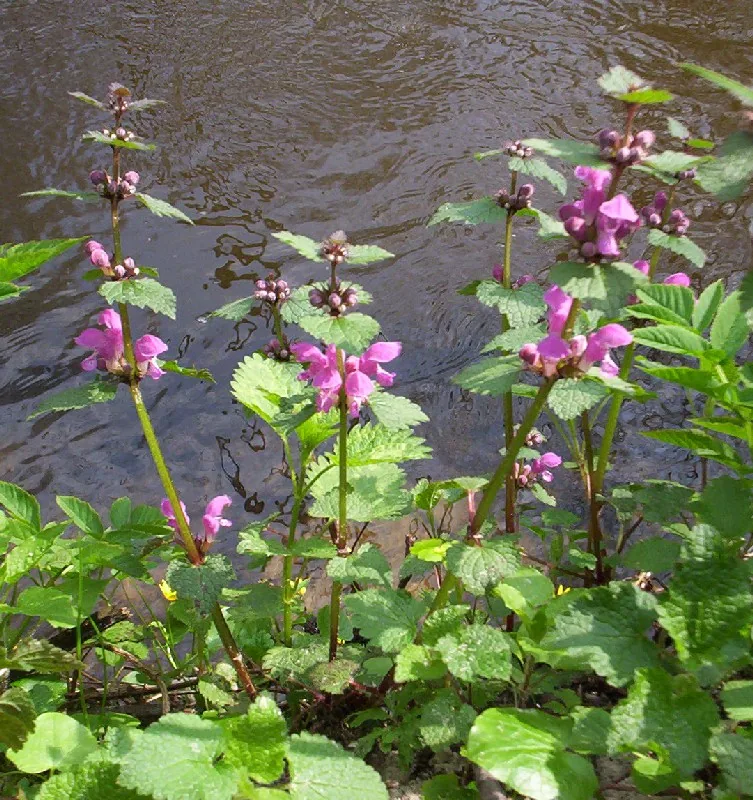
Spotted dead nettle is a low, spreading groundcover for the shade, grown as much for its silver-marked leaves as for the pink, mauve, or white flowers that rise above them in late spring. It belongs to the mint family, and it shares that family's quick, mat-forming habit. The name throws people off, since it looks like a stinging nettle but carries no sting at all.
This is one of the easiest plants you can put in a tough spot. It runs from 6 to 9 inches (15 to 23 cm) tall and knits together into a dense carpet, filling in under shrubs and along the dim north side of a house where grass gives up. The stems root as they travel, so a few plants soon read as one continuous sheet of foliage.
It asks for cool, moist, shaded ground and pays you back with months of color and almost no fuss. Push it into hot, dry, sunny sites and the leaves scorch and thin. Give it the shade it wants and the main job left is keeping its eager spread inside the bed you meant for it.
Care
The short version: part to full shade, cool and evenly moist soil that drains well, a single shearing after the flowers fade, and an edge to keep the spreading mat where you want it.
Light
Give it part to full shade. It takes some morning or dappled sun, but a hot, sunny spot scorches and thins the foliage, so the deeper shade where grass struggles is exactly where this plant shines.
Water
Keep the soil cool and evenly moist, watering roughly every 5 to 10 days and more often in a dry spell. Once established it tolerates dry shade, but the leaves brown and thin if it bakes, so don't let it run bone dry in heat.
Soil
Plant in humusy, well-drained loam rich in organic matter, with a pH anywhere from 6.0 to 7.5. The one thing it won't forgive is wet or compacted ground, which invites crown rot.
Temperature
It is remarkably hardy, taking anything from -40°F to 84°F (-40°C to 29°C). Cold is no threat, but lasting summer heat and humidity can cause the mat to melt out in patches.
Humidity
Ordinary outdoor humidity suits it, so there's no figure to hit. What matters more is air movement, since still, muggy air around crowded leaves is what brings on leaf spot and blight.
Feeding
This is a light feeder that rarely needs help. A single dose of balanced general-purpose fertilizer in spring is plenty, and too much only pushes soft, floppy growth.
Pruning
Shear or cut the plants back hard after they bloom. That one cut clears tired foliage, fills in any bare patches, and often coaxes a second flush of flowers.
Repotting
It rarely needs repotting, but a container plant tells you it's time when the center goes bare and dead or the roots fill the pot and dry out fast. Divide it and replant into fresh soil when that happens.
Size & spacing
Plants stay low at 6 to 9 inches (15 to 23 cm) tall but each one spreads 12 to 24 inches (30 to 61 cm) wide, so set them far enough apart to knit into a carpet without crowding.
When to plant
Spotted dead nettle is a hardy perennial that comes back on its own from zone 3 up to zone 8. Plant it in spring once the ground can be worked, look for flowers from late spring into summer, and shear it back afterward to freshen the foliage for the rest of the season.
Northern hemisphere
Southern hemisphere
Typical months for a temperate climate: start earlier in warm zones, later where spring frosts linger.
- Plant: spring
- Harvest: Late spring into summer
Hardiness
USDA hardiness zones: 3–8
Temperature: down to -40°C
Troubleshooting
Most trouble with dead nettle comes down to the wrong spot or too much damp. Browning leaves usually mean it's too hot and dry, while holes and spots point to slugs or wet-weather fungus. Match what you see below and fix the conditions before reaching for anything stronger.
Scorched, browning leaves and bare patches in the mat
This is leaf scorch, and it shows up when the planting sits somewhere too hot, too dry, or too sunny for a plant that wants cool, moist shade. Summer heat and humidity can also trigger melt-out, where whole sections of a mass planting brown and thin. Shear the plants back hard to push out fresh foliage, water to keep the soil evenly moist, and move anything stuck in a baking, sunny spot.
Fix:
- Cut or shear plants back to stimulate fresh new foliage growth
- Increase watering to keep soil evenly moist
- Relocate or shade plants sited in hot, dry, sunny areas
Mixed up with invasive yellow archangel
Spotted dead nettle gets confused with yellow archangel (Lamium galeobdolon), a separate relative that really is invasive and is listed as such in the western US. Tell them apart by the flowers and the habit: yellow archangel carries yellow blooms and races outward on rooting runners, while spotted dead nettle flowers pink, mauve, or white and stays easy to manage. Plant Lamium maculatum cultivars and pull out any yellow archangel you find.
Fix:
- Identify and remove yellow archangel where present
- Choose Lamium maculatum cultivars rather than L. galeobdolon
A creeping carpet that wanders past its bed
Dead nettle spreads by sprawling stems that root wherever they touch soil, so the mat keeps widening on its own. It's vigorous but easy to keep in check, not a true thug. Pull or cut back the stems straying over the edge, sink some edging to hold the line, and divide a stand that has outgrown its space.
Fix:
- Pull or cut back encroaching stems at bed edges
- Install edging to contain the planting
- Divide and thin overgrown stands
Ragged holes and spotted leaves in damp shade
Slugs do most of the damage here, chewing ragged holes in the soft leaves wherever the shade stays moist. The same wet, humid air invites leaf spot and leaf blight, and aphids turn up now and then. Set out slug traps or bait, strip off any spotted or blighted foliage, and open the planting up so air can move and the leaves dry faster.
Fix:
- Control slugs with traps or baits
- Remove and dispose of spotted or blighted foliage
- Improve air circulation and avoid overhead watering
Toxicity
Good news for households with animals: spotted dead nettle is not toxic. It isn't on the ASPCA's poison lists, and despite the name it has no stinging hairs, so people and pets are safe around it. The most a curious cat or dog might get from a big mouthful of leaves is a passing upset stomach.
Safe for
People · Cats · Dogs · Horses · Rabbits · Livestock · Birds
Cats None
Safe to have around cats. A cat that eats a big mouthful of leaves might get a brief upset stomach, but nothing more.
Dogs None
No real risk to dogs. The worst a curious chewer is likely to see is some mild, short-lived stomach upset from a large helping of foliage.
Horses Safe
Not toxic to horses, with no poisoning reported from grazing it.
Rabbits Safe
Rabbits can nibble the soft leaves without harm, though it shouldn't crowd out their hay and greens.
Livestock Safe
Grazing cattle, goats, and sheep tolerate it fine, and it carries none of the toxins that trouble pasture animals.
Birds Safe
Poses no danger to birds. Backyard hens and wild visitors can pick at the foliage with nothing to worry about.
People Safe
Safe for people, and the young leaves are even edible. Despite the name there are no stinging hairs, so handling it bare-handed is fine.
Despite the name it is a dead nettle with soft, non-stinging foliage and no stinging hairs, so handling is safe; pets nibbling foliage may have mild GI upset.
Varieties
Most named dead nettles are grown for their silver foliage and differ mainly in flower color. These are the ones you'll run across most, plus one look-alike to steer clear of.
White Nancy
A bright choice for deep shade, with silvery-white leaves edged in green and clean white flowers.
Beacon Silver
Carries pink flowers over broad silver leaves that light up a dim corner.
Pink Pewter
Pairs the same silver foliage with softer, paler pink blooms.
Purple Dragon
The boldest of the bunch, throwing large purple flowers above silver-marked leaves.
Orchid Frost
Frosted silver leaves set off warm orchid-pink flowers.
Yellow archangel (Lamium galeobdolon)
Avoid this one, since it is a separate, genuinely invasive Lamium relative with yellow flowers and aggressive rooting runners that is listed invasive in the western US, not a true spotted dead nettle cultivar.
How to propagate
Making more dead nettle takes almost no effort, since the plant is already spreading and rooting on its own as it grows.
DivisionEasy
Spring · 4-8 weeks
Division is the easy, reliable way to make more, and spring is the time to do it. Lift an established mat, pull or cut it into clumps, and replant them where you want more cover, and they settle in within about 4 to 8 weeks. The plant also does half the work for you, since its sprawling stems root on their own at any node that touches soil.
Myths
Dead nettle stings like a nettle because the name says so.
The leaves do look a lot like a true stinging nettle, which is where the name comes from, but that's where the likeness ends. Spotted dead nettle is a mint-family plant with soft foliage and no stinging hairs at all, and it isn't even related to true stinging nettle (Urtica dioica). You can handle it bare-handed without a second thought.