Ornamental · Lamiaceae
Hummingbird Mint
Agastache foeniculum
Give it full sun and soil that drains, and anise hyssop hums with bees and hummingbirds all summer.
Full sun
Every 7–14 days
USDA 4–8
2–5 ft · 0.6–1.5 m
Overview
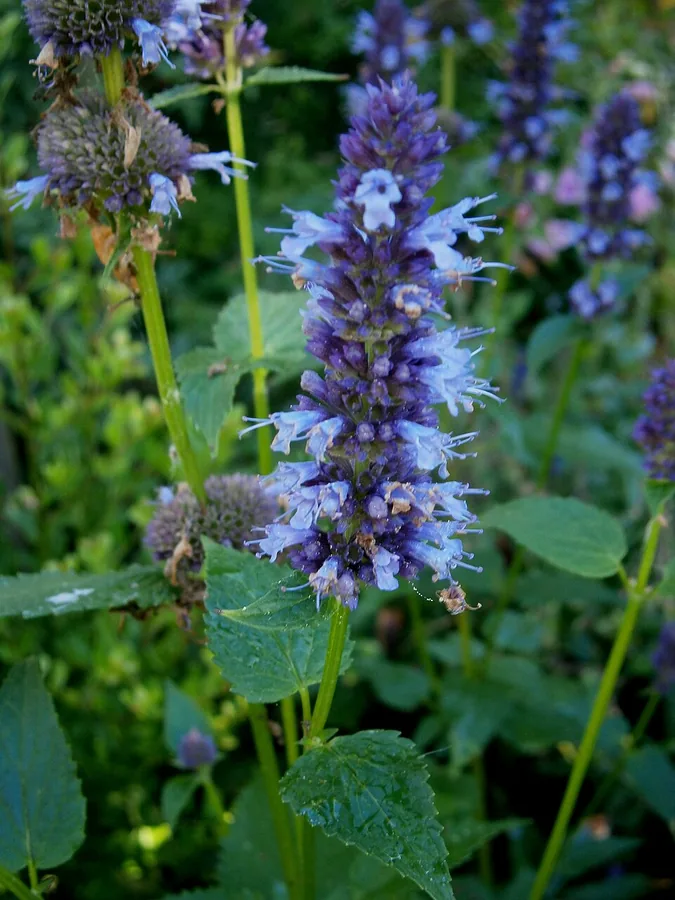
Anise hyssop earns its common name of hummingbird mint by pulling in bees, butterflies, and hummingbirds from June right through September. It belongs to the mint family but keeps its manners, sending up tall spikes of soft blue-lavender flowers over leaves that smell of anise and licorice when you brush past them.
This is an easy perennial for a sunny spot, hardy from zone 4 to zone 8 and shrugging off cold down to -29°F (-34°C). It asks for little once it settles in, taking dry spells in stride and standing up to deer and rabbits that graze on softer plants nearby.
Give it room and let the soil drain, and a single clump grows into a 2 to 5 foot (60 to 150 cm) column of bloom. The flowers feed pollinators in summer and the standing seed heads feed finches into winter, so the plant pays its way long after the show is over.
Care
The short version: full sun and well-drained soil are the whole game, since this plant fears wet feet far more than dry ones. Water deeply but let the top half of the soil dry between drinks, feed it lightly if at all, and deadhead through summer to keep the flowers coming.
Light
Plant anise hyssop in full sun for the strongest stems and the heaviest bloom. It will take some afternoon shade, but too little light leaves it floppy and short on flowers, and shade also invites the mildew it otherwise shrugs off.
Water
Water deeply, then wait. Let the top half of the soil dry out before the next drink, which works out to roughly every 7 to 14 days. Once established it handles drought well, but soggy ground is the one thing that will kill it.
Soil
It isn't fussy about fertility and grows in loam, sand, or even rocky ground, as long as that ground drains freely. Aim for a pH between 6.0 and 7.5, and skip any spot where water pools after rain.
Temperature
Hardy from zone 4 to zone 8, anise hyssop takes cold down to -29°F (-34°C) and heat up to about 95°F (35°C). That wide range is why it survives where many perennials give out.
Humidity
Ordinary outdoor humidity suits it fine, so there's no figure to track. What matters far more is moving air, since crowded, still, humid plantings are exactly where powdery mildew gets a foothold.
Feeding
This is a plant that prefers a lean diet. Feed it rarely, with no more than a light scattering of balanced fertilizer or compost in the growing season. Overfeeding only grows soft, floppy stems at the expense of flowers.
Pruning
Deadhead the spent spikes through August to keep new flowers coming. Leave the stalks standing over winter for the birds, then cut back to fresh growth in spring; trimming down to about 12 inches that spring drives fuller, bushier branching.
Size & spacing
Expect a clump 2 to 5 feet (60 to 150 cm) tall and 1.5 to 3 feet (45 to 90 cm) across. Give it the full spread so air moves freely through the planting and mildew stays away.
When to plant
Anise hyssop runs on a perennial clock once it's in the ground. Start seed indoors in late winter, set plants out after the last frost when the soil has warmed, and the show runs from June through September. Leave the spent stalks standing over winter and cut back to fresh growth in spring.
Northern hemisphere
Southern hemisphere
Typical months for a temperate climate: start earlier in warm zones, later where spring frosts linger.
- Sow: 8 to 10 weeks before the last spring frost
- Plant: after the last spring frost once soil has warmed
- Harvest: Blooms June to September
Hardiness
USDA hardiness zones: 4–8
Temperature: down to -34°C
Troubleshooting
Most trouble with anise hyssop traces back to one thing: soil that stays too wet. Get the drainage and airflow right and the plant rarely needs you at all. Match what you see below, then act while it still helps.
Wilting plant with a black, mushy crown at the base
This is crown or root rot, and it comes from soil that stays too wet rather than from any disease you can spray away. The crown tissue turns soft and discolored, the base goes waterlogged, and the plant can collapse. Improve the drainage, cut back on watering, and pull out any plant that's too far gone, replanting healthy divisions in ground that drains freely.
Fix:
- Improve drainage and reduce watering
- Remove and discard severely affected plants
- Replant healthy divisions in well-drained soil
Dusty white coating on the leaves and stems
That dusty film is powdery mildew, and it sets in where the air sits still and the planting runs crowded or humid. It bothers the look of the plant more than its health. Thin and space the plants so air can move, pull off the worst leaves, and keep water off the foliage.
Fix:
- Improve air circulation by spacing and thinning
- Remove affected foliage
- Avoid overhead watering
Orange or brown spots speckling the leaves
Raised rust-colored pustules or dark blotches point to rust and fungal leaf spots, which spread on wet foliage. The damage stays cosmetic in most years. Strip off the marked leaves and destroy them, open the plant up for better airflow, and water at the base so the leaves stay dry.
Fix:
- Remove and destroy infected leaves
- Improve air circulation
- Avoid wetting foliage
Toxicity
Good news here. Anise hyssop carries no toxins, so it's safe around cats, dogs, horses, livestock, and children alike. The leaves are even a kitchen herb, used in teas and baked goods for their anise flavor, and the strong scent keeps most browsing animals away on its own.
Safe for
People · Cats · Dogs · Horses · Rabbits · Livestock · Birds
Cats None
No toxic compounds here, so a curious cat that nibbles a leaf is in no danger. A large mouthful of any plant can still bring on a little drooling or a passing upset stomach, but nothing about anise hyssop poses a real risk.
Dogs None
Safe around dogs. The most you might see from a dog that eats a lot of foliage is a brief stomach grumble, the same as with any non-toxic plant, and the strong anise scent tends to put most off after one taste.
Horses Safe
Horses can graze near it without concern, since none of the plant is poisonous to them. It also tends to be left alone in the pasture, as the aromatic foliage isn't to their liking.
Rabbits Safe
Rabbits are in no danger from it. The plant is actually known to be rabbit-resistant, so they usually pass it by for tastier greens rather than browse the scented leaves.
Livestock Safe
Cattle, goats, and sheep can be kept around it safely, with no toxin to worry about. Its minty, licorice scent means most stock graze elsewhere and leave the stand standing.
Birds Safe
Birds come to no harm from anise hyssop, and the planting earns its keep with them. Finches feast on the seed heads left standing into winter while hummingbirds and pollinators work the summer flowers.
People Safe
The leaves are not only safe but a kitchen herb, carrying an anise or licorice flavor that goes into teas, salads, and baked goods. Children are in no danger near the plant.
Varieties
Anise hyssop has been bred into a handful of standout cultivars worth knowing by name. These are the ones you'll meet most often at the nursery.
Blue Fortune
A popular hybrid prized for its dense, long-blooming spikes of blue-lavender flowers.
Golden Jubilee
Grown as much for its bright golden-yellow foliage as for the lavender flower spikes it carries above it.
Blue Blazes
A tall cultivar that stands out with showy spikes of violet-blue bloom.
How to propagate
Anise hyssop multiplies with almost no effort, whether you split an old clump or simply let it sow its own replacements around the garden.
DivisionEasy
Spring or fall · One growing season
Lift an established clump in spring or fall and split it into healthy pieces, then replant the divisions in well-drained soil. Give each one a full growing season to settle in and fill out.
SeedEasy
Spring; self-seeds readily in the garden · First season from transplanted seedlings
Anise hyssop self-seeds freely, so the easiest route is to move volunteer seedlings to where you want them in spring. To get those volunteers, stop deadheading in late summer and let the spikes set seed; the transplants reach decent size in their first season.
Myths
Anise hyssop is a true mint that will take over the garden.
It does sit in the mint family, but it doesn't run wild the way true mints do. It spreads at a modest pace through rhizomes and self-seeding, and it often turns out to be a short-lived perennial rather than an unstoppable spreader.
Anise hyssop is related to true hyssop and tastes like it.
Despite the shared name, it belongs to the genus Agastache, not the true Hyssopus. Crush a leaf and you get a clear anise or licorice scent, which is why it ends up in teas, salads, and baked goods.