Ornamental · Campanulaceae
Cardinal Flower
Lobelia cardinalis
Give it wet feet and a little shade, and cardinal flower lights up late summer with scarlet spikes the hummingbirds chase.
Partial shade
Every 2–4 days
USDA 3–9
2–4 ft · 0.6–1.2 m
Overview
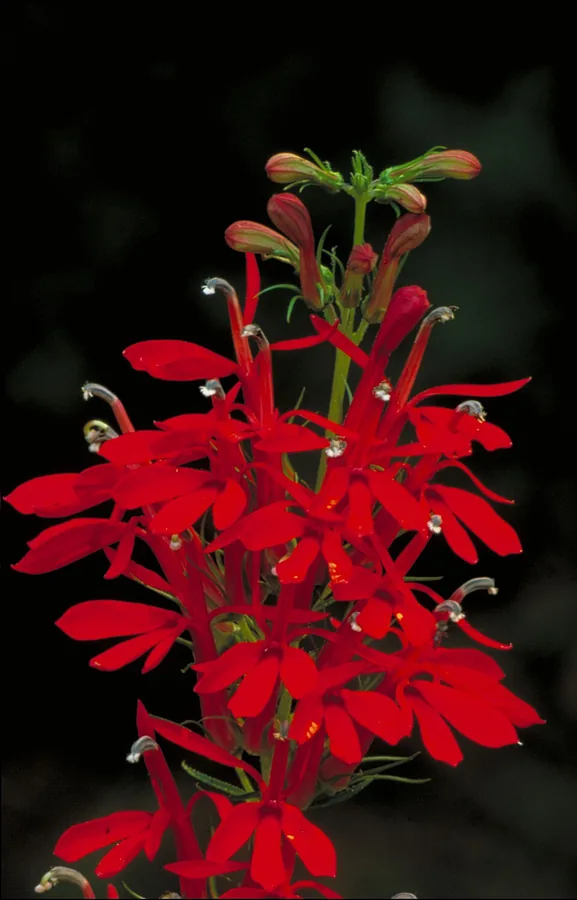
Cardinal flower is a native perennial of stream banks, wet meadows, and pond edges across much of North America. It sends up tall spikes of brilliant scarlet flowers from late summer into fall, on plants that reach 2 to 4 feet (60 to 120 cm). The blooms are built for hummingbirds, which do most of the pollinating, and butterflies work them too.
What sets this plant apart is its thirst. Most garden perennials want good drainage, but cardinal flower wants the opposite, thriving in medium-to-wet ground that never fully dries and shrugging off the odd flood. That makes it a natural fit for a rain garden, a boggy low spot, or the muddy margin of a pond where little else will flower.
It is an easy plant with one quirk. The original clump is short-lived, often fading after a few seasons, but it leaves behind basal rosettes and drops seed that fill the gap. Let it renew itself and a single planting can hold its ground for years.
Care
The short version: part shade to full sun, soil kept consistently moist to wet and never allowed to dry, rich and humusy ground, and a yearly nudge from dividing rosettes or letting it self-seed.
Light
Cardinal flower does best in part shade, though it takes full sun where the soil stays wet enough to keep pace. Deep shade thins the bloom, so give it some bright light and steady moisture together.
Water
This is the one that matters most. Keep the soil consistently moist to wet and never let the root zone dry out, watering every 2 to 4 days in the absence of rain. It even handles brief flooding, which is why it belongs at a pond or stream edge.
Soil
Plant in rich, humusy ground that holds water and runs high in organic matter. A pH from 6.0 to 7.0 suits it well, and the wetter and more fertile the spot, the happier the plant.
Temperature
It is fully hardy, taking winters down to -40°F (-40°C) and summers up to about 95°F (35°C). That cold tolerance covers USDA zones 3 through 9, so most gardeners can grow it as a permanent perennial.
Humidity
Ordinary outdoor air is plenty, so there is no number to chase. What the plant cares about is wet soil at the roots, not moisture in the air.
Feeding
Rich organic soil usually feeds it well enough on its own. A light topdressing of compost or a balanced fertilizer through the growing season is all the extra it wants.
Pruning
Deadhead the spent spikes to stretch the bloom and rein in heavy self-seeding, but leave the basal rosettes alone over winter. In cold climates, mulch the roots so frost can't heave the crowns out of the ground.
Size & spacing
Plants stand 2 to 4 feet (60 to 120 cm) tall and spread 12 to 24 inches (30 to 60 cm) wide. Give each clump that much room so the spikes have light and air around them.
When to plant
Cardinal flower runs on a cool-season start and a late-season finish. Surface-sow seed indoors in late winter, set plants out after the last frost once the soil has warmed, and the scarlet spikes open from midsummer through mid-fall.
Northern hemisphere
Southern hemisphere
Typical months for a temperate climate: start earlier in warm zones, later where spring frosts linger.
- Sow: Surface sow on moist medium in late winter; seed needs light and benefits from cold stratification.
- Plant: After last frost in spring once soil has warmed.
- Harvest: Late summer through mid-fall (July to October).
Hardiness
USDA hardiness zones: 3–9
Temperature: down to -40°C
Troubleshooting
Cardinal flower has few real problems, and almost all of them trace back to one thing: water, either pests in the damp or stress when the ground dries out. Match what you see below and fix the moisture, and most trouble clears on its own.
The clump fades and vanishes after a few years
Cardinal flower is a short-lived perennial by nature, leaning on basal offsets and dropped seed to carry on rather than living long itself. Crown rot or frost heaving speeds the loss when the soil dries out or the rosettes go unmulched. Let some seed fall or divide the rosettes in spring, and the stand renews itself.
Fix:
- Allow some seed to drop or collect and resow to maintain the stand
- Divide and replant basal rosettes in spring
- Mulch crowns in cold climates to prevent heaving
Wilting, browning leaf edges, and stalled growth in summer
This is drought stress, plain and simple, because cardinal flower will not put up with dry ground. Water deeply to bring the moisture back, lay down organic mulch to hold it, and if the spot keeps drying out, move the plant to a wetter home like a rain garden or pond edge.
Fix:
- Water deeply to restore even moisture
- Add organic mulch to retain soil moisture
- Relocate to a wetter site such as a rain garden or pond edge
Ragged holes chewed through the leaves and rosettes
The moist, shaded ground that cardinal flower loves is also where slugs and snails thrive, and they go straight for the tender young growth. Hunt them down by hand in the evening, clear away the damp litter piled against the crowns, and reach for iron-phosphate bait if they keep coming back.
Fix:
- Hand-pick slugs and snails in the evening
- Reduce surface debris and mulch piled against crowns
- Use iron-phosphate slug bait if pressure is high
Toxicity
Treat the whole plant as poisonous. Every part holds lobeline and related piperidine alkaloids, which are toxic to dogs, cats, horses, livestock, and people if eaten, bringing on nausea, vomiting, and in large amounts effects on the heart and breathing. The plant's own emetic action usually cuts a meal short, but keep it away from pets, grazing animals, and children all the same.
Toxic to
Cats · Dogs · Horses · Rabbits · Livestock · Birds · People
Cats Toxic
A cat that chews any part may drool, go quiet and dull, and bring up its food, often with diarrhea and a sore belly. Larger amounts can throw off the heartbeat, so don't leave cut stems where a curious cat can reach them.
Dogs Toxic
Watch for heavy drooling, low energy, vomiting, and loose stools after a dog eats the leaves or flowers. The same lobeline that upsets the gut can disturb the heart rhythm when a dog gets into a big mouthful.
Horses Toxic
Horses that graze the foliage take in the same piperidine alkaloids and react with colic, drooling, and weakness. Heavy feeding can press on the heart and breathing, so keep the plant well clear of paddocks.
Rabbits Toxic
The lobeline runs through every part, so this is not safe forage for a rabbit. Nibbling brings on drooling, gut upset, and a listless, off-color animal.
Livestock Toxic
Cattle, sheep, and goats can be poisoned if they graze it, with salivation, vomiting, and dullness the first signs. A large dose pushes into nervous and heart trouble, though the plant's own emetic kick usually cuts the meal short.
Birds Caution
Treat it as unsafe and keep pet birds away from the leaves and flowers. The alkaloids that sicken other animals give no reason to think a bird would fare any better.
People Caution
No part of this plant is food, and eating it brings nausea, vomiting, and a burning throat. Swallowing a real amount can reach the heart and breathing, so keep it away from children and wash your hands after handling the sap.
Keep away from pets and grazing animals; wash hands after handling sap.
Helpline numbers

United States
ASPCA Animal Poison Control: (888) 426-4435 (fee applies)
Poison Control: (800) 222-1222



Canada
Poison Centres: 1-844-764-7669
Varieties
Most cardinal flowers sold are the straight scarlet species, but a few selections trade up the foliage for darker drama. These are the ones worth knowing.
Queen Victoria
Its deep bronze-purple to maroon leaves set off the scarlet flower spikes for a striking two-tone show.
Black Truffle
Very dark, almost black-purple foliage sits beneath bright red blooms for the strongest contrast of the group.
Fried Green Tomatoes
A green-leaved selection that pairs vivid red flowers with noticeably better garden vigor.
How to propagate
Cardinal flower keeps itself going two ways, and both are simple: split the rosettes it makes at the base, or let the fine seed do the work for you.
DivisionEasy
Spring, by separating the basal rosettes (offsets) from the parent plant. · One growing season
In spring, lift the plant and pull the basal rosettes away from the parent crown. Replant each division right away into moist, rich soil and keep it well watered, and it settles in over a single growing season.
SeedEasy
Surface-sow on moist medium in late winter to early spring; seed needs light to germinate. · Blooms typically in the year after sowing
Scatter the fine seed on the surface of a moist mix in late winter to early spring and leave it uncovered, since it needs light to sprout. Plants raised this way usually flower the year after sowing. In a damp spot the plant self-seeds freely on its own, which is how a short-lived perennial keeps a stand going.
Myths
The cardinal flower gets its name because it attracts cardinals.
The name comes from the brilliant cardinal-red of the blooms, the same red as the robes worn by Roman Catholic cardinals. The flowers actually draw hummingbirds and butterflies, not the bird the plant is named for.
Lobelia is a gentle herb that is safe to eat.
It carries lobeline and related alkaloids that turn toxic once you swallow much of it, bringing on nausea and vomiting and, in larger amounts, more serious effects in both people and animals. No part of this plant is safe to eat.