Vegetable · Brassicaceae
Broccoli
Brassica oleracea Italica Group
Time it for cool weather and steady moisture, and broccoli gives you a main head plus weeks of side shoots.
Full sun
Every 3–5 days
32–77°F · 0–25°C
55–85 days
Overview
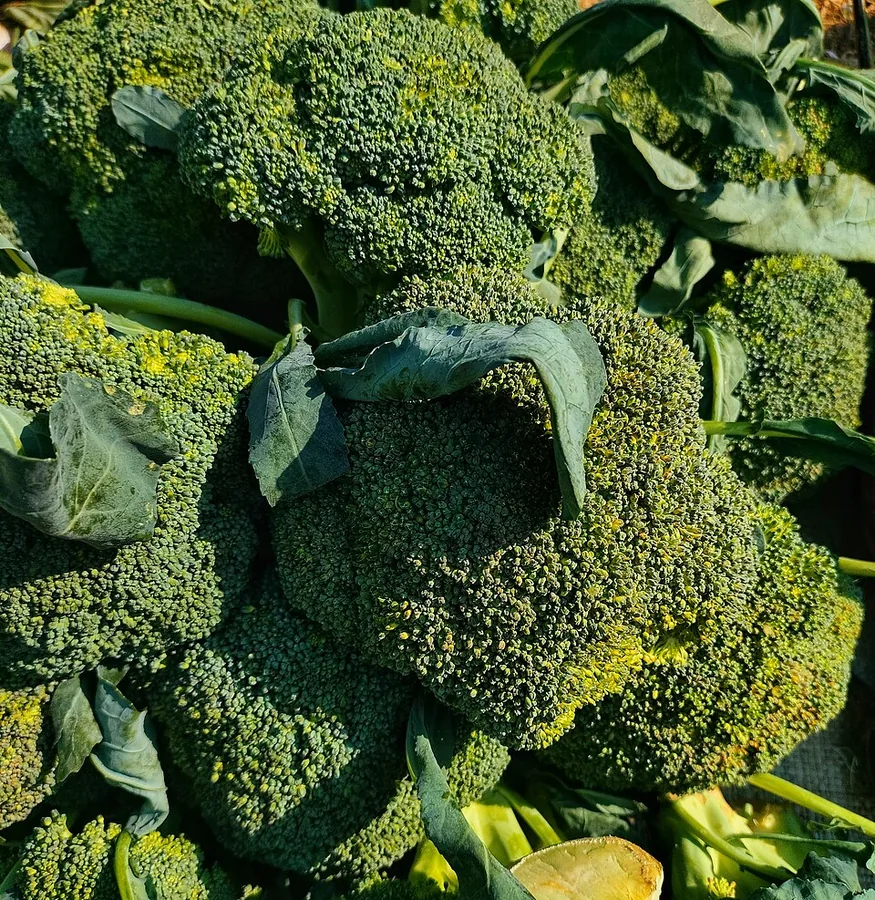
Broccoli is a cool-weather member of the cabbage family, grown for the tight cluster of flower buds you cut before they ever open. It descends from wild cabbage and shares a species with cauliflower, kale, and Brussels sprouts. Treated as an annual, it suits a spring crop, a fall crop, or both in the same bed.
Timing decides almost everything. Set plants out so the heads mature while the weather is still cool, since heat pushes the buds open into yellow flowers and ends the harvest early. Get the season right and you cut a firm central head, then keep picking side shoots from the leaf axils for weeks after.
Broccoli asks for steady care rather than fussy care. It is a heavy feeder that wants rich soil, even moisture, and full sun, and it draws a predictable set of pests that row cover handles well. Give it those basics and it is one of the most productive crops in the garden.
Care
The short version: full sun, rich soil with plenty of compost, and even moisture of 1 to 1.5 inches of water a week. Time the crop so the heads mature in cool weather, feed it well, and cut the head while the buds are still tight.
Light
Broccoli wants full sun, at least 6 to 8 hours a day, to build a firm head. It will take a little afternoon shade where springs warm up fast, and that shade can even buy you time before the heat makes it bolt.
Water
Keep the soil evenly moist, around 1 to 1.5 inches of water a week. One deep weekly soaking beats frequent light sprinkles, and steady moisture matters most while the head is forming, since a dry spell stalls it.
Soil
Plant in rich, well drained loam worked over with compost or well-rotted manure. A pH of 6.0 to 7.0 suits it, and the near-neutral end also helps hold back clubroot, which thrives in sour soil.
Temperature
Broccoli is a cool-season crop, happiest from 32°F to 77°F (0°C to 25°C). It shrugs off light frost, but sustained heat above about 80°F (27°C) makes the head bolt before you can cut it.
Humidity
Ordinary outdoor humidity is fine, so there is no figure to hit. Airflow counts for more here, since crowded, damp foliage invites the caterpillars and rots that trouble brassicas.
Feeding
Broccoli is a heavy feeder. Work a balanced fertilizer into the bed before planting, then side-dress with nitrogen about 3 to 4 weeks after transplanting to push strong leaf growth ahead of the head.
Pruning
There is no real pruning to do. Cut the central head with about 6 inches of stem while the buds are still tight, leave the plant in place for side shoots, and pull off any yellowing lower leaves.
Repotting
Broccoli is not a houseplant, so it is never repotted. Move seedlings to the garden at 5 to 8 weeks old, before they grow rootbound, because cramped transplants tend to button once they are set out.
Size & spacing
Plants reach 18 to 35 inches (45 to 90 cm) tall and about as wide. Give each one 18 to 24 inches (45 to 60 cm) of room so air moves freely and every plant has the food it needs.
When to plant
Broccoli runs on the cool ends of the year. Start seeds indoors in late winter for a spring crop or in July for a fall one, set the hardened-off transplants out while it is still cool, and harvest the main head before summer heat or hard frost arrives.
Northern hemisphere
Southern hemisphere
Typical months for a temperate climate: start earlier in warm zones, later where spring frosts linger.
- Sow: 6-8 weeks before the last spring frost (early to mid-April in cold climates); sow again in early to late July for a fall crop
- Plant: Set hardened-off transplants out around 2-3 weeks before the last spring frost; transplant the fall crop in mid to late summer
- Harvest: Harvest the main head in late spring to early summer (spring crop) or in autumn (fall crop) when it is 3-6 inches across and buds are still tightly closed; side shoots follow for several weeks
Hardiness
USDA hardiness zones: 2–11
Temperature: down to -46°C
Troubleshooting
Most broccoli trouble shows up at the head or the roots, and it often comes down to temperature or timing. Catch the early signs and you can still save the crop or the next planting. Match what you see below, then act while it helps.
The head loosens and opens into yellow flowers
This is bolting, and heat is the usual trigger once temperatures hold above about 80°F (27°C) as the head matures. A late harvest or water stress hurries it along too. Cut the head the moment the buds start to loosen, because quality drops fast, and time future crops so heads fill out in cool weather.
Fix:
- Harvest immediately at the first sign of loosening buds; quality declines fast
- Cut bolted heads off so side shoots may still form in cooler weather
Plants wilt at midday and yellow despite enough water
Trouble at the roots is the usual cause. Pull a wilting plant and check: white legless maggots and tunneled roots point to cabbage root maggot, while swollen, knotted galls point to clubroot, a soil disease that loves acidic ground. Destroy infected plants without composting them, protect the rest with row covers or stem collars, and rotate brassicas out of that bed for three to four years.
Fix:
- Remove and destroy infested or infected plants (do not compost clubroot material)
- For root maggot, protect remaining plants with row covers or collars at the stem base
- For clubroot, lime soil toward pH 7 and rotate out of brassicas for several years
A tiny head forms while the plant is still small
This is buttoning, and it usually traces back to a cold spell that hit young transplants near or below 40°F (4°C). Oversized or rootbound seedlings and stress during establishment push the plant the same way. Eat the little head, since it rarely sizes up, and replant with stocky transplants timed to the season.
Fix:
- Harvest and eat the small head; the plant rarely sizes up afterward
- Keep remaining plants evenly watered and side-dress with nitrogen
- Replant with fresh, properly sized transplants timed to the season
Ragged holes in the leaves with green caterpillars
The likely culprit is the imported cabbageworm, the velvety green larva of the white cabbage butterfly, often joined by cabbage loopers and diamondback moth larvae. Look on leaf undersides and down in the head for the caterpillars and their frass. Handpick what you find, spray Bt or spinosad while the larvae are small, and cover plants with row cover from the day you transplant.
Fix:
- Handpick caterpillars
- Apply Bacillus thuringiensis (Bt) or spinosad per label while larvae are small
- Soak harvested heads in cold salted water to drive out hidden caterpillars
Toxicity
Broccoli is a food crop and safe all around. No part of it is toxic to pets, livestock, or people, and the whole head and stem are good to eat. The only thing worth watching is portion size, since a big helping of raw brassica can leave an animal gassy.
Safe for
People · Cats · Dogs · Horses · Rabbits · Livestock · Birds
Cats None
Broccoli isn't poisonous to cats. Most cats ignore it, and the worst a curious nibble brings is a little gas.
Dogs None
Safe for dogs in small amounts, and many enjoy a crunchy piece. Keep servings modest, since a big helping of raw florets can leave a dog gassy or briefly off its food.
Horses Safe
There's nothing toxic here for a horse. Brassicas can be a bit gassy, so treat broccoli as an occasional snack rather than a regular feed.
Rabbits Safe
Rabbits can eat broccoli leaves and small bits of head safely. Introduce it slowly, because too much too fast may bring on gas.
Livestock Safe
Cattle, goats, and sheep handle broccoli and its trimmings without harm. Only heavy, repeated feeding of raw brassicas is worth avoiding.
Birds Safe
Chickens and other backyard birds peck at broccoli with no trouble, leaves and florets alike. It's a welcome green that costs you nothing once the heads are cut.
People Safe
Broccoli is a kitchen staple, good raw or cooked, with no part of the head or stem off limits. Just wash garden-cut heads well to clear out any hidden caterpillars and soil.
No special handling precautions; wash garden-harvested heads to remove insects and soil before eating.
Varieties
Dozens of broccoli varieties exist, split mostly between quick spring types and heat-tolerant ones. These are the names you will run into most.
De Cicco
An early Italian heirloom that gives you a modest central head and then keeps throwing side shoots over a long stretch.
Calabrese
The classic open-pollinated Italian type, with a medium green central head and a generous run of side shoots after.
Packman
An early hybrid that heads up in about 55 days from transplant, which makes it a favorite for spring crops.
Green Magic
A heat-tolerant hybrid that holds its quality once warm weather arrives, where many others would bolt.
Companions
Broccoli grows best beside plants that use space it leaves open or pull its pests away, and worst beside its own brassica cousins, which share the same diseases and crowd it for food.
Plant near
onions: Alliums make efficient use of space among widely spaced broccoli and their strong scent is traditionally credited with deterring some brassica pests
aromatic herbs (e.g., dill, chamomile): Flowering aromatic herbs attract beneficial insects, including parasitoid wasps that attack cabbageworm and other caterpillar pests
beets: Low-growing, light-feeding root crop that does not compete strongly with heavy-feeding broccoli for nitrogen or space
Keep apart
strawberries: Traditionally listed as a poor companion for cole crops; strawberries compete in the bed and are commonly recommended to be kept separate from brassicas
other heavy-feeding brassicas (cabbage, cauliflower, Brussels sprouts) in the same bed: Closely related crops share the same pests and soilborne diseases (clubroot, root maggot) and compete for nutrients; extensions recommend 3-4 year rotation away from all brassicas
How to propagate
Broccoli is grown from seed, started indoors and moved out as a transplant for either a spring or a fall crop.
SeedEasy
Sow indoors 6-8 weeks before the last spring frost, or sow indoors or direct in early to late July for a fall crop · Germinates in about 4-7 days in warm soil; reaches transplant size in 5-6 weeks (fall crop) to 6-8 weeks (spring crop)
Almost everyone grows broccoli from seed. Sow indoors 6 to 8 weeks before your last spring frost, or start a fall crop indoors or direct in July, and seeds break ground in 4 to 7 days in warm soil. Harden the seedlings off, set them a little deeper than they grew in the cell, and space them 18 to 24 inches (45 to 60 cm) apart. Skip any leggy or rootbound transplant, since those are the ones that button.
Myths
Once you cut the main head, the plant is done and should be pulled.
Leave the plant in the ground after you take the central head and it keeps going. Smaller side shoots push out from the leaf axils, and you can harvest them for weeks, especially through cool fall weather.
Frost ruins a broccoli crop.
Broccoli is a cool-season crop that takes a light frost in stride. Fall plants keep growing and producing after the first frosts, and cold weather often sweetens the heads. Only young transplants need protection once it drops below 32°F (0°C).