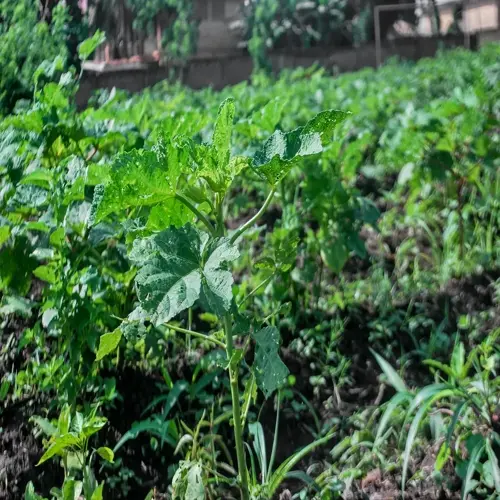

Trench planting is the basic principle for successfully growing potatoes. Dig trenches 6 to 8in (15 to 20cm) deep in a well-drained soil. I've found this depth to prevent the seed tuber from rotting, but still allows it to sprout easily. Leave a space between the rows of at least 36in (90cm) for further hilling up. Always plant with the eyes upwards for the strongest shoots.
Soil Preparation
- Use well-draining soil rich in organic matter
- Mix 3 inches (7.5 cm) compost into trench base
- Maintain pH 5.8-6.5 using pine fines if needed
Ongoing Maintenance
- Hill soil around stems every 2-3 weeks
- Provide consistent moisture during tuber formation
- Apply balanced fertilizer low in nitrogen
Hilling Technique: Protects tubers until they start to develop, but do not expose them to sunlight. Start hilling up when the plants are about 8 inches (20cm). Mound 4 inches (10cm) of soil, or straw around the stems. I like to use straw in rainy climates so you don't have as many problems when harvesting. Repeat every 2 - 3 weeks, until the plants are in flower.
I water with 1-1.5 inches (2.5-4 cm) of water weekly, but increase it during the flowering stage (when tubers appear). Most gardeners use drip irrigation, which keeps the soil moistened. I insert my finger in the soil; if it feels damp 3 inches (7.5 cm) down, I leave it alone. Never let them stand in water, as it will cause them to rot.
Choose disease-resistant varieties suited for your climate. Russet-type potatoes thrive in cooler areas, while Red Norland-type varieties perform best in warmer temperatures. Practice crop rotation and switch the location of planted crops every year. Avoid planting after tomatoes and peppers. Harvest at the time of vine yellowing and "cure" the harvested potatoes before storing.
Read the full article: How to Grow Potatoes: Essential Gardening Guide