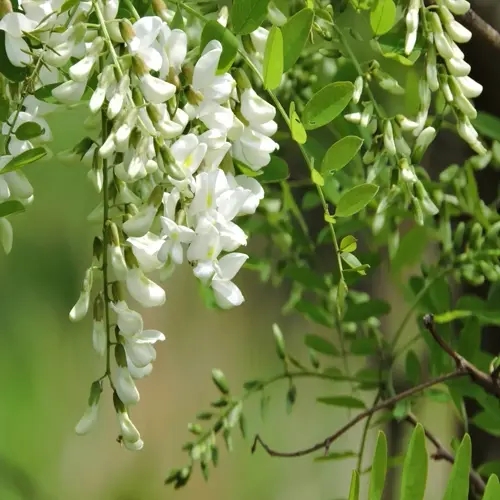

"Dad, why is the tree closing its hands?" my daughter asked me one evening on the back deck. She was pointing at the silk tree in my own yard here in zone 7. The soft, fern-like leaves had folded shut as the sun went down. I noticed the tiny leaflets pressed together in neat pairs. Her question is the door to the best of the interesting mimosa tree facts. The leaves fold up on their own each night, and you can watch the whole thing for yourself.
The tree has a tidy name for this move. Botanists call the trick nyctinasty, a daily leaf reaction to light and dark. The push comes from special cells at the base of each leaf. Those cells move water in and out to swing the leaflets open and shut. You will also see mimosa leaf folding when rain rolls in, hours before dusk. You do not need a lab to catch the change, just a spot on your porch at the right hour. A cloudy storm at noon can make your tree look like it is dozing off early.
There is a proper term for that lacy leaf shape too. Each leaf is bipinnately compound, which means the frond splits, then splits again into many small leaflets. That double split gives the mimosa its soft, feather look. Your tree is also deciduous, so it drops every leaf in fall and grows a fresh set each spring. In summer you get pink, silky puff flowers that smell sweet, which is how the silk tree earned the name.
You might hear a few names for this same tree. Botanists know the species as Albizia julibrissin, but most people just say mimosa or silk tree. The tree came from Asia, with a home range that runs from Iran across to China and Korea. Gardeners once prized the mimosa as a fast shade tree with a pretty crown. That charm is a big part of how the tree spread so far from home.
The mimosa also has a long past in this country. Growers first brought the tree here in 1745, and it took hold fast. You can blame the seed for a lot of that reach. A mimosa seed can still sprout after five years in the ground, with close to 90% still able to grow. A small seed beetle called Bruchidius terrenus now feeds on those seeds. The beetle acts as a natural brake on the spread, based on work by Chang and a team in 2011. The flat brown pods hang on the tree all winter and rattle in the wind.
You can use the folding leaves to spot a mimosa fast. Brush past the foliage at dusk, or check the tree right before a storm. A true mimosa starts to close up, and few yard trees do that. So this habit gives you a fun clue when you want to name a tree on a walk. Point the tree out to your kids and they will look for the leaves every night. Come morning, watch the leaves open again as the light returns, and the show starts over.
Keep one thing in mind while you enjoy the show. The same tree is invasive across much of the country. The mimosa crowds out native trees along roads and streams, and those tough seeds are the reason. Admire the leaf folding in a yard that already has a mimosa. Just skip planting a new one, and do not toss the seed pods into the woods. You get all the wonder, and none of the spread.
Read the full article: Mimosa Tree: Beauty, Care, and Invasive Truth