
Introduction
The mimosa tree charms people fast with its soft, feathery leaves and its pink powder puff flowers that smell sweet all summer long. You have likely slowed down to admire one along a roadside or in some old front yard. That beauty is real. So is the trouble that comes with it. This tree can turn from a garden favorite into a headache you cannot easily undo.
Botanists call it Albizia julibrissin, and gardeners know it as the silk tree. It is native to Asia, from Iran across to Japan. Settlers brought it to the United States back in 1745 as a garden showpiece. It shoots up into a broad, fast-growing shade tree that reaches 20 to 40 feet (6 to 12 m) tall. It thrives across USDA zones 6 to 9, yet it lives a short life of about 30 years.
Here is the honest tension. Many states across the Southeast and mid-Atlantic list it as an invasive tree. Rangers now report it spreading through national parks too. So this fast, easy ornamental sits right at the center of a real gardener's dilemma. Does it belong in your yard, or not?
You will get more here than a quick care sheet. The facts come from the folks at your state university extension. They also come from peer reviewed studies. You will learn how to care for the tree and why it spreads so fast. You will also get clear steps to remove it, plus native trees that give the same beauty without the risk. Read on and decide with real facts on your side.
What Is a Mimosa Tree?
You can spot a mimosa tree fast once you know its three main traits. The tree has bipinnately compound leaves. Each leaf splits into rows of tiny leaflets, which gives the plant a soft, fern like look. The crown grows wide and flat, like an open umbrella. From late spring into summer the branches fill with fragrant pink powder-puff flowers. They look like little tufts of silk thread.
You may know this tree by its Latin name, Albizia julibrissin. It is part of the pea and bean family, Fabaceae. It is a small tree with several trunks. It grows 20 to 40 ft (6 to 12 m) tall and spreads 20 to 50 ft (6 to 15 m) wide. The tree is native to Asia, from Iran to Japan. It reached the United States in 1745 as a garden plant. When the flowers fade, it sets flat straw colored pods. Each pod is about 6 in (15 cm) long and ripens from August to September.
The species name julibrissin comes from an Anglicized Persian phrase that means silk flower. That is why you will see it sold as the silk tree or the Persian silk tree. The threadlike pink blooms do look like tufts of fine silk, so the old names still fit.
Like other legumes, the mimosa pulls nitrogen from the air and feeds it into the soil through its roots. This one trait lets the tree thrive in poor, rocky ground where most trees would sulk. That same easy vigor drives its darker side as an aggressive spreader, which you will read about later in this guide.
Several plants share the name mimosa. This tree is Albizia julibrissin, the silk tree. It is not the low sensitive plant (Mimosa pudica) whose leaves fold at a touch, and it is not the mimosa flower used in the brunch drink.
How to Grow Mimosa Trees
A split mimosa limb hung over my back deck the morning after a summer storm crossed my zone 7 yard. The inherited pink silk tree sits in the damp back corner by the wood line, and one thick branch had torn halfway off. The wood was still green inside, yet it had cracked like a dry stick. Mimosa wood stays brittle for the life of the tree, and storms find the weak joints first.
Here is the good news: mimosa tree care asks very little of you. The tree wants full sun but takes partial shade without complaint, though it blooms best out in the open. It grows in clay, loam, or sand, and it handles acid, neutral, or alkaline soil alike. Plant it in well-drained soil and it shrugs off drought, heat, salt, and poor ground that would stop a fussier tree.
The question of how to grow mimosa tree seedlings comes down to climate more than anything. The tree is hardy in USDA zones 6 to 9, though a hard winter can injure young wood in zone 6a. It is a genuine fast-growing tree, adding several feet a year, so shade arrives sooner than with most species. Water it deep through the first season, and after that it needs almost none.
Pick a spot with full sun to partial shade and room for a 20 to 40 ft (6 to 12 m) crown, well away from patios, walls, and foundations.
Dig a hole as deep as the root ball and two to three times as wide; mimosa handles poor, dry, or salty soil, so heavy amendment is rarely needed.
Place the tree so the root flare sits level with the soil surface, backfill, and firm gently to remove air pockets around the roots.
Water deeply after planting and during the first season; once established the tree is notably drought tolerant and needs little supplemental water.
Remove weak, crossing, or storm-damaged limbs while young to build stronger structure, since mimosa wood is brittle and prone to breakage.
The hard part is not growing mimosa. It is holding it back. The tree seeds itself fast, and it also sends up root sprouts that pop through lawns and beds yards from the trunk. Site it well away from patios, walls, and foundations so surface roots and suckers stay clear of hard surfaces. Because it spreads with so little help, many regions now discourage planting it, which is worth checking before you dig.
Before planting mimosa, check whether it is listed invasive in your state. If you still want the look, choose a lower-seeding cultivar or a native alternative, because even disease-resistant types can still set seed.
Benefits, Beauty, and Wildlife
One July evening I sat on the back deck of my zone 7 yard. The old silk tree in the damp back corner filled the air with a sweet scent. I watched the hummingbirds work the pink powder-puff flowers while tiger swallowtails drifted through the fern-like leaves. The tree came with the house, and by dusk the whole canopy was still busy with wings.
That scene is the honest case for the benefits of mimosa trees, and you can see the pull right away. This is a true pollinator tree, so its fragrant flowers bring you hummingbirds, bees, and butterflies through the hottest weeks of summer. It also gives you fast-growing shade in years, not decades. And as a nitrogen fixer in the legume family, it settles into the poor, thin soil where your other trees would starve.
Ornamental beauty
- Flowers: Silky pink powder-puff blooms cover the canopy from late spring into summer, giving the tree its silk tree and Persian silk tree names.
- Foliage: The fern-like, bipinnately compound leaves create a soft, tropical texture that reads as delicate even on a large, spreading tree.
- Form: A broad, flat-topped crown casts a light, dappled shade that many gardeners find more pleasant than the dense shade of larger trees.
Pollinator and wildlife magnet
- Hummingbirds: The nectar-rich summer flowers are a strong draw for hummingbirds, which return to feed on the blooms through the warm months.
- Insects: Bees and butterflies also work the fragrant flowers, adding movement and pollinator activity to the garden during peak summer.
- Fragrance: A sweet, carrying scent from the blooms makes the tree noticeable from a distance and adds to its appeal near patios and decks.
Fast shade in poor conditions
- Speed: Mimosa grows quickly, so it delivers usable shade far sooner than most slower ornamental or shade trees a homeowner might plant.
- Toughness: It tolerates drought, heat, salt, and poor or compacted soils, which lets it thrive in tough spots where other trees struggle.
- Nitrogen fixing: As a member of the legume family, mimosa fixes nitrogen, helping it establish in low-nutrient sites without added fertilizer.
Traditional cultural uses
- Tree of Happiness: In parts of Asia the mimosa is known as a tree of happiness, tied to its cheerful summer flowers and long cultural history.
- Traditional medicine: Chinese herbal tradition has used the bark and flowers for mood, stress, and sleep, though these uses are not clinically proven.
- Framing: Treat any wellness claims as folk tradition rather than verified remedies, since authoritative sources do not confirm medicinal efficacy.
The tree carries a cultural history to match its looks. Dig into old herbals and you find a long record of use. Chinese tradition has leaned on the bark, called he huan pi, and the flowers, called he huan hua, for mood, stress, and sleep. Treat these as folk tradition and not proven medicine, since no solid research backs the health claims.
These same perks are why mimosa spread across the country after it arrived in 1745. A tree that grows fast, feeds itself in poor soil, and drops seed that lasts for years will not stay where you plant it. So enjoy the flowers in your yard and the wildlife they pull in. But read the next sections before you dig a hole. The same charm that wins you over is what makes this tree hard to contain.
Are Mimosa Trees Invasive?
Are mimosa trees invasive? Yes, and it is not a close call. The Invasive Plant Atlas lists it as an invasive species. So do UF/IFAS and TexasInvasives. You will find the tree across the southeastern and eastern United States. It shows up in national parks like Great Smoky Mountains and the Blue Ridge Parkway. It also takes over disturbed ground such as old fields, roadsides, and stream banks.
The trouble starts with the seeds. A tough seed coat blocks water and lets the seeds sit dormant for years. About 90% stay viable after 5 years, per TexasInvasives. Each flat pod holds 4 to 11 seeds, so one mature tree drops a huge crop into your soil. Most seed dispersal happens near the parent tree. But water carries seeds far downstream. That is how mimosa spreads along creeks and river banks.
The seeds are only half the problem. Cut a mimosa down and it fights back with fresh shoots. New growth can top 3 feet in a single season. Those root sprouts spread sideways and form whole colonies from one plant. Mimosa is also a nitrogen fixer. It changes the soil chemistry to suit itself. That gives it an edge over the native plants it crowds out.
A long-lived seed bank
- Viability: Impermeable seed coats let mimosa seeds stay dormant for years, with about 90% still viable after five years in one study cited by TexasInvasives.
- Volume: Each flat pod holds 4 to 11 seeds and mature trees produce large seed crops, so a single tree loads the soil with future seedlings.
- Dispersal: Seeds mostly drop near the parent but travel much farther by water, letting mimosa colonize stream banks and riparian corridors downstream.
Vigorous resprouting
- Regrowth: When cut or damaged, mimosa resprouts fast from the stump and roots, with new shoots growing over three feet (about one meter) in a single season.
- Colonies: Root sprouts form spreading colonies from one plant, so the tree persists even after the main trunk is removed.
- Persistence: The combination of long-lived seeds and vigorous resprouting is exactly why the tree is so hard to remove once established.
Changing the ecosystem
- Nitrogen fixing: As a legume, mimosa fixes nitrogen and can alter the nutrient cycles of native habitats, per the UF/IFAS assessment.
- Crowding: It grows in dense stands that reduce sunlight and nutrients for native plants, displacing them on forest edges and open ground.
- Range: It is listed invasive by many state councils and reported in national parks, invading disturbed sites like old fields, roadsides, and stream banks.
A natural check on seeds
- Seed beetle: The introduced seed beetle Bruchidius terrenus preys on mimosa seeds and can reduce seed production and viability, per UF/IFAS and Chang et al.
- Documented rise: Beetle predation rose rapidly from 2001 to 2002 near Athens, Georgia, and stayed substantial for the following five years.
- Coinfection: Beetle-attacked seeds were more likely to also be infected by Fusarium fungus, hinting at a combined pathway that lowers fertility.
Add all of this up and you get a tree that shrugs off most removal efforts. Even the seed beetle in that last group cannot clear a mature stand on its own. Once a mimosa settles in, the seed bank and the resprouting roots keep bringing it back to your yard season after season. That is why the experts who track this tree keep repeating the same warning.
Once established, mimosa is difficult to remove due to the long lived seeds and its ability to re-sprout vigorously.
Problems, Pests, and Disease
Before you plant a mimosa, you should know where it fails. The mimosa tree problems worth your attention sort into four groups: disease, pests, weak wood, and mess. The deadliest by far is Fusarium wilt, a lethal infection. A soil fungus, Fusarium oxysporum f. sp. perniciosum, clogs the tree from the inside until branches yellow, wilt, and die back. One fact explains why so many mimosas die young. Where the fungus sits in your soil, a tree may last just 10 to 20 years, not its usual 30.
Pests pile on from there. The mimosa webworm does the most visible damage, webbing and browning the foliage by late summer. Mites, cottony cushion scale, shot hole borer, and Armillaria root rot also feed on your tree. A plant already stressed by wilt has little left to fight it off.
The wood itself is a problem. Mimosa grows fast, so its brittle wood stays soft and low in density. Limbs split and hang after storms or hard wind. Plant one over a deck, a driveway, or close to your house, and those weak branches become a falling hazard you have to watch.
These problems build on one another. Put them together and your payoff looks thin. You get a short lifespan near 30 years, constant cleanup from dropped flowers and pods, and the steady risk of falling limbs. On top of that, the tree keeps seeding itself across your yard and past your fence. Disease and pests only add to the invasiveness worry. One more hazard rounds out the list.
Mimosa seeds contain a neurotoxin that is toxic to dogs and livestock if the seeds or pods are eaten. Clean up fallen pods promptly where pets or farm animals have access.
Removing Mimosa and Alternatives
You can't get rid of a mimosa tree by cutting it down and walking away. A stumped or topped tree fights back with resprouting shoots that top 3 feet in a single season. The seeds make it worse. About 90% stay viable after 5 years in the soil. Real control means a cut stump or basal bark herbicide plus a few seasons of pulling the sprouts that follow. That is the honest answer to how to get rid of mimosa tree without watching it come back.
The damp back corner of my zone 7 yard is now an eastern redbud that pollinators found within a week of its first bloom. The mimosa that came with the house is gone, though it fought back for 2 springs. Suckers pushed up across the lawn, some a good 10 feet from where the trunk once stood. I chased each one with a cut stump treatment and pulled the sprouts that followed. Now bees work the redbud's pink branches every spring.
Killing the tree is only half the job. The other half is filling that sunny spot with something that gives you the same beauty without the invasive risk. These native alternatives earn their place in a yard, and each one trades mimosa's problems for real wildlife value.
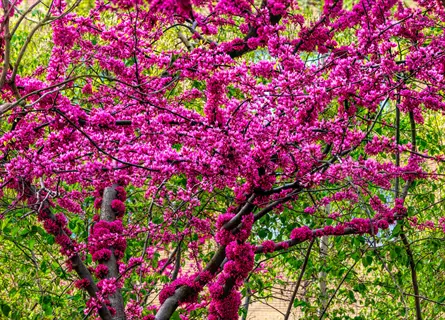
Eastern redbud
- Flowers: Rosy-pink blooms line the bare branches in early spring, giving a burst of color before the leaves open.
- Size: A small understory tree that fits residential yards without the aggressive spread or brittle limbs of mimosa.
- Wildlife: Early flowers provide nectar for bees and other pollinators at a lean time of the gardening year.
- Foliage: Heart-shaped leaves offer clean summer texture and often turn warm yellow tones in autumn.
- Range: Native across much of the eastern United States, so it belongs in the landscape rather than escaping into wild areas.
- Use: Works well as a specimen or woodland-edge tree in the same partly sunny spots where mimosa is often planted.
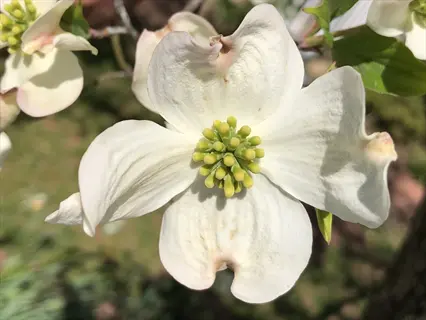
Flowering dogwood
- Flowers: Showy white or pink spring bracts make it one of the most loved native ornamental trees for home landscapes.
- Size: A modest understory tree that suits smaller yards and layered plantings beneath taller shade trees.
- Wildlife: Red fall berries feed birds, adding wildlife value that mimosa does not reliably provide.
- Foliage: Leaves turn rich red to purple in autumn, extending the tree's ornamental season well past bloom.
- Range: Native to the eastern United States, giving comparable spring beauty without invasive behavior.
- Use: Best in partial shade with moist, well-drained soil as a graceful focal point near patios or paths.
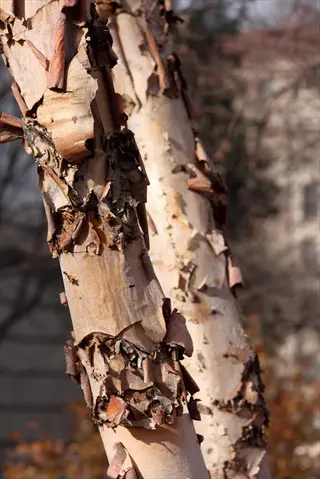
River birch
- Bark: Peeling cinnamon-and-cream bark gives year-round interest, a feature mimosa cannot match.
- Size: A fast-growing native shade tree, so it satisfies the same desire for quick shade that draws people to mimosa.
- Toughness: Tolerates wet ground and clay soils, thriving where many other shade trees struggle.
- Foliage: Fine, bright green leaves cast a light, pleasant shade over lawns and seating areas.
- Wildlife: Supports native insects and birds as part of a healthy regional food web.
- Use: Good along low, damp areas or as a fast screen where a non-invasive quick grower is wanted.
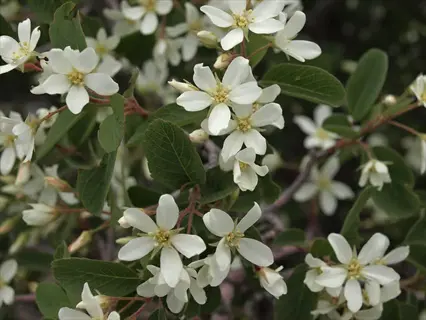
Common serviceberry
- Flowers: Clouds of white flowers open in early spring, giving a delicate display similar in charm to mimosa's blooms.
- Fruit: Summer berries are edible and are prized by birds, adding food value to the garden.
- Size: A small tree or large shrub that fits tight spaces and mixed borders without overwhelming them.
- Foliage: Autumn color ranges from orange to red, giving strong seasonal interest across the year.
- Range: Native across much of North America, so it strengthens rather than disrupts local ecosystems.
- Use: Works as a multi-season specimen in sun to partial shade in place of an ornamental mimosa.
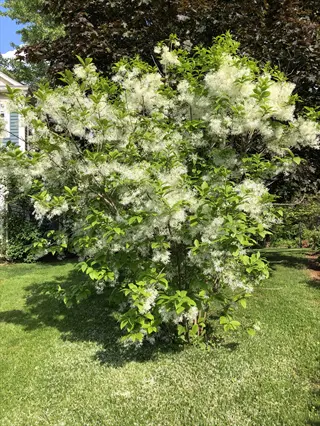
White fringetree
- Flowers: Fragrant, fringe-like white flowers drape the tree in late spring, offering a soft, airy look.
- Size: A small native tree well suited to yards, courtyards, and mixed ornamental plantings.
- Fragrance: The sweet scent gives the same fragrant-tree appeal that many gardeners seek in mimosa.
- Wildlife: Flowers draw pollinators and later fruit supports birds, adding ecological value.
- Foliage: Clean summer leaves turn yellow in fall for an extra season of interest.
- Use: Plant in sun to partial shade as a fragrant, non-invasive focal point near living spaces.
Because mimosa resprouts with shoots over three feet in a season and seeds stay about 90% viable after five years, a cut tree comes back. Plan on stump or bark herbicide plus several seasons of removing sprouts.
5 Common Myths
Mimosa trees are harmless to pets and farm animals, so there is no reason to worry about dogs or livestock near them.
Mimosa seeds contain a neurotoxin that is toxic to dogs and livestock if eaten, so fallen pods should be cleaned up promptly.
Buying a sterile or disease-resistant mimosa cultivar means it cannot spread or become invasive in your area.
Even disease-resistant cultivars can still set seed, and Virginia Tech notes they can be considered potentially invasive.
Cutting a mimosa tree down to the ground is enough to kill it and stop it from coming back for good.
Mimosa resprouts vigorously from the stump and roots, with sprouts over three feet in a season, so herbicide follow-up is needed.
The mimosa is a sturdy, long-lived shade tree that will grace a yard for many generations to come.
Mimosa is short-lived, averaging about 30 years, has weak brittle wood, and is often killed young by Fusarium wilt.
The mimosa tree is a native North American species that belongs naturally in United States woodlands.
Mimosa is native to Asia, from Iran to Japan, and was introduced to the United States in 1745 as an ornamental.
Conclusion
The mimosa tree earns its fans for good reason. Those pink puffball flowers and soft leaves shaped like ferns turn a plain yard into something special for a few weeks each summer. It is easy to see why people planted this silk tree for generations. But beauty is only half the story here. The other half asks for a clear head before you put one in the ground.
Here is what the facts add up to, one last time. A mimosa grows fast to 20 to 40 feet across USDA zones 6 to 9, yet it lives only about 30 years. It spreads as an invasive tree through seeds that survive for years and roots that throw up fresh sprouts after you cut it down. About 9 in 10 seeds stay alive after five years, so one tree can seed a whole hillside. Its seeds also carry a neurotoxin that harms dogs and livestock. And Fusarium wilt can kill a full-grown tree in one season.
So here is the plain call. If a mimosa already stands in your yard and it is not spreading, you can enjoy it. Just stay on top of the seed pods and pull the suckers before they root. Good mimosa tree care means checking for those seeds every fall. But if you are still choosing what to plant, pick one of the native alternatives instead. A redbud gives you the same spring color. Dogwood and serviceberry feed local birds and bees, and neither one spreads.
You now hold every fact you need to make an informed choice for yourself. An honest look at the mimosa tree shows a gorgeous plant that is also a handful. Weigh the short life, the toxic seeds, and the fast spread against those summer blooms. Then decide what fits your yard and your patience. Whatever you choose, you are choosing with your eyes open.
Glossary
- bipinnately compound leaves
- Leaves that are divided twice into many small leaflets, which gives mimosa its feathery, fern-like appearance.
- Bruchidius terrenus
- A small seed beetle that feeds on mimosa seeds and acts as a natural check on how many survive.
- cut-stump treatment
- A control method in which a tree is cut down and herbicide is applied to the fresh stump to kill the roots.
- Fusarium wilt
- A soil-borne fungal disease that blocks a tree's water-carrying tissue, causing wilting and often killing mimosa.
- nitrogen fixer
- A plant that captures nitrogen from the air and adds it to the soil, helping it grow in poor ground.
- nyctinasty
- The daily folding of a plant's leaves shut at night or in rain in response to darkness or moisture.
- riparian
- Relating to the land and vegetation along the banks of a river or stream.
- seed bank
- The store of dormant but still-viable seeds that builds up in the soil and keeps sprouting over many years.
External Sources
Frequently Asked Questions
What is another name for the mimosa tree?
The mimosa tree is also called the silk tree, Persian silk tree, pink silk tree, and by its botanical name Albizia julibrissin.
Are mimosa trees good for anything?
Yes. Mimosa trees provide fast shade, fragrant summer flowers, nectar for pollinators, and they fix nitrogen in the soil.
How fast do mimosa trees grow?
Mimosa trees grow very fast, and root sprouts can grow over three feet (about one meter) in a single season.
How long do mimosa trees live?
Mimosa trees are short-lived, averaging about 30 years, and often just 10 to 20 years where Fusarium wilt is present.
When do mimosa trees bloom?
Mimosa trees bloom from late spring through summer, roughly May to August, producing fragrant pink powder-puff flowers.
Can you grow a mimosa tree in a pot?
You can grow a young mimosa in a large pot for a few years, but it grows fast and soon needs planting in the ground.
Are mimosa tree seeds poisonous to dogs?
Yes. Mimosa seeds contain a neurotoxin that is toxic to dogs and livestock if the seeds or pods are eaten.
Is the mimosa tree used as a medicine?
In traditional Chinese medicine, mimosa bark and flowers are used for mood and sleep, but these uses are not clinically proven.
How do you get rid of a mimosa tree?
Cut the tree at ground level, treat the fresh stump with herbicide, and remove resprouts repeatedly, because mimosa resprouts vigorously.
- Cut the trunk at ground level, ideally once it is flowering to limit seed set
- Treat the fresh stump or bark with glyphosate or triclopyr herbicide
- Pull or cut root sprouts as they appear
- Monitor for several seasons because long-lived seeds keep sprouting
What is an interesting fact about mimosa trees?
One interesting fact is that mimosa's fern-like leaves fold shut at night and in rain, a movement called nyctinasty.