
Introduction
The verbena plant has won over gardeners for centuries. James Tweedie first shipped it from Argentina to Europe in the 1700s. That move helped start the Victorian carpet bedding craze. British nurseries soon sold more than 50 named cultivars to eager buyers. Today this tough plant still earns its spot in gardens around the world.
I've grown verbena in raised beds, hanging baskets, and borders for over 8 years now. Few flowering plants can match what verbena does. The genus holds about 250 species, yet only 6 show up at most garden centers. Those 6 cover just about every garden style you can think of.
Garden verbena works like a Swiss Army knife for your yard. Trailing types spill from containers with bright verbena flowers all summer long. Tall varieties feed butterflies, bees, and hummingbirds through the entire season. Dried stems of some species give stem nesting bees a place to raise their young. A cousin called vervain has made its way into major medicine guides too.
This guide covers the best varieties for your garden. You'll find planting tips, care schedules, design ideas, and methods to grow verbena from spring through fall.
8 Best Verbena Varieties
Not all verbena varieties fill the same role in your garden. Some trail over the edges of verbena hanging baskets while others grow 6 feet tall in a meadow. I've sorted these 8 picks by the garden problem each one solves so you can match the right plant to your space.
Garden verbena grows 6 to 18 inches tall. Trailing verbena spreads up to 5 feet wide. Purpletop verbena towers at 2 to 6 feet. That range lets you fill every layer of a border with one genus. Homestead Purple earned the RHS Award of Garden Merit and stays a top pick. Several newer types have pushed heat and mildew resistance even further for your beds.
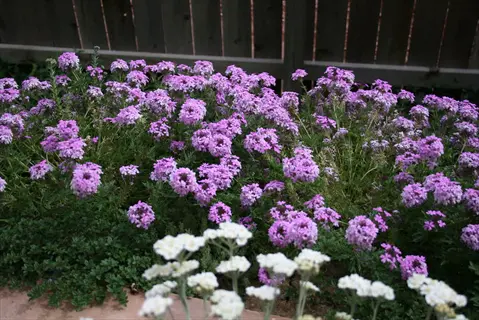
Homestead Purple Verbena
- Growth Habit: A vigorous trailing perennial that reaches 8 to 10 inches (20 to 25 centimeters) tall and spreads 2 to 4 feet (0.6 to 1.2 meters) wide, forming a dense mat of deep purple flower clusters.
- Best For: Groundcover plantings, slope stabilization, and front-of-border edging where its spreading habit fills gaps quickly throughout the growing season.
- Hardiness: Reliably perennial in USDA zones 7 through 10, making it one of the hardiest garden verbena selections available to home gardeners.
- Bloom Period: Produces rich purple flower clusters from late spring through the first hard frost, with blooms returning within 2 to 3 weeks after mid-summer trimming.
- Disease Resistance: Shows moderate resistance to powdery mildew compared to many seed-grown varieties, though good air circulation still helps prevent fungal issues.
- Care Level: Thrives in full sun with minimal watering once roots are established, tolerating heat, humidity, and poor soil conditions with very little maintenance required.
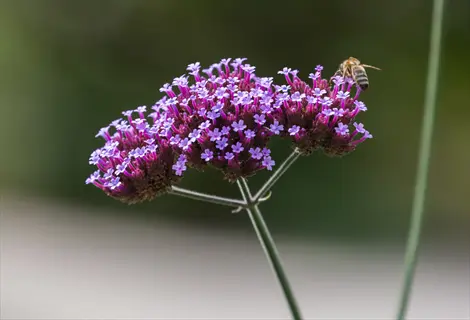
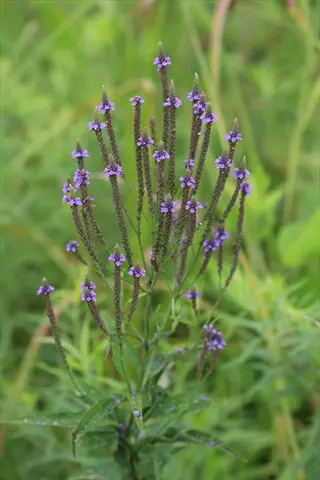
Verbena Bonariensis (Purpletop)
- Growth Habit: An airy, tall perennial reaching 2 to 6 feet (0.6 to 1.8 meters) in height with wiry, square stems topped by clusters of tiny lavender-purple flowers measuring 2 to 3 inches (5 to 8 centimeters) across.
- Best For: Meadow gardens, cottage gardens, pollinator plantings, and mid-to-back border positions where its tall stems create a see-through screen effect.
- Wildlife Value: One of the top butterfly and bee attractors among verbena species, with seeds that feed American goldfinches and hollow stems that provide nesting habitat for stem-nesting bees.
- Hardiness: Hardy in USDA zones 7 through 11, but frequently self-seeds in colder zones, returning each year from volunteer seedlings rather than root survival.
- Historical Note: First grown as a garden ornamental in 1726 by James and William Sherard from seeds collected in Buenos Aires, and later received the Royal Horticultural Society Award of Garden Merit.
- Caution: Classified as potentially invasive in California, Texas, Australia, and southern Africa, so gardeners in warm climates should deadhead spent flowers to limit self-seeding.
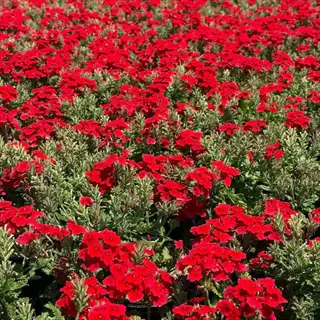
Superbena Royale Red Verbena
- Growth Habit: A mounding-to-trailing hybrid verbena that grows 6 to 12 inches (15 to 30 centimeters) tall and spreads 18 to 24 inches (46 to 61 centimeters) wide with vivid true-red flower clusters.
- Best For: Container plantings, hanging baskets, and window boxes where its trailing habit spills over edges and creates a vibrant cascading display.
- Bloom Performance: Produces self-cleaning flowers that do not require deadheading, blooming continuously from planting until the first fall frost without interruption.
- Heat Tolerance: Bred specifically for strong performance in hot, humid climates where older seed-grown verbena varieties often fail or stop blooming by midsummer.
- Disease Resistance: Shows improved resistance to powdery mildew compared to seed-grown types, reducing the need for fungicide treatments in humid growing conditions.
- Companion Pairing: Works as a spiller element alongside upright Angelonia and mounding Calibrachoa in the classic thriller-filler-spiller container recipe.
Tapien Blue Violet Verbena
- Growth Habit: A low-growing, creeping variety that reaches just 4 to 6 inches (10 to 15 centimeters) tall but spreads 18 to 25 inches (46 to 64 centimeters) per season, hugging the ground tightly.
- Best For: Rock gardens, pathway edges, and garden slopes where a low-growing carpet of blue-violet flowers fills spaces between stepping stones and borders.
- Spread Rate: One of the fastest-spreading verbena varieties available, covering bare ground quickly to suppress weeds and reduce the need for mulching.
- Bloom Color: Produces deep blue-violet flower clusters that maintain their saturated color even during the hottest weeks of summer without fading or washing out.
- Drought Tolerance: Exceptionally drought tolerant once established, requiring supplemental water only during extended dry spells lasting longer than two weeks without rainfall.
- Maintenance: Requires almost no pruning or shaping, with a naturally compact growth habit that stays neat without the leggy, open appearance common in other trailing types.
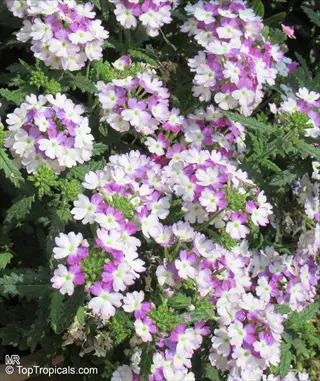
EnduraScape Pink Bicolor Verbena
- Growth Habit: A heat-loving, semi-trailing variety growing 8 to 12 inches (20 to 30 centimeters) tall and spreading 20 to 24 inches (51 to 61 centimeters) wide with eye-catching pink-and-white bicolor blooms.
- Best For: Mixed borders, mass plantings, and elevated garden beds where the two-tone flower pattern adds visual interest and contrast against green foliage.
- Climate Endurance: Part of the EnduraScape series bred for extreme heat and humidity tolerance, maintaining flower production even in temperatures above 95 degrees Fahrenheit (35 degrees Celsius).
- Perennial Potential: One of the few hybrid verbena series that returns reliably as a perennial in USDA zones 7 through 10, surviving mild winters without replanting.
- Pollinator Appeal: The bicolor petal pattern is highly attractive to butterflies and bees, with flower clusters producing abundant nectar throughout the blooming season.
- Low Input: Requires only one application of controlled-release fertilizer at planting time and weekly watering during the first month before becoming largely self-sufficient.
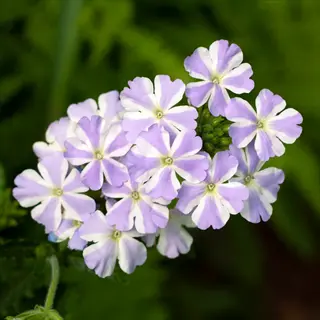
Lanai Lavender Star Verbena
- Growth Habit: A compact, trailing variety that grows 8 to 10 inches (20 to 25 centimeters) tall and spreads up to 20 inches (51 centimeters) wide with delicate lavender-and-white star-patterned flowers.
- Best For: Hanging baskets, mixed containers, and window boxes where the starry flower pattern is displayed at eye level for maximum appreciation.
- Unique Feature: Each individual floret shows a lavender rim with a white star center, creating a distinctive pattern not found in solid-colored verbena selections.
- Bloom Season: Begins flowering in late spring and continues without significant pause through the first frost, with peak bloom intensity during the warmest months of summer.
- Container Performance: Specifically selected for container culture, with a branching habit that fills out pots evenly and does not develop the bare center common in some trailing varieties.
- Pairing Ideas: Pairs beautifully with purple Superbena and white trailing lobelia in mixed containers for a monochromatic cool-toned display.
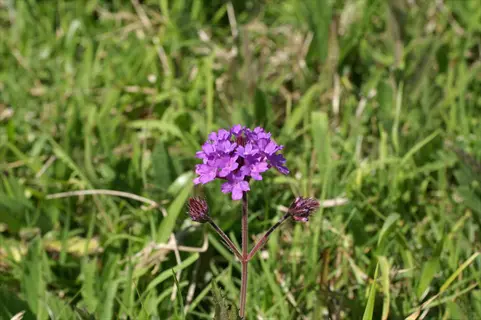
Verbena Rigida (Tuberous Verbena)
- Growth Habit: A tough, clump-forming perennial that grows 1 to 1.5 feet (30 to 46 centimeters) tall with stiff, upright stems bearing tight clusters of vibrant purple to magenta flowers.
- Best For: Low-water landscapes, xeriscaping projects, and dry garden borders where its tuberous root system stores moisture during prolonged dry periods.
- Hardiness: Reliably perennial in USDA zones 7 through 10, surviving colder winters than most garden verbenas thanks to its underground tuberous root reserves.
- Drought Ability: Among the most drought-tolerant verbena species due to its tuberous root system, thriving in sandy, rocky, and poor soils where other plants struggle.
- Spread Pattern: Forms expanding colonies through underground tubers and self-seeding, making it effective for naturalizing large areas with minimal planting effort.
- Wildlife Benefit: Produces dense flower clusters that attract butterflies and bees from midsummer through fall, providing late-season nectar when many other plants have finished blooming.
Glandularia Canadensis (Rose Verbena)
- Growth Habit: A native North American trailing perennial formerly classified as Verbena canadensis, growing up to 1 foot (30 centimeters) tall and spreading 2 to 5 feet (0.6 to 1.5 meters) wide.
- Best For: Native plant gardens, restoration projects, and naturalized landscapes where a locally adapted groundcover adds both color and ecological value.
- Native Range: Found naturally across the eastern and central United States, making it an excellent choice for gardeners seeking regionally appropriate flowering groundcover plants.
- Bloom Period: Produces rose-pink to lavender flower clusters from mid-spring through fall, with bloom intensity peaking during the cooler months of spring and early autumn.
- Ecological Role: Supports a wider range of native pollinators than hybrid verbenas because local bees and butterflies have co-evolved with this species over thousands of years.
- Adaptability: Tolerates clay, loam, and sandy soils across a broad pH range and handles both full sun and light afternoon shade in warmer southern regions.
Each of these verbena varieties fills a clear gap in your garden. I've tested most of them through hot summers and cold snaps. Pick based on where you need color and how much care you want to give each bed or pot.
Planting and Care Guide
Knowing how to plant verbena the right way saves you from 2 common failures: root rot and midsummer burnout. Your verbena plant care routine changes with the seasons, so I break it down by time of year below. The key is well-drained soil and a good verbena fertilizer plan from day one.
One thing most guides skip is why drainage matters so much. Wet roots invite Pythium and Rhizoctonia pathogens that kill verbena fast. I lost an entire bed of seed grown verbena to root rot in my second year because the soil stayed too damp after rain. Verbena watering should happen once per week when rainfall drops below 1 inch. Verbena deadheading and a mid-summer trim of one fourth of the plant's size bring back fresh blooms in 2 to 3 weeks.
Spring Planting Setup
- Timing: Plant verbena outdoors after the last frost date in your area, when soil temperatures have reached at least 60 degrees Fahrenheit (16 degrees Celsius) and nighttime temperatures stay consistently above 50 degrees Fahrenheit (10 degrees Celsius).
- Soil Preparation: Amend heavy clay soil with coarse sand or perlite to improve drainage, as verbena roots are highly susceptible to Pythium and Rhizoctonia root rot pathogens in waterlogged conditions.
- Spacing: Set garden verbena transplants 12 to 18 inches (30 to 46 centimeters) apart, and space taller Verbena bonariensis plants approximately 2 feet (61 centimeters) apart to allow proper air circulation.
- First Feeding: Apply a controlled-release 16-4-8 fertilizer at planting time to provide balanced nutrition throughout the first growing season without the risk of overfeeding.
Summer Maintenance Routine
- Watering: Water once per week if your area receives less than 1 inch (2.5 centimeters) of rainfall, applying water at the base of the plant to keep foliage dry and reduce powdery mildew risk.
- Mid-Season Trimming: Cut back one-fourth of the plant's height and spread in mid-summer to stimulate a fresh flush of blooms that will appear within 2 to 3 weeks after pruning.
- Deadheading: Remove spent flower clusters regularly on varieties that are not self-cleaning to redirect energy toward producing new blooms rather than setting seed.
- Pest Monitoring: Check the undersides of leaves weekly for spider mites, aphids, and whiteflies, and treat early infestations with a strong water spray or insecticidal soap.
Fall Transition Period
- Extended Blooming: Many verbena varieties continue blooming until the first hard frost, so avoid cutting plants back too early and allow them to provide late-season nectar for migrating butterflies.
- Seed Collection: Allow a few flower heads to mature and dry on Verbena bonariensis plants if you want volunteer seedlings the following spring, but remove the rest to control spreading.
- Perennial Preparation: In USDA zones 7 through 11, apply a 2 to 3 inch (5 to 8 centimeter) layer of mulch around the base of perennial verbena types to insulate roots against winter cold.
- Container Plants: Move potted verbena to a sheltered location before the first frost if you want to attempt overwintering, or take stem cuttings in early fall to root indoors.
Winter and Off-Season Care
- Frost Protection: Perennial verbena in marginal zones (zone 7) benefits from a thick layer of straw or pine needle mulch placed over the crown after the first hard freeze.
- Indoor Overwintering: Bring container verbena indoors to a bright, cool room with temperatures around 50 to 60 degrees Fahrenheit (10 to 16 degrees Celsius) and reduce watering to prevent root rot.
- Spring Cleanup: Remove dead foliage and old mulch in early spring once new growth appears, and apply fresh fertilizer to give returning perennial plants a strong start.
- Replacement Planning: Clemson Extension recommends replacing perennial verbena plants every 2 to 3 years, as older plants tend to decline in vigor and bloom quality.
Southern gardeners should grab plants grown from cuttings instead of seed grown types. Clemson specialists note that seed raised bedding verbena struggles in hot, humid weather. Plants grown from cuttings handle heat and moisture much better and last longer in your garden beds.
Verbena in Garden Design
Verbena fits into more garden styles than most plants I've worked with. You can use it as verbena groundcover along a path or a spiller in verbena containers. It also works as a tall accent in a verbena cottage garden. The trick is picking the right verbena companion plants and spacing them well.
I build most of my container combos around the thriller, filler, spiller formula. Upright Angelonia acts as the thriller. Mounding Calibrachoa fills the middle, and trailing verbena spills over the rim. This same setup works for verbena hanging baskets and window boxes. For verbena borders, pair low types with salvia or lantana at 14 to 18 inches apart.
NC State lists Verbena bonariensis as a top pick for pollinator gardens and cottage gardens. Its tall, thin stems let you see right through to the plants behind them. That see-through quality earned it the RHS Award of Garden Merit. Few border plants give you that kind of airy look without blocking your view.
How to Propagate Verbena
Verbena propagation gives you 4 solid options depending on your patience and what tools you have on hand. Growing verbena from seed is the cheapest route but also the slowest. I prefer verbena stem cuttings for most jobs because they root fast and give you clones of your best plants.
Verbena seed starting trips up a lot of new growers because the seeds need total darkness to sprout. Most flower seeds want light, so this catches people off guard. Verbena germination takes 14 to 28 days with good conditions. Results can be spotty. Start your seeds indoors 8 to 12 weeks before the last frost for the best shot at strong transplants.
Growing From Seed
- Starting Time: Begin seeds indoors 8 to 12 weeks before your last expected frost date, as verbena seeds are known for slow and irregular germination that demands a solid head start.
- Light Requirement: Cover seeds with a full layer of soil because verbena seeds require total darkness to germinate, unlike many flower seeds that need light to trigger the germination process.
- Temperature: Maintain soil temperature between 65 and 75 degrees Fahrenheit (18 to 24 degrees Celsius) using a heat mat if necessary to improve the slow germination rate.
- Expected Timeline: Germination takes about 14 to 28 days with darkness and consistent moisture, though some seeds may sprout earlier or later due to uneven seed vigor.
Stem Cuttings in Water or Soil
- Best Timing: Take 4 to 6 inch (10 to 15 centimeter) stem cuttings from healthy, non-flowering shoots in late spring or early summer when the plant is in active growth.
- Preparation: Remove the lower leaves from the bottom half of each cutting and dip the cut end in rooting hormone powder to speed up root development.
- Rooting Medium: Place cuttings in moist perlite, vermiculite, or a glass of clean water, keeping them in bright indirect light until roots reach 1 to 2 inches (2.5 to 5 centimeters) long.
- Success Rate: Stem cuttings from cutting-grown verbena varieties tend to root within 2 to 3 weeks and produce plants identical to the parent in flower color and growth habit.
Division of Established Clumps
- Best Timing: Divide mature verbena clumps in early spring just as new growth begins to emerge, giving divisions the entire growing season to establish before winter arrives.
- Technique: Dig up the entire root ball and use a sharp spade or garden knife to separate it into sections, making sure each division has both roots and at least 3 to 4 healthy stems.
- Replanting Depth: Set divisions at the same depth they were growing before and water well at planting time to eliminate air pockets around the roots.
- Best Candidates: This method works best for clump-forming types like Verbena rigida and Homestead Purple, which develop dense root systems over 2 to 3 years.
Layering for Trailing Types
- How It Works: Trailing verbena stems root on their own where they contact moist soil, making layering the easiest propagation method for spreading and creeping varieties.
- Technique: Pin a healthy stem section to the soil surface using a landscape staple or small stone, ensuring that at least one leaf node is pressed tight into the ground.
- Timeline: Roots tend to form at the pinned node within 3 to 4 weeks during warm weather, at which point the new plant can be severed from the parent and transplanted.
- Best Candidates: Trailing types like Glandularia canadensis, Tapien series, and other low-growing verbena varieties are the best candidates for this simple propagation approach.
Pollinators and Wildlife Value
Most garden guides mention verbena pollinators in a single line and move on. That sells this plant short. I've watched monarchs, swallowtails, and painted ladies land on the same verbena cluster in my garden. Verbena butterflies are just the start of what your pollinator garden can attract.
Verbena bees include honeybees and native species like sweat bees and stem nesting bees. NC State data shows that dead hollow stems of Verbena bonariensis give these bees a place to lay eggs over winter. Verbena hummingbirds feed from the small florets on red and pink types. American goldfinches visit dried seed heads in fall for a quick meal.
You also get a bonus: verbena is verbena deer resistant and rabbits leave it alone too. That makes it one of the few plants that feeds the wildlife you want and keeps out the ones you don't. Expert Susan Mahr calls this an underused pollinator plant. I agree with her after years of growing it.
Medicinal History of Vervain
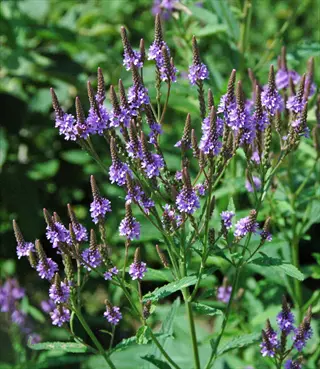
Most garden sites skip verbena medicinal uses, but the history here is too good to ignore. I first tried vervain herbal medicine as tea from a neighbor who grew Verbena officinalis. This species stands apart from the garden types you grow for color. It has been used in verbena traditional medicine for thousands of years. Romans treated wounds with it. Celts burned it in rituals. Ancient cultures called it the "holy herb" long before labs could test its effects.
Modern science has caught up with those old claims about vervain herbal medicine. Lab teams pulled active compounds from the plant. The main ones are verbascoside and verbenalin. Lab tests confirm the plant fights germs, reduces swelling, and protects nerve cells. The European Pharmacopoeia added it in 2008. The Chinese version listed it back in 1995.
You should know that human trials remain limited at this point. When I first looked into this, I found a 2022 animal study that showed kidney tissue changes after long term use at high doses. In my experience, the plant offers real potential but don't treat it as a cure on your own. Talk to a doctor before using vervain as any kind of herbal treatment for health issues.
Ancient Folk Medicine
- Romans and Celts used vervain in rituals and wound treatments long before modern science identified the active compounds
- The plant earned the name 'holy herb' across multiple ancient cultures
Victorian and Colonial Era
- European colonists carried vervain seeds worldwide, establishing the plant in traditional medicine systems across multiple continents
- Vervain became a staple in herbalist gardens throughout Britain and North America
20th Century Pharmacological Study
- Researchers isolated verbenalin and verbascoside, confirming anti-inflammatory and neuroprotective properties in laboratory settings
- These findings linked centuries of folk use to measurable biological activity
Modern Scientific Validation
- European Pharmacopoeia listed Verbena officinalis in 2008 and Chinese Pharmacopoeia in 1995
- Documented therapeutic activities include antioxidant, antimicrobial, anti-inflammatory, neuroprotective, and anticonvulsant effects
5 Common Myths
Verbena must be watered every day to keep its flowers looking fresh and colorful throughout the growing season.
Verbena is drought tolerant once established and only needs watering once per week if rainfall is less than 1 inch (2.5 centimeters), as overwatering causes root rot.
All verbena plants are annuals that die at the end of summer and never come back the following year.
Many verbena species are tender perennials that return each year in USDA zones 7 through 11, and some types like Verbena bonariensis self-seed freely in cooler climates.
Verbena and lemon verbena are the same plant and can be used interchangeably in herbal teas and recipes.
Ornamental verbena belongs to the genus Verbena in the family Verbenaceae, while lemon verbena (Aloysia citrodora) is an entirely different genus used for culinary purposes.
Verbena grows equally well in full shade and full sun, so placement in the garden does not really matter.
Verbena requires a minimum of 6 to 8 hours of direct sunlight per day to bloom properly, and shade causes leggy growth, fewer flowers, and increased risk of powdery mildew.
Growing verbena from seed is quick and easy, with sprouts appearing within just a few days of planting outdoors.
Verbena seeds germinate slowly and irregularly, require darkness to sprout, and should be started indoors 8 to 12 weeks before the last frost date for best results.
Conclusion
The verbena plant does more than fill a gap in your flower beds. It works in containers, borders, meadows, and hanging baskets with equal ease. The best verbena varieties bring in butterflies, bees, and hummingbirds while keeping deer and rabbits away. The vervain cousin also carries a medicinal heritage that goes back thousands of years.
Growing verbena gets easier when you follow a few core rules. Give it full sun, drain the soil well, and water once a week when rain falls short. Replace your perennial plants every 2 to 3 years as Clemson Extension suggests. If you live in a hot, humid area, grab plants grown from cuttings rather than seed grown types for stronger verbena care results all season.
In my experience, what sets this plant apart is how it connects beauty and ecology in one package. Your garden feeds pollinators and even gives stem nesting bees a home in the dead stems you leave standing through winter. I tested many plants for this role and few pull double duty like verbena does.
With about 250 species in the genus, you have plenty of room to try new types. Start with a proven pick like Homestead Purple or Verbena bonariensis. Then try a native rose verbena or the drought tough tuberous type. Match the right verbena to your climate zone and garden style, and this plant will reward you for years.
External Sources
Frequently Asked Questions
Do verbena come back every year?
Many verbena species are tender perennials in USDA zones 7 through 11 and will return each year in warm climates, though gardeners in colder zones typically replant them as annuals each spring.
Does verbena like sun or shade?
Verbena strongly prefers full sun and needs a minimum of 6 to 8 hours of direct sunlight per day to produce abundant blooms and resist disease.
What is the verbena plant used for?
Verbena is used for ornamental garden displays, container plantings, pollinator attraction, and cut flower arrangements, while Verbena officinalis has a long history in herbal medicine.
Where is the best place to plant verbena?
The best place to plant verbena is a sunny spot with well-drained soil, such as raised beds, south-facing borders, hanging baskets, or containers on a sunny patio.
What are common problems with verbenas?
The most common problems with verbenas are powdery mildew, spider mites, root rot from overwatering, and leggy growth caused by insufficient sunlight or poor pruning habits.
Is verbena toxic to pets?
Most ornamental verbena species are considered non-toxic to cats and dogs, though ingestion may cause mild stomach upset, and some commercial sources recommend keeping plants away from pets as a precaution.
Is verbena easy to grow?
Verbena is generally easy to grow once established, requiring full sun, well-drained soil, and moderate watering, with most varieties tolerating heat, drought, and poor soils.
Does verbena keep bugs away?
Verbena is not a strong insect repellent on its own, though lemon verbena (Aloysia citrodora) contains citral, a compound found in some natural bug sprays.
What are the side effects of verbena?
Medicinal vervain (Verbena officinalis) may cause nausea, digestive discomfort, or allergic reactions in some people, and long-term use at high doses showed kidney tissue changes in animal studies.
Are verbena roots invasive?
Most garden verbena roots are not invasive, but Verbena bonariensis self-seeds aggressively and has naturalized as a weed in parts of California, Texas, Australia, and southern Africa.