
Introduction
I held a tradescantia zebrina up to my window one morning. The leaves flickered with a metallic shimmer that stopped me cold. Tiny hairs along the leaf edges scatter light like stained glass in motion. This trailing plant earns its spot among the best starter houseplants you can grow. The colors look far more exotic than the price tag suggests.
Susan Mahr from the University of Wisconsin wrote that this is an easy plant for anyone to grow, even wanna be green thumbs. I've seen brand new plant parents keep their inch plant alive through missed waterings and dim rooms. The stems bounce back faster than almost any other houseplant I've grown in over a decade of indoor gardening. Your wandering dude plant can take a beating and still look great.
Most tradescantia zebrina care guides give you the same basic tips and stop there. What they skip is that 21 named cultivars exist, each with its own color pattern. Some flash deep burgundy while others show pink, cream, and silver patches. You have far more options than the quick care blurbs online would have you think.
This guide gives you rare variety tips and a season by season care calendar you won't find in one place anywhere else. You'll learn why your plant loses its purple color and how to turn one stem into a dozen new plants. You'll also find out which pests to watch before they cause real damage to your collection.
8 Tradescantia Zebrina Varieties
Most plant shops sell one or two types of tradescantia zebrina and leave it at that. You can find 21 named tradescantia zebrina cultivars in the collector market right now. Each one carries its own blend of silver, purple, green, and pink.
I've grown 6 of these tradescantia zebrina varieties side by side over the past few years. The color gaps are clear even under the same light and soil setup. Sectoral pattern types fetch premium prices at online auctions. Each leaf on those plants looks hand painted. The Violet Hill cultivar remains the easiest to find at your local garden center.
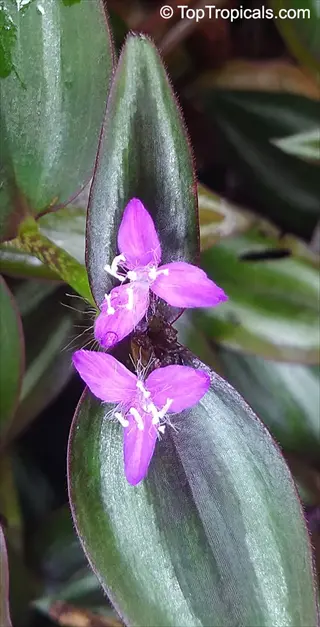
Tradescantia Zebrina Violet Hill
- Leaf Pattern: The most common cultivar in stores features classic silver and green stripes on top with a rich purple underside that catches light when trailing down from a shelf.
- Color Range: Upper leaves show two broad silver bands flanking a central green stripe. The entire underside glows deep magenta under good lighting conditions.
- Growth Habit: Trailing stems reach 2 feet or longer and produce dense foliage when you give them bright indirect light and regular pinching at the growing tips.
- Market Names: Often sold under the trade names Silver Plus, Pink Joy, and Red Gem. All three labels refer to this same cultivar, which creates confusion at the store.
- Availability: The easiest variety to find at garden centers, big box stores, and online retailers. It makes the ideal starting point for new tradescantia collectors.
- Care Note: Maintains the strongest purple color of any standard cultivar when grown in bright indirect light with morning sun from an east facing window.
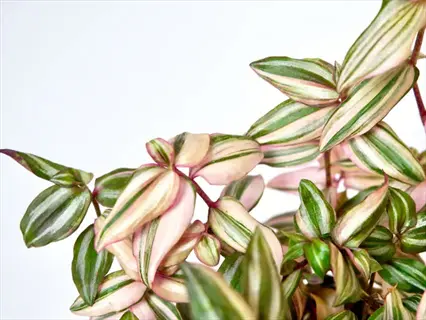
Tradescantia Zebrina Quadricolor
- Leaf Pattern: Shows four distinct colors on a single leaf including green, silver, pink, and cream in a sectoral variegation pattern that shifts from leaf to leaf.
- Variegation Type: Sectoral variegation means each leaf has random blocks of color rather than uniform stripes. Every leaf looks unique and catches the eye.
- Growth Rate: Slower than the standard Violet Hill because the cream and pink sections hold less chlorophyll. This reduces the plant's total energy production.
- Light Needs: Requires brighter light than solid colored varieties to make up for reduced chlorophyll. Direct afternoon sun still risks burning the pale leaf sections.
- Rarity Level: Hard to find in regular retail stores but available through plant shops and online sellers who focus on variegated houseplant collections.
- Documentation: One of the few cultivars documented by both Wisconsin Extension and NC State Extension. This gives it stronger botanical standing than many trade named varieties.
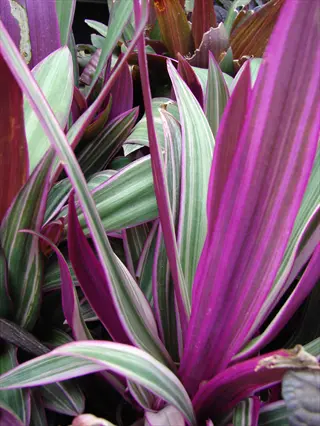
Tradescantia Zebrina Burgundy
- Leaf Pattern: Deep burgundy purple foliage with minimal silver striping creates a darker, more dramatic look compared to the classic silver striped varieties you see everywhere.
- Color Depth: The rich wine red tone comes from higher levels of anthocyanin pigments. These darken with increased light exposure through the growing season.
- Trade Names: Also sold as Purple Joy, Purple Passion, and Red Jewel depending on the grower. Check the leaf pattern rather than trust the label alone.
- Growth Habit: Produces vigorous trailing stems similar to Violet Hill but with thicker leaves that hold up better during brief dry periods between waterings.
- Display Pairing: The deep burgundy foliage creates stunning contrast when displayed next to bright green or golden pothos in a grouped hanging arrangement.
- Documentation: Listed by NC State Extension as a recognized cultivar, providing botanical authority for its status as a distinct variety within the species.
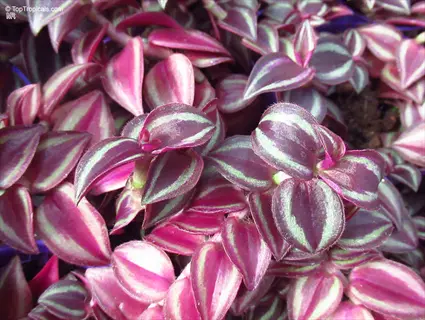
Tradescantia Zebrina Purpusii
- Leaf Pattern: Solid olive green to bronze upper surface without the typical silver stripes, paired with a vibrant purple underside that sets it apart from all other cultivars.
- Unique Feature: The absence of silver banding makes this variety look quite different from standard tradescantia zebrina. Collectors who expect the classic stripes are often surprised.
- Texture: Leaves are a bit hairy on both surfaces compared to the smoother texture of Violet Hill. They have a soft, velvety feel when you touch them.
- Historical Background: Named after Carl Albert Purpus, a German plant collector who gathered specimens across Mexico in the early 1900s during major botanical expeditions.
- Light Response: Bronze tones deepen in brighter light while lower light causes the leaves to shift toward a plainer green. You lose the bronze overlay without enough exposure.
- Documentation: Listed by Wisconsin Extension as one of the 3 primary cultivars alongside Tricolor and Quadricolor in their tradescantia zebrina plant profile.
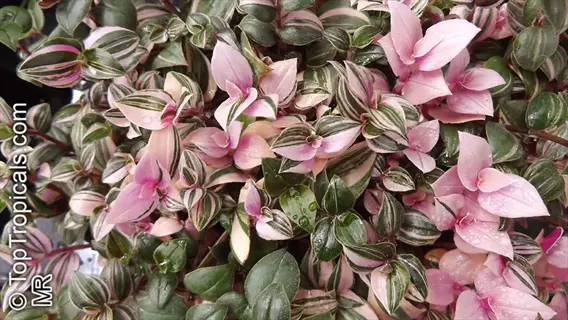
Tradescantia Zebrina Tricolor
- Leaf Pattern: Three distinct colors appear on each leaf including green, silver white, and pink or lilac tones. The result is a softer pastel look compared to the bold standard variety.
- Pink Tones: Pink shows up most on new growth and along leaf margins. It fades a bit as leaves mature but keeps a warm blush under good conditions.
- Comparison: Often confused with Quadricolor, but Tricolor shows more uniform pink distribution rather than the random sectoral blocks that define Quadricolor patterns.
- Sensitivity: More sensitive to low light than standard cultivars because the pink and white leaf areas produce less energy. You need bright conditions to prevent reversion to plain green.
- Propagation Note: Take cuttings from the most colorful stems to preserve the tricolor pattern. Less variegated sections may produce offspring with reduced pink coloration.
- Documentation: Listed alongside Purpusii and Quadricolor by Wisconsin Extension as one of the 3 named cultivars in their official tradescantia zebrina profile.
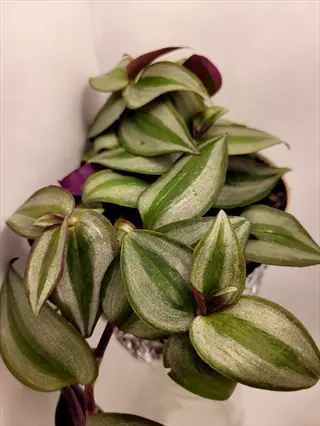
Tradescantia Zebrina HappiLee
- Leaf Pattern: Features bold sectoral variegation with large blocks of cream, green, and pink. The patchwork effect looks nothing like the even striping found in standard plants.
- Variegation Stability: Sectoral variegation can be unstable. Some stems may revert to solid green or solid purple over time if you don't prune the reverted growth.
- Rarity: One of the harder cultivars to track down. You'll find it through plant collectors, plant swaps, and online auctions focused on rare houseplants.
- Growth Speed: Much slower than non variegated cultivars due to reduced chlorophyll in the cream and pink leaf sections. This limits how much energy the plant can produce.
- Care Requirement: Needs more careful light management than standard varieties. It thrives in bright indirect light but suffers fast in low light corners of a room.
- Collector Value: This named cultivar with sectoral variegation commands higher prices in the plant market. Demand rivals Quadricolor and Discolor Multicolor among serious growers.
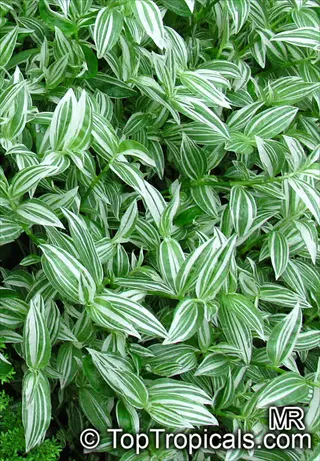
Tradescantia Zebrina Discolor Multicolor
- Leaf Pattern: Striking sectoral variegation with random patches of cream, green, pink, and silver. You can get leaves that look nothing alike on the same trailing stem.
- Visual Impact: No two leaves share the exact same color spread. This creates an ever changing display as the plant pushes out new growth from each node.
- Distinction: Often grouped with Quadricolor but shows more extreme variation between leaves. Some emerge almost all cream while others come out green or purple.
- Stability Challenge: The most variegated stems may produce leaves with too little chlorophyll to sustain themselves. Tips or edges can brown from energy deficit.
- Propagation Strategy: Select cuttings from stems showing balanced variegation rather than extremes. Moderate cuttings tend to produce the healthiest and most colorful new growth.
- Market Position: Among the rarest tradescantia zebrina cultivars you can buy. Serious collectors trade these alongside other sectoral variegation specimens.
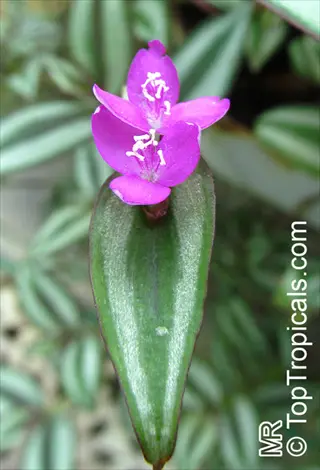
Tradescantia Zebrina Standard Green Form
- Leaf Pattern: The wild type form features green leaves with a subtle silver sheen and faint striping. Less vivid than named cultivars but more vigorous and forgiving of your mistakes.
- Hardiness: The most tolerant form of tradescantia zebrina. It handles lower light, inconsistent watering, and temperature swings better than any named cultivar.
- Invasive Concern: This is the form found growing as ground cover in tropical regions. The Florida Invasive Plant Council lists it due to its aggressive spreading habit.
- Color Potential: Even the standard green form develops stronger purple and silver tones in bright light. It can rival named cultivars in vibrancy under ideal conditions.
- Best For Beginners: The ideal starting plant for anyone new to tradescantia because it tolerates the widest range of conditions while still showing that sparkle effect in good light.
- Native Habitat: This form looks most like wild populations found across southern Mexico through Colombia. It carpets forest floors and stream banks as ground cover in the wild.
Start with the Violet Hill or Standard Green form if you're new to these plants. Once you master the basics, you can branch out into rarer sectoral types that need more light and attention to stay colorful.
Light and Color Secrets
Your tradescantia zebrina light requirements boil down to one simple rule. Give it bright indirect light and the purple pops. Take that light away and you'll watch the color fade to plain green within weeks. I've tested this with the same plant in 4 different rooms and the results were dramatic every time.
The purple color comes from pigments called anthocyanins that act like sunscreen for the leaf. When your plant senses strong light, it pumps out more of these pigments to protect itself. That's why a tradescantia zebrina losing color almost always sits in a dim corner. Move it closer to a window and the purple comes back within a few weeks as the plant ramps up pigment production again.
That metallic sparkle you notice in good light isn't your eyes playing tricks on you. Fine hairs called trichomes line the leaf margins and bend light like tiny prisms. Wisconsin Extension notes this sparkle effect in their plant profile. You'll see it best when morning sun hits the leaves at an angle from an east facing window.
If you notice your tradescantia zebrina turning green and losing stripes, don't panic. The fix is almost always more light, not more water or food. NC State Extension confirms the plant handles everything from full sun to partial shade across USDA zones 9a through 11b. Just avoid harsh afternoon sun that bleaches the leaves and scorches the edges.
Soil, Watering, and Humidity
Getting your tradescantia zebrina soil right matters more than most growers realize. NC State Extension confirms that root rot and stem rot happen fast in soggy conditions. The best soil for tradescantia zebrina drains quick but holds enough moisture to keep the roots happy between waterings. Think of a wrung out sponge as your target. Damp but never dripping wet.
Tradescantia zebrina watering trips people up because care sources don't agree. Some say let the soil dry out. Others say keep it moist at all times. I tested both and the right call depends on your pot, the season, and your room's moisture. Stick your finger 1 inch into the soil and water when it feels dry. In summer you'll water every 5 to 7 days. In winter you might wait 2 to 3 weeks.
A well-draining potting mix handles most of the heavy lifting for you. NC State Extension notes that this plant tolerates a wide pH range from acid below 6.0 to alkaline above 8.0. That means you don't need to fuss over pH levels. Overwatering kills far more tradescantia zebrina plants than bad pH ever will. Focus your energy on drainage and watering habits instead.
Standard Indoor Mix
- Ratio: Combine three parts all-purpose indoor potting mix with one part perlite for a lightweight blend that holds moisture while allowing fast drainage through the container.
- Best For: Everyday indoor growing in plastic or ceramic pots with drainage holes, suitable for all standard tradescantia zebrina cultivars in typical household humidity conditions.
- Drainage Test: Water should flow through the bottom within 10 to 15 seconds of pouring. If it pools on the surface or takes longer, add more perlite to improve drainage speed.
Humidity-Friendly Mix
- Ratio: Use two parts potting mix, one part perlite, and one part orchid bark to create an extra airy blend that resists waterlogging in humid rooms above 60% moisture.
- Best For: Bathrooms, kitchens, terrariums, or any spot where moisture stays high and soil takes longer to dry between tradescantia zebrina watering sessions throughout the year.
- Advantage: The chunky orchid bark pieces create air pockets that promote root breathing even when the potting mix around them retains moisture for long stretches between waterings.
Outdoor Ground Cover Mix
- Ratio: Amend existing garden soil with equal parts compost and coarse sand to improve both nutrition and drainage for plants placed in garden beds or borders.
- Best For: Outdoor planting in USDA zones 9 through 11 where tradescantia zebrina grows as a ground cover in shaded garden areas beneath taller plants.
- Caution: Watch for aggressive spreading in warm climates since the Florida Invasive Plant Council lists tradescantia zebrina as invasive. It can escape garden boundaries fast.
Propagation Starter Mix
- Ratio: Fill small pots with equal parts perlite and peat moss or coco coir for a clean, moisture holding medium that pushes fast root growth on fresh stem cuttings.
- Best For: Rooting stem cuttings in soil rather than water. This produces stronger initial root systems that move into regular potting mix with less shock after tradescantia zebrina repotting.
- Tip: Keep this mix damp but never soggy during the first 2 to 3 weeks until new growth appears at the stem tips. That signals the roots have taken hold.
Humidity sits lower on the priority list than most care guides suggest. Your plant prefers 50% to 70% moisture in the air but adapts well to normal household levels around 40%. You don't need a humidifier unless your home drops below 30% during winter heating season.
Propagation and Pruning Tips
Few houseplants root faster than this one. Tradescantia zebrina propagation beats most species you'll grow at home. Some blogs claim roots pop up in 1 to 2 days, but that's a stretch. Wisconsin Extension confirms stem cuttings root with ease, and I've found 5 to 14 days is a realistic range for visible roots in water. Soil rooting takes a bit longer at around 1 to 3 weeks.
The best part about tradescantia zebrina pruning is that every cut gives you free plants. When your tradescantia zebrina leggy growth shows bare lower stems, that's your signal to grab some scissors. Snip the stems back to where you want them, then root those stem cuttings in water or moist soil. I do this every spring and end up with more plants than I have pots for.
If you want to know how to make tradescantia bushy, the trick is pinching stem tips before they get long. Each pinch point sprouts 2 new branches where you made the cut. Do this a few times in spring and summer and you'll build a dense, full plant rather than a few long scraggly trails. Water propagation lets you watch roots grow in real time, which is fun and helps you learn the process.
Wisconsin Extension documents 3 methods that work well. You can use stem tip cuttings, layering where trailing stems touch soil, or dividing established clumps. Layering is the most hands off method because stems root on their own at the nodes. Just pin a stem down and check back in 2 weeks for roots.
Seasonal Care Calendar
No other tradescantia zebrina care guide gives you a full seasonal plant care breakdown like the one below. I built this calendar after tracking my own plants through every season for 3 years. Your plant's needs shift with the sun and temperature, so what works in July can harm your plant in January.
People ask me when to prune inch plant stems and my answer is always early spring. That's also when to repot tradescantia into fresh soil if your plant has outgrown its pot. Tradescantia zebrina fertilizer goes on from spring through summer, then you stop feeding for fall and winter. Growth slows below 50 degrees Fahrenheit so your plant needs less of everything during cold months.
Spring (March through May)
- Watering: Increase watering as growth speeds up. Check the top inch of soil every 5 to 7 days and water when it feels dry to the touch.
- Feeding: Begin monthly tradescantia zebrina fertilizer with a balanced liquid food at half strength to support the surge of new stem and leaf production.
- Pruning: Early spring is the best time to prune your inch plant hard. Cut back leggy or bare stems to push fresh bushy growth and root the cuttings to create new plants.
- Light: Move plants closer to windows as daylight hours increase. Clean leaves with a damp cloth to remove dust that blocks light during this key growth phase.
- Repotting: Spring is ideal for repotting into a container one size larger. Refresh the soil mix to restore drainage and nutrients that ran out over the past year.
Summer (June through August)
- Watering: Water every 5 to 7 days or more often during heat waves. Watch for drooping leaves as a sign that your plant needs moisture sooner than your usual timing.
- Feeding: Continue monthly feeding through the summer growing season. Outdoor plants in zones 9 through 11 may benefit from feeding every 2 to 3 weeks due to faster growth.
- Light: Shield from intense afternoon sun that can bleach leaf color. A sheer curtain on south or west facing windows prevents scorching while keeping brightness up.
- Humidity: Mist leaves or place on a pebble tray with water if indoor air dries out from air conditioning running through the summer months.
- Propagation: Peak season with warmth and long days producing the fastest rooting times for stem cuttings placed in water or moist soil mix.
Fall (September through November)
- Watering: Cut back watering as growth slows down. Stretch to every 10 to 14 days depending on indoor heating and how humid your home stays.
- Feeding: Stop all fertilizer by mid October as the plant enters its rest period. Extra nutrients during this time cause salt buildup that damages roots.
- Light: Move plants to the brightest window as outdoor daylight drops. Add a grow light if leaves begin losing purple color during shorter autumn days.
- Temperature: Bring outdoor plants inside before nights drop below 55°F. Cold stress and frost damage stems fast in exposed conditions.
- Maintenance: Remove dead or yellow leaves and trim leggy growth before winter sets in. This keeps the plant tidy and cuts hiding spots for pests.
Winter (December through February)
- Watering: Water every 14 to 21 days. Check that soil dries well between sessions. Overwatering during dormancy is the top cause of winter root rot in this species.
- Feeding: Do not fertilize during winter. The plant's growth slows below 65°F and it cannot process extra nutrients at that pace.
- Light: Put the plant in the brightest spot you have. Consider a grow light running 10 to 12 hours a day if you see legginess or color loss in dark winter months.
- Humidity: Indoor heating dries the air below 30% in many homes. Place a humidifier near your plant or group plants together for a small moisture boost.
- Pest Watch: Spider mites love dry winter air. Check leaf undersides each week and wipe with a damp cloth to catch problems before they spread.
Wisconsin Extension notes that this plant grows as an annual in zones colder than USDA 9. If you live somewhere cold, keep it indoors from fall through spring. Treat it as a year round houseplant rather than a seasonal grower.
Pests, Diseases, and Toxicity
Tradescantia zebrina pests show up most in winter when dry air weakens your plant. I've fought spider mites 3 times on my own plants. I caught them all by checking leaf undersides during my weekly watering. NC State Extension lists aphids, mealybugs, scale, whiteflies, and spider mites as the top threats.
Tradescantia zebrina root rot is the number one disease killer. It starts with too much water sitting in the pot. You'll spot tradescantia zebrina yellow leaves at the base first. Stems turn mushy and dark near the soil line. Catch it early by pulling the plant out, trimming rotten roots, and moving it to fresh dry mix. Leaf spot also shows up in wet conditions but it's less common indoors.
Pet owners want to know: is this plant safe? The tradescantia zebrina toxic pets risk is real but stays low. The sap causes contact dermatitis on human skin and mild stomach upset if cats, dogs, or horses chew the leaves. I keep my plants on high shelves and hanging baskets far from my cats. Wear gloves when you prune if your skin reacts to plant sap.
Here's a fact most guides skip. The tradescantia zebrina invasive risk is real in warm regions. The Florida Invasive Plant Council lists it for spreading fast and crowding out native plants. If you grow it outdoors in USDA zones 9 through 11, keep it in pots or raised beds. Don't let it escape into wild areas near your property.
5 Common Myths
Tradescantia zebrina needs direct full sun all day to maintain its vibrant purple and silver color pattern on leaves.
Bright indirect light is ideal. Direct sun for extended hours actually bleaches the purple pigment and can scorch the leaf surface.
You should keep tradescantia zebrina soil constantly wet because it is a tropical plant from humid rainforest environments.
Overwatering causes root rot and stem rot. Allow the top inch of soil to dry between watering sessions for healthy roots.
Tradescantia zebrina is completely safe around pets and children since it is just a common decorative houseplant.
The sap causes contact dermatitis in humans and mild gastrointestinal irritation if ingested by cats, dogs, or horses.
A leggy tradescantia zebrina with bare stems is dying and should be thrown away because it cannot recover.
Leggy growth is normal in low light. Pinch stem tips to encourage branching and move the plant to brighter indirect light.
All tradescantia zebrina plants look the same with identical purple and silver striped foliage patterns.
At least 21 named cultivars exist, ranging from deep burgundy to multicolored sectoral variegation patterns like Quadricolor.
Conclusion
Tradescantia zebrina care comes down to a few core habits that anyone can build. Give it bright indirect light, water when the top inch dries out, and prune leggy stems back in spring. These 3 steps cover 90% of what your plant needs to stay healthy and colorful through every season of the year.
This guide gave you 21 tradescantia zebrina varieties to explore. They range from rare sectoral types to the tough standard green form. You've seen how pigments create that purple color and how light controls it. The seasonal care calendar gives you a clear plan so you never guess what your inch plant needs at any time of year.
I've tested this next tip on my own plants for years and it works every time. Move your tradescantia zebrina to a new spot and watch it for 2 to 3 weeks. The leaves will tell you everything. More purple means the light is good. Fading green means you need a brighter window. This hands on approach teaches you more than any guide can.
This beginner houseplant has a way of pulling people deeper into the plant hobby. One inch plant turns into 10 through easy stem cuttings. Then you want a Quadricolor. Then a Burgundy. Before you know it, your window sills are full. That's the magic of tradescantia zebrina care once you get the basics down right.
External Sources
Frequently Asked Questions
How do you care for Tradescantia zebrina?
Provide bright indirect light, water when the top inch of soil dries, use well-draining potting mix, and feed monthly during spring and summer.
Is Tradescantia hanging or climbing?
Tradescantia zebrina is a trailing plant that grows best in hanging baskets, though stems can climb when given support.
Does Tradescantia zebrina need full sun?
Tradescantia zebrina prefers bright indirect light rather than full sun, which can scorch and bleach its leaves.
Is Tradescantia zebrina an indoor plant?
Yes, tradescantia zebrina is one of the most popular indoor plants, though it also grows outdoors in USDA zones 9 through 11.
How often should I water a Tradescantia Zebrina?
Water every 7 to 10 days during the growing season and every 2 to 3 weeks in winter, letting the top inch dry first.
What are the common problems with Tradescantia?
Common problems include leggy growth from low light, yellowing leaves from overwatering, and pests like spider mites and mealybugs.
What is the lifespan of a Tradescantia plant?
Individual stems live 2 to 3 years, but the plant renews itself through rooting at nodes and propagation, lasting indefinitely.
Are Tradescantia difficult to care for?
Tradescantia zebrina is one of the easiest houseplants to grow, forgiving of occasional neglect and simple to propagate.
What problems can Tradescantia Zebrina have?
Tradescantia zebrina can suffer from root rot, leaf spot diseases, color fading, leggy stems, and infestations of aphids or spider mites.
Do Tradescantia need a lot of water?
Tradescantia zebrina prefers moderate watering with soil that dries slightly between sessions rather than constantly wet conditions.