
Introduction
Few plants put on a show quite like the smoke tree in the middle of summer. Pink and purple hairs cover the branches and look like a soft watercolor wash floating in the air. Then fall rolls in and the whole plant lights up in shades of orange, scarlet, and deep purple. This three season display makes it one of the most striking ornamental shrub choices you can add to your yard.
I planted my first smoke bush about 8 years ago after seeing one at a local botanical garden. The hazy plumes stopped me in my tracks. Since then I've grown 5 cultivars of Cotinus coggygria and learned what works through trial and error. This deciduous shrub grows 10 to 15 feet tall and wide at a fast clip, and its fibrous root system makes it easy to move when you pick the right spot.
One thing most guides skip over is the safety angle. The sap contains urushiol, the same compound found in poison ivy. You need to wear gloves when pruning or handling cut stems. Knowing this early saves you from an unpleasant rash down the road.
This guide covers everything from picking the right cultivar to pruning, planting, and design. You'll also find the rich cultural history behind this plant that goes back over 1,000 years. Whether you want a bold specimen or a low care privacy screen, read on for the tools to grow one well.
8 Best Smoke Tree Varieties
Not all smoke tree varieties look or grow the same way. Some stay compact at 4 feet while others tower past 20 feet. Foliage colors range from near black purple to bright chartreuse gold. I've grown most of these over the years and the differences between cultivars matter more than people think.
These 8 picks cover every size, color, and garden use you might need. You'll find compact options like Winecraft Black for your containers and patios. The American smoke tree works as a shade tree if you have more space. You can now find dwarf smoke tree types at most retail garden centers too.
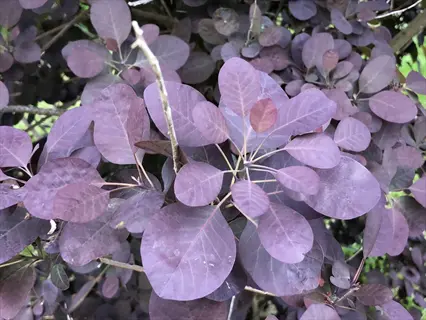
Royal Purple Smoke Tree
- Foliage: Deep purple-maroon leaves hold their rich color all season when grown in full sun, creating a bold contrast against green-leaved garden companions.
- Size: Reaches 10 to 15 feet (3 to 4.5 meters) tall and wide at maturity with a rounded, spreading growth habit that fills its space quickly.
- Plumes: Produces airy pinkish-purple flower plumes in summer that stand out dramatically against the dark foliage background.
- Hardiness: Thrives in USDA Zones 4 through 9 and tolerates a wide range of soil types including clay, loam, and sandy conditions.
- Fall Color: Leaves transition to scarlet-red in autumn before dropping, extending the ornamental season well into late October in most regions.
- Best Use: Works as a striking specimen plant, focal point in mixed borders, or as an informal privacy hedge in larger residential landscapes.
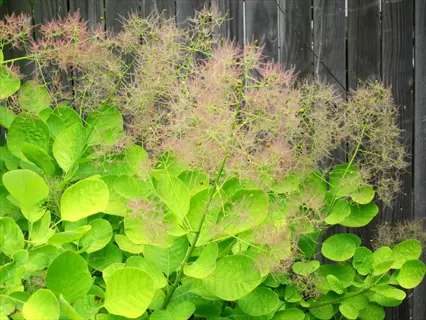
Golden Spirit Smoke Tree
- Foliage: Bright chartreuse-yellow leaves light up the garden, especially when backlit by afternoon sun, and are less prone to reverting than purple cultivars.
- Size: Grows 8 to 10 feet (2.4 to 3 meters) tall and wide, making it slightly more compact than the standard European species.
- Plumes: Produces pinkish flower plumes in early to midsummer that contrast beautifully with the golden-green foliage below.
- Hardiness: Hardy in USDA Zones 5 through 8 and naturally forms a denser habit that requires less corrective pruning than many other cultivars.
- Fall Color: Foliage shifts to coral, orange, and red tones in fall, providing a warm seasonal display that pairs well with ornamental grasses.
- Best Use: Ideal for brightening darker garden corners, adding contrast to purple-leaved plantings, or using as a standalone specimen in smaller yards.
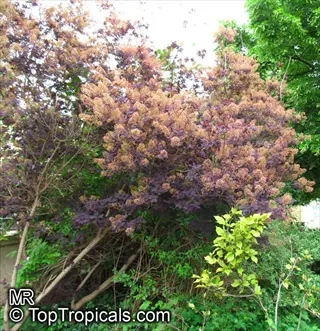
Grace Smoke Tree
- Foliage: Large, blue-green leaves with a purplish tinge emerge in spring and mature to soft green, providing a more subtle color palette than Royal Purple.
- Size: One of the largest cultivars, reaching 15 to 20 feet (4.5 to 6 meters) tall and wide, and is a hybrid between Cotinus coggygria and Cotinus obovatus.
- Plumes: Exceptionally large, showy pinkish-red flower plumes appear in summer and are among the most dramatic of any cultivar in the genus.
- Hardiness: Hardy in USDA Zones 4 through 8 with strong vigor inherited from the American smoke tree parent in this hybrid cross.
- Fall Color: Brilliant orange-red to scarlet autumn foliage rivals even the American species for seasonal color intensity and duration.
- Best Use: Best suited for large properties where it has room to spread, or trained as a single-trunk small tree for a more structured garden focal point.
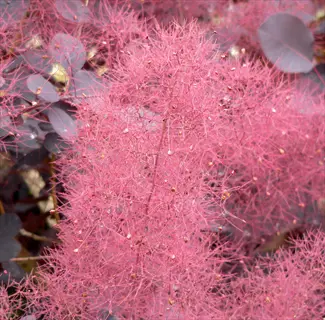
Velvet Cloak Smoke Tree
- Foliage: Rich dark purple leaves maintain their color well through summer, though not quite as intensely as Royal Purple in side-by-side comparison.
- Size: Grows 10 to 15 feet (3 to 4.5 meters) tall and wide with an upright, vase-shaped form that becomes more rounded with age.
- Plumes: Purple-tinged flower plumes appear in midsummer and complement the dark foliage for a cohesive, moody color scheme in the garden.
- Hardiness: Thrives in USDA Zones 4 through 8 and shows good cold tolerance, performing reliably in northern gardens with harsh winters.
- Fall Color: Leaves turn reddish-purple in autumn, giving a long season of dark-toned foliage before leaf drop in late fall.
- Best Use: Works well as a background plant in mixed borders or as a hedge where its upright form creates a dense, colorful screen.

Winecraft Black Smoke Tree
- Foliage: Near-black purple foliage emerges in spring and holds its dark, dramatic color throughout the growing season in full sun conditions.
- Size: A more compact cultivar reaching 4 to 6 feet (1.2 to 1.8 meters) tall and wide, making it one of the best choices for smaller garden spaces.
- Plumes: Produces fluffy pink flower plumes that create a striking contrast against the very dark leaves during the summer months.
- Hardiness: Hardy in USDA Zones 4 through 8 and bred by Proven Winners for improved garden performance and consistent retail availability.
- Fall Color: Foliage transitions to shades of red and orange in autumn before dropping, adding final seasonal interest to container and border plantings.
- Best Use: Perfect for container gardens, small patios, mixed borders, and foundation plantings where a full-sized smoke tree would overwhelm the space.
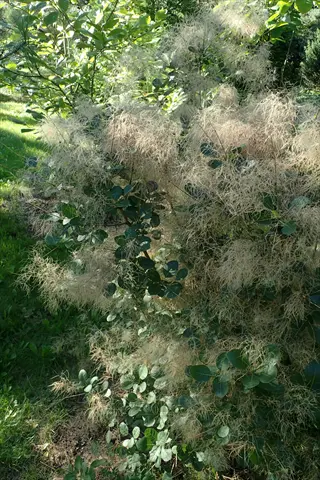
Young Lady Smoke Tree
- Foliage: Fresh green leaves provide a lighter, more traditional appearance compared to purple-leaved cultivars, blending easily into most garden palettes.
- Size: Compact grower reaching 6 to 10 feet (1.8 to 3 meters) tall and wide, filling the gap between dwarf varieties and full-sized species plants.
- Plumes: Notable for producing abundant pink flower plumes at a younger age than most cultivars, meaning less waiting time for the signature smoke effect.
- Hardiness: Hardy in USDA Zones 5 through 8 and performs well even in sites with moderate shade exposure compared to purple-leaved types.
- Fall Color: Leaves turn yellow to orange in autumn, offering a warm seasonal finish that pairs well with late-blooming perennials and ornamental grasses.
- Best Use: Excellent for gardeners who want reliable flowering without hard pruning trade-offs, and well suited for cottage-style or naturalistic garden designs.
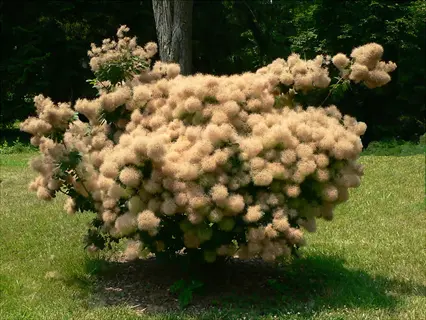
Daydream Smoke Tree
- Foliage: Blue-green leaves have a clean, fresh appearance through summer and form a naturally dense canopy without the need for frequent corrective pruning.
- Size: Reaches 10 to 15 feet (3 to 4.5 meters) tall and wide at maturity with a compact, rounded form that requires less space management than looser varieties.
- Plumes: Exceptionally heavy, fluffy green-to-pink flower plumes are denser and fuller than most cultivars, creating the strongest smoke-like visual effect.
- Hardiness: Hardy in USDA Zones 4 through 8 and listed by Virginia Cooperative Extension as one of the naturally denser cultivars requiring less pruning effort.
- Fall Color: Produces variable autumn color ranging from yellow and orange to purplish-red, depending on growing conditions and regional climate patterns.
- Best Use: Ideal for gardeners who prioritize the showiest plumes over colored foliage, and works beautifully in informal hedgerows and large mixed plantings.
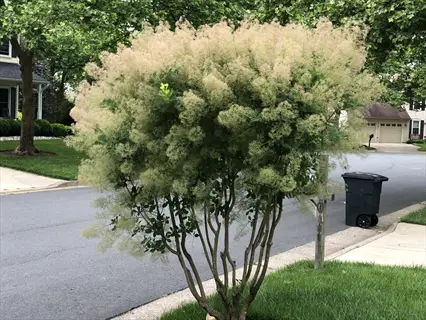
American Smoke Tree
- Foliage: Large, rounded blue-green leaves up to 5 inches (12.7 centimeters) long are bigger than any European cultivar and give the plant a bold, tropical feel.
- Size: The largest species in the genus, reaching about 25 feet (7.6 meters) tall at maturity, making it a true small tree rather than a large shrub.
- Plumes: Flower plumes are less showy than European varieties, but the overall canopy size and structure more than compensate in landscape presence.
- Hardiness: Native to the southeastern United States and hardy in USDA Zones 4 through 8, with excellent adaptability to rocky limestone soils.
- Fall Color: Widely regarded as having one of the most spectacular fall color displays of any native tree, with brilliant shades of orange, scarlet, and purple.
- Best Use: Prized by native plant enthusiasts and available primarily through mail-order nurseries, making it a special addition for gardeners seeking rare native species.
Your best pick depends on the space you have and the look you want. Royal Purple smoke tree and Velvet Cloak smoke tree give you that deep, moody purple look. Golden Spirit smoke tree and Daydream offer lighter foliage with heavier plume displays. The Grace smoke tree hybrid reaches the biggest size of the garden cultivars, while the American smoke tree tops them all at 25 feet.
Planting a Smoke Tree
Planting smoke tree the right way starts with good timing and the right spot. If you live in a cold zone like USDA Zone 4 or 5, plant in early spring after the last frost so roots get a full season to settle in. Gardeners in warmer areas like Zone 7 or 8 can plant in fall when cooler temps help roots grow without heat stress.
Pick a spot that gets full sun for at least 6 hours a day. Purple cultivars need every bit of that light or their leaves will fade to green. I made the mistake of planting a Royal Purple in a spot that got afternoon shade and the color was washed out all summer. You want well-drained soil above all else, but the good news is that the soil pH range runs from 3.7 to 6.8 based on Virginia Tech data. That gives you far more soil flexibility than most guides suggest.
When you're ready to dig, make the hole about twice as wide as the root ball but no deeper. Set the plant so the top of the root ball sits level with the ground. Fill in with the same soil you dug out and skip any amendments or fertilizer. Rich soil causes weak, leggy growth on these plants. The fibrous root system makes it easy to transplant. Don't stress about getting every detail of planting smoke tree perfect on day one.
After planting, spread 2 to 3 inches of mulch around the base but keep it a few inches back from the trunk. Water well that first week, then cut back to once a week for the rest of the first growing season. Your goal is to let the roots find their own water as fast as they can.
Zone 4 gardeners should add an extra layer of mulch in late fall to protect roots from deep freezes. If you garden in Zone 8 or warmer, watch for signs of root rot during humid summers. How to plant smoke tree the right way comes down to sun, drainage, and leaving the soil alone. Get those 3 things right and your plant will take off.
Smoke Tree Care Essentials
Smoke tree care gets easier once your plant makes it through that first growing season. This is one of the most low-maintenance shrubs you can grow. Virginia Cooperative Extension says there are no serious pest or disease problems to watch for. Every major source also agrees this plant is drought tolerant once the roots grab hold.
In spring, check for any dead or frost damaged branches and cut them out. This is also your window for hard pruning if you want denser foliage that year. I give my plants a light trim each March and it keeps them looking full without giving up too many blooms. Skip the fertilizer because fertilizing smoke tree plants causes leggy, weak stems that flop over. Poor soil is their sweet spot.
Summer is hands off. Your plant is drought tolerant and won't need watering smoke tree unless you go 3 or 4 weeks without rain. If your leaves start to curl or droop, give the base a deep soak and it will bounce back fast. Deer tend to leave these plants alone, so you won't need fencing. This is a true deer resistant shrub backed by data from NC State and Virginia Tech.
Fall brings the best color of the year. Let the leaves do their thing and drop on their own. I rake them up and use them as mulch around the base for a free layer of winter protection. Add 3 to 4 inches of mulch before the ground freezes if you garden in Zone 4 or 5.
Overwintering is simple in most zones. The plant goes dormant and handles cold just fine down to Zone 4. If you grow one in a container, move the pot to a sheltered spot before hard freezes hit. That's the full yearly calendar for smoke tree care and it shows why so many gardeners call this plant low-maintenance.
Pruning and Training
Pruning smoke tree is the single biggest care choice you'll make each year. As Virginia Tech puts it, smokebush puts out long, lanky stems that make the plant look straggly without management. I learned this the hard way when I skipped pruning for 2 years and ended up with a messy tangle. Hard pruning gives you bigger, bolder leaves but removes all the blooms on old wood for that season. Light pruning keeps the shape tidy and lets you enjoy the full smoke effect come summer.
The best time to think about when to prune smoke tree is late winter before new growth starts. I do all my cuts in late February or early March and it works great every year. You can choose between rejuvenation pruning, light shaping, or training into a tree form vs shrub form. Each approach has clear trade offs that the guide below lays out for you.
Pruning for Maximum Blooms
- Timing: Limit pruning to late winter or very early spring, removing only dead, damaged, or crossing branches while leaving healthy older stems intact for flower production.
- Method: Smoke tree flowers develop on old wood from previous seasons, so preserving two-year-old and older branches is essential for the signature billowy plume display.
- Result: Light annual pruning keeps the natural shape intact and produces the fullest smoke-like flower display each summer, though the overall shrub may appear somewhat open.
- Best For: Gardeners who prioritize the dramatic summer smoke effect and are willing to accept a slightly looser plant form in exchange for abundant flowering.
Hard Pruning for Dense Foliage
- Timing: Cut all stems back to 6 to 8 inches (15 to 20 centimeters) from the ground in late winter before new growth begins, while the plant is still fully dormant.
- Method: This rejuvenation technique, sometimes called coppicing or stooling, forces vigorous new growth with larger leaves and more intense foliage color throughout the season.
- Result: The plant regrows as a dense, bushy shrub with oversized colorful leaves, but will not produce any flower plumes that season since blooms only form on old wood.
- Best For: Gardeners growing purple or golden cultivars primarily for foliage color who value a compact, dense habit over the summer smoke effect.
Training Into Tree Form
- Timing: Begin training a young plant by selecting one strong central leader and removing all competing stems at ground level in late winter of the first or second year.
- Method: Continue removing lower side branches and any suckers from the base each year, gradually raising the canopy to the desired height over two to three growing seasons.
- Result: A single-trunk small tree with an attractive rounded canopy that works well as a focal point or patio tree, reaching 10 to 15 feet (3 to 4.5 meters) tall.
- Best For: Gardeners who want a small ornamental tree form for structured garden designs, patios, or areas where a shrubby growth habit would block views or pathways.
Low-Maintenance Cultivar Choice
- Strategy: Select cultivars that naturally grow dense and compact, reducing the need for frequent corrective pruning to maintain an attractive, full appearance.
- Recommended Varieties: Virginia Cooperative Extension specifically identifies Daydream, Golden Spirit, and Royal Purple as cultivars that form denser habits with less management effort.
- Ongoing Care: Even low-maintenance cultivars benefit from annual removal of dead or damaged wood and occasional thinning of crowded interior branches to improve air circulation.
- Best For: Busy gardeners or those planting smoke trees in low-maintenance landscape areas where regular pruning is not practical or desirable.
I use hard pruning on my Royal Purple each year to get those huge, dark leaves. On my Daydream I leave the old wood alone so I get the best plume show every summer. You can mix both methods in the same garden to get the best of each world.
Landscape Design Ideas
A smoke tree in landscape settings does serious work as a focal point, privacy screen, or border anchor. The blue green leaves grow up to 3 inches long per Missouri Botanical Garden data. Fall colors range from yellow to orange to red. That mix of color means this plant fits into almost any garden style you have in mind.
I've used smoke trees as a specimen plant in my lawn and as a mixed border backdrop. I even grew one in a large container on my patio for 2 seasons. The trick is matching the right cultivar to the right spot. Pair each planting with smart companion plants and your design comes together fast.
Specimen Focal Point
- Placement: Position a single smoke tree in an open lawn area or at the intersection of garden paths where its billowy plumes and colorful foliage can be appreciated from multiple angles.
- Companion Plants: Underplant with low-growing perennials like yarrow, catmint, or ornamental grasses that complement without competing for visual attention during the summer display.
- Design Tip: Backlit foliage creates an especially dramatic effect, so consider placing purple or golden cultivars where afternoon sun passes through the leaves from behind.
Mixed Border Planting
- Placement: Use smoke tree as a tall background anchor in perennial borders, placing it behind mid-height plants like black-eyed Susans, Russian sage, and helenium for layered color.
- Companion Plants: Purple smoke tree varieties pair strikingly with gold and chartreuse foliage plants, while green-leaved types blend well with bold-flowered companions like hydrangeas.
- Design Tip: Plant at least 8 to 10 feet (2.4 to 3 meters) from the border edge to allow the spreading canopy to fill in without overwhelming neighboring perennials.
Privacy Screen or Hedge
- Placement: Space plants 6 to 8 feet (1.8 to 2.4 meters) apart for an informal hedge that fills in within two to three growing seasons while maintaining a natural, billowy appearance.
- Companion Plants: Interplant with ninebark or spirea for additional screening density at different heights, creating a layered privacy barrier with multi-season interest.
- Design Tip: Choose naturally dense cultivars like Daydream or Royal Purple that require less corrective pruning to maintain a full screening effect throughout the growing season.
Container Growing
- Placement: Select compact cultivars like Winecraft Black for containers at least 18 to 24 inches (45 to 60 centimeters) in diameter with drainage holes, placed in full sun on patios or decks.
- Winter Care: In zones colder than Zone 6, move containers to a sheltered garage or unheated shed before the first hard freeze to protect roots from repeated freeze-thaw cycles.
- Design Tip: Repot into a container 2 to 4 inches (5 to 10 centimeters) larger than the root ball every two to three years, and use well-draining potting mix to prevent root rot.
Slope and Erosion Control
- Placement: Plant smoke trees on dry, rocky slopes or hillsides where their fibrous root systems help stabilize soil and their drought tolerance means minimal irrigation after establishment.
- Companion Plants: Combine with other drought-tolerant slope plants like tickseed, ornamental grasses, and creeping junipers for complete ground coverage and reduced maintenance.
- Design Tip: Space plants 10 to 12 feet (3 to 3.6 meters) apart on slopes to allow canopies to knit together over time while giving roots room to spread and anchor the soil.
Container gardening with a compact cultivar is a great way to enjoy this plant. You get the foliage color, the plumes, and the fall show right on your patio. For erosion control on slopes, the fibrous roots and drought tolerance make this an ideal low care choice that most guides skip.
History and Ethnobotany
Most guides skip the smoke tree history, but this plant has roots in human culture that go back over 1,000 years. Long before anyone grew it for curb appeal, people across Europe and Asia prized it as a dye plant. The wood makes a rich yellow dye that colored fabric and leather for centuries. I find that knowing this backstory changes how you look at one growing in your garden.
One of the best examples sits in Mount Athos, Greece. Researchers found smoke tree dye in old church garments made over a thousand years ago. They found the same dye in Romanian textiles and in Chinese Dunhuang cave fabrics. Textiles on 2 different continents used the same plant as a dye source. That tells you just how valued this species was in the ethnobotany of world cultures.
The tannin content in the leaves hits 18% to 20% when the plant flowers. That high tannin level made the plant great for both dyeing and leather work across the region. Traders in Venice sold dried leaves and wood as a tanning agent. That gave the plant the common name Venetian sumach. These traditional uses made the smoke tree a cash crop before anyone grew it as a garden shrub.
Folk healers used this dye plant for wounds, liver care, skin issues, and fever. That was true in Romania, Bulgaria, Serbia, Turkey, and China. A 2021 study in Frontiers in Pharmacology found over 300 compounds in the plant. Many of those compounds line up with the claims of medicinal herbs traditions. Modern science now backs up what healers knew for ages.
Knowing this history adds a deeper layer to growing one in your own yard. You're not just planting a pretty shrub. You're growing a plant that colored garments and healed wounds across dozens of cultures for over 1,000 years.
5 Common Myths
Smoke trees need rich, fertile soil and regular fertilizing to produce their best foliage and flower plumes.
Smoke trees actually prefer somewhat infertile, well-drained soils and excessive fertilizer promotes weak, leggy growth rather than better blooms.
All smoke tree varieties stay compact and rarely exceed 5 feet (1.5 meters) in height or spread.
European smoke trees grow 10 to 15 feet (3 to 4.5 meters) tall and wide, while the American species can reach about 25 feet (7.6 meters) tall.
You cannot prune a smoke tree hard because it will kill the plant or prevent it from ever flowering again.
Smoke trees tolerate hard pruning down to 6 to 8 inches (15 to 20 centimeters) from the ground and will regrow vigorously, though blooms appear only on old wood.
Purple-leaved smoke tree varieties keep their deep color regardless of where you plant them in the garden.
Purple varieties like Royal Purple will revert to green foliage when grown in shade, and they need full sun to maintain their rich color throughout the season.
Smoke trees are completely safe to handle with bare hands because they are just ordinary garden shrubs.
Smoke tree sap contains urushiol, the same irritant found in poison ivy, and can cause contact dermatitis especially in people sensitive to poison ivy.
Conclusion
The right smoke tree turns your garden into a three season showpiece with very little effort from you. Pick a cultivar that fits your space and matches the color you want. Royal Purple and Velvet Cloak give you deep, moody tones. Golden Spirit and Daydream bring lighter foliage with bigger plumes. This Cotinus coggygria species and its smoke bush cousins are tough enough for almost any yard.
Once your ornamental shrub gets through that first growing season, the work drops to almost nothing. The Missouri Botanical Garden calls this plant tough, drought tolerant, and able to handle a wide range of soils and pH levels. You won't need to fuss with fertilizer or pest sprays. Just decide between hard pruning for bold foliage or light pruning for those famous smoke plumes. That one choice shapes your plant more than anything else you do all year.
Don't forget the safety side that most guides leave out. Smoke tree sap contains urushiol, so grab your gloves before you prune. And if you love the idea of native plants, look into the American smoke tree through mail order nurseries. It's gaining fans fast among native plant gardeners for its huge size and stunning fall color.
I've grown these plants for years now and they keep getting better with age. Few plants match the summer plume display and the fall fireworks that a smoke tree gives you. Add in centuries of cultural heritage and you've got something special in your yard. Plant one this season and watch it become the best feature in your landscape design for years to come.
External Sources
Frequently Asked Questions
What is a smoke tree good for?
Smoke trees serve as striking ornamental specimen plants valued for their billowy, smoke-like flower plumes and vibrant fall foliage, while also providing erosion control on slopes and privacy screening in landscapes.
Is a smoke tree toxic?
Smoke tree sap contains urushiol, the same compound found in poison ivy, and can cause contact dermatitis in sensitive individuals, though the poison severity is classified as low.
Where is the best place to plant a smoke tree?
Plant a smoke tree in a location with full sun and well-drained soil, as shade causes lanky growth and purple varieties may revert to green without adequate sunlight.
What is another name for a smoke tree?
Common alternative names include smokebush, wig tree, Venetian sumach, and dyer's sumach, with the botanical names Cotinus coggygria and Cotinus obovatus.
Why is it called a smoke tree?
The name comes from the billowy, hair-like structures on spent flower clusters that create a hazy, smoke-like cloud surrounding the plant throughout summer.
Is smokebush easy to grow?
Smokebush is very easy to grow once established, thriving in poor soils, tolerating drought, resisting deer, and requiring minimal fertilizer or pest management.
What problems does Smokebush have?
The most common problems include verticillium wilt, powdery mildew, lanky growth in shade, and purple leaf varieties reverting to green without full sun exposure.
How tall do smoke trees grow?
European smoke trees (Cotinus coggygria) typically reach 10 to 15 feet (3 to 4.5 meters) tall, while the American species (Cotinus obovatus) can grow to about 25 feet (7.6 meters).
Can you take a cutting from a smoke tree?
Yes, smoke trees can be propagated from both softwood cuttings taken in early summer and semi-hardwood cuttings taken in late summer, using rooting hormone to improve success rates.
Can I cut back a Smoke Bush?
Yes, smoke bushes respond well to hard pruning in late winter or early spring, cutting stems back to 6 to 8 inches (15 to 20 centimeters) from the ground for rejuvenation.