
Introduction
The serviceberry tree might be the most useful plant you've never heard of. This native tree goes by Amelanchier in the science world and Juneberry in many backyards. It grows white blooms in spring, sweet berries in summer, red leaves in fall, and smooth bark in winter. Blueberries get all the fame. But serviceberry beats them in almost every way that counts.
I planted my first serviceberry over 8 years ago on a whim. That single tree now feeds my family and draws birds from all over the area. USDA Forest Service data shows that at least 40 bird species eat this fruit. Dozens of mammal species count on it too. No other small tree in my garden pulls that kind of weight.
Most people don't know that edible serviceberry fruit packs a real nutritional punch. A study in the journal Molecules found it has 86 times more riboflavin than blueberries. It also has 3.6 times more vitamin A. Those numbers shocked me when I first read them. This tree doesn't just look good. It gives you one of the most nutrient dense berries you can grow at home.
This guide covers the best varieties for your yard, planting tips, and nutrition facts. You'll also find wildlife value and kitchen recipes. Whether you want a native tree for pollinators or a fruit source for your table, serviceberry checks every box.
8 Best Serviceberry Varieties
The genus Amelanchier has about 30 species with all but 2 native to North America. That gives you plenty of serviceberry varieties to choose from. NC State Extension puts the USDA Hardiness range at Zones 4a through 9b for the most common species. So most gardeners in the country can find a type that fits their yard.
I've grown 4 different types of serviceberry over the years. Some are best for fruit, some for looks, and some for tight spaces. The best serviceberry cultivar for you depends on your yard size and goals. Do you want berries to eat or blooms to enjoy? Here are 8 picks that cover every need.

Autumn Brilliance Serviceberry
- Botanical Name: Amelanchier x grandiflora 'Autumn Brilliance' is a hybrid cross between A. arborea and A. laevis, growing 15 to 25 feet (4.5 to 7.6 meters) tall with a 15-foot (4.5-meter) spread.
- Best Feature: Exceptional orange-red fall foliage that rivals sugar maples, combined with heavy fruit production on a single-trunk form that fits neatly into smaller residential landscapes.
- Growing Zones: Thrives in USDA Hardiness Zones 4 through 8, tolerates clay soil and partial shade, and shows improved resistance to leaf spot compared to other hybrid cultivars.
- Fruit Quality: Produces abundant sweet berries in June that ripen evenly across the canopy, making it one of the most reliable cultivars for edible harvest in home gardens.
- Landscape Use: Works as a specimen tree, patio accent, or street tree because its upright oval canopy stays compact and its roots remain non-invasive near foundations and walkways.
- Maintenance Notes: Requires minimal pruning beyond removing any suckers at the base, and occasional thinning of interior branches improves air circulation to reduce fungal disease risk.
Downy Serviceberry
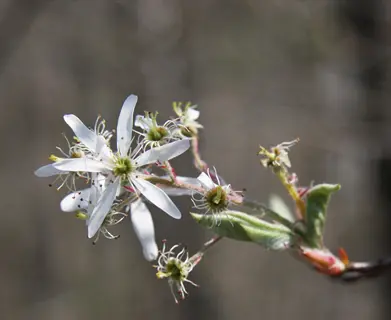
- Botanical Name: Amelanchier arborea is the most common native species, reaching 15 to 25 feet (4.5 to 7.6 meters) tall with a spread of 10 to 15 feet (3 to 4.5 meters) in landscape settings.
- Best Feature: The earliest serviceberry to bloom in spring, with clusters of white star-shaped flowers that appear before the leaves unfurl, giving the tree an ethereal cloud-like appearance.
- Growing Zones: Grows in USDA Hardiness Zones 4a through 9b, making it the most adaptable species that handles everything from cold northern winters to mild southern climates.
- Fruit Quality: Sweet blueberry-like fruit ripens in June, with NC State Extension noting a taste similar to highbush blueberry but slightly sweeter and rich in iron and copper.
- Landscape Use: Excellent as an understory tree, woodland-edge planting, or rain garden specimen because it tolerates wet soil, shade, and alkaline conditions without issue.
- Maintenance Notes: Self-fruitful and low-maintenance with a slow growth rate, though it can form multi-stemmed clumps unless trained to a single leader while young.
Saskatoon Serviceberry
- Botanical Name: Amelanchier alnifolia is a western North American native that grows 6 to 15 feet (1.8 to 4.5 meters) tall as a dense multi-stemmed shrub rather than a single-trunk tree.
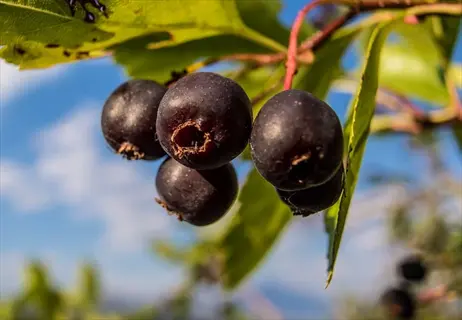
- Best Feature: Produces the largest and sweetest fruit of any Amelanchier species, making it the top choice for gardeners who prioritize edible harvest over ornamental shape.
- Growing Zones: Hardy in USDA Zones 2 through 7, handling extreme cold that eliminates other serviceberry species, and widely grown commercially in the Canadian prairies for fruit production.
- Fruit Quality: Peer-reviewed research in Molecules journal reports A. alnifolia fruit contains 562 milligrams of anthocyanins per 3.5 ounces (100 grams), significantly higher than raspberries or strawberries.
- Landscape Use: Works well as a privacy hedge, wildlife border, or orchard-style planting because its suckering habit fills in gaps quickly to form a dense, productive screen.
- Maintenance Notes: Suckering growth requires annual removal of unwanted shoots to keep the plant within bounds, and it performs best in full sun with well-drained soil.
Canadian Serviceberry
- Botanical Name: Amelanchier canadensis naturally grows as a large multi-stemmed shrub reaching 6 to 20 feet (1.8 to 6 meters) tall, native to the eastern United States and Canada.
- Best Feature: Outstanding adaptability to wet and swampy soils that most other trees refuse to grow in, making it the go-to choice for rain gardens, stream banks, and low-lying landscapes.
- Growing Zones: Performs well in USDA Zones 3 through 7, and University of Wisconsin-Madison Extension notes it is one of the five key species in the genus for home landscapes.
- Fruit Quality: Produces sweet dark purple berries that ripen in June, comparable in flavor to downy serviceberry, and the compact suckering form makes netting for bird protection easier.
- Landscape Use: Ideal for naturalizing wet areas, erosion control on slopes, or creating dense wildlife thickets because its root system stabilizes soil while its fruit attracts birds and mammals.
- Maintenance Notes: Spreads readily by root suckers so it works best in informal or naturalized settings where a clump form is desirable rather than a tidy single-trunk specimen.
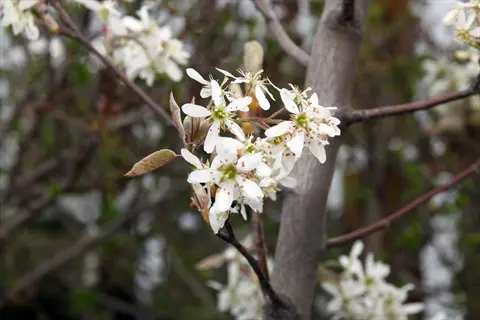
Apple Serviceberry
- Botanical Name: Amelanchier x grandiflora is a natural hybrid between A. arborea and A. laevis, typically reaching 15 to 25 feet (4.5 to 7.6 meters) tall with a graceful spreading canopy.
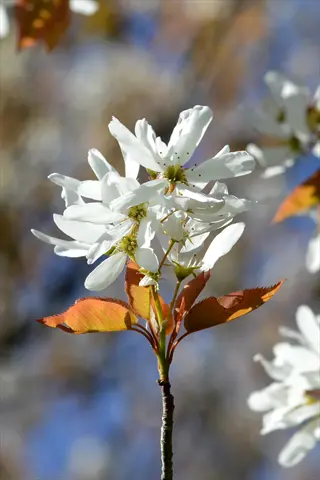
- Best Feature: The largest flowers of any serviceberry species, with individual white blossoms up to 1 inch (2.5 centimeters) across that create a showier spring display than either parent species.
- Growing Zones: Grows in USDA Zones 4 through 8, and its hybrid vigor gives it better overall disease tolerance and more consistent fruiting than pure A. arborea in many regions.
- Fruit Quality: Sweet purple-black fruit ripens in early summer with a mild almond-like flavor, and the hybrid produces berries more consistently than some pure species in variable weather years.
- Landscape Use: An excellent specimen tree for front yards, patios, or park plantings because its open vase-shaped canopy provides light shade while allowing underplanting with perennials.
- Maintenance Notes: Benefits from selective pruning every two to three years to maintain an open canopy shape, and removing water sprouts promptly helps prevent overcrowding of interior branches.
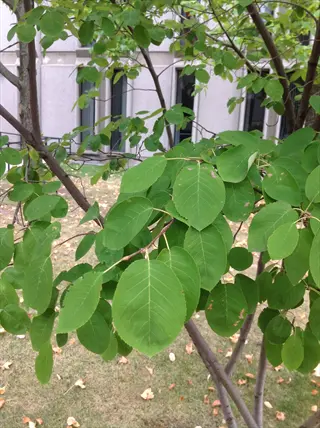
Allegheny Serviceberry
- Botanical Name: Amelanchier laevis grows 15 to 40 feet (4.5 to 12 meters) tall with smooth gray bark and bronze-purple new leaves that make it one of the most ornamental species in the genus.
- Best Feature: Young leaves emerge with a striking bronze-purple color that gradually transitions to dark green, creating a two-tone spring display that pairs beautifully with white flower clusters.
- Growing Zones: Thrives in USDA Zones 4 through 8, performing especially well in the northeast and mid-Atlantic states where cool spring weather extends its flowering period to two weeks or more.
- Fruit Quality: Dark purple-black berries are among the sweetest in the genus, and the tall canopy means fruit hangs at picking height on lower branches while upper fruit feeds birds.
- Landscape Use: Best used as a tall specimen or shade tree in larger properties because it reaches heights that dwarf most other serviceberry species and provides true canopy coverage.
- Maintenance Notes: Smooth bark adds winter interest but can be damaged by string trimmers, so maintain a mulch ring around the base to protect the trunk and reduce competition from grass.

Robin Hill Serviceberry
- Botanical Name: Amelanchier x grandiflora 'Robin Hill' is a compact hybrid cultivar that reaches 15 to 20 feet (4.5 to 6 meters) tall with a narrow upright form ideal for tight spaces.
- Best Feature: Flower buds open pink and gradually fade to white over several days, making Robin Hill the only widely available serviceberry cultivar with pink-tinged spring blossoms.
- Growing Zones: Performs well in USDA Zones 4 through 8, and its upright columnar habit means it needs less lateral space than spreading cultivars like Autumn Brilliance or Allegheny serviceberry.
- Fruit Quality: Produces moderate berry crops that are sweet and suitable for fresh eating, though fruit yield is somewhat lighter than Saskatoon or Autumn Brilliance cultivars.
- Landscape Use: Perfect for narrow side yards, driveway borders, or street plantings where a slender canopy is needed because its upright form fits in spaces as narrow as 8 feet (2.4 meters).
- Maintenance Notes: Minimal pruning needed beyond removing crossing branches, and its compact form naturally resists wind damage better than wider-canopied serviceberry cultivars.

Regent Serviceberry
- Botanical Name: Amelanchier alnifolia 'Regent' is a compact cultivar of Saskatoon serviceberry that stays 4 to 6 feet (1.2 to 1.8 meters) tall, making it the smallest widely available selection.
- Best Feature: Heavy fruit production on a dwarf shrub form means you get full-sized sweet berries from a plant small enough to grow in containers, raised beds, or tiny urban plots.
- Growing Zones: Hardy in USDA Zones 2 through 7, inheriting the extreme cold tolerance of its parent species while maintaining a manageable size for foundation plantings and mixed borders.
- Fruit Quality: Large sweet berries ripen uniformly in June, and the compact shrub form makes harvesting easy without a ladder, a key advantage over tall tree-form serviceberries.
- Landscape Use: Excellent for edible hedges, container gardening on patios, or front-yard foundation plantings where a full-sized tree would overwhelm the space and block windows.
- Maintenance Notes: Suckering can be managed by removing root shoots annually, and a light annual trim after fruiting keeps the plant dense and productive for the following season.
Your best pick depends on your space and goals. Want fruit? Go with Saskatoon or Regent. Need a showpiece tree? Try Autumn Brilliance serviceberry for its red fall leaves. Canadian serviceberry works great in wet areas. Tight on space? Robin Hill fits in spots as narrow as 8 feet.
Planting and Soil Setup
Getting your serviceberry planting right from the start saves you years of trouble down the road. I've put over a dozen of these trees in the ground and learned what works best through trial and error. NC State Extension says this tree handles clay soil, alkaline ground, and air pollution. That makes it one of the easiest native trees to plant in most yards.
If you want to know where to plant serviceberry, pick a spot with full sun to part shade. USDA Zones 4a through 9b give most people in the country a green light. Serviceberry soil requirements won't stress you out. Aim for a pH between 5.5 and 7.0. Make sure the ground drains well after a hard rain. Seeds need 2 to 6 months of cold treatment and often won't sprout until the second spring. Stick with nursery stock unless you enjoy the long wait.
When to Plant
- Best Timing: Plant your serviceberry in early spring before buds break or in late fall after leaves drop, while the tree sits in full dormancy for the strongest root growth.
- Spring Window: Get your tree in the ground as soon as you can work the soil in March or April, so roots settle in before summer heat arrives and stresses new growth.
- Fall Advantage: Fall planting gives roots several cool months to spread before the first growing season, and you'll see faster top growth the next spring compared to spring planting.
Where to Plant
- Sunlight Needs: Full sun produces the most blooms and fruit, but serviceberry handles part shade with ease since it grows as an understory tree in the wild.
- Urban Tolerance: NC State Extension confirms tolerance for air pollution, clay soil, and alkaline ground, so you can plant serviceberry along streets and driveways without worry.
- Drainage Check: Serviceberry handles wet soil better than most fruit trees, but standing water for days at a time will rot the roots. Pick a spot that drains after rain.
Soil Preparation
- Ideal pH Range: Aim for a slightly acidic to neutral pH between 5.5 and 7.0 for the best nutrient uptake and root health in your serviceberry planting site.
- Clay Soil Fix: Mix 3 to 4 inches of compost into your planting hole if you have heavy clay, which opens up drainage while adding nutrients the roots will use right away.
- Mulch Layer: Spread 2 to 3 inches of wood chip mulch around the base after planting to hold moisture, cool the roots, and keep grass from stealing water and food.
Spacing Requirements
- Standard Trees: NC State Extension suggests 12 to 24 feet of serviceberry spacing between full-sized species like downy or Allegheny to give each tree room to spread its canopy.
- Compact Cultivars: Smaller picks like Regent or Robin Hill need just 6 to 10 feet between plants, which lets you fit more into a hedge row or border planting.
- Foundation Rule: Keep your tree at least 10 to 12 feet from the house. Serviceberry has non-invasive roots so you can plant closer than most other fruit trees.
Bare Root vs Container
- Bare Root Pros: Bare root serviceberry costs less and often grows roots faster when you plant during dormancy, since the roots contact soil right away without a pot-bound tangle.
- Container Pros: Container stock gives you a wider planting window from spring through early fall and lets you see the shape of the tree before you buy it at the nursery.
- Best Choice: Go bare root if you can plant in early spring or late fall. Pick container stock if you missed the dormant window or want to plant in summer.
Serviceberry Nutrition Facts
Most people think blueberries own the top spot for berry nutrition. I thought so too until I tested both berries from my own trees. A 2025 study in Molecules backed up what I noticed. The serviceberry vs blueberry matchup isn't even close. When you look at serviceberry nutrition, it wins in almost every area.
Serviceberry anthocyanins clock in at 562 mg per 3.5 ounces. That beats raspberries and crushes strawberries. The serviceberry health benefits stack up fast from there. You get 86 times more riboflavin than you find in blueberries. The serviceberry vitamins don't stop there. You get 3.6 times more vitamin A and twice the vitamin E. Lutein levels run up to 12 times higher than blueberries, which is great for your eyes.
The serviceberry antioxidants also do real work in your body. Research shows they block COX-2 at 72%, which is close to aspirin. The fruit peels hold about 17 times more flavonoids than the pulp inside. So eat the whole berry and skip the juicer. Freezing keeps most of these good things intact. But cooking or canning cuts the value by about half.
The one downside? Serviceberry has about 49% more calories per cup than blueberries. But the added nutrients more than make up for it in my book.
Pests and Disease Solutions
Some guides claim serviceberry has no serious pest or disease issues. That's not the full picture. NC State Extension lists 6 diseases and 8 insect pests that can hit this tree. I've dealt with a few of them myself over the years. The good news is that most serviceberry diseases only show up when growing conditions go wrong.
Cedar apple rust serviceberry is the most common issue I see in my area. Fire blight serviceberry problems tend to pop up in humid weather. Powdery mildew serviceberry issues often start when air can't flow through the branches. Your serviceberry disease treatment plan starts with the right diagnosis. Below you'll find each problem, the signs to look for, and what to do about it right away.
After years of growing these trees, I know that preventing serviceberry pests and diseases beats fixing them. Pick a disease resistant cultivar for your area. Give your tree enough space for air to move through the branches. These 2 steps alone will keep most problems from ever starting.
Wildlife and Ecological Value
If you want a bird-friendly garden, serviceberry is one of the best trees you can plant. I counted 12 different bird species on my tree in a single June morning last year. USDA data backs that up. At least 40 bird species feed on serviceberry fruit. The serviceberry wildlife value goes far beyond birds though.
This tree is also a butterfly host plant for both the Red-spotted Purple and the Viceroy. That means the caterpillars feed on the leaves before they turn into adults. You won't find that role filled by most other yard trees. Your native plant garden gets a big boost from this tree. Serviceberry pollinators find food here when few other plants bloom in early spring.
Songbirds and Game Birds
- Species Count: USDA Forest Service data confirms that at least 40 bird species eat serviceberry fruit, including cedar waxwings, robins, bluebirds, thrushes, and catbirds that rely on the June-ripening berries.
- Feeding Behavior: Birds often strip ripe berries within days of full color change, which is why gardeners who want to harvest fruit for themselves should use lightweight bird netting starting when berries turn from green to red.
- Seed Dispersal: Bird ingestion is a critical scarification process that helps serviceberry seeds germinate in new locations, meaning a single tree can naturally seed new plants throughout surrounding woodland edges.
Butterflies and Pollinators
- Host Plant Role: NC State Extension documents that serviceberry serves as a larval host plant for Red-spotted Purple and Viceroy butterflies, providing essential caterpillar food that these species cannot find on non-native alternatives.
- Spring Pollination: Early white flowers bloom in April and May before most other landscape plants, giving native bees, honeybees, and early-season butterflies a critical nectar source when few other options exist.
- Pollinator Garden Value: Because serviceberry is self-fruitful and blooms early, it anchors the start of a season-long pollinator timeline when paired with summer and fall bloomers like coneflower and goldenrod.
Mammals and Small Wildlife
- Mammal Use: Several dozen mammal species including black bears, foxes, squirrels, chipmunks, and rabbits feed on serviceberry fruit, bark, or browse according to USDA Forest Service documentation.
- Habitat Structure: Multi-stemmed serviceberry forms provide dense thicket cover that shelters nesting birds, small mammals, and overwintering insects from predators and harsh weather conditions.
- Food Web Position: As a late successional to climax species in mixed-hardwood forests, serviceberry fills an understory niche that connects ground-level organisms with canopy-dwelling wildlife through its fruit and foliage.
Ecological Resilience
- Fire Recovery: USDA Forest Service notes that serviceberry is top-killed by fire but resprouts vigorously from root crowns and stumps, making it an important recovery species that stabilizes soil after disturbance events.
- Erosion Control: NC State Extension rates serviceberry as resistant to erosion and wet soil, which means planting it on slopes, stream banks, and rain gardens helps prevent soil loss while building wildlife habitat.
- Native Plant Networks: Natural associates include sugar maple, white oak, lowbush blueberry, and witch hazel, and planting these companions alongside serviceberry creates a multi-layered native habitat corridor.
Pair your serviceberry with sugar maple, white oak, and witch hazel to build a full native plant garden. These are the trees that grow with serviceberry in the wild. They create a full habitat that draws serviceberry birds and other wildlife all year.
Harvesting and Culinary Uses
Harvesting serviceberry is one of the best parts of growing this tree. I wait for it every June like a kid on a birthday. Your serviceberry fruit will ripen from June through August based on where you live. Each berry holds 4 to 10 tiny seeds that you won't even notice when you eat them fresh. Start checking your tree when the berries shift from green to red. They're ready once they turn deep purple and feel soft.
Freezing serviceberry is the best way to keep your harvest for later use. I tested this myself and the frozen berries taste just as good 6 months later. Research shows freezing holds on to most of the good nutrients. Cooking and canning cuts the antioxidant value by about 50% though. So if you care about the health perks, fresh eating and freezing beat jars of serviceberry jam. That said, a good serviceberry pie is worth every lost nutrient.
Fresh Eating and Snacking
- Ripeness Signal: Berries are ready to pick when they turn from red to deep purple-black and feel slightly soft, usually in June through August depending on your region and species.
- Flavor Profile: NC State Extension describes the taste as similar to highbush blueberry but slightly sweeter, with a subtle almond or nutty undertone that distinguishes them from other backyard berries.
- Harvesting Method: Shake branches with a soft touch over a clean sheet or tarp to catch ripe berries that fall with ease, then sort and remove any stems, leaves, or underripe red berries before eating.
Freezing for Long-Term Storage
- Nutritional Advantage: Peer-reviewed research confirms that freezing serviceberries preserves their antioxidant content with only a slight decrease, making it the best preservation method for retaining health benefits.
- Freezing Steps: Spread washed and dried berries in a single layer on a baking sheet, freeze for two hours, then transfer to airtight freezer bags where they keep their quality for up to twelve months.
- Best Uses After Freezing: Frozen serviceberries go straight into smoothies, baked goods, and sauces without thawing, and their texture holds up better than thawed blueberries in muffin and pancake batters.
Baking and Cooking Ideas
- Blueberry Substitute: Use serviceberries as a one-to-one replacement for blueberries in any recipe including pies, cobblers, muffins, pancakes, and crisps for a nuttier and slightly sweeter result.
- Pie Filling Ratio: Combine 4 cups of fresh serviceberries with half a cup of sugar, 2 tablespoons of cornstarch, and a squeeze of lemon juice for a simple filling that works in any standard pie crust.
- Flavor Pairings: Serviceberry pairs great with lemon zest, cinnamon, vanilla, almond extract, and stone fruits like peaches because its mild nutty sweetness goes well with both citrus and warm spice profiles.
Jams, Syrups, and Preserves
- Pasteurization Warning: Peer-reviewed research shows that pasteurization reduces anthocyanins by about 50%, so low-sugar refrigerator jams or freezer jams preserve more nutritional value than traditional canning.
- Simple Jam Method: Simmer 4 cups of serviceberries with 1 cup of sugar and 2 tablespoons of lemon juice for 20 minutes, mash to your preferred texture, and store in the refrigerator for up to three weeks.
- Syrup and Wine: Serviceberry syrup made by straining cooked berries through cheesecloth produces a deep purple liquid perfect for pancakes or cocktails, and the fruit has a long history of use in homemade wine and fruit leather.
Storing serviceberry is simple once you get the hang of it. Your fresh berries last about a week in the fridge. Frozen ones hold up for 12 months in sealed bags. I freeze most of my harvest and use them all winter for serviceberry recipes. You can toss them into muffins, smoothies, or pancakes right from the freezer.
5 Common Myths
Serviceberry seeds and fruit contain dangerous levels of cyanide that make them unsafe to eat raw.
Serviceberry fruit has less than 2 milligrams of hydrogen cyanide per 3.5 ounces (100 grams), well below the 5 milligram safety threshold, making it safe to eat fresh.
You need to plant two serviceberry trees for cross-pollination or you will not get any fruit at all.
Serviceberry is self-fruitful and does not require a separate pollenizer tree, so a single tree can produce a full crop of berries on its own.
Serviceberry trees grow quickly and can become invasive in a backyard landscape within a few years.
Serviceberry has a slow growth rate with non-invasive roots, and it naturally fits into woodland-edge and understory positions without overtaking other plants.
Blueberries are far more nutritious than serviceberries and there is no real health reason to choose serviceberry fruit.
Peer-reviewed research shows serviceberry fruit contains 86 times more riboflavin, 3.6 times more vitamin A, and significantly more anthocyanins than blueberries.
Serviceberry trees have no serious pest or disease problems and never need any treatment or monitoring.
While generally low-maintenance, serviceberry can suffer from cedar apple rust, fire blight, powdery mildew, and insect pests like aphids and spider mites that may require attention.
Conclusion
The serviceberry tree checks every box a home gardener could ask for. You get a four-season tree with spring blooms, summer fruit, fall color, and winter bark. Edible serviceberry fruit beats blueberries in key vitamins by a wide margin. It packs 86 times more vitamin B2 and 3.6 times more vitamin A. And at least 40 bird species show up to share the harvest with you each year.
I've grown Amelanchier in my yard for years now and the tree gives back more with each season. The fruit crops get bigger. The fall reds get deeper. The bird life grows richer. This native tree asks for almost nothing in return. No fussy soil. No constant pruning. No chemicals to keep it alive. It just does its thing year after year.
Your next step depends on where you are in the process. Pick a variety from the list above that fits your yard size. Follow the planting guide to get it in the ground at the right time. Then try your first serviceberry fruit recipe once June rolls around. Each step brings you closer to a tree that feeds your family and fills your yard with life and color all year.
Few trees give you beauty, food, and wildlife support in one package. The serviceberry tree does all 3 with ease. Plant one this season and you'll wonder why you didn't start sooner.
External Sources
Frequently Asked Questions
What are the downsides of serviceberry?
The main downsides include susceptibility to cedar apple rust, fruit drop that can stain walkways, competition with birds for ripe berries, and suckering growth in some species that requires routine pruning.
Can humans eat serviceberries?
Yes, serviceberries are completely safe and edible for humans, with a sweet flavor similar to blueberries but slightly nuttier, and they can be eaten fresh or used in baked goods, jams, and smoothies.
What is another name for a serviceberry?
Serviceberry goes by many common names including Juneberry, shadbush, shadblow, saskatoon, sugarplum, and shadwood, depending on the region and the specific species.
Where is the best place to plant a serviceberry tree?
The best place is a spot with full sun to partial shade, well-drained or slightly acidic soil, and enough room for the mature spread of 10 to 15 feet (3 to 4.5 meters).
Is it hard to grow serviceberry?
Serviceberry is one of the easiest native trees to grow because it tolerates clay soil, alkaline conditions, air pollution, and wet ground while requiring very little ongoing maintenance.
Can you plant serviceberry close to a house?
Yes, serviceberry has non-invasive roots and a compact canopy, making it safe to plant within 10 to 12 feet (3 to 3.7 meters) of a house foundation.
Why is it called a serviceberry?
The name likely dates to early colonial America when the trees bloomed around the time the frozen ground thawed enough for funeral services, though the earliest recorded English use of the word traces to 1578.
What are the benefits of serviceberry?
Benefits include edible fruit with 86 times more riboflavin than blueberries, four-season ornamental beauty, support for 40 or more bird species, non-invasive roots, and low-maintenance growth.
How long does a serviceberry tree last?
A healthy serviceberry tree typically lives 25 to 50 years in landscape settings, though some specimens in the wild can persist longer through root-crown resprouting after damage.
What is the real name of the serviceberry tree?
The scientific name is Amelanchier, a genus of about 30 species in the Rose family Rosaceae, with nearly all species native to North America.