
Introduction
Few plants turn heads like the purple heart plant does. Its deep violet leaves seem to glow under direct sun. This Mexican native grows fast, looks stunning, and asks for very little care in return. Gardens across the world now feature this beauty from the spiderwort family.
I first grew Tradescantia pallida about 8 years ago. A neighbor gave me one stem cutting from her garden bed. That single stem turned into dozens of plants across my yard and windowsills within 2 seasons. The purple queen plant earns its royal name because nothing else gives you this much color for so little work.
What sets this plant apart goes beyond good looks. A 2009 HortScience study tested 28 ornamental species for air cleaning power. Tradescantia pallida removed 4 of 5 common air toxins better than most plants in the test. Most guides miss these proven benefits like air purification and germ fighting traits. This guide covers all of it.
Think of purple heart as the Swiss Army knife of your garden. It works as a ground cover, hanging basket star, container accent, and indoor houseplant all at once. Below you will find care tips, easy ways to grow new plants, and the science that proves this plant does more than just look good.
Essential Purple Heart Plant Care
Good purple heart plant care starts with one simple truth. Give this plant full sun and you get the deepest purple leaves. The science behind this is clear. UV light triggers anthocyanin production in the leaves. More sun means more of this purple pigment. A full sun purple heart stays rich and vivid while shade turns the leaves green.
I keep my purple hearts in the brightest spots I can find. The ones in full sun for 6 to 8 hours daily stay deep violet all season long. The ones I tried in partial shade turned mostly green within a few weeks. You don't need to guess with this plant. Just follow the sun.
Watering is where most people make mistakes with this drought tolerant purple heart. Those thick stems store water, so the plant can handle dry spells better than you might think. Water every 7 to 14 days and let the top inch of soil dry out between drinks. Overwatering causes mushy stems and root rot fast. Underwatering is far less of a risk with this tough plant.
Your soil mix matters too. Use a well-draining soil with perlite mixed in to keep water from sitting around the roots. A balanced purple heart fertilizer once a month during spring and summer gives the plant all the food it needs. Keep humidity around 40% to 50% and stay on top of your purple heart watering schedule. The table below gives you a quick guide for every care factor at a glance.
5 Purple Heart Plant Varieties
Most people think there is just one type of purple heart. The Tradescantia genus holds about 80 species, but stores sell just one purple heart cultivar most of the time. That is Tradescantia pallida Purpurea, the classic deep violet one you see in most gardens. But at least 4 other purple heart cultivars exist if you know where to look.
I have grown 3 of the 5 purple heart plant varieties listed below. Each one brings a different look to your garden or container setup. The variegated purple heart has cream and pink streaks that stand out from the solid color of Purpurea. The dwarf purple heart stays compact enough for small pots and windowsills. Edward Palmer first found the wild form in Mexico back in 1907, and growers have created distinct cultivars from it ever since.
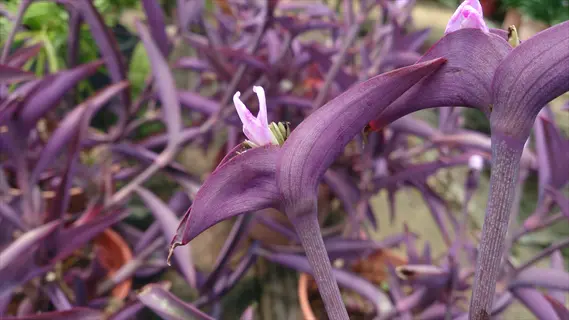
Tradescantia pallida Purpurea
- Foliage: Deep violet-purple lance-shaped leaves that grow 4 to 7 inches (10 to 18 centimeters) long and up to 3 inches (7.6 centimeters) wide, producing the most intense purple color in full sun.
- Growth Habit: Trailing stems reach 8 to 14 inches (20 to 36 centimeters) tall and spread 16 to 18 inches (40 to 46 centimeters) wide, making it ideal for ground cover and hanging baskets.
- Flowers: Produces small three-petaled pink to lavender flowers approximately 1 inch (2.5 centimeters) across that each last only a single day and bloom primarily in summer.
- Best Use: The most widely available cultivar and the standard choice for mass plantings, container edges, and mixed arrangements with chartreuse or orange companion plants.
- Hardiness: Grows as a perennial in USDA Zones 7 through 11 and can be overwintered indoors in colder climates as a houseplant or container specimen.
- Availability: This is the only cultivar commonly sold at nurseries and garden centers, making it the most accessible option for new growers.
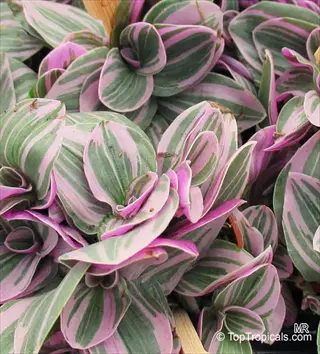
Tradescantia pallida Pale Puma
- Foliage: Lighter silvery-purple leaves with a softer pastel tone compared to the deep violet of Purpurea, creating a more subdued yet elegant garden accent.
- Growth Habit: Maintains a similar trailing form to Purpurea but tends to stay slightly more compact, making it well-suited for smaller containers and window boxes.
- Color Effect: The paler leaf color provides a gentle contrast when planted alongside deeper purple or green foliage plants in mixed garden beds.
- Best Use: Works beautifully in cottage garden settings and rock gardens where a softer purple tone blends more naturally with pastel flower companions.
- Hardiness: Shares the same growing zone requirements as Purpurea and performs best in full sun to maintain its characteristic silvery-purple coloring.
- Availability: Less commonly found than Purpurea at mainstream garden centers, so online specialty nurseries and plant swaps are the most reliable sources.
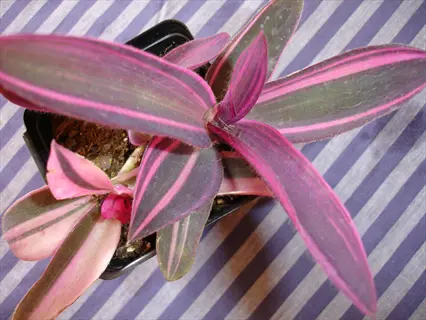
Tradescantia pallida Variegata
- Foliage: Striking leaves feature cream, pink, and purple streaks that create a multicolored effect unlike any other purple heart variety available to home gardeners.
- Growth Habit: Tends to grow slightly slower than the solid-colored Purpurea because the variegated portions contain less chlorophyll for photosynthesis.
- Light Needs: Requires bright indirect light or filtered sun because intense direct sunlight can scorch the lighter variegated portions of the leaves.
- Best Use: Makes an outstanding focal point in containers and hanging baskets where the colorful leaf patterns can be appreciated at close range.
- Care Note: Watch for reversion where all-green or all-purple stems appear and prune those stems promptly to maintain the variegated pattern throughout the plant.
- Availability: This cultivar is a collector favorite often sold through specialty online plant shops and plant enthusiast communities rather than big box stores.
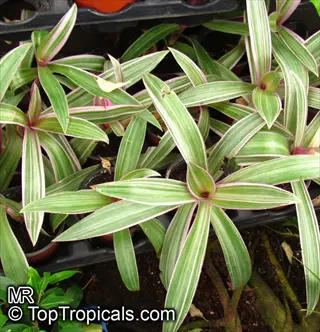
Tradescantia pallida Alba
- Foliage: Green leaves with white variegation that lack the signature purple pigmentation, offering a fresh and bright alternative to the traditional purple forms.
- Growth Habit: Grows in the same trailing pattern as other cultivars but the lighter coloring makes it particularly effective for brightening shaded porch containers.
- Color Effect: The green-and-white foliage pairs especially well with solid purple Purpurea for a two-tone display that highlights the natural range within this species.
- Best Use: Ideal for gardeners who love the Tradescantia growth habit but prefer a lighter color palette that coordinates with white or pastel garden themes.
- Care Note: May require slightly more protection from harsh afternoon sun than the purple cultivars because the lighter leaf tissue is more prone to sunburn.
- Availability: Among the rarest purple heart cultivars and typically found through specialty growers, online rare plant dealers, or dedicated collector networks.
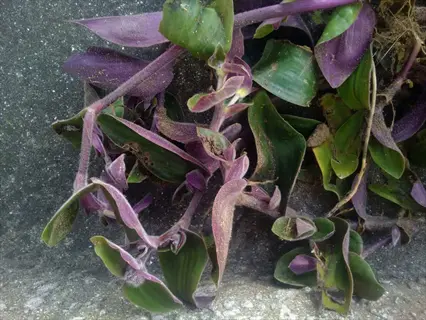
Tradescantia pallida Purpurea Nana
- Foliage: Compact deep purple leaves that are proportionally smaller than the standard Purpurea, giving this dwarf variety a tighter and more refined overall appearance.
- Growth Habit: Stays noticeably smaller and more compact than Purpurea, making it the best choice for small pots, terrariums, and tight planting spaces.
- Size Advantage: The reduced size means less frequent pruning is needed to maintain a tidy shape, which saves time compared to managing the full-sized cultivar.
- Best Use: Perfect for windowsill collections, fairy gardens, miniature container arrangements, and any setting where space is limited but bold color is desired.
- Hardiness: Shares the same temperature tolerance as the full-sized varieties and overwinters equally well indoors in cold climates.
- Availability: Sold by specialty nurseries and sometimes found at garden shows or through online rare plant sellers who focus on compact and dwarf cultivars.
Propagation and Planting Tips
Purple heart propagation is one of the easiest tasks in all of gardening. I have taken hundreds of stem cuttings from my plants over the years with a success rate above 90%. You can root in soil or try water propagation. Both methods work great when you follow a few basic steps.
The key to node propagation is cutting in the right spot. You want at least 2 nodes on each cutting because that is where roots form. Purple heart stem cuttings root in 7 to 14 days in water and 14 to 21 days in soil. Learning how to propagate purple heart gives you free plants for your whole garden or to share with friends.
Selecting and Cutting Stems
- When to Cut: Take cuttings in spring or early summer when the plant is actively growing and producing new stems with healthy purple leaves.
- Where to Cut: Use clean scissors or pruning shears to snip a 4 to 6 inch (10 to 15 centimeter) stem just below a leaf node where roots will emerge.
- Preparation: Remove the lower two or three leaves to expose the nodes, leaving at least two or three leaves at the top of the cutting for photosynthesis.
Water Propagation Method
- Setup: Place the cutting in a clear glass or jar filled with room-temperature water, making sure at least two nodes are submerged below the waterline.
- Timeline: Roots typically appear within 7 to 14 days and should reach about 1 to 2 inches (2.5 to 5 centimeters) long before transplanting into soil.
- Maintenance: Change the water every three to four days to prevent bacterial growth and keep the jar in bright indirect light during the rooting period.
Soil Propagation Method
- Setup: Insert the cutting about 2 inches (5 centimeters) deep into moist well-draining potting mix, firming the soil gently around the stem for support.
- Timeline: Roots establish in approximately 14 to 21 days, and you can confirm rooting by giving the stem a gentle tug and feeling resistance.
- Moisture: Keep the soil lightly moist but not waterlogged during the first three weeks, then gradually transition to the regular watering schedule.
Aftercare for New Plants
- Transplanting: Move water-rooted cuttings into soil once roots reach 1 to 2 inches (2.5 to 5 centimeters) long, using a pot with drainage holes and well-draining mix.
- Light Adjustment: Place newly potted cuttings in bright indirect light for the first week before gradually introducing them to full direct sun over seven to ten days.
- Feeding: Wait four to six weeks after transplanting before applying fertilizer so the new root system has time to establish without risking fertilizer burn.
Companion Plants and Design Ideas
The best purple heart companion plants use color contrast to make both plants pop. Purple foliage looks best next to warm tones like orange and yellow or bright greens like chartreuse. I have tested dozens of pairings over the years and the 6 plants below gave me the best results.
Your purple heart ground cover spreads 16 to 18 inches wide per season. That fast growth lets you fill in borders, slopes, and large containers fast. A purple heart hanging basket or purple heart container plant needs trailing partners that match its speed. Color contrast plants in chartreuse, orange, pink, and silver create the strongest visual punch for your landscape design.
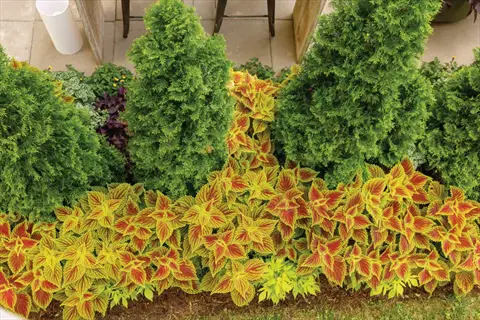
Chartreuse Coleus
- Color Effect: The bright lime-green foliage of chartreuse coleus creates one of the most striking contrasts possible against the deep purple leaves of the heart plant.
- Growing Match: Both plants share similar moisture preferences and thrive in the same temperature range, making them effortless to grow side by side in shared containers.
- Placement Tip: Position coleus behind or above purple heart in containers so the taller coleus provides a vibrant backdrop for the trailing purple stems.
- Variety Choice: Look for coleus varieties like Wasabi or Electric Lime that maintain solid chartreuse color without variegation for the cleanest visual contrast.
- Care Sync: Both plants benefit from monthly fertilizing during the growing season and tolerate the same well-draining potting mix with perlite added for drainage.
- Design Use: This pairing works in hanging baskets, window boxes, patio containers, and garden bed borders where both plants can fill in quickly during warm months.
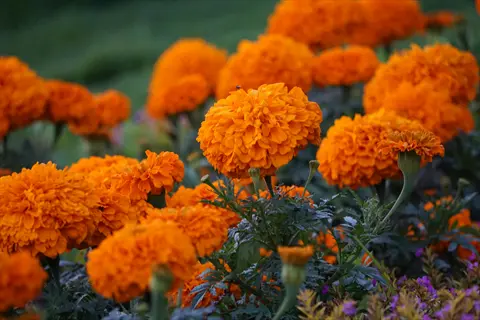
Orange Marigolds
- Color Effect: Hot orange marigold blooms against deep purple heart foliage creates a bold complementary color combination that catches attention from across the garden.
- Growing Match: Both plants are sun-loving and drought tolerant, performing their best with at least six hours of direct sunlight and minimal supplemental watering.
- Pest Benefit: Marigolds are known to repel aphids and whiteflies, which can help protect nearby purple heart plants from these common garden pests.
- Placement Tip: Plant marigolds as an upright center or backdrop with purple heart trailing over container edges or spreading as a ground cover beneath them.
- Seasonal Sync: Both plants peak during summer and fall, ensuring your garden display stays vibrant from late spring until the first frost arrives.
- Design Use: This combination is a classic cottage garden pairing that also works well in raised beds, border plantings, and large mixed containers.
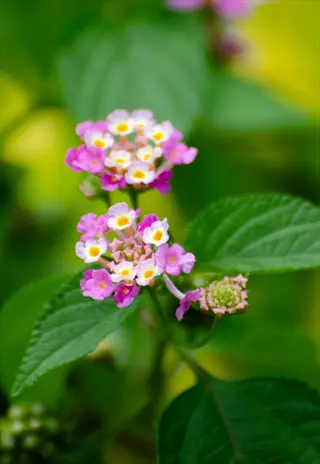
Lantana
- Color Effect: Lantana flower clusters in red, orange, yellow, and pink tones create a warm rainbow effect against the cool purple backdrop of heart plant foliage.
- Growing Match: Lantana and purple heart both handle full sun, heat, and drought with ease, making them a low-maintenance pairing for hot-climate gardens.
- Pollinator Benefit: Lantana blooms attract butterflies and bees throughout the growing season, adding movement and ecological value to the garden display.
- Placement Tip: Use lantana as the taller focal plant in the center of containers or at the back of borders with purple heart spilling forward as ground cover.
- Size Note: Choose compact lantana varieties for container pairings since standard lantana can grow quite large and overwhelm the lower-growing purple heart.
- Design Use: This heat-loving duo thrives in rock gardens, xeriscaped beds, and full-sun containers in USDA Zones 7 through 11 without extra irrigation.
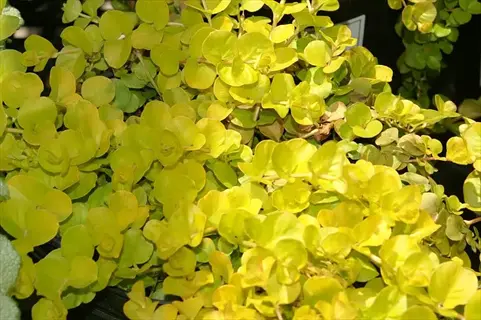
Golden Creeping Jenny
- Color Effect: The golden-yellow coin-shaped leaves of creeping Jenny create a luminous contrast when interplanted with the deep purple trailing stems of heart plant.
- Growing Match: Both are vigorous ground covers that spread at similar rates, creating an interwoven carpet of gold and purple in garden beds.
- Moisture Note: Creeping Jenny prefers slightly more moisture than purple heart, so plant them where you can water moderately without overwatering the drought-tolerant heart plant.
- Placement Tip: Let both plants trail together over container edges or retaining walls where their cascading growth habits complement each other naturally.
- Texture Contrast: The round tiny leaves of creeping Jenny against the long lance-shaped leaves of purple heart adds textural interest beyond just the color difference.
- Design Use: This pairing excels in hanging baskets, window boxes, and along garden path borders where both plants can spill over edges dramatically.
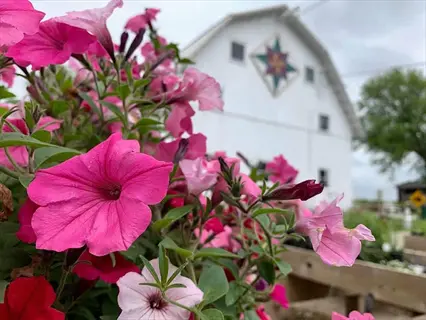
Pink Petunias
- Color Effect: Soft pink petunia blooms pick up the pink tones in purple heart flowers, creating a harmonious monochromatic purple-to-pink color gradient.
- Growing Match: Both plants love full sun and perform well in containers with well-draining soil, making them a natural pairing for patio pots and window boxes.
- Bloom Duration: Petunias bloom continuously from spring through fall when deadheaded regularly, keeping the display colorful alongside the always-purple heart foliage.
- Placement Tip: Use trailing petunia varieties alongside purple heart at container edges so both plants cascade together for a full and lush overflowing look.
- Variety Choice: Wave or Supertunia series in shades of pink, magenta, or lavender coordinate best with the purple and pink tones in heart plant foliage and flowers.
- Design Use: This pairing is especially effective in hanging baskets viewed from below, where both trailing plants create a dome of color and texture.
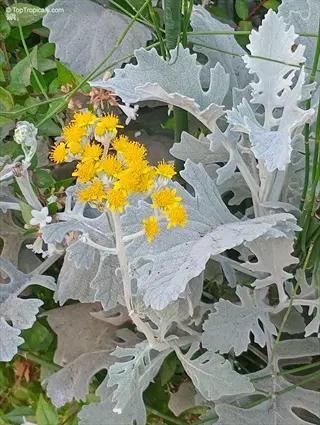
Silver Dusty Miller
- Color Effect: The silvery-white felted leaves of dusty miller create a cool neutral contrast that makes the saturated purple of heart plant foliage appear even richer.
- Growing Match: Both plants are drought tolerant and sun-loving, sharing similar low-water needs that simplify irrigation in shared containers and garden beds.
- Texture Contrast: The deeply lobed and fuzzy dusty miller leaves provide a completely different texture from the smooth lance-shaped purple heart leaves.
- Placement Tip: Alternate clusters of dusty miller and purple heart along border edges for a repeating silver-and-purple pattern that adds rhythm to garden design.
- Seasonal Interest: Dusty miller holds its silvery foliage well into fall, extending the visual partnership with purple heart past the peak of summer blooms.
- Design Use: This elegant pairing suits formal container arrangements, moonlight gardens, and Mediterranean-style plantings where silver and purple tones dominate.
Science-Backed Benefits
The purple heart plant benefits go far beyond good looks. Tradescantia pallida research from real studies shows this plant cleans your air and fights germs. It can even pull heavy metals from water. None of the other popular care guides mention these proven scientific findings.
I first read about these studies about 4 years ago and they changed how I think about this plant. It is not just a pretty face in your garden. Purple heart ranks among the best air purifying plants you can grow at home. Below you will find studies on VOC removal and indoor air quality from real labs.
Indoor Air Pollutant Removal
- Study: A 2009 HortScience study screened 28 common ornamental plants and found Tradescantia pallida showed superior removal efficiency for four of five volatile organic compounds tested.
- Pollutants Removed: The plant effectively reduced benzene, toluene, trichloroethylene, and alpha-pinene, which are chemicals commonly found in household paints, cleaners, and building materials.
- Practical Impact: Placing several purple heart plants in a room with good airflow may help reduce exposure to common indoor air pollutants over time, though lab conditions differ from real homes.
- Comparison: Among the 28 species tested, purple heart outperformed popular choices like pothos and spider plant for most pollutants, making it an underrated air-cleaning option.
Antimicrobial Activity
- Study: A 2019 study published in the Nagoya Journal of Medical Science found that aqueous purple heart leaf extract significantly inhibited biofilm formation in Pseudomonas aeruginosa bacteria.
- Mechanism: The active ingredient is water-soluble, heat-sensitive, and works by selectively inhibiting the swarming motility that bacteria use to form protective biofilm colonies.
- Significance: Pseudomonas aeruginosa biofilms cause persistent infections in hospitals, and natural biofilm inhibitors are a growing area of medical research worldwide.
- Key Detail: Polyphenols in the extract are one active component, but researchers noted likely synergistic effects with other yet-unidentified compounds in the leaf tissue.
Heavy Metal Phytoremediation
- Study: A 2014 study in Applied Biochemistry and Biotechnology demonstrated that Tradescantia pallida can accumulate chromium in its roots at concentrations up to 536 micrograms per gram of dry weight.
- Removal Rate: The plant's leaf biomass removed 94% of chromium from test solutions with a sorption capacity of 64.672 milligrams per gram, showing strong potential for wastewater cleanup.
- Defense System: The plant increased its antioxidant enzyme activity including catalase and peroxidase to cope with chromium-induced oxidative stress during the experiment.
- Environmental Use: This research suggests potential applications for using purple heart in constructed wetlands and phytoremediation projects aimed at cleaning contaminated water and soil.
Rich Phytochemical Profile
- Study: A comprehensive 2022 review in Frontiers in Bioscience documented that Tradescantia pallida contains alkaloids, flavonoids, phenolics, saponins, terpenoids, steroids, and coumarins.
- Phenolic Content: The total phenolic content measured at 153.1 plus or minus 21.8 milligrams of gallic acid equivalent per 100 grams of plant tissue, contributing to antioxidant capacity.
- Research Status: Only four of approximately 80 Tradescantia species have undergone substantial biological evaluation, meaning many more useful compounds likely remain unknown.
- Perspective: While these phytochemicals show promise in laboratory settings, more research is needed to understand practical applications for human health and environmental remediation.
Troubleshooting Common Issues
Most purple heart plant problems come down to 3 things: not enough light, too much water, or bugs. I have seen each of these happen in my own garden. Once you know the signs, the fixes are fast and simple.
Purple heart turning green is the most common issue growers ask me about. The cause is almost always too little direct sun. Your plant needs at least 6 hours of bright light to keep its deep color. Move it to a sunnier spot and the purple will come back within a few weeks.
Leggy growth is the second biggest complaint. When stems stretch out with wide gaps between leaves, your plant is reaching for more light. Pinch the tips back to keep the shape tight. Overwatering purple heart leads to root rot with mushy stems at the base. Let your soil dry out between drinks and use pots with drainage holes to stop water from pooling.
Mealybugs on purple heart show up as white cottony dots on stems and leaf joints. Wipe them off with rubbing alcohol on a cotton swab. Scale insects look like small brown bumps on the stems. Scrape them off and follow up with a spray of horticultural oil. The table below maps out each problem so you can match your symptoms to the right fix.
5 Common Myths
Purple heart plants need shade to keep their purple color because direct sun will fade the leaves over time.
Full sun actually produces the deepest purple foliage because it stimulates anthocyanin production, while shade causes leaves to turn green.
Purple heart plants are extremely toxic and dangerous to keep around children or any household pets at all.
The plant is classified as toxicity class four, meaning it causes mild skin irritation from sap contact but is not severely poisonous if ingested.
You must water purple heart plants frequently because they are tropical plants that need consistently moist soil to survive.
Purple heart stores moisture in its thick stems and is highly drought tolerant, thriving when soil dries between waterings rather than staying wet.
Purple heart plants only grow outdoors in warm climates and cannot survive or look good as indoor houseplants at all.
Purple heart grows well indoors when placed near a bright window with six or more hours of direct sunlight, making it a versatile houseplant.
All purple heart plants look the same because there is only one single variety available to buy from nurseries.
At least five named cultivars exist including Purpurea, Pale Puma, Variegata, Alba, and Purpurea Nana, each with distinct foliage traits.
Conclusion
The purple heart plant gives you more value than almost any other plant you can grow at home. Your purple heart care takes just minutes a week. Purple heart propagation is as easy as putting a stem in water. And the purple heart benefits from real science show this plant cleans your indoor air better than most popular choices.
Tradescantia pallida does it all. It fills your garden beds as ground cover. It trails from hanging baskets and patio containers. It cleans toxins from your indoor air. A 2009 study proved it beat most of 28 species tested for air cleaning power. Most guides skip that fact but it matters if you care about what your plants can do for your home.
I suggest you start with the standard Purpurea cultivar since it is the easiest to find at local garden centers. Once you see how fast it grows and how little work it needs, you will want to add rarer types like Variegata or Pale Puma to your collection. One stem cutting can turn into a whole garden within a single growing season.
This plant has grown in gardens around the world since Edward Palmer first found it in Mexico over a hundred years ago. It thrives in USDA Zones 7 through 11 and does just as well on a sunny windowsill. Give your purple heart plant bright sun and good drainage and it will reward you with stunning color for years to come.
External Sources
Frequently Asked Questions
How do you care for a Purple Heart plant?
Provide full sun for six to eight hours daily, water when the top inch of soil is dry, use well-draining potting mix, and fertilize monthly during the growing season.
Is purple heart plant good for home?
Yes, purple heart is an excellent home plant that adds vibrant color and has been shown to remove indoor air pollutants effectively.
Is purple heart plant toxic to dogs?
Purple heart plant sap can irritate a dog's skin and mouth, causing mild dermatitis, but it is not considered severely poisonous.
Do purple heart plants come back every year?
In USDA Zones 7 through 11 they return as perennials, dying back after frost and regrowing from roots in spring.
Can purple heart be grown indoors?
Yes, purple heart grows well indoors near a bright south-facing window that provides at least six hours of direct sunlight.
What is the lifespan of a Purple Heart plant?
Individual stems live two to three years before becoming leggy, but the plant perpetuates itself indefinitely through rooting stems and cuttings.
What are the common problems with Purple Heart?
Common problems include foliage turning green from low light, leggy stems, root rot from overwatering, and infestations of mealybugs or scale.
How often should I water a purple heart?
Water every seven to fourteen days depending on temperature and humidity, allowing the top inch of soil to dry between waterings.
Can purple heart grow in water permanently?
Purple heart can survive in water for months but grows best in soil where nutrients and root stability support long-term health.
Do purple heart plants grow fast?
Yes, purple heart is a fast grower that can spread over 16 to 18 inches (40 to 46 centimeters) in a single season under ideal conditions.