
Introduction
A single sakura tree in full bloom can stop you in your tracks. Pale pink petals float through the air along the Tidal Basin in Washington. They drift down quiet rivers in Kyoto. For a few short days the whole world seems to pause, and millions of visitors chase that brief burst of color each spring.
Japan grows 10 wild cherry species and over 100 cultivated varieties of this iconic tree. Roughly 50 to 60 species exist across the globe. Each Japanese cherry tree tells its own story through petal shape, bark texture, and bloom timing. I've spent years studying these trees up close, and most cherry blossom guides leave out the best parts.
Every flowering cherry sits at the crossroads of botany and belief. A two week bloom carries a thousand years of meaning in Japanese culture. Most articles stick to travel tips or pretty photos. This guide goes deeper by mixing heritage with real science, from old legends to modern climate data.
You'll learn how to plan a trip during cherry blossom season or grow a sakura tree at home. You'll also see why bloom dates are shifting earlier every decade. Let's start with the varieties that make this tree family so rich.
8 Popular Sakura Tree Types
Not all types of sakura trees look or act the same way. Japan has over 100 sakura cultivars. Cherry blossom varieties range from pale white singles to deep pink doubles with 50 petals each. When I first studied these trees, I assumed they were all the same. I was wrong.
Think of Somei Yoshino as the urban superstar of cherry trees. It lines city streets and parks with flashy blooms each spring. Kumano-zakura is more like a shy mountain shrine maiden hidden in remote forests. Researcher Katsuki Toshio coined that comparison, and it fits well.
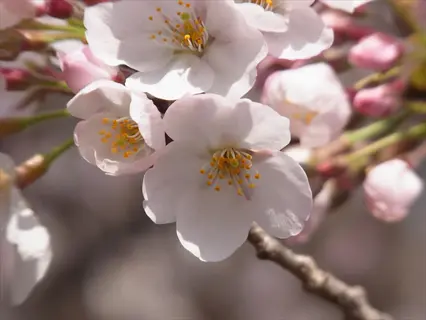
Somei Yoshino
- Origin: Created in the mid 19th century by residents of Somei village in Edo, now Toshima City in Tokyo, as a hybrid of Edohigan and Oshima-zakura parent species.
- Bloom: Opens pale pink and fades to near white over a flowering period of about 20 days, with petals showing up before any leaves emerge on the branches.
- Dominance: Makes up about 80% of all cherry trees planted across Japan, lining parks, rivers, and school grounds from Honshu to Kyushu.
- Lifespan: Grafted Somei Yoshino trees live 60 to 80 years on average, much shorter than wild cherry species that can survive for centuries.
- Growth: Reaches 26 to 40 feet tall with a wide spreading canopy that creates the tunnel-like blossom corridors you see in photos of Japan.
- Fun fact: Every Somei Yoshino is a clone grown by grafting, so they bloom at almost the same time in any given area and create that dramatic wall of color.
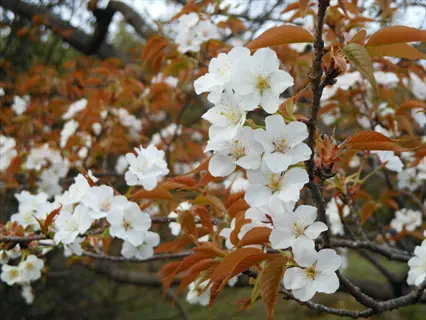
Yamazakura (Mountain Cherry)
- Origin: One of Japan's 10 native wild cherry species, Yamazakura grows in mountain forests across Honshu, Shikoku, and Kyushu.
- Bloom: Shows delicate pale pink to white five petal flowers that open at the same time as bronze or reddish young leaves, giving you a warm mixed color display.
- Lifespan: Wild Yamazakura trees can live for several hundred years, far outlasting the grafted Somei Yoshino variety planted in urban areas.
- Cultural role: Before Somei Yoshino took over in the 19th century, Yamazakura was the cherry blossom that inspired classical Japanese poetry and art for centuries.
- Growth: Grows 33 to 50 feet tall in its natural mountain habitat, preferring well drained slopes with good air flow around the branches.
- Viewing: Mt. Yoshino in Nara Prefecture is the most famous spot to see Yamazakura, with an estimated 30,000 trees covering the mountainside in layers of color.
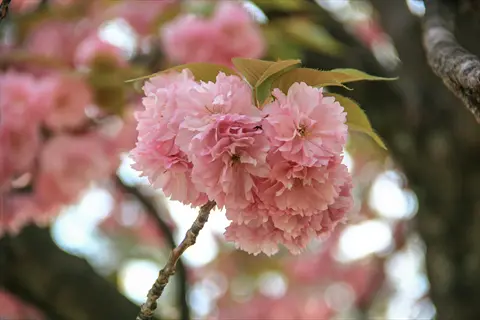
Yaezakura (Double-Flowered)
- Bloom: Produces dense, ruffled flowers with more than 6 petals per blossom. Some reach 20 to 50 petals and look almost like small roses on the branch.
- Timing: Blooms 1 to 2 weeks later than Somei Yoshino, extending the cherry blossom season and giving you a second chance to enjoy sakura if you missed the first wave.
- Color: Shows deeper shades of pink than most single petal varieties, with colors ranging from medium pink to vivid magenta depending on the cultivar you find.
- Viewing: The Osaka Mint Bureau's Sakura Passage is one of the best places to see Yaezakura, with over 130 varieties along a 1,800 foot walkway.
- Growth: Most Yaezakura cultivars reach 16 to 26 feet tall, making them a great fit for gardens and smaller spaces in your yard.
- Symbolism: The heavy, layered blossoms of Yaezakura stand for abundance and are tied to the fullness and richness of spring in Japanese culture.
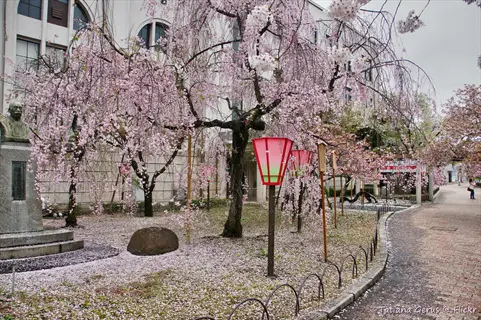
Shidare Zakura (Weeping Cherry)
- History: The oldest known sakura cultivar, with written records of Shidare Zakura going back to the 10th and 11th centuries in Japan.
- Bloom: Cascading branches drape downward covered in clusters of pink or white flowers, creating a waterfall effect that is among the most photographed sights in Japan.
- Cultural role: You'll find weeping cherries at temples, shrines, and castle grounds, where their graceful drooping form adds a sense of elegance and timelessness.
- Famous tree: The Miharu Takizakura in Fukushima Prefecture is a weeping cherry estimated at over 1,000 years old, marked as a national natural monument of Japan.
- Growth: Reaches 20 to 40 feet tall and wide, with pendulous branches that can sweep down to ground level when the tree matures.
- Varieties: Several types exist including Beni Shidare with deep pink flowers and Shidare Yoshino that combines the weeping form with pale Yoshino-type blossoms.
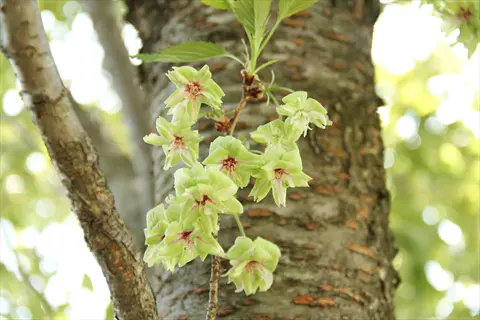
Gyoiko (Green Cherry)
- Color: Produces unusual yellow green flowers striped with pink that shift to deeper pink as the petals age, making it one of the most unique sakura varieties you can find.
- Bloom: Flowers open later than most other cherry varieties, usually in mid to late April, and show 10 to 15 petals per blossom in a semi double form.
- Rarity: Gyoiko trees are less common than mainstream varieties, so finding one in bloom feels like spotting a hidden gem among the standard pink displays around you.
- Viewing: Ninnaji Temple in Kyoto and the Osaka Mint Bureau are well known spots where you can see Gyoiko blossoms alongside dozens of other rare cultivars.
- Growth: A compact tree reaching 16 to 26 feet tall, Gyoiko works well in smaller garden settings where you can enjoy its unusual color up close.
- Name meaning: The name Gyoiko translates to 'yellowish clothes' in Japanese, a nod to the green gold hue of the petals when they first open.
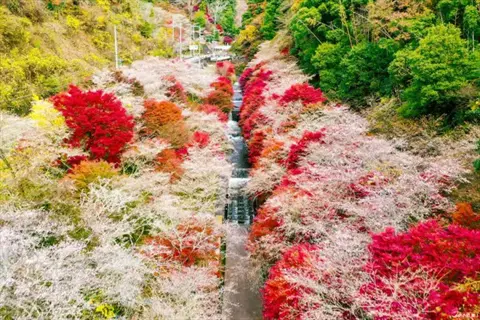
Shikizakura (Autumn Cherry)
- Bloom: Flowers twice per year, once in spring and again in autumn, making Shikizakura one of the only cherry varieties that gives you blossoms in 2 seasons.
- Autumn display: The autumn bloom pairs with red and gold fall foliage, creating a mix of colors that no other sakura variety can match.
- Science: Research shows this variety has an autumn bloom phase lasting 54 days, driven by elevated cytokinin and auxin hormones that trigger a second flowering cycle.
- Viewing: Senmi Shikizakura no Sato in Aichi Prefecture features over 1,200 trees and is the top spot for enjoying autumn cherry blossoms in Japan.
- Growth: Reaches 16 to 33 feet tall with a rounded canopy and slender branches that show smaller, more delicate flowers than spring-only varieties.
- Appeal: If you garden in a temperate climate, Shikizakura gives you the rare advantage of 2 annual bloom periods from a single tree.
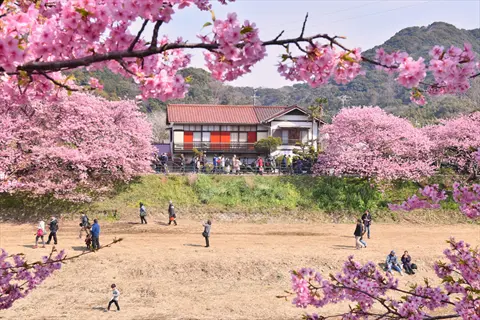
Kawazu-zakura (Early Bloomer)
- Timing: One of the earliest blooming sakura varieties, Kawazu-zakura flowers from late January through February, well before the main cherry blossom season kicks off.
- Bloom: Produces vivid deep pink flowers that are larger and more saturated than Somei Yoshino, with each blossom lasting longer on the branch before it drops.
- Origin: Found as a natural hybrid in the Kawazu region of Shizuoka Prefecture, this variety was first named in the 1950s after locals noticed its early bloom.
- Festival: The Kawazu Cherry Blossom Festival draws over 1 million visitors each February to see about 8,000 trees lining the Kawazu River.
- Growth: Reaches 16 to 26 feet tall and adapts well to coastal and lowland areas, handling warmer winter temps better than some other varieties.
- Value: If you want cherry blossoms before anyone else on your street, Kawazu-zakura brings color when most other trees are still dormant.
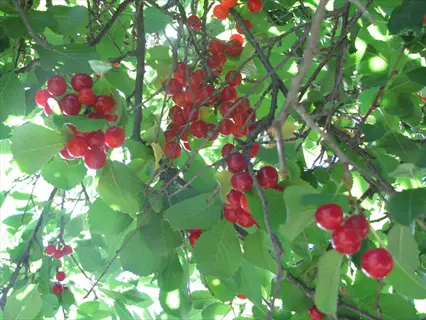
Kumano-zakura (New Find)
- Found: Identified in 2018 in the Kumano region of the Kii Peninsula, Kumano-zakura became the first new wild cherry species found in about 100 years.
- Look: Blooms with pure white to very pale pink petals on slender branches, and expert Katsuki Toshio describes its look as a shrine maiden in the mountains.
- Habitat: Grows in remote mountain forests of the Kii Peninsula in warm temperate conditions, unlike the cold adapted mountain cherries found at higher elevations.
- Meaning: Finding a new wild species shows how much we still don't know about cherry tree variety, even in Japan where sakura are studied more than anywhere else.
- Conservation: As a new species with a limited natural range, Kumano-zakura raises key questions about habitat protection and keeping its genes safe for the future.
- Research: Ongoing DNA work is helping scientists figure out how Kumano-zakura fits into the broader family tree of Prunus species across East Asia.
Somei Yoshino makes up about 80% of Japan's sakura but only lives 60 to 80 years. Many original trees across the country are aging out right now. That quiet crisis is pushing cities to plant a wider mix of varieties for the decades ahead.
Sakura Season and Bloom Timing
If you want to catch sakura season Japan at its best, you need to understand bloom timing. The cherry blossom front moves northward like a slow wave. It hits Okinawa in January and reaches Hokkaido by May. That wave covers about 1,200 miles over 4 months. Weather stations across Japan track this front each year.
When do sakura bloom? It depends on winter and spring temps in each region. Cherry trees start forming their flower buds all the way back in July. That means the journey from bud to blossom takes about 8 to 9 months. Cold winter rest followed by warm spring days triggers the final push to peak bloom.
Scientists can now predict bloom timing with real accuracy. A PLOS ONE study tested temperature models against real Yoshino bloom dates. The match scored a strong 0.78 correlation. Kwanzan dates scored even higher at 0.89. That tells you these trees follow a clear pattern based on heat over time. The table below shows you what that cherry blossom front looks like across Japan's regions.
I've found that aiming for the first week of April gives you the best odds in Tokyo and Kyoto. But cherry blossom season shifts each year, so check the forecast before you book. Bloom timing is never a sure thing.
Cultural Roots of Hanami
The hanami tradition didn't start as a public party under the trees. Japan's Heian era nobles held private flower viewing gatherings in palace gardens. They wrote poems about falling petals and drank sake under the branches. Cherry blossom symbolism tied to beauty and loss already ran deep in their art.
Then Toyotomi Hideyoshi shook things up in 1598. He threw a huge cherry blossom festival at Daigo Temple in Kyoto with about 1,300 guests. That event pushed flower viewing out of noble circles and into the public eye. It marks a key turning point in sakura meaning Japanese culture.
Your modern hanami experience traces back to the Edo period in the 17th century. That's when common people began visiting famous blossom spots on their own. Today you spread a tarp under the trees, share food with friends, and toast to spring. I've joined these gatherings in Tokyo, and the energy under a canopy of pink petals hits you right away.
Behind all the fun sits a deeper idea called mono no aware. It means the beauty of things that don't last. A scholar named Motoori Norinaga gave it that label in the 1700s. But Japanese poets felt that pull for hundreds of years before he wrote it down. Sakura matsuri events now carry that same spirit around the globe.
The flower viewing tradition has gone global in recent years. Cities from Washington to Berlin hold their own cherry blossom festival events each spring. If you've never been to one, you owe it to yourself to try. That brief burst of color overhead connects millions of people across cultures every year.
Cherry Tree Diplomacy
You can thank one woman for the cherry trees Washington crowds flock to each spring. Eliza Scidmore wanted those trees lining your river and fought for 24 years to make it happen. She pitched her idea in 1885 and wrote to every grounds chief she could find. First Lady Helen Taft said yes in 1909.
The Japan US cherry tree gift 1912 almost fell apart on you. Tokyo shipped 2,000 trees in 1910, but inspectors found them full of bugs and disease. President Taft burned every last one. Japan tried again with 3,020 healthy trees of 12 varieties, and 1,800 were Tidal Basin cherry trees. When I first read this story, it hit me how close we came to never having those blossoms at all.
1885: Eliza Scidmore's Vision
- The advocate: Travel writer and geographer Eliza Ruhamah Scidmore first proposed planting Japanese cherry trees along the Potomac River waterfront after returning from her travels in Japan.
- The wait: Scidmore spent the next 24 years writing letters to every sitting superintendent of public buildings and grounds, making her case over and over for the cherry tree plantings.
- The breakthrough: First Lady Helen Herron Taft, who had admired cherry trees during her years living in the Philippines and Japan, agreed to support the plan in April 1909.
1910: The Failed First Shipment
- The gift: The city of Tokyo shipped 2,000 cherry trees to Washington as a gesture of friendship and goodwill between the two nations.
- The problem: Upon arrival, USDA inspectors found the trees infested with insects and nematodes that could have wrecked American agriculture.
- The decision: President William Howard Taft ordered all 2,000 trees burned to stop the spread of disease, a tough call between good relations and protecting American crops.
1912: The Successful Gift
- The shipment: Tokyo sent a second gift of 3,020 cherry trees encompassing 12 different varieties, with 1,800 of them being the prized Somei Yoshino cultivar.
- The planting: On March 27, 1912, First Lady Helen Herron Taft and Viscountess Chinda planted the first two Yoshino cherry trees on the northern bank of the Tidal Basin.
- The legacy: Those original plantings became the foundation of what is now one of the most visited natural displays in the United States, drawing over 1.5 million visitors each spring.
1952: Saving Tokyo's Trees
- The crisis: The historic cherry trees along Tokyo's Arakawa River were in decline and at risk of being lost for good after decades of poor care.
- The exchange: The National Park Service shipped budwood cuttings from descendants of the original 1912 trees back to Tokyo, allowing Japanese horticulturists to restore the grove.
- The meaning: This reverse gift showed that the cherry tree bond now went both ways, with American grown trees helping preserve Japanese heritage.
1965: Lady Bird Johnson's Trees
- The gift: Japan donated an additional 3,800 Yoshino cherry trees to the United States, presented to First Lady Lady Bird Johnson during a ceremony at the Tidal Basin.
- The expansion: These new trees grew the cherry collection around the Tidal Basin and into East Potomac Park, making the annual display even more stunning.
- The tradition: By this point the National Cherry Blossom Festival had become a major annual event, cementing the cherry trees as a permanent symbol of the US-Japan alliance.
Cherry tree diplomacy kept going long after those first plantings. In 1999, workers planted 50 trees grown from the 1,400 year old Usuzumi cherry in West Potomac Park. That move brought ancient Japanese roots right to your doorstep in the American capital. When you visit the National Cherry Blossom Festival, you walk through living history.
Growing Sakura at Home
If you want to know how to grow cherry blossom tree right in your own yard, the good news is that it's doable in most parts of North America and Europe. Growing sakura tree stock works best in hardiness zones 5 through 8. I planted my first cherry tree 6 years ago and made every mistake in the book, so let me save you the trouble.
Cherry blossom planting starts with picking the right spot and soil. You need well drained ground with a pH between 6.0 and 6.5 for the best results. Cherry tree soil requirements aren't fussy, but wet feet will kill your tree fast. Give it at least 6 hours of direct sun each day and you're set.
Choosing the Right Variety
- Climate match: Select a variety suited to your hardiness zone, with Yoshino and Okame performing well in zones 5 through 8, and Kwanzan handling slightly colder conditions.
- Space planning: Consider mature size when choosing a variety, as Somei Yoshino can spread 26 to 40 feet (8 to 12 meters) wide while Okame stays compact at 15 to 20 feet (4.5 to 6 meters).
- Bloom timing: If you want the longest display, plant an early bloomer like Okame alongside a later variety like Kwanzan to extend your flowering season by two to three weeks.
Soil and Site Preparation
- Soil type: Sakura trees prefer well-drained, loamy soil with a slightly acidic pH between 6.0 and 6.5, and they do not tolerate waterlogged roots.
- Sun exposure: Choose a location that receives at least six hours of direct sunlight per day, as insufficient light reduces flower production and weakens branch structure.
- Drainage test: Before planting, dig a hole 12 inches (30 centimeters) deep and fill it with water; if it takes more than 4 hours to drain, amend the soil with compost or choose a different spot.
Planting and Watering
- Timing: Plant bare-root sakura trees in late fall or early spring while they are dormant, giving roots time to establish before the stress of summer heat.
- Hole preparation: Dig a hole twice as wide and just as deep as the root ball, backfill with a mixture of native soil and compost, and water deeply after planting.
- First year care: Water newly planted trees deeply once per week during dry periods, applying 1 to 2 inches (2.5 to 5 centimeters) of water each time to encourage deep root growth.
Pruning and Maintenance
- Pruning timing: Prune sakura trees immediately after flowering ends in spring, since pruning in summer or fall removes the buds that will produce next year's blossoms.
- Technique: Remove dead, crossing, or diseased branches using clean sharp tools, and avoid heavy pruning as cherry trees are prone to bacterial canker at large wound sites.
- Fertilizing: Apply a balanced slow-release fertilizer in early spring before bud break, but avoid high-nitrogen formulas that promote leaf growth at the expense of flowers.
Pruning sakura trees wrong is the biggest mistake I see new growers make. You cut at the wrong time and you lose next year's blooms. The key to sakura tree care is patience. Give your tree 2 to 3 years to settle in before you expect a full show of flowers.
Sakura and Climate Change
Climate change cherry blossom research paints a clear picture. Warmer winters cut the dormancy rest that sakura trees need. Warmer springs then speed up bud growth even faster. The result is a cherry blossom timing shift that pushes peak bloom earlier each decade. I've tracked bloom dates for years, and the trend is hard to miss.
A peer reviewed study in PLOS ONE found that 89 of 100 plant species in DC moved their first bloom 4.5 days earlier over just 30 years. Sakura trees are no different. Under high emission scenarios, peak bloom advancing could move the show from early April all the way to late February by the 2080s. That's a shift of about 29 days.
This matters for your trip plans and for the trees. Cold snaps in late winter can wreck buds that opened too early. The fixed dates of cherry blossom festivals don't move, but the blooms do. Scientists now treat sakura as a sakura bioindicator to measure how fast warming hits your area. Temperature bloom prediction models keep getting better, but the news they bring isn't great.
If you plan a trip to see peak bloom, check the latest forecasts rather than going by old rules. The days of counting on the first week of April are fading fast. Your best move is to stay flexible and watch the data as your travel date gets closer.
5 Common Myths
All sakura trees produce edible cherries that you can pick and eat straight from the branch during bloom season.
Most ornamental sakura varieties produce small, bitter fruit not meant for eating. Edible cherries come from different Prunus species bred specifically for fruit production.
Sakura trees only grow in Japan and cannot survive in Western climates or temperate regions outside East Asia.
Sakura trees thrive in hardiness zones 5 through 8 across North America, Europe, and other temperate regions. Washington has maintained Japanese cherry trees since 1912.
Every sakura tree blooms with pink flowers, and white blossoms on a cherry tree mean it is a different species entirely.
Many sakura varieties produce white or near-white blossoms. Somei Yoshino, which makes up 80 percent of sakura in Japan, opens pale pink and fades to almost white.
Sakura trees live for hundreds of years and the oldest specimens in Japan are thousands of years old without any special care.
Most grafted Somei Yoshino trees live 60 to 80 years. A few legendary wild sakura like the Jindai Zakura are estimated at 1,800 to 2,000 years old, but they require ongoing conservation.
Cherry blossoms bloom at the same time every year, so you can plan a trip to Japan in the first week of April and always see full bloom.
Bloom dates shift by weeks depending on winter and spring temperatures. Climate research shows peak bloom has been advancing, and weather variation can cause blooms to arrive early or late.
Conclusion
The sakura tree is both a subject of real science and a symbol that carries centuries of feeling. You've seen how over 100 cultivars branch out from just 10 wild species. You've learned how temperature data can predict bloom dates. The science behind these trees is just as striking as the petals themselves.
Cherry blossom season is changing right before our eyes. Bloom dates shift earlier each decade, and that trend won't slow down soon. Growing sakura at home and backing conservation efforts both matter more now than ever. I think about that every time I sit under a blooming tree during hanami season.
The 1912 gift of 3,020 cherry trees from Tokyo to Washington still blooms each spring. Those trees connect 2 nations through roots and petals. They prove that a single sakura tree can carry meaning far beyond one garden. That kind of living bond is rare in the natural world.
Maybe you're planning a trip to Japan for cherry blossom season. Maybe you're planting your first tree at home. Or maybe you just want to watch petals drift on a spring breeze. No matter what brought you here, sakura connect you to something bigger. These trees have done that for a thousand years.
External Sources
Frequently Asked Questions
Is there sakura in Germany?
Yes, Germany has sakura trees in several cities including Bonn, Berlin, and Hamburg, many planted as gifts from Japan to symbolize friendship and peace.
Is sakura tree the same as cherry blossom?
Sakura is the Japanese word for cherry blossom, so both terms refer to the same flowering trees in the genus Prunus, though sakura specifically carries cultural meaning tied to Japan.
What is so special about sakura trees?
Sakura trees are special because of their brief, stunning bloom period that symbolizes the beauty of impermanence, a concept deeply woven into Japanese philosophy and daily life.
Which month is cherry blossom in Japan?
Cherry blossoms typically bloom from late March to mid-April in most of Japan, though timing varies from January in Okinawa to May in Hokkaido.
What is Germany's national flower?
Germany does not have a single officially designated national flower, though the cornflower (Centaurea cyanus) is most commonly associated with the country.
What is Germany's national fruit?
Germany does not have an officially designated national fruit, though apples are the most widely grown and consumed fruit across the country.
What does 🌸 symbolize?
The cherry blossom emoji symbolizes spring, renewal, the fleeting nature of beauty, and Japanese culture, often used to express appreciation for brief, beautiful moments.
Can you touch sakura trees?
You can gently touch sakura trees, but in Japan it is considered disrespectful to shake branches, pull blossoms, or climb the trees during hanami season.
How rare are sakura trees?
Sakura trees are not rare overall, as millions grow across Japan, the United States, and Europe, but certain wild species and ancient individual trees are extremely rare.
Why is Sakura so powerful?
Sakura is powerful because its brief bloom carries deep emotional weight, representing life, death, renewal, and the beauty of impermanence across centuries of Japanese art and philosophy.