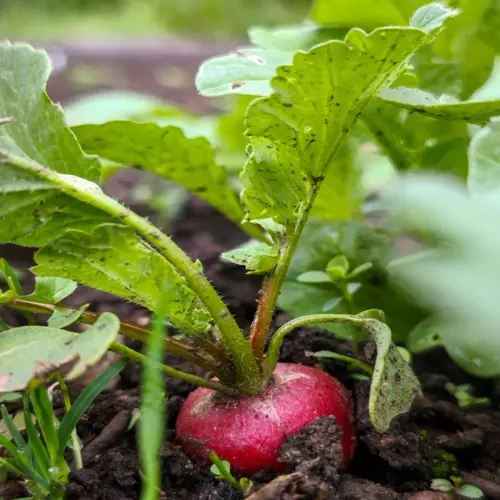

Learning how to grow spinach in your backyard provides you with an iron- and vitamin-packed powerhouse of a green that most store-bought offerings don't measure up to. You'll be enjoying its fresh crunch in salads or cooked dishes in just a few weeks.
Spinach tops the list of beginner-friendly vegetables. Ready anywhere from 30 to 45 days after sowing, spinach is eager to mature. And you don't need much room, just a corner in a garden bed or container on the balcony. Even urban gardening is possible when using raised beds.
This guide takes you from seeding to spinning an epic leaf! It shows you the best conditions for planting and watering. And I will share my favourite technique for obtaining a continuous supply. Bring on the spinach!
Essential Growth Requirements
Spinach likes cool weather, from around 45 to 75 degrees Fahrenheit. That's 7 to 24 degrees Celsius. It quickly bolts if it gets too warm. I always keep an eye on the thermometer during spring plantings. You experience the best growth before the summer heat arrives.
Sun Exposure: A bit flexible, but superimportant! Goal is about 4 to 6 hours of sun daily. Protect with some shade cloth if temps rise over 80 degrees. Mine survived a record heatwave with this method and your spinach will thank you with crunchy leaves instead of going to seed.
Soil is what makes or breaks spinach. Prep a sandy loam mix with good drainage. Get your soil tested for pH and aim for readings between 6.5 and 7.5. I add compost annually to maintain the soil's texture and nutritive state. You will see much deeper green leaves and stronger plants as a result!
Keep it watered, so the plants don't become stressed. Container plants require daily watering, and in extremely hot weather, watering every other day is sufficient. The soil in the garden beds should be soaked thoroughly every other day at most, taking care to ensure that the top two inches of soil are moist as well. Your spinach will be crisp and sweet if you keep the soil evenly moist.
Planting Simplified
Plant spinach in spring 4-6 weeks before your last frost date. The fall planting does best 6-8 weeks before the first frost. I calculate this based on information from my local agricultural extension. You'll have optimal cool-weather produce like this as opposed to the hot-weather stress on most Garners. Timing means everything with tender leaves.
In most climates, I prefer sowing in the ground to transplanting. Sow the seeds 1 inch (2.5 cm) deep in prepared soil, and leave them 1 to 2 inches (2.5 to 5 cm) apart in the rows. I do hate the root-pruning shock; only transplant in case of very short springs.
Use succession planting (sowing a new batch every two weeks, if you can) for non-stop harvests. I mark my calendar for who-knows-how-long, sowing dates in the cool months. You'll have baby leaves ready every month, and there's no gap in the garden.
Seed Preparation
- Refrigerate seeds: Place in damp paper towel for 5 days at 40°F (4°C)
- Check viability: Use seeds within 3 years for >80% germination rate
- Organic preference: Select untreated seeds for chemical-free growth
Soil Preparation
- Loosen soil: Till to 12 inch (30 cm) depth for root development
- Amend with compost: Mix 2 inch (5 cm) layer into planting area
- Level surface: Rake smooth before sowing for even moisture
Sowing Technique
- Planting depth: ½ inch (1.25 cm) shallow trench for quick sprouting
- Spacing: 2 inches (5 cm) between seeds in staggered rows
- Cover lightly: Use fine soil to avoid crusting over seeds
Germination Care
- Water frequency: Mist daily until sprouts emerge (7-14 days)
- Temperature control: Maintain 60°F (15°C) soil with row covers
- Thinning: Remove extras at 2 inch height for 4 inch spacing
Transplanting
- Timing: Move seedlings at 4 inch (10 cm) height with 4 true leaves
- Hardening: Acclimate 7 days starting with 2 hour outdoor exposure
- Spacing: Set plants 6 inches (15 cm) apart in garden beds
Top Varieties for Reliability
Plant bolt-resistant varieties such as Bloomsdale. This variety is a savoy type that survives cold down to 20°F (-7°C) and takes 45-50 days to mature. The crinkled leaves taste sweet longer than most greens. I have grown this one for many years.
Lazio produces smooth-leaved foliage in roughly 40 to 45 days. It is fungus-resistant and prefers humid conditions while maintaining an upright growth habit. Due to its small size, it is ideal for container gardening and small garden areas with some shading. I highly recommend this variety for all of the above reasons.
In just 25-30 days, this space-saving variety is the fastest to mature of all. It won't bolt due to sudden temperature changes, thanks to its heat tolerance. The semi-savoy leaves are well-suited for close planting, making them ideal for quick salad production in a small space.
The Winter Queen can endure cold temperatures as low as -9 °C. The crop requires approximately 50 to 55 days until harvest; however, it produces an excellent winter yield due to its robust, dark green foliage, which is supported in a cold frame. It is one of my most important crops during the year.
Baby Leaf Hybrid regrows after multiple cuttings. Harvest tender leaves in 25 days for salads. It thrives in containers under grow lights. You can expect 4-5 harvests from a single planting.
Bloomsdale
- Crinkled savoy leaves with exceptional cold tolerance down to 20°F (-7°C)
- Slow to bolt in warming conditions, extending harvests by 2-3 weeks
- 45-50 days to maturity with glossy, dark green leaves ideal for cooking
- Best for garden beds in cooler climates with consistent moisture
Lazio
- Smooth flat leaves resistant to downy mildew in humid conditions
- High-yield producer with upright growth reaching 10-12 inches tall
- 40-45 days to maturity, perfect for baby leaf harvesting
- Best for succession planting and container gardens in partial shade
Space
- Fast-growing smooth leaves ready for harvest in just 25 days
- Heat-tolerant with reduced bolting risk in unexpected warm spells
- Compact growth at 6-8 inches tall, ideal for small spaces
- Best for beginner gardeners and high-density planting
Winter Queen
- Extreme cold-hardy variety surviving temperatures down to 15°F (-9°C)
- Large dark green leaves with thick texture for winter harvests
- 50-55 days to maturity but provides overwintering yields
- Best for fall planting and unheated greenhouse production
Baby Leaf Hybrid
- Tender petite leaves harvest-ready in 25-30 days for salads
- Continuous regrowth for 4-5 cuttings in cut-and-come-again cycles
- Disease-resistant to common spinach pathogens
- Best for container growing and indoor gardens under lights
Care and Problem-Solving
Feed spinach with organic fertilizers like compost tea every three weeks. Fish emulsion diluted to half strength works great for nitrogen. I do not use high-nitrogen formulas that create bitterness. Side dress once a month with aged compost for a steady regimen.
Combat pests with natural methods. Spray aphids with a soapy water mix (1 teaspoon per quart). Create slug barriers out of diatomaceous earth. Remove and dispose of any leaves that have leaf miner damage upon sight. I lay insect mesh at planting, so bugs don't even get a chance to infest.
Fix yellowing leaves. Overwatering is often the cause - cut back on the frequency. It could also be a nitrogen deficiency - it exhibits the same symptoms; apply some compost tea. Always test the soil moisture before watering to ensure optimal watering. In a couple of days, the plants will be green again!
Prevent your spinach plants from bolting by keeping the soil cool. Heavily mulch them, or drape them with shade cloth if the temperature rises to 75°F or above. Lightly water them each morning to cool the roots to ease stress, and harvest the outer leaves promptly. Your spinach lasts longer.
Fertilizing Routine
- Apply compost tea every 3 weeks during active growth periods
- Use fish emulsion diluted to half strength for nitrogen boost
- Avoid high-nitrogen formulas that cause bitter-tasting leaves
- Side-dress plants with aged compost at 4-week intervals
Pest Management
- Aphids: Spray leaves with soapy water (1 tsp mild soap per quart)
- Slugs: Create barriers using diatomaceous earth around plants
- Leaf miners: Remove affected foliage; use floating row covers
- Prevention: Install insect mesh at planting to block pests
Watering Techniques
- Containers: Water daily in morning to maintain moist soil
- Garden beds: Deep soak every 2 days during dry periods
- Use soaker hoses to keep foliage dry and prevent mildew
- Check soil moisture by inserting finger 2 inches deep
Weather Protection
- Frost: Cover with cloth when temperatures drop below 32°F (0°C)
- Heat: Install 30% shade cloth above 80°F (27°C)
- Wind: Use row covers anchored with rocks on windy days
- Mulching: Apply straw to regulate soil temperature
Disease Prevention
- Downy mildew: Ensure 6-inch spacing for air circulation
- Avoid overhead watering to reduce fungal infection risk
- Remove diseased leaves immediately to prevent spread
- Rotate crops annually to break pathogen cycles
Harvest and Storage
Harvest baby leaves at 25-30 days old when the leaf is 2-3 inches long and sow fresh seed in their place, or grow into mature leaves and pick at 40-45 days, when leaves are 4-6 inches long. Always harvest spinach early in the morning when the leaves are crisp and sweet. I avoid harvesting at midday when the plants are wilting from the stress of the sun's heat.
Use the cut-and-come-again method for ongoing harvests. Clip off outer leaves weekly, 1 inch above the crown. Don't harvest more than a third of the plant's bulk at a time. I harvest 4 or 5 before they bolt. Your plants always put out fresh foliage.
Store unwashed spinach in the refrigerator in airtight containers at 32°F (0°C) for 3 to 5 days. If you wrap fresh spinach in a damp towel, it will stay fresh longer, about 7 days. It is best to blanch the leaves before freezing. I prefer it this way so that it can retain its flavor and nutrients.
Blanch spinach by boiling it in water for 2 minutes. Then plunge it into ice water. Drain and pack it in bags or other suitable containers. This process will inhibit the activity of the enzymes that cause spoilage, and will preserve the green food as fresh as the day it was prepared for 6 months to a year.
Timing
- Baby leaves: Ready in 25-30 days when 2-3 inches (5-7.5 cm) long
- Mature leaves: Harvest at 40-45 days reaching 4-6 inches (10-15 cm)
- Best time: Early morning when leaves are crisp and sugar-rich
- Avoid: Midday heat when plants are stressed and wilted
Cut-and-Come-Again Method
- Frequency: Harvest outer leaves weekly to stimulate regrowth
- Technique: Cut stems 1 inch (2.5 cm) above crown using sharp scissors
- Limit: Take ≤1/3 of leaves per harvest to avoid plant stress
- Duration: Provides 4-5 harvests over 6 weeks before bolting
Full Harvest
- When: When plants show bolting signs or before frost
- Method: Cut entire plant ½ inch (1.25 cm) above soil line
- Regrowth: May resprout if roots remain intact in cool weather
- Yield: 1-1.5 lbs (0.45-0.68 kg) per 10 sq ft (1 sq m)
Post-Harvest Handling
- Cool immediately: Submerge in ice water for 10 minutes
- Dry thoroughly: Use salad spinner then pat with towels
- Remove debris: Discard yellowed or damaged leaves
- Avoid washing: If storing fresh; moisture speeds decay
Preservation Techniques
- Blanching: Boil 2 minutes then ice bath for freezer storage
- Vacuum-sealing: Remove air before freezing for longer shelf life
- Pureeing: Blend with water for easy portioning in recipes
- Dehydrating: Dry at 125°F (52°C) for powdered spinach
5 Common Myths
Spinach requires 8+ hours of full sun exposure daily to develop properly and produce large leaves.
Contrary to popular belief, spinach actually thrives best with 4-6 hours of sunlight daily and benefits significantly from afternoon shade in warmer climates. Excessive sun exposure accelerates bolting and causes leaf scorching, while partial shade conditions maintain crucial soil moisture levels and extend harvest windows for optimal yields. Gardeners should prioritize morning sun with protection from intense afternoon rays for healthiest growth patterns and prolonged production cycles.
Summer planting produces excellent spinach harvests when watered frequently during hot weather conditions.
This is fundamentally incorrect because spinach is a cool-season crop that bolts rapidly when temperatures exceed 80°F (27C), regardless of watering frequency. Instead, gardeners should plant heat-resistant alternatives like Malabar spinach during summer months and reserve true spinach for spring/fall growing seasons with appropriate temperature ranges of 45-75F (7-24C). Attempting summer cultivation typically results in bitter, flowering plants within two weeks of emergence.
Transplanting spinach seedlings yields better results than direct sowing seeds in garden beds.
Direct sowing is significantly more effective since spinach develops delicate taproots that suffer severe transplant shock when moved. Seeds germinate rapidly in 7-14 days when sown inch deep in prepared soil, avoiding root disturbance entirely and resulting in 20-30% higher yields. Transplanting often stunts growth permanently due to damaged root systems, whereas direct-sown plants establish stronger foundations for continuous leaf production throughout the season.
Deep watering on a weekly basis will create a stronger system of roots for spinach, as well as eliminate the need for excessive watering to be done during hot months, which can cause bolting.
When growing spinach, it is more beneficial to have the plant grow with a consistently moist environment, rather than having the plant soaked at interval, and then not receiving additional water until much later in its growth cycle. To effectively water spinach, use light daily watering for containers or light every couple of days for garden beds, without creating waterlogged conditions or the chance of root rot. A lot of deep watering can also promote fungal disease and does not prevent bolting with the onset of a heat wave, while also allowing for the extension of tender leaf production and delaying flowering by allowing for a more consistent temperature of the soil.
Bolted spinach becomes toxic and must be discarded immediately to avoid health risks.
While bolted spinach develops bitter flavors due to increased oxalic acid concentrations, it remains completely safe for human consumption and doesn't contain toxic compounds. The bitterness can be reduced by blanching leaves for two minutes before use in cooked dishes like soups and casseroles. Alternatively, bolted plants provide valuable nutrients for compost piles if not palatable, rather than requiring disposal as hazardous material that might contaminate soil.
Conclusion
How often can you walk outside and grab a handful of nutritious, iron-rich greens for a meal or snack? This 'superfood' is unbeatable for freshness, flavor, and nutrition, and you can have it growing right outside your kitchen door. Who wants to buy store-bought when you can have greens that are tastier, more nutrient-dense, and you know who grew them? Spinach is the ideal first crop for beginner gardeners.
With the right methods, you can harvest spinach throughout the entire year. You might even be able to grow it in your backyard year-round. In winter, I use cold frames, where I can enjoy fresh leaves; in the summertime, I use shade cloth. I'll say it again: you'll never run out of it.
I find different varieties, such as bolt-resistant Bloomsdale and fast-growing Space, that work for me. I plant in pots on my balcony, or in raised beds in a friend's small yard. I tend to discover new favorites through trial and error. You might find your perfect spinach match!
Nothing beats the satisfaction of home-grown spinach. I can recall that first crisp handful after weeks of tender, labor of love. You'll notice the difference in the taste of every leaf. Get started today and reap the rewards of a healthy harvest.
External Sources
Frequently Asked Questions
How do you grow spinach for beginners?
Start with cool-season planting in well-drained soil, providing consistent moisture and partial shade. Follow this step-by-step approach:
- Sow seeds ½ inch deep in early spring or fall
- Maintain soil temperatures between 45-75°F (7-24°C)
- Water lightly every morning for containers
- Harvest outer leaves first using cut-and-come-again method
- Protect plants with row covers during temperature extremes
How long does spinach take to grow?
Spinach growth duration varies by variety and harvest preference. Baby leaves mature fastest while full heads require more time. Key growth stages include:
- Baby leaves: 25-30 days after sowing
- Mature leaves: 40-45 days for full development
- Cut-and-come-again cycles: Weekly harvests for 6 weeks
- Complete life cycle: 50-55 days before bolting occurs
- Regrowth potential: 3-4 harvests from single planting
Does spinach regrow after harvesting?
Yes, spinach regenerates when harvested properly using the cut-and-come-again method. For successful regrowth:
- Cut outer leaves 1 inch above crown
- Never remove more than ⅓ of foliage
- Allow 7-day recovery between harvests
- Provide consistent moisture and cool temperatures
- Expect 3-5 harvests before bolting occurs
What are spinach's sunlight requirements?
Spinach thrives in balanced light conditions rather than full sun exposure. Optimal lighting involves:
- 4-6 hours of morning sunlight daily
- Afternoon shade when temperatures exceed 75°F
- Partial shade protection in warmer climates
- 30% shade cloth during summer heat waves
- Indirect light for container-grown spinach
Which fertilizer works best for spinach?
Organic fertilizers with balanced nutrition promote healthy spinach growth without bitterness. Recommended options include:
- Compost tea applied every 3 weeks
- Diluted fish emulsion for nitrogen boost
- Aged compost side-dressed monthly
- Avoid high-nitrogen chemical fertilizers
- pH-balanced supplements for soil maintenance
Can spinach grow year-round?
With season-specific techniques, spinach production extends through multiple seasons. Year-round strategies include:
- Spring/fall planting in open gardens
- Winter cultivation in zones 8+ with protection
- Summer alternatives like Malabar spinach
- Succession planting every 2 weeks during cool periods
- Indoor container growing under grow lights
What shouldn't be planted near spinach?
Avoid companion planting with vegetables that compete for nutrients or attract shared pests. Problematic neighbors include:
- Strawberries (spread fungal diseases)
- Potatoes (compete for soil nutrients)
- Corn (creates excessive shade)
- Fennel (inhibits root development)
- Beans (alter soil pH unfavorably)
How to prepare soil for spinach?
Proper soil preparation ensures optimal spinach growth and prevents common issues. Essential steps involve:
- Tilling soil to 12-inch depth
- Mixing 2-inch compost layer
- Achieving sandy loam texture
- Balancing pH between 6.5-7.5
- Leveling surface for even moisture
Is container growing suitable for spinach?
Containers work exceptionally well for spinach with proper maintenance. Key container practices include:
- 5-gallon buckets with drainage holes
- Quality potting mix with perlite
- Daily morning watering routines
- Shallow sowing at ½ inch depth
- Positioning in east-facing locations
What pests commonly attack spinach?
Spinach faces several common pests requiring organic intervention methods. Primary threats and solutions:
- Aphids: Control with soapy water sprays
- Leaf miners: Remove affected leaves promptly
- Slugs: Apply diatomaceous earth barriers
- Prevention: Install insect mesh covers
- Natural predators: Encourage ladybugs and lacewings