Ornamental · Melanthiaceae
Large-flowered Trillium
Trillium grandiflorum
Give it deep shade and rich woodland soil, and this slow native rewards your patience each spring.
Partial shade
Every 3–7 days
USDA 4–8
8–18 in · 20–46 cm
Overview
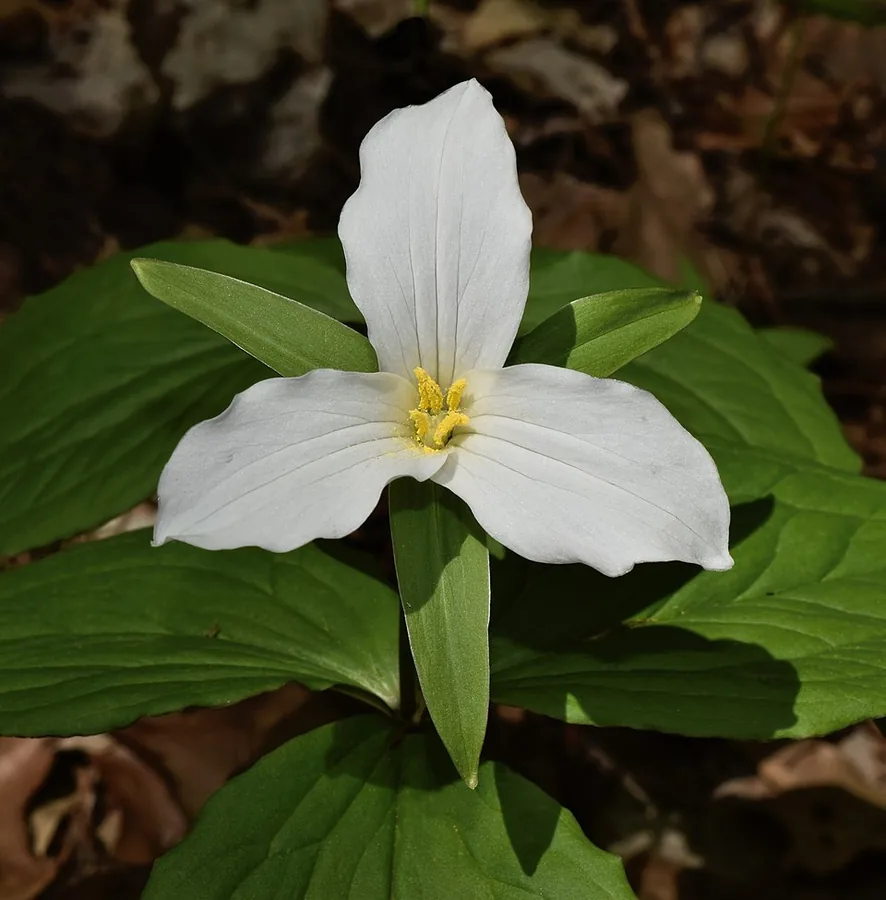
Large-flowered trillium is the showpiece of the spring woodland floor, a single white bloom held above a whorl of three broad leaves. It belongs to the lily allies and grows wild across the rich, shaded forests of eastern North America. The flower opens white and slowly fades to a soft pink as it ages.
This is a plant that lives at its own pace. It grows from a rhizome and spreads slowly, and a seed can take the better part of a decade to reach a flowering plant. In a settled woodland garden it can live for many years and form a quiet, lasting colony.
Patience is the price of admission. Trillium asks for shade, steady moisture, and rich leafy soil, and once it is happy it wants nothing more than to be left alone. The one rule that matters most is never to dig a plant from the wild.
Care
The short version: plant it in dappled to full shade in deep, rich, humusy soil, keep the ground evenly moist through spring growth, and then leave the established clump undisturbed.
Light
Trillium is a true woodland plant that wants partial to full shade. Dappled light under deciduous trees is ideal, since the flowers open before the canopy leafs out, and deep shade suits it just fine once it does.
Water
Keep the soil evenly moist but never waterlogged, watering through dry spells while the plant is in active spring growth. The foliage dies back on its own by late summer, and from then on the dormant rhizome needs far less.
Soil
Plant in deep, rich, humusy soil packed with organic matter and draining freely. A pH anywhere from 5.0 to 7.0 works, which covers most leaf-mold woodland ground.
Temperature
This is a cold-hardy native, comfortable across the broad range of -29°F to 84°F (-34°C to 29°C). It needs a real winter chill to break dormancy and bloom, so it is a poor fit for hot, frost-free climates.
Humidity
Ordinary outdoor humidity is plenty, so there is no number to chase. A moist, shaded site with a leafy mulch does more for the plant than any reading on a gauge.
Feeding
Rich woodland soil usually feeds the plant on its own. In fall, lay down a thin layer of leaf mulch or leaf mold, no more than 2 inches, to mimic the forest floor and slowly enrich the ground.
Pruning
No pruning is needed. Let the foliage die back on its own after flowering, since those leaves are feeding the rhizome for next year's bloom, and cutting them early only weakens the plant.
Repotting
Trillium is rarely moved or divided because it deeply resents disturbance. Lift it only when a crowded clump loses vigor or stops flowering well, and even then expect a slow recovery.
Size & spacing
A mature plant stands 8 to 18 inches (20 to 46 cm) tall and spreads 9 to 12 inches (23 to 30 cm) across. Give each one room to form its slow clump without crowding its neighbors.
When to plant
Trillium runs on the woodland calendar. Plant dormant rhizomes in fall, then wait for the flowers in spring, which open anywhere from April to June before the leafy canopy fills in overhead.
Northern hemisphere
Southern hemisphere
Typical months for a temperate climate: start earlier in warm zones, later where spring frosts linger.
- Plant: Plant dormant rhizomes in fall; sow fresh seed outdoors in fall
- Harvest: Blooms April to June
Hardiness
USDA hardiness zones: 4–8
Temperature: down to -34°C
Troubleshooting
Trillium gives little trouble once it is settled, and most of what goes wrong shows up on the leaves. Match what you see below and act early, while the fix still counts. The one real setback comes from moving the plant at all.
A plant that sulks or fades after being moved
Trillium hates having its roots disturbed, so transplant shock often follows any digging or dividing. The best cure is not to move it at all. When you must divide, wait until the foliage has died back, replant the rhizome at once at the same depth, and keep it evenly moist while it settles. Starting with nursery-grown plants spares you the trouble of moving a wild clump that may never recover.
Fix:
- Leave established plants undisturbed where possible
- If dividing, do so after foliage dies back and replant rhizomes promptly at the same depth
- Keep newly set plants evenly moist while they re-establish
Ragged holes in the leaves and petals with slime trails
This is the work of slugs and snails, which feed after dark in damp shade and leave silvery trails behind them. Go out at night or early morning to pick them off, clear away the leaf litter and boards they hide under, and ease up on watering. If they keep coming, scatter an iron-phosphate bait.
Fix:
- Hand-pick slugs and snails in the evening
- Reduce excess moisture and remove debris that shelters them
- Apply iron-phosphate slug bait if pressure is heavy
Spots, blotches, or powdery patches on the leaves
These mark a fungal leaf spot, rust, or smut, which take hold when the foliage stays wet and air sits still. Pick off the marked leaves and bin them, give the clump more room to breathe, and water at the base. A good fall cleanup of old debris keeps the spores from carrying over.
Fix:
- Remove and destroy affected leaves
- Improve air circulation and avoid wetting foliage
- Clean up fallen plant debris at season end
Toxicity
Trillium is a mild concern rather than a serious poison. The berries and rhizome hold saponins that can upset the stomach of a pet, a grazing animal, or a person who eats them, but the plant is not a systemic toxin and the ASPCA does not list it. Keep the fruit and roots out of reach, and never dig this protected wildflower from the wild.
Toxic to
Cats · Dogs · Horses · Rabbits · Livestock · Birds · People
Cats Mild
The saponins in the berries and rhizome can upset a cat's stomach, bringing on drooling or vomiting if a piece is swallowed. Most cats leave the plant alone, and a small nibble rarely amounts to much.
Dogs Mild
A dog that chews the fruit or digs up the rhizome may drool, vomit, or pass a loose stool. The upset is mild and usually settles on its own, though it pays to keep a curious digger away from the roots.
Horses Mild
The same saponins make the rhizome and berries a mild stomach irritant for grazing horses. Trouble is unlikely, since the plant grows in shaded woodland rather than open pasture.
Rabbits Mild
Saponins in the fruit and roots can leave a rabbit with a queasy gut if it eats much. The foliage is the safer part, but the berries and rhizome are best kept out of reach.
Livestock Mild
Cattle, goats, and sheep that browse the rhizome or fruit may show mild digestive upset from the saponins. Serious poisoning is not expected from this plant.
Birds Caution
The ripe berries draw birds, which help scatter the seed, but the saponins still make the fruit a mild irritant. Treat it as a caution rather than a safe snack for pet birds.
People Caution
No part of the plant is meant to be eaten, and the saponin-rich berries and rhizome can cause stomach upset if swallowed. Keep children from sampling the fruit, and never harvest it as food.
Keep fruits and rhizomes away from pets and children. This is a slow-growing native protected or restricted in some areas; source only nursery-propagated plants rather than digging from the wild.
Helpline numbers

United States
ASPCA Animal Poison Control: (888) 426-4435 (fee applies)
Poison Control: (800) 222-1222



Canada
Poison Centres: 1-844-764-7669
Varieties
Trillium grandiflorum is grown mostly as the wild species, but one color form turns up now and then.
f. roseum
A naturally occurring pink form whose blooms open soft pink instead of the usual white.
How to propagate
Trillium can be increased by dividing the rhizome or starting from seed, though both ask for a slow hand and a long wait.
DivisionModerate
After foliage dies back in late summer to fall · 1 to 2 years
Lift and split the rhizomes only once the leaves have died back in late summer to fall, while the plant is dormant. Replant the pieces at once, then be patient, because trillium resents disturbance and takes 1 to 2 years to settle back into growth.
SeedDemanding
Sow fresh seed in fall outdoors · Several years to flowering
Growing trillium from seed asks for real patience. Sow fresh seed outdoors in fall and expect double dormancy, so the seeds wake slowly across two or more years, and a plant takes several more years to reach flowering size. Each seed carries a fatty appendage that draws ants, which carry it off and plant it for you.
Myths
Picking a trillium in the woods or digging one up for the garden does no harm.
Snapping off the flower takes the plant's only set of leaves with it, which can starve the rhizome and set the plant back for years or kill it outright. It also transplants poorly and is protected or restricted in many areas. Always buy nursery-propagated plants rather than collecting from the wild.