Vegetable · Convolvulaceae
Sweet Potato
Ipomoea batatas
Give it warm soil, full sun, and a long season, and the sweet potato fills the ground with storage roots.
Full sun
Every 5–7 days
64–95°F · 18–35°C
90–120 days
Overview
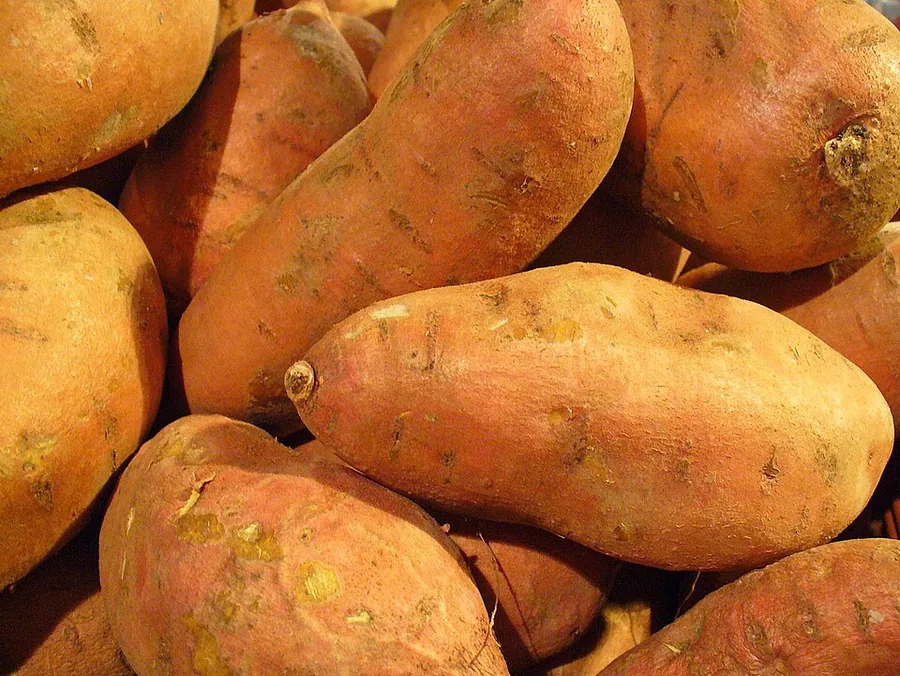
The sweet potato is a sprawling, heat-loving vine grown for the swollen storage roots that form underground. It belongs to the morning glory family, not the nightshade family that holds the Irish potato, and the two are unrelated despite the shared name. Where summers run long and warm, a few plants can blanket a bed and crop heavily.
It asks for little once it gets going. The vines run 3 to 15 feet (90 cm to 4.5 m) across the ground, smothering weeds as they go, while the real prize swells out of sight below. Beyond the roots, the young leaves and shoot tips are edible too, cooked like spinach in much of the world.
Heat is the one thing it won't do without. Sweet potatoes sulk in cold soil and die at the first frost, so the trick is a warm bed, a long stretch of summer, and patience while the roots size up underground.
Care
The short version: full sun and loose, well-drained soil on a raised ridge, about an inch of water a week with less near harvest, and a light low-nitrogen feed so the plant builds roots instead of all vine.
Light
Sweet potatoes want full sun, at least six to eight hours a day, to drive the vine growth that feeds the roots. They'll take a little afternoon shade, but the more sun they get, the better the crop underground.
Water
Give about 1 inch of water a week in deep soakings, letting the top of the soil dry between drinks. Ease off as harvest nears, since a sudden flood after a dry spell splits the roots as they swell too fast.
Soil
Plant in loose, well-drained loamy or sandy soil, ideally heaped into raised ridges so the roots have room to run and never sit wet. A slightly acidic pH of 5.5 to 6.5 suits them best.
Temperature
This is a tropical crop that thrives in real heat, from 64°F to 95°F (18°C to 35°C). Cold soil stalls it and frost kills it outright, so there's no rushing it into the ground in spring.
Humidity
Ordinary summer humidity in the 40% to 70% range is plenty, and there's no number to fuss over outdoors. Warmth and sun matter far more to this crop than the moisture in the air.
Feeding
Less is more here. Work a low-nitrogen fertilizer such as 5-10-10 into the bed before planting, then sidedress once before the vines cover the row. Heavy nitrogen grows lush leaves and stunts the roots you're after.
Pruning
The roots need no pruning at all. Trim the vines only to keep a bed tidy or to stop them straying, and put the tender shoot tips to use as cooked greens rather than tossing them.
Size & spacing
The plants stay low at 6 to 12 inches (15 to 30 cm) tall but the vines sprawl 3 to 15 feet (90 cm to 4.5 m) wide. Give each plenty of ground to run, or train the vines back so they don't swamp their neighbors.
When to plant
Sweet potatoes run on warmth and have no tolerance for frost. Sprout slips indoors from a stored root in late winter, set them out only after the soil has warmed in spring, and dig the roots in fall before the first frost catches them.
Northern hemisphere
Southern hemisphere
Typical months for a temperate climate: start earlier in warm zones, later where spring frosts linger.
- Sow: Sprout slips from a stored root indoors 6-8 weeks before transplanting
- Plant: After all danger of frost once soil is warm, roughly April through early July
- Harvest: Harvest storage roots in fall before the first frost
Hardiness
USDA hardiness zones: 9–11
Temperature: down to -7°C
Troubleshooting
Most sweet potato trouble hides underground and only shows up at harvest, on the roots themselves. Learn the few pests and one fungus that mar the crop and you can dig clean roots year after year. Match what you find below, then act before next season.
Pinholes by the stem and bitter, tunneled roots
This is the sweetpotato weevil, the worst pest the crop faces. Adults chew small holes near the stem end while their larvae bore through the flesh, leaving frass-packed tunnels that turn the root dark and bitter. Dig up and destroy every infested root and vine, and never save that material to grow next year's slips.
Fix:
- Remove and destroy infested roots and vines
- Do not save infested material for propagation
Ragged holes chewed into the roots
Wireworms, the slim larvae of click beetles, gouge shallow pits that deepen into ragged holes as the roots grow. They thrive in ground that was recently sod, so steer clear of grassy beds. Harvest as soon as the roots size up to cut their feeding time short.
Fix:
- Harvest promptly once mature to limit feeding time
- Avoid planting in recently turned sod
Dark blotches spreading across the root skin
Scurf is a fungus that stains the skin but stops there. The dark spots enlarge and run together, yet the flesh underneath stays sound and good to eat. It rides in on infected planting stock, so toss the worst roots and start your next crop only from clean, disease-free slips.
Fix:
- Discard heavily affected roots
- Start next crop only from clean, disease-free slips
Toxicity
Good news on this one: the sweet potato is safe for people and pets alike. The ASPCA lists the vine as non-toxic to cats, dogs, and horses, and the cooked root and tender greens are food for both people and animals. Nothing here needs locking away.
Safe for
People · Cats · Dogs · Horses · Rabbits · Livestock · Birds
Cats None
Safe to be around. A cat that nibbles the vine won't be poisoned, though a big mouthful of any greenery can bring on a little drool or a brief upset stomach.
Dogs None
No toxic principles here, and cooked sweet potato is a common treat in dog food. Keep servings modest, since a gut full of fibrous root or vine can loosen the stool.
Horses None
Grazing the foliage poses no poisoning risk. As with any rich new feed, introduce it slowly so the digestion has time to adjust.
Rabbits Safe
The leaves and vine tips are safe forage and the cooked root is fine in small amounts. Go easy, because too much starchy root at once can upset a rabbit's sensitive gut.
Livestock Safe
Cattle, goats, and sheep can eat the vines and roots without harm, and the foliage is grown for fodder in many places. Plenty of clean water and a gradual switch keep things settled.
Birds Safe
Chickens and other poultry happily peck at cooked root and chopped greens with no danger. Offer it as part of a varied diet rather than the whole meal.
People Safe
Cooked sweet potato is a nourishing staple food, and the young leaves and shoots are eaten as a cooked green. Eat it freely; only the raw root is hard to digest in quantity.
Although non-toxic, eating large amounts of any plant material can cause mild stomach upset in pets.
Varieties
Hundreds of sweet potato cultivars exist, but a few orange-fleshed ones turn up in most gardens. These are the names worth knowing.
Beauregard
A widely grown orange-fleshed cultivar prized for heavy yields and earlier maturity than most.
Covington
An NC State release with rose skin and orange flesh that turns out uniform, reliably sweet roots.
Georgia Jet
A fast-maturing orange-fleshed type that fits shorter, cooler growing seasons where others run out of time.
How to propagate
Sweet potatoes don't grow from seed in the garden. You start them from slips, free copies sprouted off a single stored root, which makes a handful of grocery tubers into a whole bed of plants.
Stem cuttingsEasy
Spring, after the soil has warmed and frost danger has passed · 2 to 3 weeks
Sweet potatoes start from slips, the rooted sprouts you cut from a stored root that has begun to shoot. Set the slips out as cuttings once spring soil is warm and the frost has passed, and they take hold and root readily within 2 to 3 weeks.
Myths
Every part of the sweet potato plant is poisonous because it's a relative of toxic morning glories.
The roots and cooked leaves of the food sweet potato are eaten the world over, and the ASPCA lists the plant as non-toxic. The confusion comes from the seeds of some ornamental morning glories, which belong to other Ipomoea species and are a different matter.
Sweet potatoes and ordinary Irish potatoes are the same kind of plant.
They aren't even close relatives. Sweet potato is a vining member of the morning glory family that swells its roots into storage organs, while the Irish potato sits in the nightshade family and forms its tubers on underground stems.