Houseplant · Asteraceae
String of Pearls
Curio rowleyanus
Get the watering right and this trailing succulent spills a curtain of green pearls over the pot edge.
Bright indirect
50–81°F · 10–27°C
USDA 9–12
1–3 ft · 0.3–0.9 m
Overview
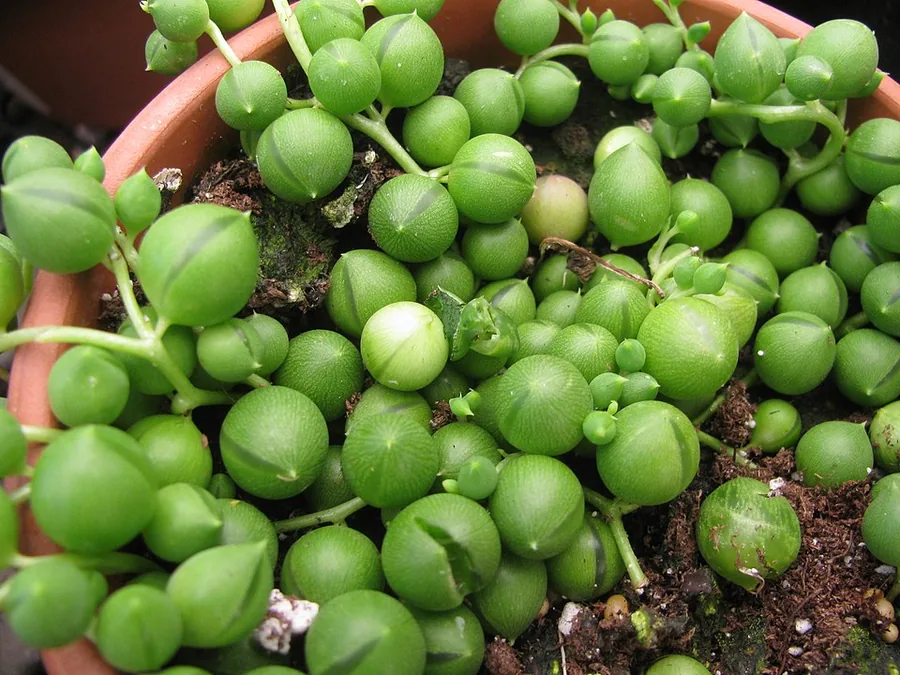
String of pearls is a trailing succulent from the dry corners of South Africa, where its bead-like leaves store water to ride out long dry spells. Each round pearl carries a thin clear stripe, a little window that lets light reach the tissue inside while keeping water loss low. Grown indoors it is almost always hung high, so the strands can pour down over the rim of a basket.
It belongs to the aster family, the same group as daisies, and in summer it can open small white flowers that give off a faint cinnamon scent, though it rarely bothers to bloom inside. The plant was long sold as Senecio rowleyanus and still is, but botanists now place it in the genus Curio. Either name gets you the same trailing pearls.
Most of the skill here comes down to water. The pearls plump up when the plant is happy and shrivel when it is thirsty, but the quick way to kill one is to keep the soil wet. Give it bright light and a pot that drains fast, let it dry out fully between drinks, and it will trail for years.
Care
The short version: bright indirect light, a gritty fast-draining mix in a shallow pot, and a complete dry-down between thorough waterings, with less water in winter and a light feed in spring.
Light
Give it bright indirect light, the kind it gets near a window without harsh sun landing on the beads. It will take some direct sun once hardened to it, but unfiltered midday rays scorch the pearls. Too little light, and the strands stretch out thin and bare.
Water
This is where the plant lives or dies. Soak the mix until it drains, then leave it alone until it has dried out completely before watering again, going heavier in summer and lighter in winter. The beads shrivel when thirsty, but soggy soil brings on the root rot that kills most of these plants.
Soil
Plant it in a gritty, fast-draining cactus or succulent mix so water never lingers around the roots. A pH anywhere from 6.0 to 8.0 suits it, and a shallow clay pot helps the soil breathe and dry out between waterings.
Temperature
Ordinary room warmth works, roughly 50°F to 81°F (10°C to 27°C). It likes a cooler rest over winter, around the low end of that range, and it won't take frost, so keep it indoors once nights turn cold.
Humidity
Low household humidity is exactly what this succulent wants, so skip the misting and the pebble trays. Dry air actually helps keep rot at bay around the stems and beads.
Feeding
It needs very little. Feed lightly in spring with a dilute balanced or cactus fertilizer while it's actively growing, and ease off entirely through the winter rest.
Pruning
Trim back any leggy or bare strands to push the plant fuller, and pinch overly long stems to keep it tidy. The pieces you cut off root easily as new plants, so nothing has to go to waste.
Repotting
Repot only every one to two years, moving up to a shallow container rather than a deep one. Roots crowding the pot or soil that dries out almost as soon as you water it are the signs it's ready.
Size & spacing
The strands trail from about 1 to 3 feet (30 to 91 cm) long, and the plant spreads to a similar width. Hung in a basket, those beaded stems cascade well below the pot.
Troubleshooting
Nearly every problem with string of pearls starts at the watering can or the window. The pearls themselves tell you what's wrong, going soft when dry and mushy when too wet. Match what you see below and adjust before a soft stem turns into full-blown rot.
Soft, mushy stems with pearls dropping or turning translucent
Soft, blackening stems and beads that drop or turn glassy point to root and stem rot, the single most common way this plant dies. It comes from soggy mix that never dries out. Stop watering at once, cut away the mushy parts, and restart healthy stem tips in fresh gritty mix rather than trying to nurse the old plant back.
Fix:
- Stop watering and remove affected mushy sections
- Take healthy unaffected stem cuttings and restart in fresh gritty mix
- Repot into fast-draining cactus mix in a shallow, well-drained container
Pearls turning wrinkled, soft, and flat
Plump beads that go wrinkled and soft are the plant's way of asking for a drink. This is plain underwatering, and it shows up once the mix has dried out well below the surface. Water until it runs from the drainage hole, then let the pot dry all the way down before the next round.
Fix:
- Water thoroughly until it drains, then let the mix dry completely before watering again
- Resume a regular dry-down cycle, watering more in summer than winter
Pale, brown, or crispy pearls on the sunny side
Pearls that bleach pale or crisp up brown on the side facing the window have taken sun scorch from harsh, unfiltered light. The plant wants bright light, just not blasting midday sun straight onto unhardened beads. Move it back into bright indirect light, and any time you shift it toward stronger sun, do it over a week or two so it can adjust.
Fix:
- Move to bright indirect light
- Acclimate gradually before increasing sun exposure
Toxicity
This is a toxic plant, so site it with care. The leaves and sap carry pyrrolizidine alkaloids, and eating the pearls can make cats and dogs vomit and turn listless, while the milky sap stings skin and irritates the gut. Hang it well out of reach of pets and children, and pull on gloves before you prune.
Toxic to
Cats · Dogs · Horses · Rabbits · Livestock · Birds · People
Cats Toxic
A cat that nibbles the pearls usually throws up and goes quiet and lethargic. Drooling and loose stools can follow, and the sap may leave the mouth sore.
Dogs Toxic
Dogs react much the same way, with vomiting and flagging energy the most common signs. Some get diarrhea on top of that after chewing the strands.
Horses Caution
The pyrrolizidine alkaloids that run through this genus are hard on a horse's liver, so keep the trailing stems out of reach. Eating the leaves can bring on an upset gut and a dull, off-feed mood.
Rabbits Caution
Treat it as off the menu for rabbits. The same alkaloids that trouble other animals make the leaves a poor and risky nibble, so don't let one graze the dangling pearls.
Livestock Caution
Cattle, sheep, and goats are sensitive to Senecio-type alkaloids, which build up and damage the liver over time. A houseplant rarely reaches a barn, but keep it well clear of any grazing animal.
Birds Caution
There's little hard data on birds, so the safe call is to keep a pet bird away from the strands and let it forage only on greens you know are safe.
People Caution
No part of this plant is meant to be eaten, and swallowing the leaves can upset the stomach. The milky sap stings broken skin too, so wear gloves when you prune and keep small children from putting the pearls in their mouths.
Wear gloves when handling or pruning, as the sap can irritate skin and cause a rash in sensitive individuals.
Helpline numbers

United States
ASPCA Animal Poison Control: (888) 426-4435 (fee applies)
Poison Control: (800) 222-1222



Canada
Poison Centres: 1-844-764-7669
Varieties
Almost everyone grows the plain green form, but one named selection turns up now and then.
'Variegata' (variegated string of pearls)
Its round beads are marbled in green and creamy white, so the trailing strands read as much paler than the plain form.
How to propagate
String of pearls is easy to multiply, and you'll likely end up with spare strands every time you trim it.
Stem cuttingsEasy
Active growth, spring through summer · Roots typically develop at the nodes within a couple of weeks
Cuttings are the fast, reliable way to make more of this plant, and spring through summer is the time to take them. Snip 3 to 4 inch stem tips, strip the lower beads, and lay the bare nodes against moist gritty mix or bury them lightly. Roots form at each buried node within a couple of weeks.
SeedModerate
Not commonly used in cultivation · Slow and uncommon in cultivation; less reliable than cuttings
Growing from seed is possible but rarely worth it at home. The wind-borne seeds carry a cottony tuft and are hard to come by in the trade. They are slow to get going and far less dependable than cuttings, so most growers skip them.
Myths
The correct name for this plant is Senecio rowleyanus.
That name still fills most plant tags and shop listings, but it has been reclassified. Kew's Plants of the World Online now accepts Curio rowleyanus, with Senecio rowleyanus kept on as a synonym, so both names point to the same plant.
Being a succulent, it lives on neglect and almost never needs water.
It is fussier than that reputation suggests. The pearls shrivel when the plant runs dry, yet it rots and dies fast in soil that stays wet. What it wants is a full dry-down between thorough waterings, not drought and not constant moisture.