Ornamental · Asteraceae
Strawflower
Xerochrysum bracteatum
Give it full sun and dry feet, and the strawflower hands you papery blooms that last long after the season ends.
Full sun
75–90 days
USDA 8–10
1–5 ft · 0.3–1.5 m
Overview
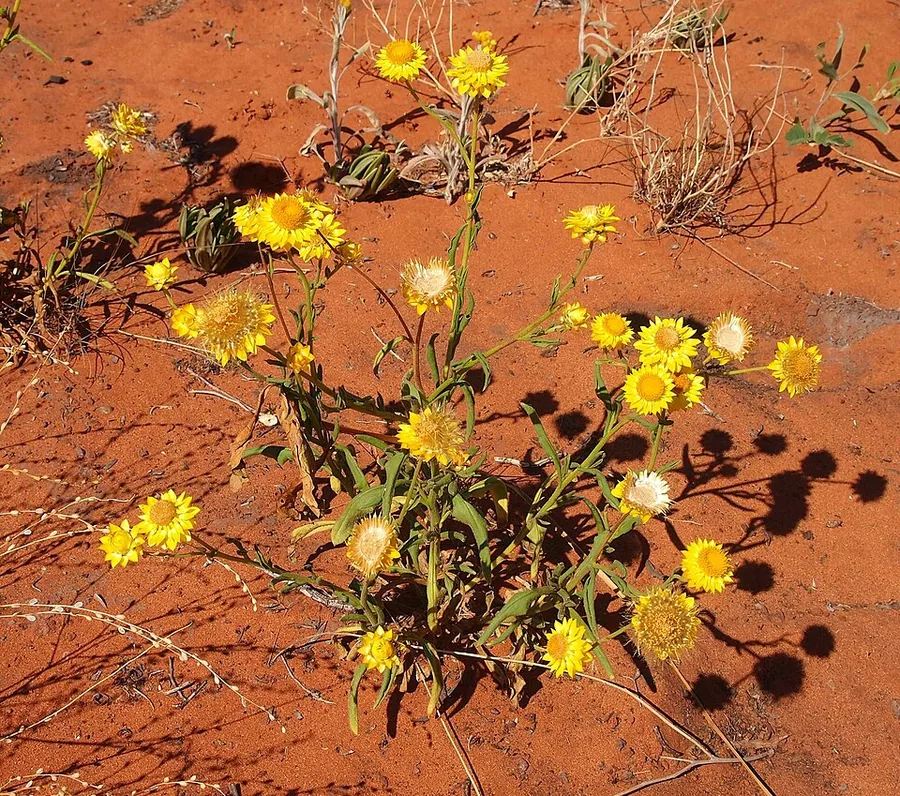
The strawflower earns its other name, golden everlasting, the moment you touch one. What look like petals are really stiff, papery bracts that crackle between your fingers and hold their color for months after cutting. The plant hails from Australia and belongs to the daisy family, and it grows almost anywhere in the garden as a warm-season annual.
It asks for very little. Plant it in full sun, give it ground that drains well, and it shrugs off heat and dry spells once it settles in. The flowers open in a wide run of colors, from gold and bronze to pink and white, and the bees and butterflies work them all summer.
Most people grow it for the cutting garden. Snap the stems while the bracts are still partly closed, hang them upside down to dry, and you get everlasting blooms for winter bouquets that keep their shape and color long after the plant outside has gone.
Care
The short version: full sun and well-drained soil that runs on the dry side. Water only when the top of the soil dries, deadhead to keep the flowers coming, and stake the taller types before they flop.
Light
Strawflowers want full sun, ideally six or more hours a day. They tolerate light afternoon shade, but in too little light the stems stretch, lean, and give you far fewer of those papery blooms.
Water
Let the top half of the soil dry between waterings. These are drought-tough plants once established, so the real danger is overwatering, which sets off root rot. Average to dry ground suits them far better than wet feet.
Soil
Plant in well-drained loam of average fertility. They handle a wide pH range, anywhere from 5.5 to 8.0, and put up with dry, lean soil that would starve fussier plants. Drainage matters more than richness.
Humidity
Ordinary outdoor humidity is fine, so there's no number to hit. Air movement is what counts, since still, muggy air around crowded plants is how mildew gets a foothold.
Feeding
This is a light feeder that does well in average soil. A balanced general-purpose fertilizer once a month through the growing season is plenty, and there's no need to push it harder than that.
Pruning
Deadhead spent blooms as they fade and the plant keeps flowering longer. A light pinch on young plants builds a bushier, sturdier frame, and the taller types may need staking to stay upright.
Size & spacing
Plants range from a tidy 12 inches to a towering 1 to 5 feet (30 to 152 cm) depending on the variety, spreading 6 to 18 inches (15 to 45 cm) wide. Give each one enough room that air can move freely between them.
When to plant
Strawflowers want warmth and won't take a frost. Start the seeds indoors in early spring, set the plants out once the cold has passed and the soil has warmed, and pick blooms from early summer until the first frost ends the show.
Northern hemisphere
Southern hemisphere
Typical months for a temperate climate: start earlier in warm zones, later where spring frosts linger.
- Sow: 6 to 8 weeks before the last spring frost; do not cover seed, as light aids germination
- Plant: After the last frost when soil has warmed
- Harvest: Blooms summer to fall (about June until frost); harvest for drying when bracts are partly open
Hardiness
USDA hardiness zones: 8–10
Temperature: down to -12°C
Troubleshooting
Strawflowers stay healthy in the right spot, and most trouble traces back to too much water or too little air. Read the early signs on the leaves, stems, and roots, then act before a small problem spreads.
Wilting and yellowing with soft rot at the base
When a strawflower collapses even though the soil is wet, the culprit is root rot from soggy ground. The roots turn dark and mushy and can no longer take up water. Stop watering and let the soil dry, then fix the drainage or move the plant somewhere it won't sit wet.
Fix:
- Stop overwatering and let soil dry
- Improve drainage or move to a better-drained site
White powdery or fuzzy coating on the leaves
This is powdery or downy mildew, a fungus that moves in when leaves stay damp and air sits still around crowded plants. Pull off the worst leaves, open up the spacing so air can move, and water at the soil line instead of over the top. Full sun and room to breathe keep it from coming back.
Fix:
- Improve spacing and air flow
- Water at the soil line and avoid wetting foliage
- Remove and discard affected leaves
Tall stems leaning and flopping over
The taller cultivars grow top-heavy and tip over once rain or wind hits the open flowers. Stake them early, before the stems get long and lanky. Pinching young plants helps too, since it builds a sturdier, bushier frame from the start.
Fix:
- Stake or provide support for tall plants
- Pinch young plants to promote sturdier branching
Toxicity
Good news for pet owners and parents: the strawflower is non-toxic all the way through. The ASPCA lists it as safe for cats, dogs, and horses, and the same goes for rabbits, livestock, birds, and people. A stray nibble won't poison anyone.
Safe for
People · Cats · Dogs · Horses · Rabbits · Livestock · Birds
Cats None
Safe around cats. The ASPCA lists the strawflower as non-toxic, so a curious nibble won't cause poisoning.
Dogs None
No concern for dogs. A bite of leaf or flower brings no risk of poisoning, though a large mouthful of any plant can still upset a sensitive stomach.
Horses None
Horses are in the clear. The strawflower is listed as non-toxic, so grazing near it carries no danger.
Rabbits Safe
Rabbits can browse it without harm. Nothing in the plant is poisonous to them.
Livestock Safe
Cattle, goats, and sheep can share a pasture with it safely, as the plant holds no toxins that trouble grazing stock.
Birds Safe
Birds are fine around it, whether they peck at the seed heads or pass through the planting.
People Safe
Harmless to people. The papery blooms are a favorite for drying, and handling the plant poses no risk to children.
Varieties
Strawflowers come in everything from knee-high dwarfs to three-foot giants. These are the named ones worth seeking out.
Bright Bikini
A dwarf strain that tops out near 15 inches in a mix of colors, which makes it a natural fit for containers.
Dargan Hill Monarch
A grey-leaved cultivar carrying large golden-yellow flowers.
Kimberly Sunset
Another grey-leaved selection, this one flowering in soft pink.
Kingsize Mixed
Bred for larger blooms on plants that reach about 3 feet tall.
How to propagate
You can raise strawflowers from a seed packet or clone a favorite from cuttings, and which you pick depends on whether you want variety or an exact copy.
SeedEasy
Start indoors 6 to 8 weeks before last frost; surface-sow as light aids germination · Germinates in roughly 1 to 3 weeks; blooms within the first season
Most gardeners grow strawflowers from seed started indoors 6 to 8 weeks before the last frost. Press the seed onto the surface and leave it uncovered, since light is what triggers it to sprout, usually within 1 to 3 weeks. Move the seedlings out after frost and they bloom that same season.
Stem cuttingsEasy
During active growth in the growing season · Several weeks to root
Cuttings are the way to keep a named cultivar true to type. Take them during active growth in the season and give them several weeks to root, and you get an exact copy of the parent rather than the mixed results seed would bring.
Myths
Strawflowers are true everlasting flowers that never fade or die.
The name oversells it. The papery bracts hold their color and shape for a long time once dried, which is why they earned the everlasting label, but the living plant is short-lived and grown as an annual. The blooms last, the plant does not.
You can save seed from a favorite cultivar and get identical plants.
Named cultivars do not come true from seed, so saved seed gives you a grab bag of variable offspring instead of copies of the parent. To keep a particular form, take stem cuttings rather than saving seed.